
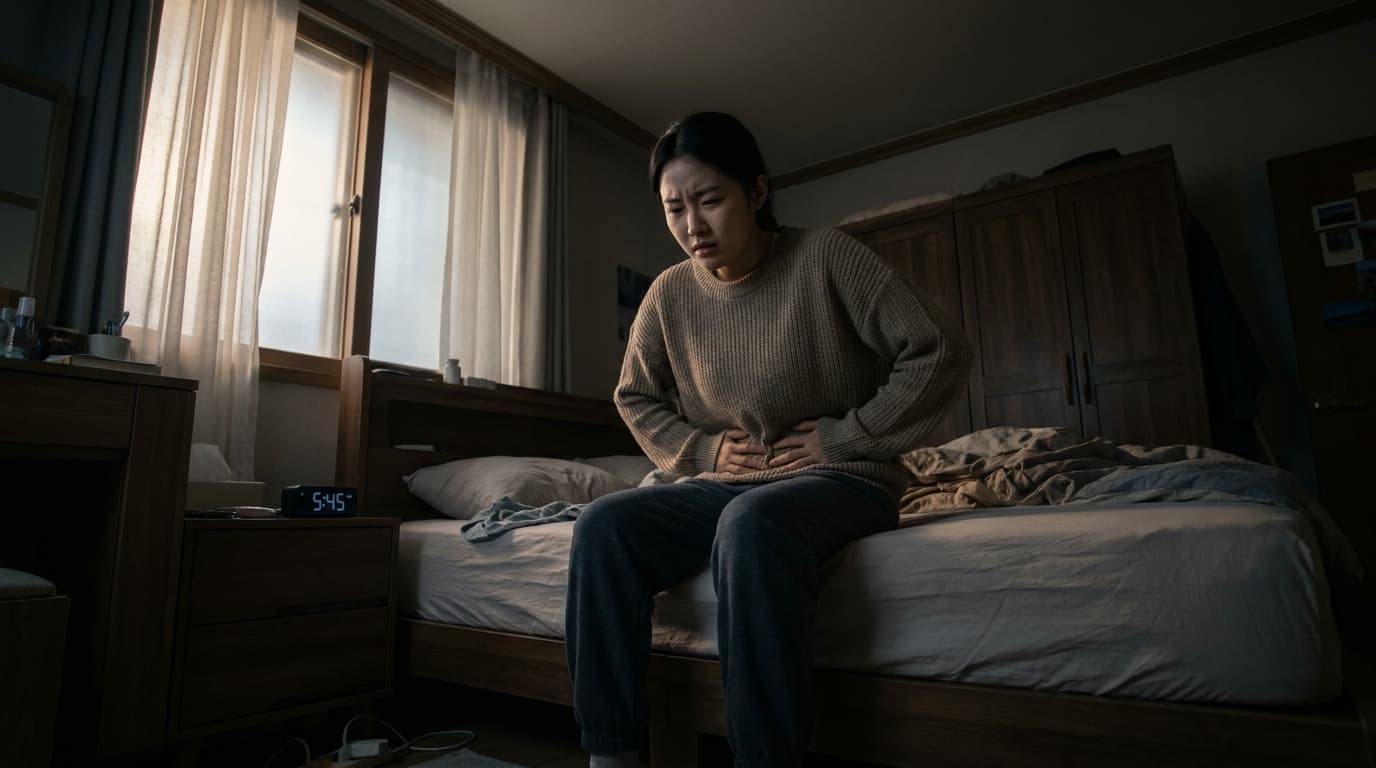
My Lower Abdomen Feels Heavy, as if it's About to Drop? Could it be Because of 'This'?
Do you suddenly feel a heavy and uncomfortable sensation in your lower abdomen, as if it's about to drop? If this symptom worsens especially before or after your period or when you're not feeling well, many women dismiss it as simple fatigue or overwork. However, this 'lower abdominal heaviness' can be an important signal from your body. Like a warning light in a car, it's highly likely a strong message that a red light has been turned on for your uterine and pelvic health. If you're experiencing ongoing discomfort that interferes with your daily life, it's time to accurately identify the cause and start appropriate management and treatment.
💡 [Key Answer] The 3 most common causes of "heaviness in the lower abdomen": ① Uterine Fibroids / ② Adenomyosis / ③ Pelvic Congestion Syndrome Dalimchae Clinic resolves the root cause of the symptoms by restoring the circulation environment of the uterus and pelvis through constitutional improvement.
Is the heavy feeling in the lower abdomen just menstrual pain?
A heavy and uncomfortable feeling in the lower abdomen is one of the common symptoms in women. Many people easily mistake this symptom for simple menstrual pain or indigestion. However, representative diseases that cause lower abdominal pain and heaviness similar to menstrual pain include uterine fibroids and adenomyosis. These diseases cause various discomforts by changing the shape or function of the uterus, and can start with mild pain or heaviness and gradually intensify. In particular, if symptoms such as excessive menstrual flow, worsening menstrual pain, back pain, and frequent urination are accompanied, it is necessary to identify the exact cause rather than dismissing it as simple menstrual pain.
How do uterine fibroids and adenomyosis make the lower abdomen feel heavy?
Uterine fibroids are benign tumors that grow in the muscle layer of the uterus and are very common in women of childbearing age. Small fibroids may have no or mild symptoms, but depending on the size or location of the fibroid, they can cause lower abdominal heaviness, pelvic pressure, heavy menstrual bleeding, and menstrual pain. Especially if they are in a position that presses on the bladder or rectum, symptoms like frequent urination or constipation may occur. Adenomyosis is a disease in which endometrial tissue grows into the uterine muscle layer, making the uterine wall thick overall. Like uterine fibroids, it often causes severe menstrual pain, heavy menstruation, and chronic pelvic pain, accompanied by lower abdominal heaviness. These diseases interfere with blood circulation in the uterus and form blood stasis (瘀血), making the lower abdomen heavier and more uncomfortable.
How does Korean medicine treatment improve lower abdominal heaviness?
Dalimchae Clinic treats the fundamental cause of women's diseases such as uterine fibroids and adenomyosis that cause lower abdominal heaviness. Beyond simply relieving symptoms, we focus on preventing recurrence by improving the uterine and pelvic environment healthily.
According to a systematic literature review and meta-analysis study by Li Q et al. published in Annals of Palliative Medicine in 2021, herbal medicine prescriptions including Ejiao or Velvet antler showed positive effects on the treatment of uterine fibroids. In this study, comparing a mifepristone monotherapy group with a mifepristone and herbal medicine combined therapy group for patients with uterine fibroids, the herbal medicine combined therapy group showed a greater reduction in uterine fibroid size and greater benefits in improving related symptoms, and the reduction in E2 and progesterone levels and the incidence of adverse reactions were also lower. The researchers concluded that these results mean that herbal medicine prescriptions including Ejiao or Velvet antler are effective in reducing uterine and fibroid size, improving related symptoms, regulating hormone levels, and reducing side effects.
In addition, a systematic literature review and meta-analysis study on the effects of acupuncture treatment for chronic pelvic pain by Kim Min-seong et al., published in Pain Research and Management in 2018, analyzed four randomized controlled trials with 474 participants. As a result, it was confirmed that chronic pelvic pain significantly decreased statistically when acupuncture treatment and conventional treatment were combined compared to the conventional treatment monotherapy group (n=277, mean difference = 1.29, 95% confidence interval = 1.13 to 1.47, p=0.0001). This suggests that acupuncture treatment can help improve symptoms in patients with chronic pelvic pain.
Based on these research results, Dalimchae Clinic Incheon Branch provides customized Korean medicine treatment according to the cause of lower abdominal heaviness. Through herbal medicine prescriptions, blood stasis in the uterus is removed and blood circulation is improved to inhibit the progression of uterine fibroids or adenomyosis, and acupuncture and moxibustion treatment smooth the circulation of Qi and blood in the pelvis and reduce pain.
'Constitutional Improvement' that makes the body not turn on again rather than turning off symptoms
Dalimchae Clinic aims for 'constitutional improvement' treatment that changes the fundamental environment of the body so that symptoms do not recur, beyond simply suppressing the symptom of lower abdominal heaviness itself. Our body's uterus and pelvis are greatly affected by the surrounding environment. Stress, irregular lifestyle, and poor eating habits hinder blood circulation in the pelvis and cause blood stasis to accumulate, weakening the function of the uterus. Constitutional improvement is a treatment that helps the uterus regain health by correcting these imbalances in the body.
To this end, customized herbal medicines are prescribed by closely diagnosing each individual's constitution, symptoms, and lifestyle. These herbal medicines help restore hormonal balance by promoting blood circulation around the uterus, clearing blood stasis, and strengthening the functions of the uterus and ovaries. In addition, it comprehensively improves the symptoms of those who complain of associated diseases related to the uterus, such as menstrual pain, heavy menstruation, or headache and dizziness, so that the overall health of the body can be restored. Dalimchae Clinic, an Incheon women's disease clinic, will help you regain your healthy daily life from the pain of lower abdominal heaviness through this integrated perspective.
What if it's me? Lower Abdominal Heaviness Checklist
Check how many of the following items apply to you.
- Recently, I often feel a heavy sensation in my lower abdomen, as if it's a stone.
- The amount of menstruation suddenly increased, and the menstrual period became longer.
- Menstrual pain has become much more severe than before, and painkillers do not work well.
- I urinate frequently or feel residual urine, and in severe cases, constipation has worsened.
- Even when it's not the menstrual period, there is pain or discomfort around the lower abdomen or pelvis.
- I feel lower abdominal pain or discomfort during intercourse.
- It feels like a heavy and uncomfortable feeling is spreading to my waist or legs.
- Fatigue comes easily, and my face turns pale or is accompanied by dizziness.
Judgment Criteria:
- 3 or more items apply: Suspected constitutional uterine problem → Consider Korean medicine treatment at Dalimchae Clinic, an Incheon uterine fibroid clinic.
- 5 or more items apply: Immediate visit is recommended, and precise diagnosis and treatment are required.
Q. If lower abdominal heaviness is severe, do I need surgery? A. Uterine fibroids or adenomyosis, which are the causes of lower abdominal heaviness, sometimes consider surgical treatment depending on the degree of symptoms, size, and location. However, surgery is not necessary in all cases, and Dalimchae Clinic prioritizes conservative Korean medicine treatment that improves the uterine environment and relieves symptoms without surgery.
Q. Is it possible to manage uterine fibroids and adenomyosis after Korean medicine treatment? A. Korean medicine treatment focuses on reducing the size of uterine fibroids or adenomyosis, relieving symptoms, and further inhibiting progression and preventing recurrence. Especially in the early stages or when surgery is not desired, it can be an effective alternative for preventing recurrence after surgery. Dalimchae Clinic Incheon for women's diseases aims for constitutional improvement that cultivates the power of the uterus to recover on its own.
Q. How long does Korean medicine treatment take? A. The treatment period may vary depending on the severity of the patient's symptoms, the progression of the disease, and the constitution. Generally, several months of steady treatment and management are required, and the customized treatment plan is adjusted by checking the treatment progress through regular checkups. You can be guided on the exact expected period through consultation with the medical staff at Dalimchae Clinic Incheon Branch.
Q. Does the symptom of lower abdominal heaviness disappear when menopause occurs? A. Since uterine fibroids or adenomyosis are affected by female hormones, symptoms may be relieved or the size of fibroids may decrease after menopause. However, you may experience continuous discomfort during the period before menopause, and all symptoms may not disappear completely. Therefore, it is important to improve the quality of life through active management even before menopause.
Symptoms such as heaviness in the lower abdomen as if it's about to drop are not problems that can be solved by enduring. You no longer have to ignore the signals your body has been sending for a long time. If you approach in the right direction, the body responds faster than you think. Bring your symptoms exactly as they are. At Dalimchae Clinic, we will find the cause together.
Where life blooms. For herbal medicine, it's Dalimchae Korean Medicine Clinic. Check your symptoms similar to mine through the AI consultation on the Dalimchae Clinic website first!
This article is health information compiled by Dalimchae medical staff based on questions frequently received in the treatment room. Medical Supervision | Women and Pregnancy Treatment Standards Dalimchae Clinic Incheon Branch Korean Medicine Doctor Yang Yuchan (Uterine Fibroid Column)