
Hello. This is Dalimchae Oriental Medicine Clinic.
Itchy Skin Bleeding and Scabbing - Is It Atopic Dermatitis? It's Not Just Eczema.
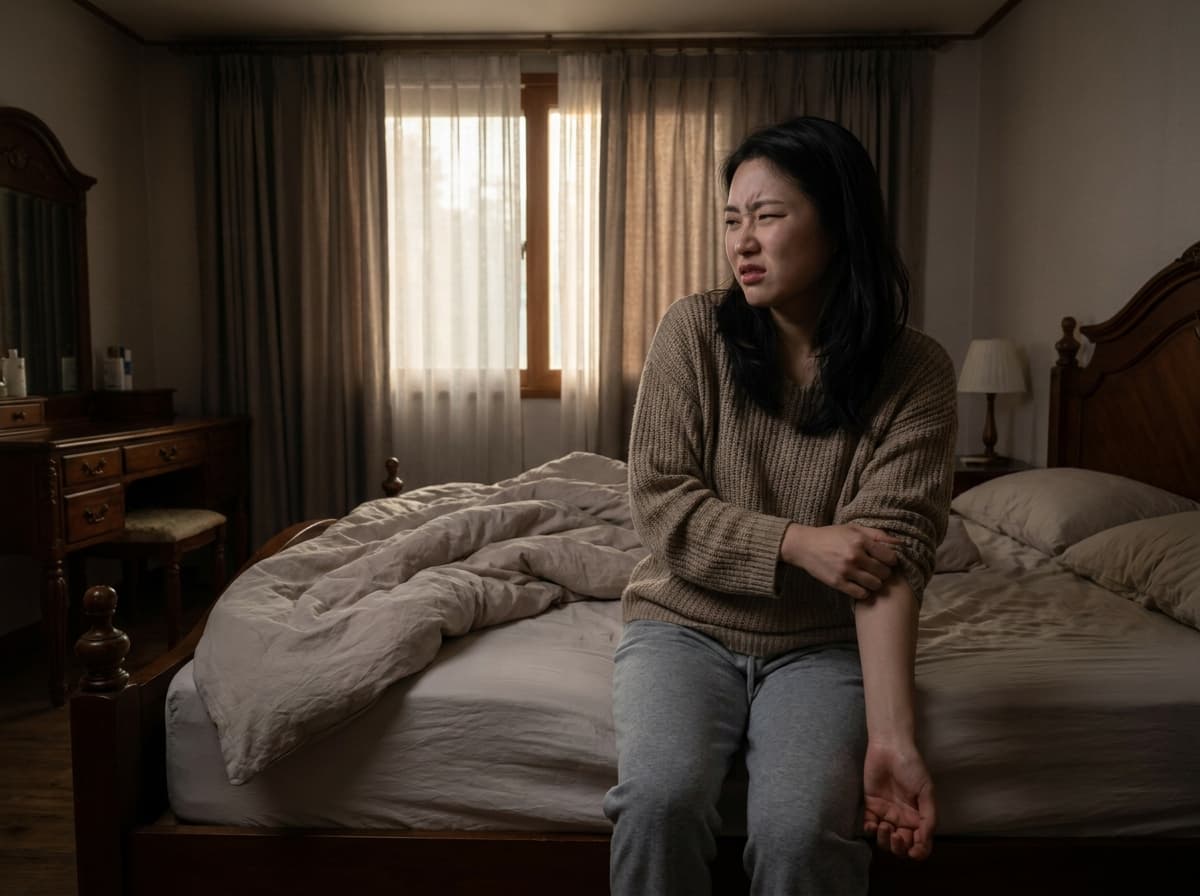
"I stayed up all night scratching," "My skin was so itchy that I scratched until it bled and scabbed. Could it be atopy?" Many people visiting the Incheon branch of Dalimchae Oriental Medicine Clinic complain of skin itching like this. It's easy to dismiss it as simple dryness or eczema, but once itching starts, it's hard to stop and often leads to chronic problems by damaging the skin. Especially if the experience of 'scratching until bleeding and scabbing' repeats, you should suspect an imbalance deep within the body rather than just a simple skin problem.
💡 [Key Answer] The 3 most common causes of skin scratching, bleeding, and scabbing - is it atopy?: ① Decreased skin barrier function (becomes vulnerable to external irritants and water loss accelerates.) ② Hypersensitivity of the immune system (excessive immune response to specific substances releases inflammatory substances.) ③ Poor gut health (increased harmful bacteria in the gut produce toxins, which can travel through the blood and cause skin inflammation.) Dalimchae Oriental Medicine Clinic solves the root cause of atopy by improving immunity through gut health restoration.
Why can't we stop scratching until it bleeds?
Skin itching is an important warning sign of our body. When an inflammatory response occurs in the skin due to external irritants or internal problems, itch-inducing substances like histamine are released, stimulating the nerves. However, in the case of chronic skin diseases such as atopic dermatitis, it's often a complex manifestation of the body's immune system and gut health rather than just a surface problem. In particular, when the skin barrier is weakened, it easily reacts hypersensitively to small irritants, creating a vicious cycle of 'itch-scratch-worsen'. Scratching provides temporary relief, but it further damages the skin and deepens inflammation, making the itch even stronger.
Why is atopy more than just a skin disease?
Atopic dermatitis is a chronic inflammatory disease caused by a complex interaction of the body's immune system, gut health, and environmental factors. In particular, the gut and skin are closely connected, often explained by the concept of the 'Gut-Skin Axis,' similar to the 'Gut-Brain Axis.' When the balance between beneficial and harmful bacteria in the gut is broken, the permeability of the intestinal wall increases, allowing toxins or waste products that haven't been fully decomposed to be absorbed into the blood. These then circulate throughout the body, making the skin's immune response hypersensitive and worsening atopic symptoms.
Latest Research Results on Oriental Medicine Treatment for Atopy
Research on the effectiveness of Oriental medicine treatment for atopic dermatitis is continuously ongoing. A study by Lee Byeong-jin's research team published in 『Frontiers in Pharmacology』 in 2025 revealed the results of a randomized controlled clinical trial in which 26 adult patients with atopic dermatitis and anorexia were administered Bojungikgi-tang (BJT) for 8 weeks and followed up for 4 weeks. The study showed that the BJT-treated group showed significant improvements in the SCORAD score, which evaluates the severity of atopic dermatitis, and the DLQI score, which evaluates the quality of life, compared to the control group, and these improvement effects were maintained during the 4-week follow-up period. In particular, significant changes in the composition of the gut microbiome were observed after taking BJT, leading researchers to conclude that BJT can improve atopic dermatitis and anorexia symptoms by regulating gut microbes.
Furthermore, a domestic study applied Oriental medicine treatment (including constitutional acupuncture, herbal medicine, herbal ointment, and baths) to 30 patients with atopic dermatitis for 3 months, and found that the SCORAD index decreased statistically significantly from an average of 42.04 points before treatment to 25.44 points after treatment (p<0.0001). At the same time, the eosinophil count was also confirmed to decrease significantly, showing that Oriental medicine treatment is effective in improving clinical symptoms and inflammatory markers of atopic dermatitis.
These research data are consistent with the treatment philosophy of Dalimchae Oriental Medicine Clinic, which emphasizes the importance of balancing the root causes within the body, especially gut health and immune function regulation, rather than simply suppressing symptoms. At our Incheon branch, based on these data, we focus on strengthening skin immunity and increasing skin regeneration through gut detoxification.
How does Oriental medicine view and treat atopy?
Dalimchae Oriental Medicine Clinic understands atopy not as a temporary skin problem but as a chronic inflammatory disease manifested on the skin due to inflammation and immune hypersensitivity within the body. In particular, we treat the root cause of atopy through the principle of 'gut detoxification.' We believe that toxins accumulated in the intestinal wall travel through the blood to create systemic inflammation, and this inflammation appears on the skin, the weakest link.
Dalimchae's gut detoxification treatment doesn't just empty the gut; it focuses on restoring the broken gut environment to increase toxin discharge capacity and strengthen the gut barrier function. This prevents harmful substances generated in the gut from entering the blood and creates an environment where skin cells can regenerate healthily through systemic circulation improvement. When the gut becomes healthy, the skin's immune response stabilizes, and atopic symptoms such as itching, inflammation, and oozing can naturally improve. Many people looking for an atopy clinic in Incheon are overcoming chronic skin concerns through gut detoxification treatment. It's also common to suffer from other immune diseases like chronic allergic rhinitis or asthma along with atopy.
Chronic Atopy, Do You Need Dalimchae Oriental Medicine Clinic Incheon's Gut Detoxification Treatment? (Self-Diagnosis Checklist)
If 3 or more of the following apply, you need to consider fundamental atopy treatment through gut health and immune function improvement.
- I often stay up at night because my skin is so itchy.
- Areas that bleed and scab due to scratching occur repeatedly.
- My skin is dry and has a lot of dead skin cells.
- Gut problems like indigestion, constipation, or diarrhea are frequent.
- Itching tends to worsen after eating certain foods.
- Atopy symptoms worsen during seasonal changes or under stress.
- Even when using steroid ointments, it's only temporary and recurrence is frequent.
- Dermatitis occurs around the eyes, neck, inner elbows, or behind the knees.
3 or more apply → Consider immunity improvement through gut detoxification 5 or more apply → Immediate consultation with Dalimchae Oriental Medicine Clinic Incheon branch recommended
FAQ – Frequently Asked Questions about Atopy
Q. How long does atopy treatment take? A. The duration of atopy treatment varies greatly depending on the severity of symptoms, chronicity, constitution, and lifestyle of the patient. It usually takes several months for symptoms to improve, and continuous management is necessary for fundamental constitutional improvement.
Q. Can adult atopy also be treated with Oriental medicine? A. Yes, adult atopy often shows different patterns from childhood atopy, with complex factors like stress or poor eating habits at play. In Oriental medicine, the root cause of adult atopy is effectively treated through personalized treatments like gut detoxification and immunity improvement according to the individual's constitution and symptoms.
Q. Can atopy heal naturally? A. Mild atopy may improve through lifestyle changes alone, but chronic atopy severe enough to cause bleeding and scabbing is unlikely to heal naturally. If left untreated, symptoms may worsen and lower the quality of life, so active treatment is important.
Q. I have both atopy and allergic rhinitis. Can they be treated together? A. Yes, atopy and allergic rhinitis often have a common root: an overactive immune system. Dalimchae Oriental Medicine Clinic provides integrated treatment to improve both symptoms simultaneously by restoring systemic immune balance through gut detoxification.
Skin itching is not a problem that can be solved by enduring it. You no longer have to ignore the signals your body has been sending for a long time. If you approach it in the right direction, your body will react faster than you think. Bring the symptoms you are experiencing as they are. Dalimchae Oriental Medicine Clinic Incheon branch will find the cause together.
Where life blooms. For herbal medicine, it's Dalimchae Oriental Medicine Clinic. Check your symptoms first through the AI consultation on the Dalimchae Oriental Medicine Clinic website!
This health information was compiled by the medical staff of Dalimchae, based on questions frequently asked in the examination room. Medical Supervision | Yang Yuchan, Oriental Medical Doctor, Incheon Branch of Dalimchae Oriental Medicine Clinic (Atopy Column)