
Hello. This is Dalimchae Clinic.
Why cant I sleep when I'm tired? Signs of autonomic imbalance.
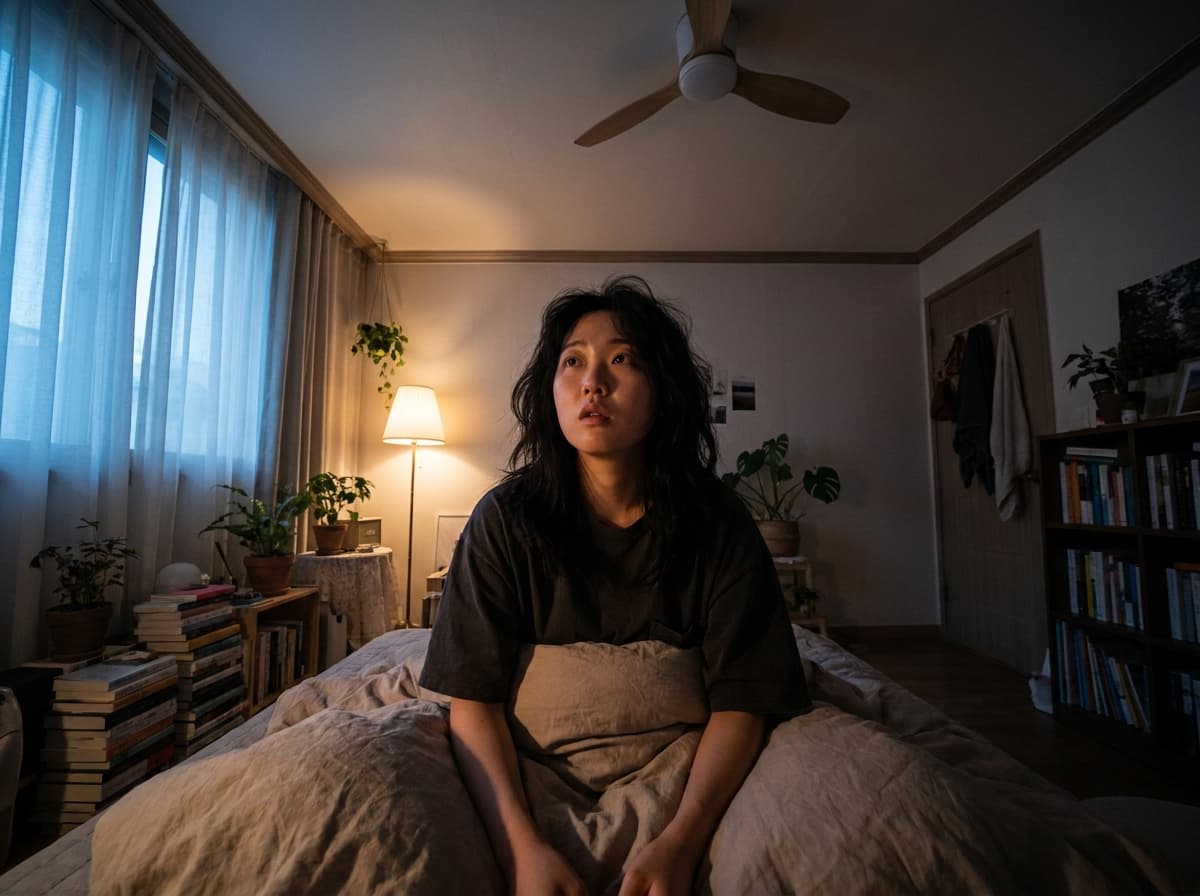
Even if you weren't looking at your smartphone until late at night, and even if your body is exhausted, why do you have to fight the battle of not being able to sleep every night? Even when you lie down and close your eyes, your mind is full of all sorts of thoughts, and tossing and turning until dawn is the most common pain experienced by insomnia patients. The painful experience of having to wake up forced because you couldn't sleep even though your eyes were tired the next morning ruins your day and is often accompanied by chronic fatigue and, in severe cases, depression.
💡 [Key Answer] The three most common causes of the "I'm tired but can't sleep" symptom: ① Autonomic imbalance / ② Brain overactivity / ③ Chronic stress Dalimchae Clinic creates an environment where the brain can rest comfortably by stabilizing the autonomic nervous system to help you regain deep sleep.
The reason why you can't sleep even if your eyes are tired, it's because of autonomic imbalance.
If you can't sleep despite your body being tired, you should first suspect an imbalance in the autonomic nervous system. The autonomic nervous system is an important nervous system that regulates all unconscious functions of our body, and it consists of the parasympathetic nervous system that is activated when falling asleep and the sympathetic nervous system that is activated when active. When the balance between these two nervous systems is broken, the sympathetic nervous system becomes excessively hyperactive even at night, just like during the day, so the brain cannot rest properly. This interferes with the secretion of melatonin, a sleep hormone, and stimulates the arousal center of the brainstem, making it difficult to fall asleep. Eventually, the phenomenon of being tired but not being able to sleep repeats. Dalimchae Clinic helps our body regain its natural sleep rhythm by correcting this autonomic imbalance. In particular, many people who visit Songdo Insomnia Clinic are suffering from this problem.
Insomnia, a problem that goes beyond simple sleep deprivation.
Insomnia goes beyond simply sleeping less and can significantly reduce the quality of life by causing physical functional disorders such as decreased concentration, headaches, and dizziness, as well as mental problems such as anxiety and depression. According to data from the Korea Institute of Oriental Medicine, the number of patients visiting hospitals for insomnia has exceeded 600,000 per year and is increasing every year. Lack of sleep has a negative effect on overall health, such as lowering immunity and increasing the risk of chronic diseases. Songdo Clinic does not simply suppress symptoms but finds and resolves the root cause of insomnia to help recover a healthy daily life.
Korean medicine treatment, pulls out the deep roots of insomnia.
Korean medicine treatment for insomnia focuses on restoring the balance of the autonomic nervous system, calming brain overactivity, and regaining harmony of body and mind. This goes beyond simply inducing sleep and is a process of developing the body's own ability to fall asleep comfortably.
In a multi-center clinical study conducted by the Korea Institute of Oriental Medicine (KIOM) and four domestic Korean medicine university affiliated hospitals in 2021, the scientific effectiveness of electroacupuncture for insomnia was identified. 150 patients who met the criteria for insomnia disorder in the 'Diagnostic and Statistical Manual of Mental Disorders, 5th Edition' and had experienced discomfort in daily life due to insomnia for more than 3 months participated in this study. As a result of the study, the ISI (Insomnia Severity Index) score of the electroacupuncture treatment group improved significantly from an average of 19.02 before treatment to 10.13 after the end of treatment, and in particular, the improvement effect continued to 8.60 and 8.02 at 4 weeks and 8 weeks after the end of treatment, respectively. It was also confirmed that anxiety and depression scales were improved. Researchers concluded that electroacupuncture is effective in alleviating insomnia severity and improving sleep quality, and the effect is continuous. These research results serve as an important basis for Dalimchae Clinic's active use of electroacupuncture therapy for the treatment of insomnia caused by autonomic imbalance.
In addition, a study on [Latest Clinical Trends of Evidence-Based Herbal Medicine] updated in March 2026 analyzed the latest clinical trends on the efficacy and safety of Cheonwangbosimdan, a traditional herbal medicine prescription, for insomnia. This study analyzed data from 1,256 insomnia patients who participated in a total of 14 studies, and in particular, as a result of a meta-analysis of 5 randomized controlled trials (RCTs), it was evaluated that Cheonwangbosimdan is beneficial in reducing sleep onset time. Cheonwangbosimdan consists of 15 types of herbal medicines such as Rehmannia glutinosa, Scrophularia buergeriana, and Ophiopogon japonicus to supplement the yin of the heart and kidneys and regulate overexcitation of the nervous system, and sedative ingredients such as Ziziphus jujuba and Thuja orientalis stabilize the central nervous system to help improve early sleep and excessive dreaming. Researchers concluded that Cheonwangbosimdan is not a simple sleeping pill but a prescription that corrects overexcitation of nerves and autonomic imbalance. As such, Dalimchae Clinic supports the stabilization of the autonomic nervous system and comfortable relaxation of the brain through customized herbal medicine prescriptions that consider the symptoms and constitution of each individual patient, helping to regain deep and comfortable sleep.
Principles of Autonomic Stabilization Treatment at Dalimchae Clinic
At Dalimchae Clinic, insomnia is diagnosed as a 'state where the brain cannot rest' due to an imbalance in the autonomic nervous system. When the balance of the autonomic nervous system is broken, the brain continues to operate and cannot rest even at night, like an overheated computer. In Korean medicine, this is also explained as an imbalance of 'Suseunghwagang (水升火降)'. It refers to a state where the heat rises to the head and the lower abdomen becomes cold, and the heat of the nervous system rises and the brain cannot be stabilized.
Dalimchae Clinic's autonomic stabilization treatment is based on the following core principles.
- Calming brain overheating and stabilizing nerves: Through acupuncture, moxibustion, and pharmacopuncture treatments that help relax the excessively hyperactive sympathetic nervous system and activate the parasympathetic nervous system, it calms brain overheating and stabilizes the nervous system. In particular, Songdo Autonomic Clinic selects acupoints suitable for each patient's constitution and symptoms to maximize the treatment effect.
- Customized herbal medicine prescription: Herbal medicine is prescribed to improve internal imbalance by considering the type of insomnia symptoms (insomnia, sleep maintenance disorder, early arousal, etc.) and accompanying symptoms (anxiety, depression, headache, indigestion, etc.). By using herbal medicines that protect and stabilize the brain and nervous system, such as Cheonwangbosimdan mentioned above, it facilitates the circulation of qi and blood in the body and creates an environment where the brain can rest comfortably.
- Lifestyle management and psychological stability support: We guide you on forming correct sleep habits and stress management methods to increase treatment effects and prevent recurrence. From the perspective of Korean medicine, which values the connection between body and mind, psychological stability is also seen as an essential element in restoring autonomic balance.
Do I have insomnia too? Self-checklist
If 3 or more of the following items apply, we recommend you suspect insomnia and consult with the medical staff at Dalimchae Clinic Songdo Branch.
- It takes more than 30 minutes to fall asleep.
- Waking up 2 or more times at night, or finding it difficult to fall asleep again once awake.
- Waking up 2 or more hours earlier than desired and not being able to fall asleep again.
- Total sleep time is less than 6 hours on 3 or more days a week.
- Even after sleeping, it doesn't feel like you slept and you don't feel refreshed.
- Worrying in advance about not being able to sleep at night and feeling anxious.
- Feeling severe fatigue, drowsiness, and decreased concentration during the day.
- Experiencing other physical symptoms together, such as headache, dizziness, and indigestion.
3 or more → Suspect insomnia due to autonomic imbalance → Review of Korean medicine combined treatment 5 or more → Immediate visit and professional diagnosis are recommended as it may worsen into chronic insomnia
FAQ: We answer your questions about insomnia.
Q. How long does insomnia treatment take? A. The treatment period for insomnia varies depending on the severity of symptoms, chronicity, presence of accompanying diseases, and lifestyle improvement efforts. Usually, acute insomnia of less than 3 months can be improved relatively quickly, but chronic insomnia that has lasted for more than 3 months requires steady treatment and management.
Q. Is it possible to treat insomnia without sleeping pills? A. Yes, it is fully possible. Dalimchae Clinic does not rely on drugs such as sleeping pills but focuses on regaining the balance of the autonomic nervous system and creating an environment where the brain can fall asleep comfortably on its own. Korean medicine treatments such as herbal medicine, acupuncture, and moxibustion help solve the root cause of insomnia without the burden of side effects.
Q. If I have insomnia, do other diseases occur? A. Insomnia can increase the risk of various physical and mental diseases such as depression, anxiety disorders, cardiovascular diseases, obesity, and diabetes, as well as chronic fatigue and decreased concentration and memory. Therefore, if you have insomnia symptoms, it is important to receive appropriate treatment early.
Q. What kind of tests do you use for diagnosis at Songdo Insomnia Clinic? A. At Dalimchae Clinic Songdo Branch, we accurately diagnose the patient's current health status and the cause of insomnia through precise pulse diagnosis, abdominal diagnosis, and heart rate variability (HRV) tests that objectively evaluate the state of autonomic balance. Based on this, we establish an optimal customized treatment plan for the individual.
The pain of being tired but not being able to sleep is not a problem that can be solved by enduring it. You no longer have to ignore the signals your body has been sending for a long time. If you approach it in the right direction, your body will react faster than you think. Bring the symptoms you are experiencing as they are. Dalimchae Clinic will find the cause together.
Where life blooms. Herbal medicine is Dalimchae Clinic. Check your symptoms first with Dalimchae Clinic website AI consultation!
This post is health information organized by the medical staff of Dalimchae based on questions frequently received in the consultation room. Medical Supervision | Oh Hyun-min, Korean medicine doctor at Dalimchae Clinic Songdo Branch (Insomnia Column) based on Brain/Autonomic nervous system treatment standards.