
Hello. This is Dalimchae Korean Medicine Clinic.
If You Feel Bloated Only After Lunch Could It Be Damjeok Disease
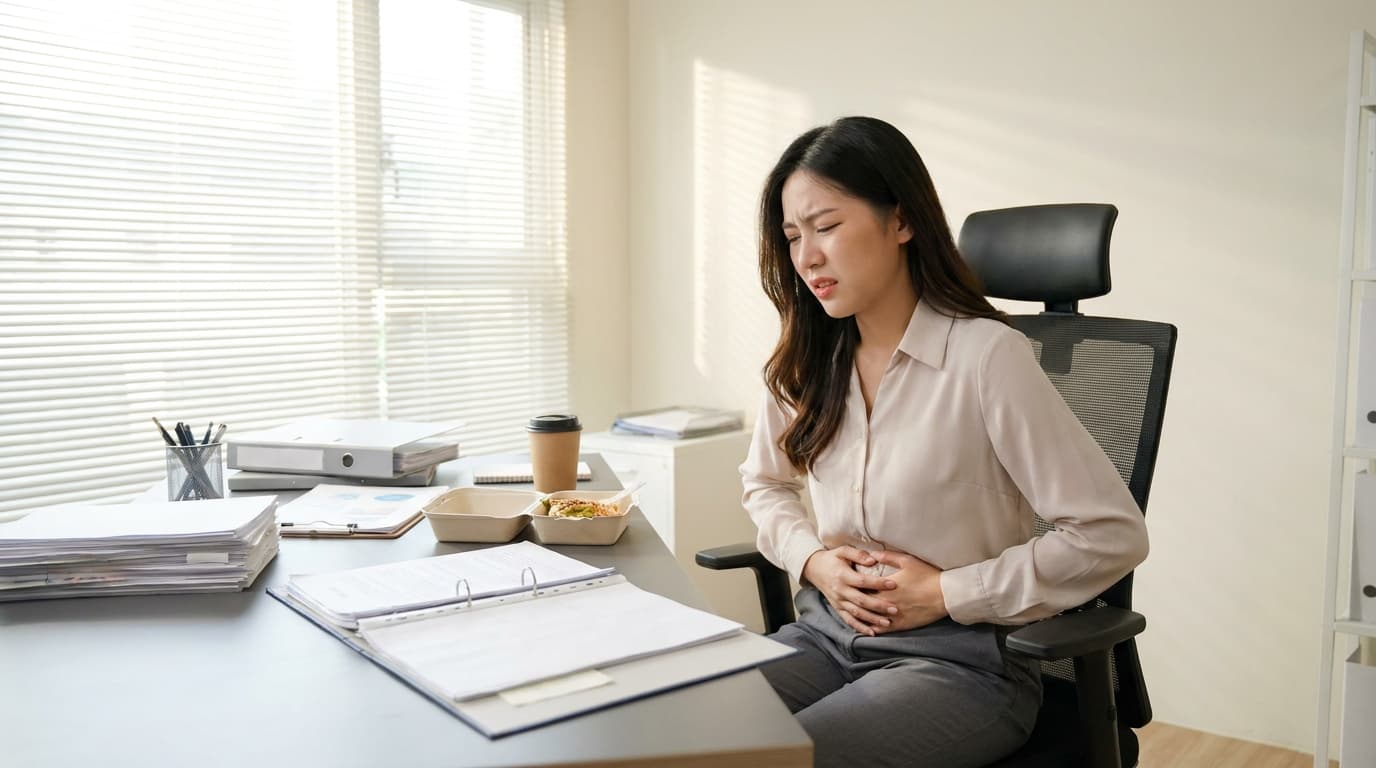
Have you ever found it difficult to concentrate at work because you felt bloated and uncomfortable only after having lunch at the office? The frustration and indigestion symptoms that visit after a meal are common things many people experience, but if such discomfort repeats daily, it might not be a simple indigestion. Especially in modern society where stress and irregular lifestyle habits are prevalent, red lights often turn on for stomach health. The continued bloating even when endoscopic examinations show no special abnormalities makes people worry whether it could be 'Damjeok disease'.
💡 [Key Answer] 3 most common causes of "feeling bloated only after lunch": ① Decreased gastrointestinal motility / ② Autonomic imbalance due to stress / ③ Waste product 'Damjeok' accumulated in the intestinal wall Dalimchae Clinic resolves the fundamental cause of indigestion through 'intestinal detoxification' treatment that detoxifies toxins in the intestinal wall and restores gastrointestinal function.
Why do I feel bloated only after lunch?
Feeling bloated particularly after lunch can be caused by a combination of various factors. The first thing to consider is eating habits. Hurried eating habits, overeating, and consuming certain foods can put a burden on the digestive organs. However, the problem is when symptoms do not improve even after improving these habits. At this time, you should suspect functional problems in the digestive organs themselves or deeper causes. In particular, a significant number of people suffering from chronic indigestion are diagnosed with 'functional dyspepsia', which occurs due to decreased gastrointestinal motility or visceral sensory hypersensitivity, and it is difficult to find special abnormalities in general examinations. This is closely related to the imbalance of the 'Gut-Brain Axis' where the brain and gut influence each other.
I thought it was simple indigestion, but what is 'Damjeok disease'?
'Damjeok disease' is a concept viewed in Korean medicine as an important cause of chronic digestive symptoms. It refers to a disease where waste products called 'Dam-eum (痰飮)' accumulate on the outer wall of the stomach, lowering gastrointestinal motility, hindering digestive enzyme secretion, and hardening stomach tissue. This is a problem of a different dimension from simple gastritis or reflux esophagitis, causing a phenomenon where food is not properly digested and stagnates as the stomach wall hardens. Due to this, various symptoms such as postprandial fullness, bloating, nausea, belching, and abdominal distension can appear, and in severe cases, systemic symptoms such as headaches, dizziness, and chronic fatigue can even accompany. In particular, it is easy for patients to feel frustrated because examinations in Western medicine often come out normal.
How does Korean medicine view 'Damjeok disease'?
In Korean medicine, when the 'unhwa (運化)' function of the stomach digesting and sending down food decreases, or when unphysiological waste products accumulate in the body due to excessive stress and fatigue, it is viewed as Dam-eum. When this Dam-eum hardens on the stomach wall and becomes 'Damjeok (痰積)', gastrointestinal movement slows down and digestive function drops. In addition, stress can cause 'Liver Qi depression (肝氣鬱結)', hindering the energy circulation of the digestive system and causing chest stuffiness or pain. In other words, Damjeok disease is understood to occur as a combination of systemic factors such as stress and autonomic imbalance, as well as problems in the stomach itself. Songdo indigestion clinic aims for customized treatment tailored to individual constitutions and symptoms by grasping these complex causes.
Can Damjeok disease be effectively treated with Korean medicine?
Yes, Korean medicine treatment can expect meaningful effects on chronic indigestion, especially symptoms caused by Damjeok disease. Various research results on the improvement of decreased gastrointestinal motility and digestive discomfort support this.
In a systematic literature review and meta-analysis study on functional dyspepsia published in the journal 'Phytotherapy Research' in 2021, the effects of Korean medicine treatment including herbal medicine were analyzed targeting a total of 49 randomized controlled clinical trials and 6,987 patients. As a result of the study, herbal medicine treatment showed a significantly higher effect on improving functional dyspepsia symptoms compared to placebo (fake drug) (SMD = -0.58, p < 0.00001), and patients' quality of life was also significantly improved (SMD = -0.64, p < 0.00001). The researchers concluded that herbal medicine treatment is effective and safe for treating functional dyspepsia, and can have an efficacy level similar to existing Western medicine treatments.
In addition, in a clinical study conducted by Professor Park Jae-woo and Ko Seok-jae's research team at the Digestive and Biliary Clinic of Kyung Hee University Hospital, published in the 'Journal of Alternative and Complementary Medicine' in 2016, 8 sessions of personalized acupuncture clinical research were conducted for 4 weeks on 76 patients with functional dyspepsia. As a result, the treatment group that received acupuncture showed about 60% improvement in indigestion symptoms compared to the control group that did not receive treatment, and significant improvements were confirmed especially in symptoms such as abdominal discomfort, heartburn, and postprandial fullness. These treatment effects showed aspects of persisting even after 4 weeks had passed.
These research data suggest that Korean medicine treatment can be an effective treatment method for alleviating functional dyspepsia and Damjeok disease symptoms and raising patients' quality of life. Dalimchae Clinic helps fundamental recovery of the digestive system by complexly applying pharmacopuncture, herbal medicine, and acupuncture treatment tailored to individual symptoms and constitutions based on these scientific grounds.
What is the principle of Dalimchae Clinic's 'Intestinal Detoxification' treatment?
At Dalimchae Clinic, the core causes of chronic indigestion where you feel bloated only after lunch, especially Damjeok disease, are viewed as 'intestinal toxins' and 'gastrointestinal function decline'. Our body's gut goes beyond being an organ that simply digests food, being like the 'second brain' that exerts a profound influence on immunity and nervous system functions. When waste products and toxins accumulate in the intestinal wall, gut health collapses, which can induce inflammatory responses and spread throughout the body via the blood.
Dalimchae Clinic's 'intestinal detoxification' treatment focuses on breaking the chain of this vicious cycle. First, we prescribe herbal medicine that removes Damjeok (waste products) accumulated on the outer wall of the stomach and restores weakened stomach mucous membranes. This herbal medicine promotes the peristaltic movement of the stomach and activates digestive enzyme secretion to help food descend smoothly without stagnating in the stomach. In addition, it improves intestinal wall permeability, suppresses harmful bacteria, and proliferates beneficial bacteria to make the gut microbial environment healthy.
Along with this, acupuncture and pharmacopuncture treatments are combined to stimulate acupuncture points that control gastrointestinal function, relieve inflammation, and improve qi and blood circulation. In particular, it restores the balance of the autonomic nervous system tense due to stress, creating an environment where the brain and gut can communicate healthily. Through this, we help escape from chronic bloating by restoring the body's original function of digesting and detoxifying itself, rather than simply alleviating symptoms.
How is Songdo indigestion treated at Dalimchae Clinic?
Songdo Dalimchae Clinic provides systematic oriental medicine combination treatment for patients suffering from chronic indigestion and Damjeok disease. It starts with precise diagnosis to closely grasp each individual's stomach state, constitution, lifestyle habits, and stress level. Through pulse wave tests and autonomic tests, we check the overall balance state of the body and establish the most suitable treatment plan for the individual based on it.
Treatment proceeds along three main axes. First, we prescribe customized herbal medicine that removes the waste product 'Damjeok' accumulated on the outer wall of the stomach and strengthens gastrointestinal function. Second, we perform acupuncture and pharmacopuncture treatment that promotes gastrointestinal motility, relieves inflammation, and aids qi and blood circulation. Third, we guide lifestyle coaching and mind stabilization therapy that resolve autonomic imbalance caused by stress and tension and smooth communication between the brain and gut. At Songdo Korean Medicine Clinic, through this integrated approach, we do not simply suppress symptoms, but create a healthy body that finds the root of symptoms, solves them, and prevents recurrence.
Feeling bloated only after lunch! Self-check list
If 3 or more of the following items apply, you should suspect functional dyspepsia or Damjeok disease and consider precise diagnosis and oriental medicine combination treatment at Dalimchae Clinic Songdo Branch.
- Stomach is frequently bloated and stuffy after meals.
- Even eating a little makes me feel full quickly, making it hard to finish food.
- The solar plexus area is always stuffy or occasionally has a burning pain.
- When digestion is poor, my head feels heavy and I feel dizziness.
- Uncomfortable due to frequent belching, flatulence, and abdominal distension.
- When my stomach feels bad, diarrhea and constipation alternate.
- Indigestion symptoms become more severe when stressed.
- Endoscopic examinations say there are no special abnormalities.
When 3 or more apply: Suspect functional dyspepsia → Review oriental medicine treatment through Dalimchae Clinic consultation When 5 or more apply: High possibility of chronic Damjeok disease → Recommend immediate visit and precise diagnosis
Q. How long should Damjeok disease be treated? A. The treatment period for Damjeok disease varies depending on the severity, chronicity, and constitution of the patient's symptoms. Generally, through steady herbal medicine intake and acupuncture treatment, a treatment period of about 3 to 6 months is expected, and management for recurrence prevention is important even after symptom improvement.
Q. Can Damjeok disease also be managed after oriental medicine treatment? A. Oriental medicine treatment focuses on solving the root cause of Damjeok disease and normalizing gastrointestinal function. Through steady treatment and lifestyle habit improvement, we help symptoms disappear and maintain a healthy stomach state.
Q. Can bloating symptoms heal naturally? A. Simple indigestion can improve with temporary rest or dietary adjustment, but chronic bloating or Damjeok disease is difficult to improve naturally. Rather, leaving it unattended can worsen symptoms and cause other diseases, so active treatment is necessary.
Q. I have both indigestion and reflux esophagitis, can they be treated together? A. Yes, indigestion and reflux esophagitis are closely related to problems with gastrointestinal function and often appear together. Dalimchae Clinic's intestinal detoxification treatment improves overall gastrointestinal function, so it can effectively treat both symptoms simultaneously.
Symptoms of feeling bloated and uncomfortable only after lunch are not problems solved by enduring. You no longer have to ignore the signals your body has sent for a long time. If you approach in the right direction, the body responds faster than you think. Bring the symptoms you are currently experiencing just as they are. At Dalimchae Clinic, we will find the cause together.
Where life blooms. For herbal medicine, it's Dalimchae Korean Medicine Clinic. Check symptoms similar to mine through AI consultation on the Dalimchae Clinic website first!
This article is health information organized together by Dalimchae medical staff based on questions frequently received in the treatment room. Medical Supervision | Intestinal & Digestive Treatment Standards Dalimchae Clinic Incheon Branch Korean Medicine Doctor Oh Hyun-min (Indigestion Column)