
Hello. This is Dalimchae Korean Medicine Clinic.
I Want to Stop Taking Hives Medication, Is There No Fundamental Solution Other Than Antihistamines?
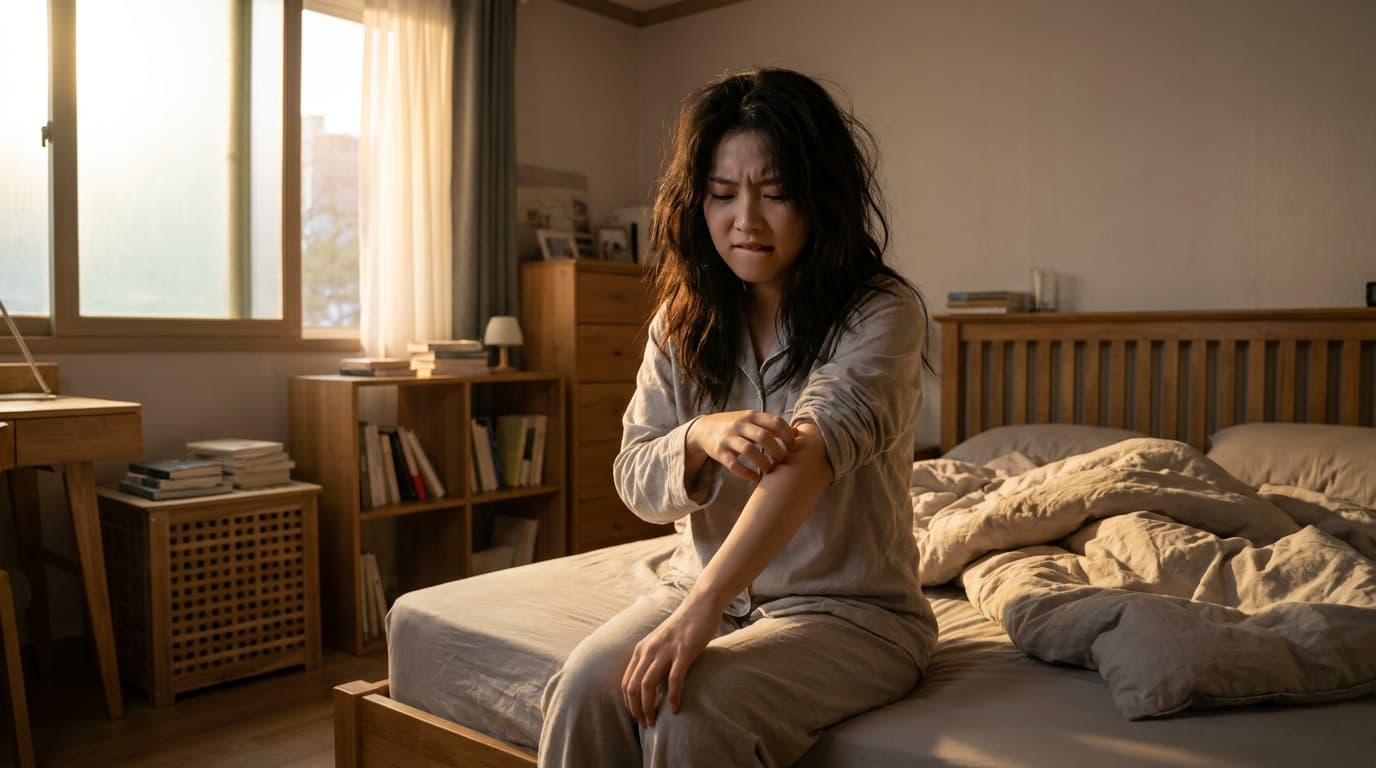
Suddenly, wheals swelling red on the skin and unbearable itching appear. At first, many thought it was a passing symptom, but due to hives that do not disappear for months, daily life becomes difficult. Exhausted from taking antihistamines every day, people fall into concerns such as "Is it okay to keep taking this medicine?" and "When can I escape from hives?" Due to symptoms appearing on the skin, interpersonal relationships also shrink, and it is difficult to get a good night's sleep because of scratching all night.
Skin disease is often not just a problem of the skin surface, but a signal announcing an imbalance inside our body. In particular, chronic hives are deeply related to the disturbance of the immune system, and gut health plays a core role here.
💡 [Key Answer] Top 3 most common causes when you want to stop taking hives medication: ① Gut microbiome imbalance causing immune disturbance ② Chronic stress and autonomic nervous system instability ③ Immune system hypersensitivity and accumulation of inflammation-inducing substances Dalimchae Korean Medicine Clinic resolves the root cause of hives and restores body immune balance through gut detoxification treatment approach.
Is it okay to keep taking antihistamines?
Antihistamines are the most common treatment sought by many suffering from chronic hives. While this medicine is effective in temporarily relieving itching and wheals, it suppresses symptoms, so stopping the medication often leads to recurrence. In particular, 40-55% of chronic hives patients do not respond to standard doses of antihistamines, leading them to increase dosages or consider other drugs (such as steroids or immunosuppressants). However, these drugs raise concerns about side effects with long-term use, prompting many to seek alternative treatments.
Hives are not merely a problem of histamine excess, but can be a warning signal sent by our body's immune system. Rather than suppressing symptoms visible on the outside skin, it is important to find the root cause of why the immune system reacts hypersensitively and what disrupted the body's balance, and solve it.
What is the relationship between "Gut Health" and "Hives"?
Recent studies are paying close attention to the close connection between gut health and the occurrence of hives. About 70% of our body's immune cells are distributed in the gut, and the gut microbial ecosystem has a profound impact on the systemic immune system. When the gut microbial balance is broken, the barrier defense function weakens, allowing harmful substances (toxins, microbial metabolites, etc.) to easily enter the blood. This is also called 'Leaky Gut Syndrome'.
Toxins introduced this way induce systemic inflammatory responses and stimulate immune cells to promote histamine secretion, contributing to the occurrence of hives. In particular, chronic hives patients tend to show significantly lower gut microbial diversity compared to healthy individuals, a decrease in short-chain fatty acid (SCFA) producing bacteria important for inflammation suppression, and an increase in harmful bacteria such as Proteobacteria. This is strong evidence that gut imbalance plays an important role in the pathophysiology of hives.
Korean Medicine Treatment for Hives and Evidence from Research
Korean medicine treatment for hives focuses on correcting internal imbalance to normalize the immune system and regulate inflammatory responses. Indeed, many clinical studies support the effectiveness of Korean medicine treatment.
A 2018 study evaluated the effectiveness of herbal medicine treatment in 78 chronic hives patients. Conducted as a randomized double-blind placebo-controlled trial, the herbal medicine group showed a weekly urticaria activity score (UAS7) of 9.9 ± 9.2 at day 56, which was statistically significantly lower than the control group's 15.6 ± 10.8 (p = 0.038). In addition, a gradual decrease in symptom severity was clearly observed in the herbal medicine group (p < 0.001), confirming that safe Korean medicine can be safely applied as an adjuvant therapy. The researchers concluded that herbal medicine treatment for chronic hives can be valid and effective as an adjuvant therapy to standard treatment.
Another study analyzing urticaria activity scores before and after herbal medicine treatment in 34 chronic hives patients showed a significant decrease from a pre-treatment average of 15.38 ± 3.75 to 8.82 ± 5.21 post-treatment (p=0.000). This shows that hives symptoms can be effectively improved even with relatively short-term treatment.
Based on these data, Dalimchae Korean Medicine Clinic Incheon Branch focuses on gut microbiome imbalance and immune system disturbance, which are the root causes of hives, and provides treatments to increase body detoxification capacity and reduce inflammation.
Principles of "Gut Detoxification" Treatment at Dalimchae Korean Medicine Clinic
Dalimchae Korean Medicine Clinic treats the root of chronic hives through gut detoxification. This goes beyond merely suppressing symptoms appearing on the skin, cutting off the vicious cycle where toxins accumulated in the gut barrier travel through the blood to create systemic inflammation.
An unhealthy gut becomes a favorable environment for harmful bacteria to proliferate, and the toxins produced by these harmful bacteria damage the gut barrier and contaminate the blood, causing chronic inflammation. This inflammation manifests on the skin and causes various skin diseases such as hives, atopy, and eczema.
Gut detoxification treatment at Dalimchae Korean Medicine Clinic proceeds through the following steps:
- Toxin Elimination and Gut Environment Improvement: Prescribes custom herbal medicine tailored to individual constitution and symptoms to suppress harmful gut bacteria and alleviate inflammation. It focuses on discharging wastes and toxins accumulated in the gut and helping gut mucosa recovery.
- Beneficial Bacteria Proliferation and Gut Barrier Strengthening: To foster a healthy gut microbial ecosystem, it helps proliferate beneficial bacteria and strengthens damaged gut barrier function to block external toxin influx. Strengthening the gut barrier reduces immune system hypersensitivity and prevents hives recurrence.
- Restoration of Immune Balance: Recovers systemic immune system balance through gut health recovery. When immunity stabilizes, the skin recovers by itself and excessive reactions to external stimuli decrease, naturally improving hives symptoms.
This gut detoxification treatment helps not only alleviate hives symptoms but also improve overall digestive health and enhance immunity. Many people visiting Incheon Hives Korean Medicine Clinic regain a healthy life free from chronic skin concerns through gut detoxification treatment.
Could I Also Have "Gut Toxin Type" Hives? Checklist
If 3 or more of the following apply to you, you may have chronic hives caused by gut toxins:
- Usually digestion is poor and bloating is frequent.
- Irritable bowel syndrome symptoms such as irregular constipation or diarrhea occur.
- Fatigue is easily felt and the body feels heavy.
- Stress makes hives or digestive symptoms worse.
- Eating spicy, salty, or greasy food worsens hives.
- Antihistamines do not easily calm hives or they recur frequently.
- Not only skin but other allergy symptoms such as stomatitis or rhinitis occur.
- Skin is dry and keratosis frequently occurs.
If 3 or more apply: Suspected gut toxin-type hives → Consideration of Dalimchae Korean Medicine Clinic's gut detoxification treatment is recommended. If 5 or more apply: Immediate visit and precise diagnosis are recommended to start active treatment.
FAQ – Questions About Hives
Q. How long can hives last? A. Hives disappearing within 6 weeks are classified as acute hives, and those lasting or recurring for 6 weeks or more are diagnosed as chronic hives. Chronic hives can last from a few months to several years, significantly reducing the patient's quality of life.
Q. Are there other methods besides antihistamines for chronic hives? A. Yes, for chronic hives that cannot be resolved with antihistamines alone, Korean medicine treatment restoring immune system and gut health balance can be an effective alternative. Herbal medicine and acupuncture treatments aim to approach the root problem of the body and prevent hives recurrence.
Q. Can hives heal naturally? A. Acute hives can naturally improve with avoidance of causative substances or mild drug treatment. However, for chronic hives of unknown cause, natural healing without active treatment is difficult to expect, and symptoms can worsen or prolong.
Q. I have indigestion along with hives, can they be treated together? A. Yes, hives and indigestion often appear together, suggesting that gut health problems are the main cause of hives. Dalimchae Korean Medicine Clinic Incheon Branch simultaneously promotes hives symptom relief and digestive function improvement through gut detoxification treatment, helping overall health recovery.
Hives are not a problem solved by endurance. You no longer have to ignore the body's signals sent for a long time. Approaching in the right direction makes the body react faster than expected. Bring your current symptoms as they are. Dalimchae Korean Medicine Clinic will find the cause together.
Where life blooms. Herbal medicine is Dalimchae Korean Medicine Clinic. Check your symptoms through AI consultation on the Dalimchae website first!
This article is health information organized together by Dalimchae medical staff based on questions frequently received in the treatment room. Medical Supervision | Skin Disease Treatment Standards Dalimchae Korean Medicine Clinic Incheon Branch Korean Medicine Doctor Yang Yu-chan (Allergic Skin Disease Column)