
Hello. This is Dalimchae Korean Medicine Clinic.
I stopped menstruating after dieting, it's a red light from your body
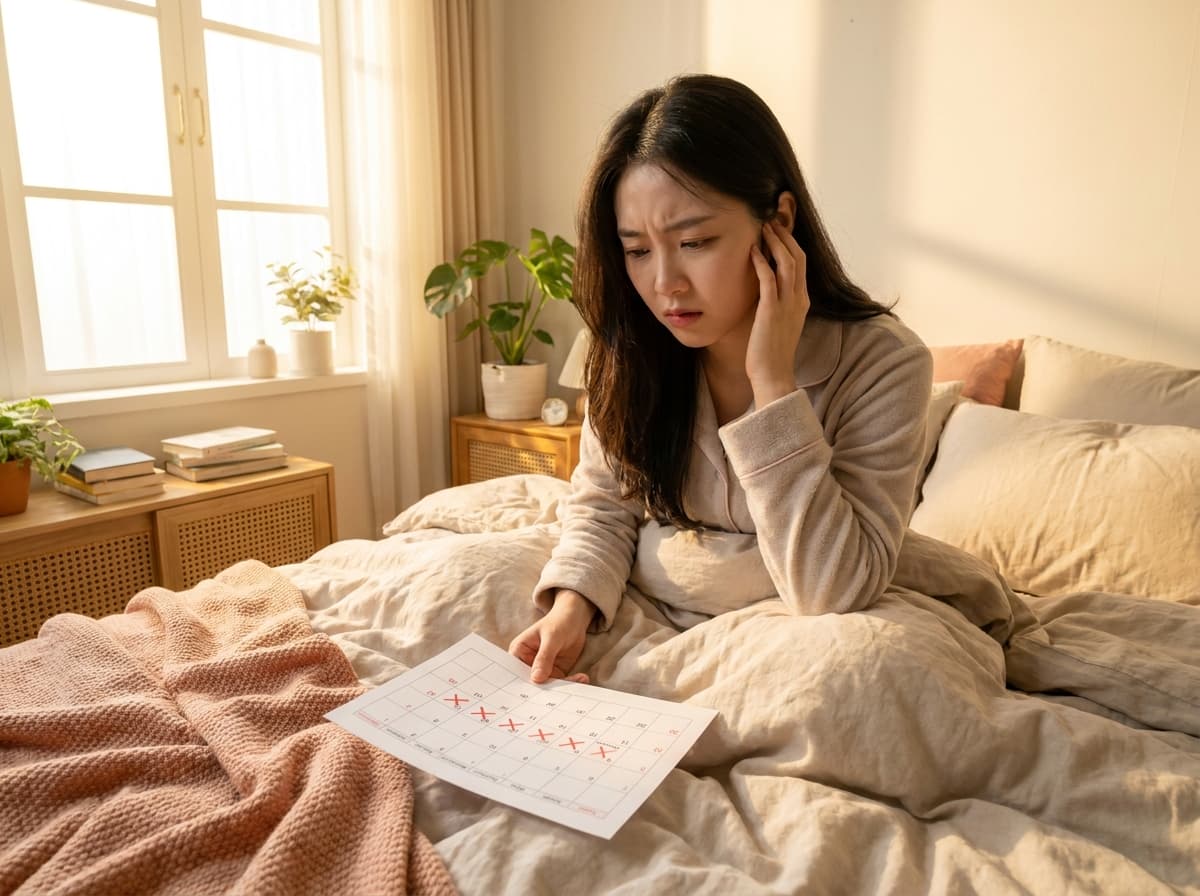
"I stopped menstruating after dieting." The anxiety and worry contained in this single sentence can only be fully understood by women who have experienced it firsthand. You might be flustered and upset, feeling like the diet you started for beauty has instead broken your body's important balance. Sudden weight loss or excessive dietary changes can affect our body in unexpected ways, causing the menstrual cycle—an important indicator of health—to stop. Especially among young women, diet-induced irregular periods or amenorrhea is a significant issue that can negatively affect long-term female health beyond mere inconvenience.
💡 Key Answer The 3 most common causes of stopping menstruation after dieting: ① Hypothalamic Amenorrhea: Decreased function of the brain's hypothalamus / ② Rapid Body Fat Loss: Disruption of hormone production / ③ Nutritional Imbalance and Stress: Depletion of overall body energy. Dalimchae Korean Medicine Clinic Incheon Branch restores the broken balance of the body and recovers ovarian function through constitutional improvement.
Why does menstruation stop after dieting?
A healthy menstrual cycle is an important signal that our body is maintaining a stable state. If this menstrual cycle stops due to a sudden diet, it should be taken as a powerful warning sign that the internal balance of the body is broken. In particular, rapid weight loss and extreme dietary restrictions can directly affect the function of the brain's hypothalamus, leading to hypothalamic amenorrhea. The hypothalamus secretes Gonadotropin-Releasing Hormone (GnRH), a key hormone that regulates the menstrual cycle. Stress or lack of energy caused by dieting suppresses this GnRH secretion, thereby lowering the ovary's ovulation function.
How does body fat loss affect menstruation?
While many people think of body fat reduction as a goal of dieting, a certain level of body fat is essential for female hormone production. Estrogen is produced not only in the ovaries but also in adipose tissue, and a body fat percentage that is too low can drop estrogen levels and interfere with follicle growth and ovulation processes. In particular, when body fat is excessively reduced due to extreme dieting, the body determines that there is insufficient energy to maintain reproductive function and activates a defense mechanism to temporarily stop menstruation. This is an instinctive reaction of our body to preserve reproductive capacity and can be seen as an effort to maintain minimum physical conditions for healthy pregnancy and childbirth.
Is hormone imbalance simply a matter of starving?
Diet-induced amenorrhea is often caused by a combination of factors rather than just starving. Irregular eating habits, nutrient deficiencies, and psychological stress experienced during the dieting process all adversely affect hormonal balance. When the body is in a state of chronic stress, secretion of the stress hormone cortisol increases, which can further aggravate menstrual irregularity by breaking the balance with reproductive hormones. Furthermore, a lack of certain nutrients can interfere with the female hormone synthesis process or lower the activity of enzymes required for hormone metabolism, affecting the menstrual cycle. At the Incheon branch, we focus on restoring fundamental physical balance for those complaining of amenorrhea due to dieting, rather than just the result of weight loss.
A 2014 study by Kwon Su-gyeong and colleagues published in the Clinical and Experimental Reproductive Medicine journal analyzed the causes of amenorrhea in Korean women and found that among 1,080 patients with secondary amenorrhea out of a total of 1,212 amenorrhea patients, 8.3% (90 people) had "nutrition-related hypothalamic hypogonadotropic amenorrhea." This suggests that changes in nutritional status, such as dieting, are an important cause of menstrual cessation in Korean women.
In addition, a case report by Oh Young-jun and colleagues published in the Medicine (Baltimore) journal in 2019 presented a case of a 39-year-old woman who suffered from amenorrhea and abdominal obesity after stopping oral contraceptives and recovered menstrual function through Korean medicine treatment. This patient received wild ginseng complex pharmacopuncture and moxibustion treatment 5 times over 1 month, and was prescribed herbal medicine (Geoseuphwan) to control overeating as an auxiliary measure. Menstruation restarted after 3 treatments, and body weight and body composition also improved after 5 treatments. The researchers concluded that these results show that pharmacopuncture and moxibustion can be effective in treating amenorrhea by regulating Qi and blood functions and promoting health. These research results show that diet-induced amenorrhea is not just a weight problem but stems from an imbalance in overall physical function, and a Korean medicine approach can be an effective solution. Based on these data, Dalimchae Korean Medicine Clinic Incheon Branch helps you regain a healthy menstrual cycle on your own by improving the disturbed constitution, beyond just inducing menstruation.
What is Dalimchae Clinic Incheon Branch's treatment for diet-induced amenorrhea?
When treating diet-induced amenorrhea at Dalimchae Clinic Incheon Branch, we focus on 'constitutional improvement' to create a body that doesn't just turn off symptoms but doesn't turn off health again. Our body's endocrine system is intricately connected, so if one part collapses, the balance of the whole is shaken. We correct the hormonal imbalance and autonomic nervous system confusion caused by dieting to create an environment where the body can restore its healthy menstrual cycle on its own. Many people who visit Incheon amenorrhea clinics experience improvement in overall condition and uterine health, beyond just starting menstruation again.
We diagnose each individual's constitution, current body condition, and dieting process and patterns in detail to prescribe customized herbal medicine and help strengthen ovarian function and regain hormonal balance through Korean medicine complex treatments such as acupuncture, moxibustion, and pharmacopuncture. Especially when worried about infertility or uterine health issues, this constitutional improvement treatment is a great help for fundamental health recovery. Dalimchae Clinic Incheon Branch deeply understands the signals your body sends and does its best to help you regain healthy beauty.
Diet-induced Amenorrhea Self-Checklist
Check how many of the following items apply to you.
- Attempted rapid weight loss within the last 3 months.
- Extremely restricting daily calorie intake.
- Consuming almost no specific nutrients such as carbohydrates or fats.
- Exercise volume has suddenly increased or doing high-intensity exercise every day.
- Have become more sensitive and irritable than usual and have difficulty falling asleep.
- Losing more hair than usual and skin has become dry.
- Menstrual cycle was relatively regular after menarche but stopped or became irregular after dieting.
Judgment Criteria:
- 3 or more items: Diet-induced amenorrhea suspected. Consider Korean medicine complex treatment to restore body balance.
- 5 or more items: Immediate professional consultation and visit recommended. Active intervention for a healthy menstrual cycle is necessary.
FAQ
Q. When will menstruation return after dieting? A. There are large individual differences, but it often restarts within 3-6 months after returning to a healthy diet and lifestyle. However, if the period of amenorrhea lengthens, natural recovery may be difficult, so it is recommended to seek professional help.
Q. Must I regain weight for menstruation to return? A. You don't necessarily have to regain weight. What's important is to restore an appropriate body fat percentage, improve nutritional imbalance, and manage stress to regain the body's hormonal balance. Appropriate weight recovery may be accompanied if necessary.
Q. What problems occur if diet-induced amenorrhea is left untreated? A. Leaving amenorrhea untreated can seriously affect long-term female health, such as decreased ovarian function, increased risk of osteoporosis, and increased possibility of infertility. It is important to treat early without ignoring the body's signals.
Q. Can I receive treatment for diet-induced amenorrhea at Dalimchae Clinic Incheon Branch? A. Yes, Dalimchae Clinic Incheon Branch provides customized treatment for women suffering from amenorrhea and irregular periods due to dieting. We help regain a healthy menstrual cycle by restoring the fundamental balance of the body through individual constitutional diagnosis.
Diet-induced amenorrhea is not a problem that will be solved by enduring it. You no longer have to ignore the signals your body has been sending for a long time. If you approach it in the right direction, your body reacts faster than you think. Bring your symptoms just as they are. We will find the cause together at Dalimchae Clinic Incheon Branch.
A place where life blooms. Herbal medicine is, after all, Dalimchae Korean Medicine Clinic. Symptoms similar to mine? Check first with the AI consultation on the Dalimchae Clinic website!
This health information was compiled by the Dalimchae medical staff based on questions frequently received in the consultation room. Medical Supervision | Min Jihong, Korean Medicine Doctor at Dalimchae Clinic Incheon Branch (Female/Pregnancy Care Standard)
#DietAmenorrhea #Amenorrhea #ConstitutionalImprovement #IncheonClinic #IrregularPeriods #FemaleHealth #KoreanMedicineTreatment #InfertilityPreparation