
Hello. This is Dalimchae Korean Medicine Clinic.
I have no appetite, could it be an emergency signal from the body?
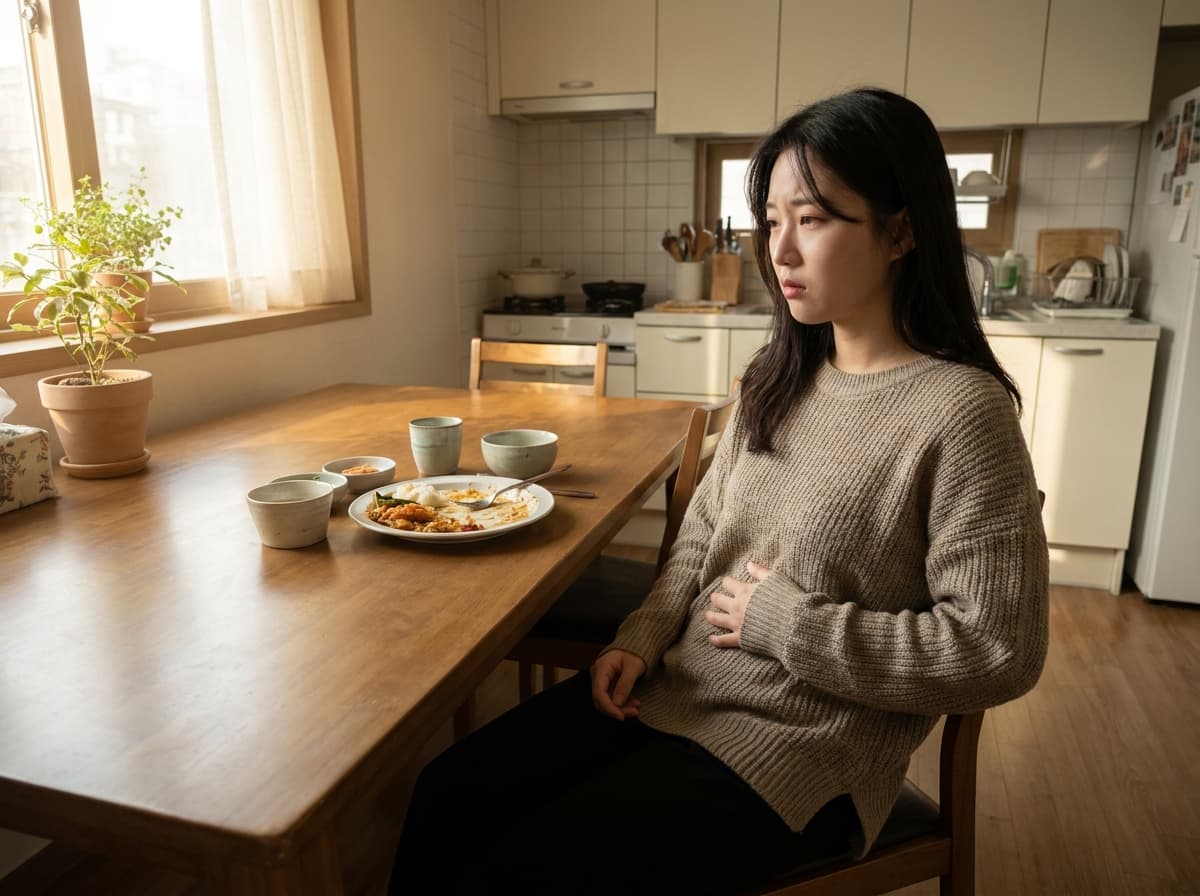
Suddenly, the dinner table becomes a chore, and even your favorite foods don't catch your eye. You might brush it off as a temporary loss of appetite, but if this "I have no appetite" symptom lasts for weeks or months, it might not be a simple issue. You may have felt frustrated that digestive medicine only works temporarily or that medical tests show no specific abnormalities. Anorexia is an important signal that lowers the vitality of life and adversely affects overall health. This is because if the body does not get enough energy through food, it becomes increasingly tired.
💡 Key Answer The 3 most common causes of [I have no appetite]: ① Functional Dyspepsia: Chronic digestive discomfort due to decreased gastric motility or hypersensitivity to gastric expansion. ② Damjeok Disease: "Dam toxins," or waste accumulated on the outer wall of the stomach, lower gastrointestinal function and induce anorexia. ③ Gut-Brain Axis Imbalance: Communication problems between the gut and brain lead to abnormal appetite-regulating hormones and psychological factors. Dalimchae Clinic removes toxins from the outer wall of the stomach through Gut Detox and restores the balance of the gut-brain axis to recover appetite.
Is it just stress that I have no appetite at all?
Many people consider anorexia as something minor, saying, "It's because I've been under a lot of stress lately." While stress can certainly affect appetite, it's not everything. Chronic stress can worsen gastrointestinal symptoms and, furthermore, cause an imbalance in the Gut-Brain Axis, disturbing the appetite regulation system itself. The gut is so closely connected to the brain that it's called the "second brain," and about 90% of the happy hormone serotonin is produced in the gut. If gut health deteriorates, it causes an imbalance in gut microbiota, which adversely affects the production of neurotransmitters and can lead to systemic symptoms such as depression and lethargy, as well as anorexia.
Many people visit hospitals for anorexia but receive a diagnosis of "functional dyspepsia" along with an explanation that there are no specific organic abnormalities. However, if the discomfort persists despite no abnormalities in tests, you can suspect "Damjeok disease." Damjeok disease is a condition where undigested food waste accumulates on the outer wall of the stomach due to irregular eating habits, overeating, stress, etc., forming "Dam toxins," which cause the stomach to harden. When the outer wall of the stomach hardens, problems occur in the process of food being digested and in gastric peristalsis, leading to a loss of appetite and symptoms such as early satiety, bloating, nausea, and vomiting. These Dam toxins do not stay only in the stomach but can spread throughout the body via blood or lymph, causing various systemic symptoms such as headaches, dizziness, and chronic fatigue.
In September 2025, a study published in the SCI(E)-level international academic journal "Healthcare" by the research team of Director Seo-hyung Choi of Widam Korean Medicine Hospital is an important achievement that scientifically systematized the Korean traditional medicine concept of "Damjeok Syndrome" and received recognition from the international academic community for the first time. This study provided a basis for explaining the pathophysiology of patients with intractable dyspepsia that is not diagnosed by endoscopy through Korean medicine and scientifically verified the abdominal hardness diagnosis method, a core diagnostic element of Damjeok syndrome, based on more than 430,000 clinical experiences. In particular, by identifying increased serotonin metabolites and decreased parasympathetic nerve activity through patient blood indicators and autonomic nervous system analysis, it was revealed that Damjeok syndrome is closely related to gut-brain axis abnormalities. As such, Damjeok disease is not just a gastric problem but a disease deeply related to overall health, and those looking for a Songdo anorexia clinic should consider treatment from the perspective of Damjeok disease.
How does Korean medicine treat anorexia to regain appetite?
In Korean medicine, anorexia is diagnosed as "decreased spleen and stomach (脾胃) function" or "phlegm (痰飮) stagnation," and personalized treatment is carried out by identifying the cause. Rather than simply suppressing symptoms, we focus on recovering the gastrointestinal function itself and restoring the body's balance.
In a study by Makoto Arai's research team published in the Japanese "Journal of Gastroenterology" in 2009, 21 healthy adults were administered Yukgunja-tang (Rikkunshito) for 2 and 6 weeks at 7.5g/day, and it was confirmed that plasma acyl-ghrelin concentrations significantly increased compared to week 0 (p<0.01). Ghrelin is a gastrointestinal hormone that regulates appetite, and this study scientifically clarified the mechanism by which Yukgunja-tang is effective in improving anorexia. As such, herbal medicine plays a role in reinforcing gastric function and promoting appetite and is frequently used for patients with functional dyspepsia.
Additionally, studies published in the Journal of Korean Internal Medicine since 2003 have shown that applying Korean medicine treatment to patients who visited for functional dyspepsia resulted in about an 85% improvement in individual symptoms such as nausea, vomiting, early satiety, abdominal bloating, abdominal pain, anorexia, and heartburn. In particular, the group that took Banhasasim-tang showed significant improvement in early satiety levels and confirmed the effect of reducing abnormal gastric rhythm (gastric tachycardia) in electrogastrography. This shows that Korean medicine treatment has a positive effect on improving gastric motility disorders.
What is Dalimchae Clinic's Gut Detox treatment that regains appetite?
At Dalimchae Clinic Songdo Branch, we do not view anorexia symptoms such as "I have no appetite" as simple condition fluctuations. We believe the root cause of symptoms lies in the "Dam toxins" accumulated on the outer wall of the stomach and the broken balance of the "Gut-Brain Axis." To solve this, we apply the Gut Detox treatment principle.
Gut detox starts from the perspective that toxins accumulated on the intestinal wall create systemic inflammation through the blood, which affects brain function and the autonomic nervous system, leading to decreased appetite. Our body's digestive organs go beyond simply breaking down food; they are at the core of the immune system and act as a factory for neurotransmitters. However, if toxins accumulate on the intestinal wall due to poor eating habits and stress, these toxins worsen the intestinal environment and damage the intestinal wall, making toxins leak into the blood like a leaking basket.
Dalimchae Clinic's Gut Detox treatment removes these Dam toxins and recovers the damaged intestinal wall, helping the gut perform its proper function. By utilizing specially fermented herbal medicines, we melt and discharge Dam toxins from the outer wall of the stomach and activate digestive movement by loosening the stiffness of the gastric muscles. In addition, through personalized prescriptions according to the patient's constitution and the type of Damjeok (deficient-cold type, excess-heat type, yin-deficiency type, etc.), we regulate the heat balance in the gut and improve not only the stomach but also overall health by removing toxins spread throughout the body.
This Gut Detox treatment goes beyond simply making you have an appetite; it aims to improve various systemic symptoms accompanied by anorexia, such as lethargy, depression, and chronic fatigue, by smoothing communication in the Gut-Brain Axis. This is consistent with the perspective of Korean medicine, which views the relationship between the stomach and the heart as a "mother-child relationship." Just as gastric function is weak when the heart is weak, you can experience overall vitality being restored when gut health is recovered. At the Songdo Korean Medicine Clinic, we sincerely empathize with the patients' pain and strive to solve it from the roots.
"I have no appetite" Self-Checklist
If 3 or more of the following apply, you can suspect decreased gastrointestinal function and Damjeok disease. Check for the root causes through the complex Korean medicine treatment at Dalimchae Clinic Songdo Branch.
- I have no appetite at all even when it's mealtime.
- Even after eating just a little, I feel full and find it hard to eat more.
- My solar plexus or upper abdomen always feels bloated and stuffy.
- Even after taking digestive medicine, it's only temporary and doesn't last long.
- Burping or heartburn occurs frequently.
- Fatigue and lethargy are severe, and I don't feel refreshed even after sleeping.
- My head feels heavy, or it's accompanied by headaches and dizziness.
- Stools are irregular, or constipation and diarrhea are frequent.
If 3 or more apply: Suspected decreased gastric function → Consultation at Dalimchae Clinic Songdo Branch recommended If 5 or more apply: High possibility of Damjeok disease and Gut-Brain Axis imbalance → Immediate visit for precise diagnosis recommended
FAQ: Clearing up curiosities about "I have no appetite."
Q. Can the "I have no appetite" symptom heal on its own? A. While mild anorexia due to temporary stress or fatigue may improve on its own, it is difficult to see natural improvement if the "I have no appetite" symptom persists chronically. Instead, it can lead to nutritional imbalance and worsening of overall health, so active cause identification and treatment are necessary.
Q. What should I do when digestive medicine has no effect? A. Digestive medicine temporarily promotes gastric movement or supplements digestive enzymes, but it cannot solve root causes such as "Dam toxin" issues on the outer wall of the stomach or Gut-Brain Axis imbalance. If there is no response to digestive medicine, it is good to consider treatment from the perspective of Korean medicine, such as Damjeok disease.
Q. Are other discomforts treated together besides the "I have no appetite" symptom? A. Yes, by solving Damjeok disease and Gut-Brain Axis imbalance, which are the root causes of anorexia, systemic symptoms such as chronic fatigue, headaches, and depression can be improved together, as well as gastric symptoms like indigestion, abdominal bloating, and heartburn. Gut Detox treatment aims to restore the balance of the whole body.
Q. How long does the treatment take at the Songdo anorexia clinic? A. The treatment period can vary depending on the severity of the patient's symptoms, chronicity, and constitution. Generally, consistent management is important for treating functional dyspepsia and Damjeok disease, and according to Haneum Korean Medicine Clinic for Psychiatry, functional dyspepsia often improves by 20-30% per month, with a goal of 3 months of treatment. At Dalimchae Clinic Songdo Branch, we provide detailed treatment plans after personalized diagnosis.
Not having an appetite is not an issue that can be solved by enduring. You no longer have to ignore the signals your body has been sending for a long time. If you approach in the right direction, the body responds faster than you think. Bring your symptoms as they are. At Dalimchae Clinic Songdo Branch, we will find the cause together.
Where life blooms. For herbal medicine, it's Dalimchae. Check your symptoms similar to mine through the AI consultation on the Dalimchae Clinic website first!
This article is health information compiled by Dalimchae medical staff based on questions frequently received in the treatment room. Medical Supervision | Gastrointestinal Treatment Standards Dalimchae Clinic Songdo Branch Korean Medicine Doctor Oh Hyunmin (Anorexia Column)