
Hello. This is Dalimchae Clinic.
I feel bloated whenever I eat, could it be because of 'Damjeok' (Phlegm Accumulation)?
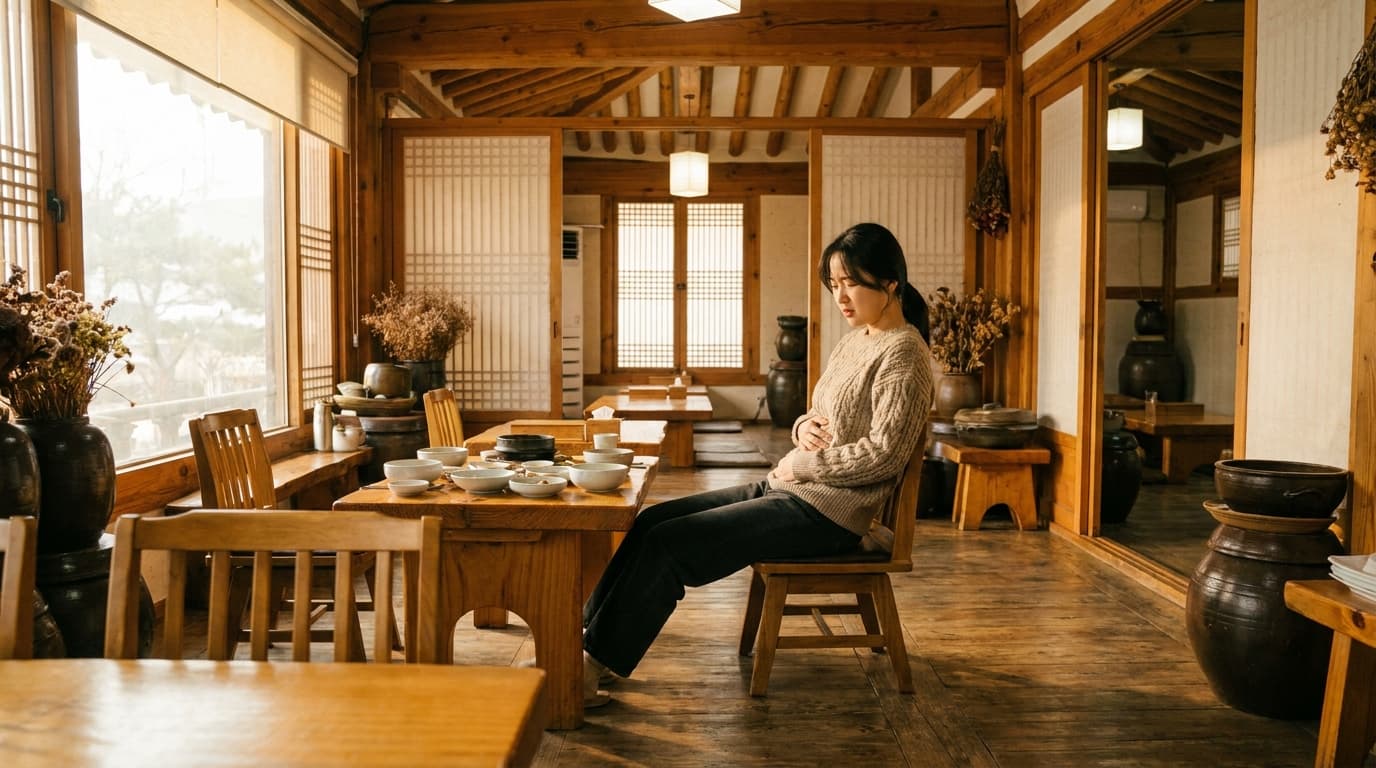
"I feel bloated whenever I eat." This is one of the most common complaints from patients visiting Dalimchae Clinic in Songdo. The stuffiness after a meal, the feeling of poor digestion, and the bloating as if filled with gas go beyond mere discomfort, taking away the vitality of daily life and turning happy meal times into painful hours. Gastroscopy shows no special abnormalities, so why does this painful symptom keep repeating? Perhaps the cause is 'Damjeok,' a hidden waste problem in our body.
💡 [Key Answer] The 3 most common causes of feeling bloated whenever I eat: ① Decreased Gastrointestinal Function / ② Accumulation of Intestinal Toxins (Damjeok) / ③ Autonomic Nervous System Imbalance Dalimchae Clinic uses Gut Detox treatment to go beyond recovering gastrointestinal function, removing toxins from the body and restoring the balance of the gut-brain-nerve axis.
The reason for post-meal bloating might not be just 'indigestion.'
Post-meal bloating is often dismissed as simple indigestion. However, if you chronically feel uncomfortable whenever you eat and general digestants don't help, it's highly likely not just a problem with the gastric mucosa. In Eastern medicine, the cause of these symptoms is often found in 'Damjeok (痰積).' Damjeok refers to waste clumps accumulated on the outer wall of the stomach, where food is not properly digested and accumulates around the stomach, becoming a cause of decreased stomach motility.
This Damjeok causes not only problems in the gastrointestinal tract itself but also systemic symptoms. For example, the area between the pit of the stomach and the navel may feel hard to the touch, or you may experience frequent nausea and belching, alternating diarrhea and constipation, as well as neurological symptoms like unknown headaches, dizziness, insomnia, and chest tightness. Research shows that more than 94% of Damjeok patients accompany three or more systemic symptoms including gastrointestinal disorders. This suggests that Damjeok is not just a stomach problem but is closely linked to overall health.
Decreased stomach motility and Damjeok: An Eastern Medicine perspective.
Our stomach plays an important role in digesting and discharging food. However, when stomach motility decreases due to excessive stress, irregular eating habits, or congenital weakness of stomach function, undigested food waste accumulates on the outer wall of the stomach, forming 'Damjeok.' This Damjeok mass interferes with stomach circulation and makes the stomach wall dry and hard, hindering normal digestive enzyme secretion.
This decreased stomach function often leads to a diagnosis of 'Functional Dyspepsia.' Functional dyspepsia is a condition where chronic upper abdominal discomfort or pain repeats even though no special organic abnormality is found in tests like endoscopy. Since improvement is often slow or symptoms frequently recur with Western medical treatment, Eastern medical approaches are receiving more attention. In particular, about 40% of functional dyspepsia patients show impaired relaxation of the gastric fundus, leading to early satiety and weight loss.
Is herbal treatment effective for functional dyspepsia and Damjeok?
In Eastern medicine, various treatments are applied to treat the root causes of Damjeok and functional dyspepsia. In particular, herbal treatment plays an important role in recovering stomach function and removing Damjeok, the waste in the body.
A 2023 study published in the journal 「Evidence-Based Complementary and Alternative Medicine」 evaluated the efficacy and safety of Naesohwajung-tang, a herbal prescription, in 116 patients with functional dyspepsia for 4 weeks. The results showed that the group taking Naesohwajung-tang showed a statistically significant decrease and improvement in the total dyspepsia symptom score (p < 0.05) and symptom improvement (p < 0.01) compared to the placebo group. In particular, significant improvements compared to the placebo group were confirmed in several detailed indicators such as epigastric burning, post-meal fullness, early satiety, quality of life related to functional dyspepsia, and phlegm-dampness questionnaire scores (p < 0.05). The researchers concluded that this is the first randomized controlled clinical trial proving that Naesohwajung-tang is effective in relieving symptoms in patients with functional dyspepsia. Such research data supports Dalimchae Clinic's philosophy of evidence-based Eastern medical treatment.
Additionally, a study by the Department of Internal Medicine, Dong-eui University Hospital (Kim Kyung-rim et al.), published in the 「Journal of Internal Korean Medicine」 in 2020, reviewed the effects of Sagunja-tang on functional dyspepsia through systematic review and meta-analysis. This study aimed to evaluate the effect of Sagunja-tang by analyzing randomized controlled trials (RCTs). In this way, herbal prescriptions traditionally used for digestive diseases are being scientifically proven through modern research methods, providing an important basis for Dalimchae Clinic to help the fundamental recovery of stomach function through personalized herbal prescriptions.
How is Dalimchae Clinic's Gut Detox treatment different?
Dalimchae Clinic in Songdo solves the symptom of bloating whenever you eat through 'Gut Detox.' Gut detox goes beyond temporarily relieving indigestion symptoms; it removes toxins accumulated on the stomach wall and restores the balance of the Gut-Brain Axis, strengthening our body's self-healing power.
It is important to break the vicious cycle where toxins accumulated in the intestinal wall cause systemic inflammation through the blood, which again reduces stomach function. At Dalimchae Clinic, we use herbal prescriptions tailored to each patient's constitution and symptoms to increase gastrointestinal motility, promote digestive enzyme secretion, and strengthen the detox function of the intestinal wall. In addition, acupuncture treatment shows immediate digestion improvement effects with fewer side effects, especially helping to regulate gastrointestinal movement and improve chronic indigestion by needling key acupuncture points on the legs, wrists, and abdomen.
This gut detox treatment not only improves symptoms such as bloating, fullness, and reflux esophagitis by recovering stomach function but also contributes to improving systemic symptoms such as stress, anxiety, and insomnia by restoring the balance of the autonomic nervous system through the vagus nerve connecting the gut and brain. Beyond the symptoms appearing on the surface, our goal at Dalimchae Clinic is to improve the internal environment that is the root of the symptoms, helping patients regain a comfortable and active daily life.
Am I suffering from 'Damjeok-type indigestion'? Self-diagnosis checklist.
If 3 or more of the following questions apply to you, it is recommended to suspect Damjeok-type indigestion and consider precise diagnosis and treatment at Dalimchae Clinic in Songdo.
- The feeling of bloating and stuffiness after a meal lasts for more than 2 hours.
- The area around the pit of the stomach always feels stuffy or hard to the touch.
- I get indigestion frequently, and it doesn't go away even after taking digestants.
- Belching or gas occurs frequently, and there are many gurgling sounds in the stomach.
- I often feel nauseous and queasy.
- I often feel a heavy head, headaches, or dizziness for no particular reason.
- I feel severe fatigue and my body feels heavy.
- It is sometimes accompanied by insomnia or heart palpitations.
- Constipation and diarrhea repeat irregularly.
If 3 or more apply: Suspected Damjeok-type indigestion → Consider Eastern medical diagnosis and treatment If 5 or more apply: Prompt visit and precise check-up recommended
Frequently Asked Questions (FAQ)
Q. I feel bloated whenever I eat, but digestants aren't effective. Why is that? A. General digestants often stop at temporarily helping stomach motility or suppressing gastric acid secretion. If chronic bloating is related to Damjeok accumulated on the outer wall of the stomach or autonomic nervous system imbalance, it is difficult to solve fundamentally with simple digestants.
Q. Is 'Damjeok' a diagnosis name that can be received at a hospital? A. Damjeok is an Eastern medical diagnosis name, and in many cases, no special abnormalities appear in Western medical tests like endoscopy. Therefore, you may be diagnosed with 'Functional Dyspepsia' at a hospital, but Eastern medicine approaches and treats it with the concept of Damjeok.
Q. Why do headaches or dizziness appear together with indigestion? A. Damjeok can affect the entire body's blood circulation and autonomic nervous system beyond gastrointestinal problems. Since the gut and brain are connected by the 'Gut-Brain Axis,' if a problem occurs in the gut, it can affect brain function, accompanying systemic symptoms such as headaches, dizziness, and insomnia.
Q. How long does treatment take at a Songdo Damjeok clinic? A. The Damjeok treatment period can vary depending on the severity of the patient's symptoms, the degree of Damjeok accumulation, and lifestyle habits. Usually, it can take several weeks to several months with consistent treatment and lifestyle improvement.
The symptom of bloating whenever you eat is not a problem that can be solved by enduring. You no longer have to ignore the signals your body has been sending for a long time. If approached in the right direction, your body reacts faster than you think. Bring the symptoms you are experiencing as they are. We will find the cause together at Dalimchae Clinic.
Life in bloom. Herbal medicine is, after all, Dalimchae Clinic. Check your symptoms similar to mine through the AI consultation on the Dalimchae Clinic homepage!
This health information was compiled by the Dalimchae medical team based on questions frequently received in the consultation room. Medical Supervision | Gut and Digestion Diagnosis Standard, Dalimchae Clinic Songdo Branch, Doctor Oh Hyunmin (Indigestion Column)