
Hello. This is Dalimchae Korean Medicine Clinic.
Heavy Menstrual Bleeding: Could it be Uterine Fibroids? Listen to Your Body's Signals.
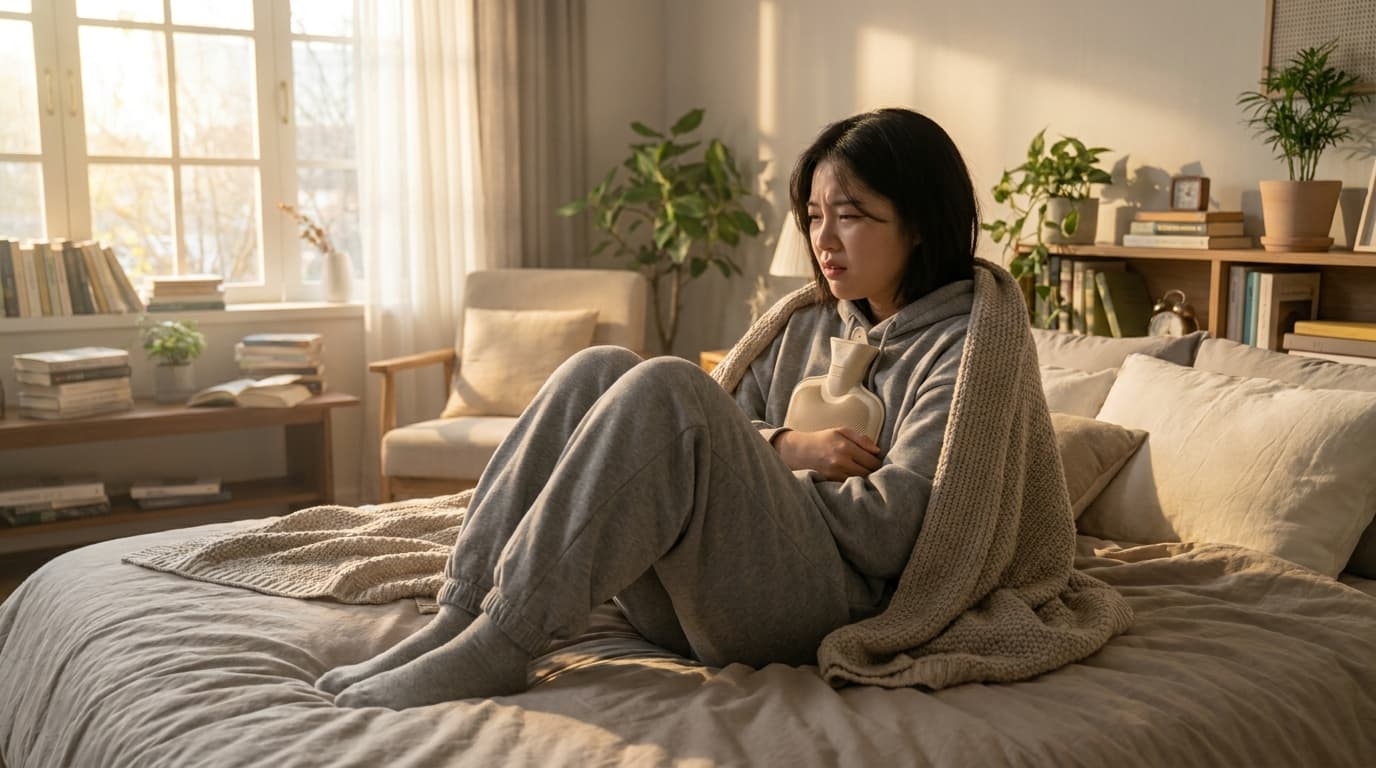
Many people find the monthly arrival of periods unpleasant. In particular, if you are worried about heavy menstrual bleeding, you might be concerned about whether there is a serious problem with your body beyond the inconvenience of daily life. You might lose sleep at night due to excessive bleeding as if it's pouring out, or you might postpone important appointments, constantly worrying about leaks. In addition to fatigue and anemia, if you're exhausted by the recurring pain of menstrual cramps every month, ask yourself if this is the case. These symptoms are not just simple menstrual phenomena but could be important warning signals from your body.
💡 Key Answer The 3 most common causes of heavy menstrual bleeding: ① Hormonal Imbalance (excess estrogen, insufficient progesterone) / ② Uterine Diseases (uterine fibroids, adenomyosis, etc.) / ③ Stress and Lifestyle Habits Dalimchae Clinic helps the body regain its own balance by creating a healthy uterine environment through constitutional improvement.
How much bleeding is considered a problem?
Worries about menstrual volume are common among women, but it's hard to know the exact criteria for 'when it becomes a problem.' Generally, a menstrual period lasts 2–7 days, and the total volume is considered normal if you use 15–25 medium-sized pads throughout the period and the blood is a clear pinkish-red without clots. If ▲ the period lasts for more than 8 days, ▲ the volume is so heavy that you have to change medium pads every hour or two, or ▲ large clots are frequently mixed in the menstrual blood, you should suspect menorrhagia. If this is accompanied by symptoms of anemia such as dizziness, chronic fatigue, and shortness of breath, it could be a sign that your body is already under significant strain.
Simple menorrhagia vs. Uterine Fibroids: How to tell the difference?
There are various causes of menorrhagia, but one of the most common concerns is uterine fibroids. Uterine fibroids are benign tumors that occur in the smooth muscles of the uterus, occurring in about 25% of women of childbearing age and increasing in frequency to 30–40% in women over 40. When uterine fibroids occur, the surface area of the endometrium may increase, uterine contractions may be hindered, and blood vessel production may be promoted, leading to menorrhagia.
Menorrhagia caused by uterine fibroids may show a different pattern from menorrhagia caused by simple hormonal imbalance. For example, uterine fibroids may be accompanied by symptoms such as ▲ clotted menstrual blood, ▲ worsening menstrual pain, ▲ pelvic pressure, and ▲ frequent urination or constipation. Especially since symptoms vary greatly depending on the location or size of the uterine fibroids, precise diagnosis is necessary rather than simply considering it as 'heavy volume.'
Why does menorrhagia occur even without uterine fibroids?
There are many cases where people complain of heavy menstrual bleeding even without uterine fibroids. This is mainly related to hormonal imbalance. In particular, when estrogen is excessive and progesterone is relatively insufficient, the endometrium becomes abnormally thick, which can increase menstrual volume. Decreased ovarian function, stress, irregular lifestyle habits, and excessive dieting also cause hormonal imbalance, leading to menorrhagia.
In Korean medicine, this menorrhagia is seen as occurring when the circulation of Qi and blood is not smooth or when stagnant blood (瘀血) stays in the uterus. Stagnant blood interferes with blood circulation and worsens the uterine environment, becoming a major cause of increased menstrual volume or intensified menstrual pain. It is important to treat fundamentally by removing stagnant blood and improving the circulation of Qi and blood in the uterus, rather than simply stopping the bleeding.
Can Korean medicine treatment improve menorrhagia and uterine fibroids?
Yes, Korean medicine treatment can help improve the discomfort caused by menorrhagia and uterine fibroids. Especially for those who feel burdened by surgical treatment or want conservative treatment, Korean medicine can be a good option.
A systematic literature review and meta-analysis study published in Frontiers in Oncology in 2024, involving 640 patients with uterine fibroids, evaluated the clinical effects of combined acupuncture and herbal medicine treatment. The results showed that the overall clinical effective rate significantly increased in the group receiving both acupuncture and herbal medicine compared to the group receiving herbal medicine alone (relative risk 1.20, 95% CI 1.12 to 1.30, P<0.00001), and the size of uterine fibroids also significantly decreased (standardized mean difference -0.82, 95% CI -1.36 to -0.27, P<0.00001). Researchers concluded that this complex treatment has a positive effect on reducing uterine size, regulating hormone levels, and improving patients' quality of life. This data aligns with the reason why Dalimchae Clinic takes a multifaceted approach to restore the uterine health of patients suffering from uterine fibroids and menorrhagia.
In addition, a multicenter observational study in Korea published in Frontiers in Medicine (Lausanne) in 2026 reported the results of applying individualized Traditional Herbal Decoctions (THDs) to 119 patients with primary dysmenorrhea. In this study, the group that received herbal medicine treatment showed a significant decrease in menstrual pain intensity (NRS) at the second visit compared to the group that did not (estimate -1.41, p = 0.029), and painkiller usage also significantly decreased (estimate -1.63, p = 0.001). Researchers suggested that individualized herbal medicine treatment may be associated with reduced menstrual pain intensity and painkiller usage. This suggests that Korean medicine treatment can be effective in improving menstrual pain, which is frequently accompanied by menorrhagia, and serves as a basis for Dalimchae Clinic's constitutional improvement treatment to help restore overall women's health.
How does Dalimchae Clinic's constitutional improvement treatment proceed?
Dalimchae Clinic Songdo Branch provides constitutional improvement treatment tailored to each individual's constitution and symptoms for patients who complain of heavy menstrual bleeding. Rather than simply suppressing symptoms, we aim to create a healthy state of the body where symptoms do not recur.
The uterus of our body is like a small forest. When hormonal balance is broken or stress is severe, the soil of this forest dries up or toxins accumulate, leading to stagnant blood or Qi and blood circulation disorders. Dalimchae Clinic's constitutional improvement treatment makes the soil of this forest fertile and helps the healthy cycle of life to occur.
1. Precise Diagnosis: We comprehensively analyze the current state of Qi and blood, balance of the autonomic nervous system, and hormonal environment through pulse wave and autonomic nervous system tests. Especially since women's diseases are closely related to stress, the stability of the autonomic nervous system is also importantly addressed.
2. Customized Herbal Prescription: We prescribe customized herbal medicine to remove stagnant blood, promote Qi and blood circulation in the uterus, and correct the broken hormonal balance. We focus on resolving the root cause of menorrhagia and restoring uterine health. This is also of great help in creating a healthy uterine environment for women preparing for pregnancy or postpartum care.
3. Acupuncture and Moxibustion Treatment: By combining acupuncture and moxibustion treatment on uterine-related acupuncture points, we improve blood circulation, strengthen uterine function, and alleviate pain. This is also effective for alleviating pain caused by uterine fibroids or general menstrual pain.
The female Korean medicine doctors at Dalimchae Clinic Songdo Branch listen to each patient's story, deeply empathize with their current discomfort, and establish the optimal treatment plan.
Menorrhagia Self-Checklist
If you fall into 3 or more of the following items, professional consultation on your current uterine health is necessary.
- ◻ Menstrual period lasts for 8 days or more.
- ◻ You have to change pads every hour or two during menstruation.
- ◻ You lose sleep worrying about leaks even at night.
- ◻ Clots larger than a 500-won coin are frequently seen in menstrual blood.
- ◻ You feel dizziness, shortness of breath, or extreme fatigue during every period.
- ◻ Menstrual pain is getting worse, making daily life difficult without painkillers.
- ◻ Normally, the lower abdomen feels heavy or something is felt.
- ◻ Your skin becomes pale and you feel lethargic for no particular reason.
If 3 or more apply: A red light may have been turned on for your current uterine health, so it is recommended to receive a professional diagnosis at a Songdo Menorrhagia Clinic. If 5 or more apply: It is better to start precise examination and treatment through an immediate visit.
FAQ
Q. Can heavy menstrual bleeding cause anemia? A. Yes, if menorrhagia persists, the risk of iron-deficiency anemia due to iron loss in the body is very high. Anemia can cause fatigue, dizziness, headache, and shortness of breath, significantly affecting daily life, so it must be managed.
Q. Does uterine fibroids always make menorrhagia worse? A. Not necessarily. Uterine fibroids appear differently in symptoms depending on their location, size, and number, and many cases are asymptomatic. However, if they are located close to the endometrium or are large, they are highly likely to cause menorrhagia.
Q. Can uterine fibroids disappear after Korean medicine treatment? A. Korean medicine treatment focuses on inhibiting the growth of uterine fibroids, reducing their size, and improving accompanied menorrhagia and pain. It is hard to conclude that all fibroids will disappear completely, but it can contribute to effectively managing uncomfortable symptoms and lowering the recurrence rate by making the uterine environment healthy.
Q. How long does it take to treat menorrhagia in Songdo? A. The treatment period varies depending on the severity of individual symptoms, the presence of uterine fibroids, constitution, and lifestyle habits. Generally, through steady treatment, symptom improvement can be expected within 3–6 months, and details can be guided through consultation after visiting the Songdo Clinic.
The signal of heavy menstrual bleeding is not a problem that can be solved by enduring. You no longer have to ignore the signals your body has been sending for a long time. If you approach in the right direction, the body responds faster than you think. Bring your symptoms exactly as they are. At Dalimchae Clinic Songdo Branch, we will find the cause together.
Where life blooms. For herbal medicine, it's Dalimchae Clinic. Check your symptoms similar to mine through the AI consultation on the Dalimchae Clinic website first!
This article is health information compiled by Dalimchae medical staff based on questions frequently received in the treatment room. Medical Supervision | Women and Pregnancy Treatment Standards Dalimchae Clinic Songdo Branch Korean Medicine Doctor Oh Hyun-min (Menorrhagia Column)