
Hello. This is Dalimchae Clinic.
Hearing a Ringing in Your Ears? Could It Be an Autonomic Nervous System Issue?
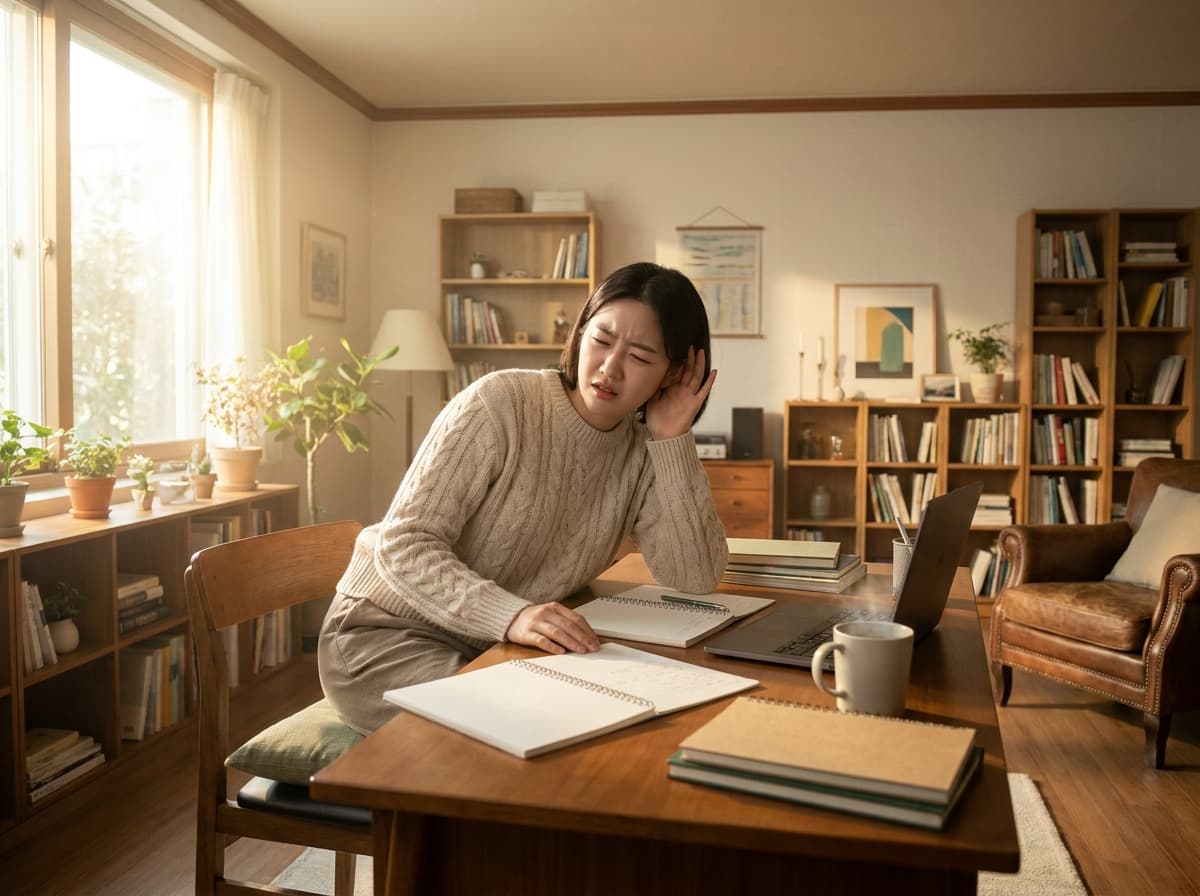
When you need to concentrate on studying or important work, and a sudden 'beep' sound starts in your ears, how flustered would you be? You might think it's temporary, but if it repeats or intensifies, it causes not only a drop in concentration but also significant discomfort in daily life. Many people complain, "I hear a ringing in my ears when I study." Tinnitus is not just a problem with the ears; it could be an important signal from deep within your body.
💡 [Key Answer] The 3 most common causes of hearing a ringing in your ears: ① Autonomic Nervous System Imbalance / ② Stress and Chronic Fatigue / ③ Dysfunction of the Auditory Pathway Dalimchae Clinic finds and resolves the root cause of tinnitus through autonomic stabilization, restoring a healthy body where the brain and ears communicate peacefully.
Is Ringing in the Ears Simply a Problem with the Ears?
Many people visit an ENT clinic first when tinnitus occurs. However, many are frustrated when they are diagnosed with no specific abnormalities or when symptoms don't improve despite medication. Then, what is the real cause? In Korean medicine, tinnitus is seen not just as a problem of the ear itself, but as a signal that the balance of the entire body is broken. In particular, an imbalance in the autonomic nervous system due to stress or overwork acts as a major cause.
The autonomic nervous system regulates all unconscious functions of our body. It manages heart rate, digestion, and body temperature regulation, as well as the response to stress. When this system becomes unstable, the brain cannot rest and enters a hyperactive state. Since the ear is a sensory organ directly connected to the brain, hyperactive signals from the brain are transmitted to the ear, manifesting as various forms of tinnitus such as beeping, cicada sounds, or the sound of flowing water, even though there is no actual external sound. This can significantly reduce the quality of life, accompanied by concentration loss, sleep disorders, and anxiety.
Tinnitus and Autonomic Imbalance: What Are the Scientific Research Results?
Interest in changes in the autonomic nervous system of tinnitus patients is growing, and various studies have reported their connection.
According to a literature review study published in the 「Journal of Korean Medical Ophthalmology & Otolaryngology & Dermatology」 in 2023, the effects of autonomic nervous system abnormalities and Korean medical treatments on tinnitus patients were analyzed. Researchers confirmed that sympathetic hyperactivity and parasympathetic decline are observed in tinnitus patients, which are closely related to tinnitus symptoms. Furthermore, it suggested that Korean medical treatments such as acupuncture and Transcutaneous Electrical Nerve Stimulation (TENS) can have significant effects on regulating autonomic functions and improving tinnitus symptoms.
In a related study published in PMC, heart rate variability (HRV) parameters were compared and analyzed between 40 tinnitus patients (19 acute, 21 chronic) and 40 healthy controls. The results showed that tinnitus patients had significantly decreased high-frequency components and total power (P < 0.05), and a significantly increased low-frequency to high-frequency ratio (P < 0.05), confirming vagal withdrawal and sympathetic overactivity. Particularly, chronic tinnitus patients showed stronger autonomic changes than acute patients. Researchers concluded that these results provide a basis for Korean medical treatments, such as acupuncture and qigong training, to improve tinnitus by regulating cardiac autonomic function. Based on these studies, Dalimchae Clinic makes restoring the balance of the autonomic nervous system the core of tinnitus treatment.
Autonomic Stabilization: How Is It Applied to Tinnitus Treatment?
Dalimchae Clinic Songdo Branch views tinnitus not just as a sound in the ear, but as a result of systemic imbalance. We focus particularly on tinnitus caused by overloading the brain and autonomic nervous system, offering a fundamental solution through autonomic stabilization.
When the balance of the autonomic nervous system is lost, the brain cannot rest. Like an overheated engine, the brain continues to operate excessively, creating unnecessary signals, which appear as tinnitus. Dalimchae Clinic focuses on calming this brain hyperactivity and creating an environment where the brain can rest comfortably by restoring autonomic balance. In Korean medicine, lowering the heat of the nervous system and creating an environment for the brain to rest is explained as Suseunghwagang (水昇火降). This involves achieving harmony in the autonomic nervous system through the principle of body circulation: keeping the head cool and the lower abdomen warm.
Through acupuncture, herbal prescriptions, and pharmacopuncture, we relax the body tensed by stress, suppress excessive sympathetic hyperactivity, and strengthen parasympathetic function to achieve autonomic harmony. This reduces unnecessary brain signals transmitted to the ear, alleviating tinnitus symptoms and improving overall quality of life by addressing common comorbidities such as headaches, dizziness, insomnia, and anxiety. This is why those looking for a Songdo Tinnitus Clinic are satisfied with the results at Dalimchae Clinic.
Tinnitus: Could I Have Autonomic Tinnitus?
Check if your tinnitus symptoms are related to an autonomic nervous system imbalance using the checklist below.
[Tinnitus Self-Diagnosis Checklist]
- Ringing in the ears worsens when stressed or tense.
- The sound becomes clearer at night or in quiet environments.
- Sleep quality is poor, with difficulty falling or staying asleep.
- The head feels heavy or foggy, with frequent headaches or dizziness.
- There's a feeling of chest tightness, anxiety, or heart palpitations.
- The neck or shoulders are often stiff, and the back of the neck feels tight.
- Digestion is poor, or you suffer from nervous stomach disorders.
- Chronically fatigued, not feeling refreshed even after resting.
- Sensitive to surrounding noises or easily startled by small sounds.
- 3 or fewer: Low possibility of autonomic imbalance; can improve with lifestyle changes.
- 3–5: Autonomic instability suspected; consider professional consultation at a Songdo Clinic.
- 6 or more: High possibility of tinnitus due to autonomic imbalance; active autonomic stabilization treatment at Dalimchae Clinic is recommended.
Tinnitus Treatment Process at Dalimchae Clinic
Dalimchae Clinic Songdo Branch provides customized treatments tailored to individual symptoms and causes.
- Precision Diagnosis: Along with Korean medical diagnoses such as consultation, pulse, and abdominal examination, we objectively evaluate the balance of the autonomic nervous system through heart rate variability (HRV) testing. This helps identify the root cause of tinnitus and accurately analyze the individual's constitution and symptoms.
- Customized Herbal Prescription: Prescribes herbal medicine to restore autonomic balance and calm brain hyperactivity. It aims to stabilize the nerves, improve blood circulation, alleviate tinnitus symptoms, and restore overall health.
- Acupuncture & Pharmacopuncture: Acupuncture is applied to acupoints related to tinnitus to facilitate the flow of energy and blood and relax tense muscles. Particularly, pharmacopuncture, which uses refined herbal ingredients, is used to maximize treatment effects. This helps block unnecessary signals to the brain and improves the function of the auditory pathway. Recent studies have reported that applying individualized Korean medical combined treatment (acupuncture, Chuna, jaw joint balance therapy, etc.) to chronic tinnitus patients resulted in a significant decrease in tinnitus discomfort (THI score) from 68 to 0, along with improvements in headaches and neck pain.
- Lifestyle Guidance: Provides detailed guidance on lifestyle habits that help alleviate tinnitus, such as stress management, sleep hygiene, and diet, helping patients maintain a healthy balance on their own.
Consistency is key in tinnitus treatment, and as a Songdo Autonomic Clinic, Dalimchae Clinic does its best to help patients regain a healthy daily life.
Q. How long does it take for tinnitus to improve? A. The treatment period varies depending on the onset, severity, and cause of the tinnitus. Acute tinnitus can improve relatively quickly, but chronic tinnitus may require several months of consistent treatment and management.
Q. Is tinnitus while studying caused by stress? A. Yes, tinnitus occurring in situations requiring concentration, such as studying or work, is closely related to stress. Stress can disrupt the balance of the autonomic nervous system and worsen tinnitus symptoms.
Q. I have insomnia along with tinnitus; can they be treated together? A. Tinnitus caused by autonomic imbalance often accompanies insomnia. Dalimchae Clinic's autonomic stabilization treatment is effective in improving not only tinnitus but also accompanying symptoms like insomnia, headaches, and dizziness.
Q. Can tinnitus heal naturally? A. Temporary tinnitus may disappear naturally, but if there's a root cause like autonomic imbalance or auditory pathway dysfunction, natural healing is unlikely. If left untreated, it may progress to chronic tinnitus, so early diagnosis and treatment are important.
Tinnitus is not a problem you should just endure. You no longer have to ignore the signals your body has been sending for a long time. If approached in the right direction, the body responds faster than you think. Bring your symptoms as they are. We will find the cause together at Dalimchae Clinic.
Where life blooms. For herbal medicine, it's Dalimchae Clinic. Check your symptoms first through the AI consultation on the Dalimchae Clinic website!
This health information was compiled by the Dalimchae medical team based on common questions received in the treatment room. Medical Supervision | Brain & Autonomic Nervous System Standards, Dalimchae Clinic Songdo Branch, Dr. Oh Hyunmin (Tinnitus Column)