
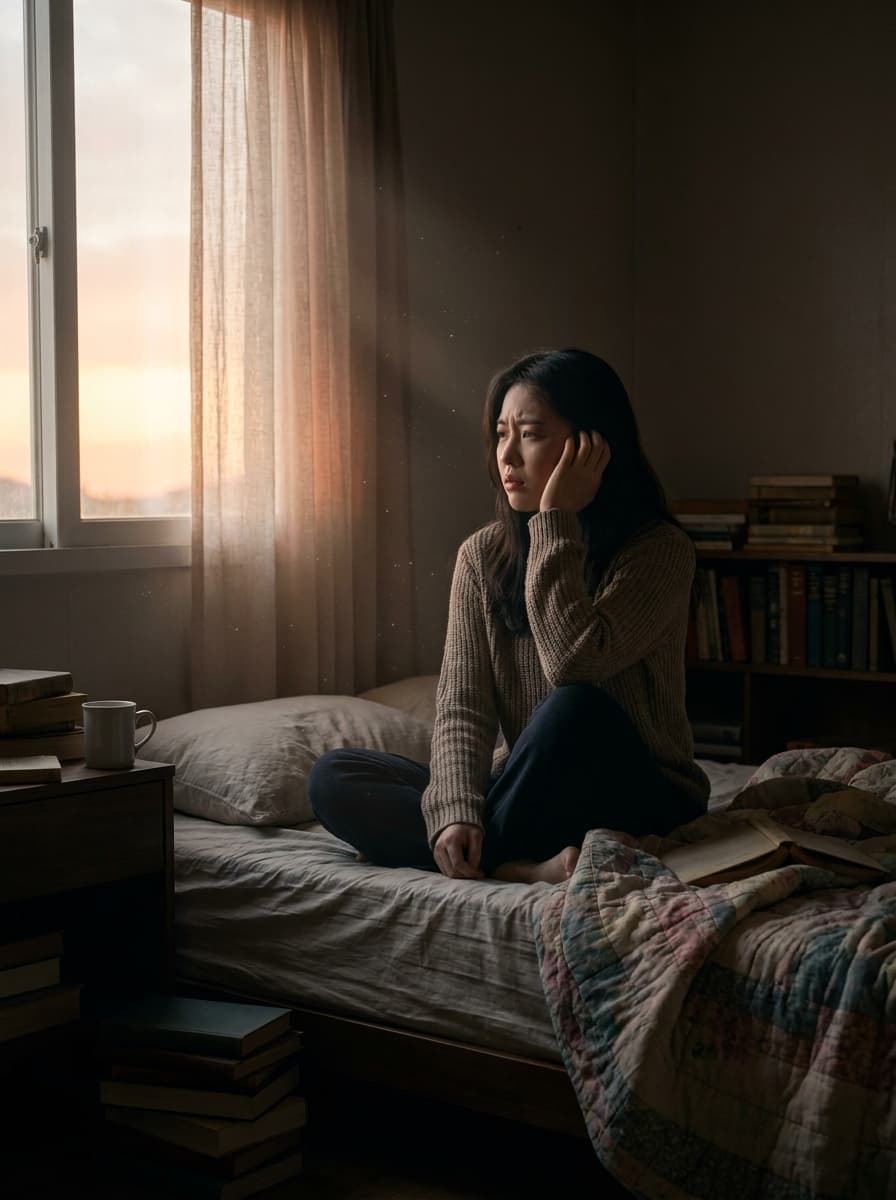
Headache That Does Not Get Better Even After Taking Painkillers: Is It a 'Warning Light' for Your Body?
How long has it been since you reflexively reached for a painkiller for a throbbing, pounding headache? At first, one or two pills might have been enough, but now the headache doesn't subside easily even with medication, and you're likely worried as the frequency increases. Many people suffer daily, complaining, "I take painkillers all the time, but the headache won't go away." Beyond simple head pain, chronic headaches significantly lower quality of life, accompanied by decreased concentration, chronic fatigue, and even depression. Could you have been suppressing only the symptoms while ignoring the root cause of the pain? At Dalimchae Korean Medicine Clinic Incheon, we interpret chronic headaches not just as pain, but as an important warning signal that your body's balance is broken.
💡 [Key Answer] The 3 most common causes of headaches that don't get better even after taking painkillers: ① Autonomic nervous system imbalance due to excessive stress / ② Chronic inflammation and blood circulation disorders / ③ Tension in the cervical spine and muscles due to poor posture and lifestyle habits. Dalimchae Korean Medicine Clinic resolves the root cause of headaches through autonomic stabilization and creates an environment where the brain can recover itself.
Why Does Autonomic Imbalance Cause Headaches?
Many people experience headaches only to be told that their test results are 'normal.' However, a significant portion of chronic headaches with unknown causes stem from issues with the autonomic nervous system, our body's automatic control system. The autonomic nervous system regulates essential life functions like heart rate, digestion, temperature control, and sleep, but its balance is easily broken by excessive stress or fatigue. In particular, when the sympathetic nervous system is over-activated, blood vessels constrict and cranial nerves become hypersensitive, lowering the pain threshold so that even minor stimuli easily trigger headaches. This is like a car engine overheating; the brain cannot rest and continues to be overloaded.
How Does Korean Medicine View Chronic Headaches?
In Korean medicine, headaches are referred to as 'Baek-byeong-ji-jang' (百病之長), meaning a symptom that can appear in various diseases. Modern chronic headaches are interpreted as being closely related to qi and blood circulation disorders, phlegm-dampness (fluid stagnation), and emotional imbalances. True pain relief is only possible when these fundamental causes are addressed. It is important to create an environment where the entire body's balance is restored and the brain can recover and stabilize itself, rather than simply suppressing the pain.
What Are the Actual Effects of Korean Medical Headache Treatment?
Recent studies show that Korean medical treatment is effective for various types of headaches. A study by researcher Son Ja-yeon's team at Haeundae Jaseng Hospital of Korean Medicine, published in the 2024 international journal 'Journal of Clinical Medicine,' reported results of combined Korean medicine integrative treatment and suboccipital muscle pharmacopuncture for 80 patients complaining of moderate to severe tension-type headaches after traffic accidents. The results showed that the pharmacopuncture group recovered faster and showed better improvement than the control group (Korean medicine integrative treatment alone). On the Numeric Rating Scale (NRS; 0-10), the pharmacopuncture group's score decreased from 6.91 before treatment to 3.84 after 3 days of hospitalization, and dropped to 2.27 at discharge, significantly lower than the control group's 3.42. Additionally, in the Headache Disability Inventory (HDI; 0-100), the pharmacopuncture group showed a significant improvement, decreasing from 73.35 before treatment to 35.78 on the 4th day of hospitalization, compared to 60.56 in the control group. Researchers concluded that these results prove pharmacopuncture is effective and safe for improving tension-type headaches.
Furthermore, a real-world clinical study by Shaohua Lyu's team published in 'Frontiers in Pharmacology' in 2024 reported that migraine frequency and pain intensity decreased, and patients' quality of life scores improved after taking herbal medicine for more than 28 days. As such, Dalimchae Korean Medicine Clinic believes in the potential of Korean medical treatment to resolve the root cause of headaches and prevent recurrence, beyond simple analgesic effects.
Autonomic Stabilization Treatment at Dalimchae Korean Medicine Clinic Incheon
A headache that doesn't get better even after taking painkillers may be a signal that the autonomic nervous system is overheating and the brain is unable to rest properly. Dalimchae Korean Medicine Clinic focuses on autonomic stabilization to break this vicious cycle. When the autonomic balance is lost, the brain cannot rest and remains in an excited state, which can be accompanied by various symptoms such as insomnia, dizziness, and indigestion, as well as headaches.
We prescribe customized herbal medicines that help relax the overactive sympathetic nervous system and activate the parasympathetic nervous system. This is a process of lowering the excessive heat in the nervous system and creating an environment where the brain can rest comfortably—in Korean medicine, this is explained by the principle of Suseunghwagang (水升火降), keeping the head cool and the lower abdomen warm. We also stabilize the autonomic nervous system and improve blood circulation through pharmacopuncture, where herbal medicine components are injected directly into acupoints, to alleviate headaches.
Many people looking for a Songdo headache clinic are regaining clarity and vitality through Dalimchae's autonomic stabilization treatment. Dalimchae's goal is not just to turn off the pain, but to make a body where it doesn't turn back on.
Could It Be Me? Chronic Headache Autonomic Imbalance Checklist
If 3 or more of the following apply to you, you may suspect a headache caused by autonomic imbalance.
- Frequent stiffness and severe pain in the back of the neck and shoulders.
- Frequent fatigue and not feeling refreshed even after resting.
- Difficulty falling asleep or waking up frequently during the night.
- Feeling oppressed in the chest, anxious, or having frequent palpitations.
- Poor digestion, feeling bloated or oppressed in the stomach.
- Cold hands and feet or excessive sweating in specific areas.
- Frequently told that you have become sensitive and irritable.
- Frequent dizziness or feeling lightheaded when standing up.
3 or more apply: You may suspect an autonomic imbalance-type headache, and it is recommended to review integrative Korean medical treatment. 5 or more apply: We recommend immediate professional diagnosis and treatment to restore autonomic function. Look for a clinic specializing in autonomic treatment among Incheon headache clinics.
FAQ: Clearing Up Questions About Korean Medical Headache Treatment
Q. Why won't my headache go away even though I keep taking painkillers? A. Painkillers provide temporary relief but do not resolve the root cause. In fact, long-term use can lead to medication-overuse headaches, making the headache more chronic or reducing the effectiveness of the medication due to tolerance.
Q. I have headaches and dizziness together. Can they be treated at the same time? A. Yes, both headaches and dizziness are often closely related to autonomic imbalance. Dalimchae's autonomic stabilization treatment addresses the root cause of both symptoms for integrated improvement.
Q. Will the headache recur after Korean medical treatment? A. Korean medical treatment aims not only for symptom relief but also for the prevention of recurrence. By improving the root causes such as autonomic imbalance and blood circulation disorders, it increases the body's resilience so that the brain can maintain its health, effectively lowering the recurrence rate.
Q. I am looking for a clinic that treats headaches in Songdo. What are the characteristics of Dalimchae Korean Medicine Clinic Incheon? A. Dalimchae Korean Medicine Clinic Incheon views the root cause of headaches as an autonomic nervous system imbalance and focuses on stabilizing the autonomic nervous system and enhancing the brain's recovery through customized herbal medicine, pharmacopuncture, and acupuncture. We help you regain a healthy life without recurrence through meticulous treatment tailored to each patient's constitution and symptoms.
Headaches that don't get better even after taking painkillers are not a problem that can be solved by enduring. You no longer have to ignore the signals your body has been sending for a long time. When approached in the right direction, the body responds faster than you think. Bring your symptoms as they are. At Dalimchae Korean Medicine Clinic Incheon, we will find the cause together and help you regain a clear and refreshing daily life.
Where life blooms. Herbal medicine is, after all, Dalimchae Korean Medicine Clinic. Check your symptoms with the AI consultation on the Dalimchae website first!
This health information was compiled by the Dalimchae medical staff based on questions frequently received in the consultation room. Medical Supervision | Min Jihong, KMD, Dalimchae Korean Medicine Clinic Incheon, specialized in Brain and Autonomic Nervous System (Headache Column)
#Headache #ChronicHeadache #PainkillerTolerance #AutonomicImbalance #HeadacheCause #IncheonHeadacheClinic #SongdoClinic #BrainAutonomicNervousSystem