
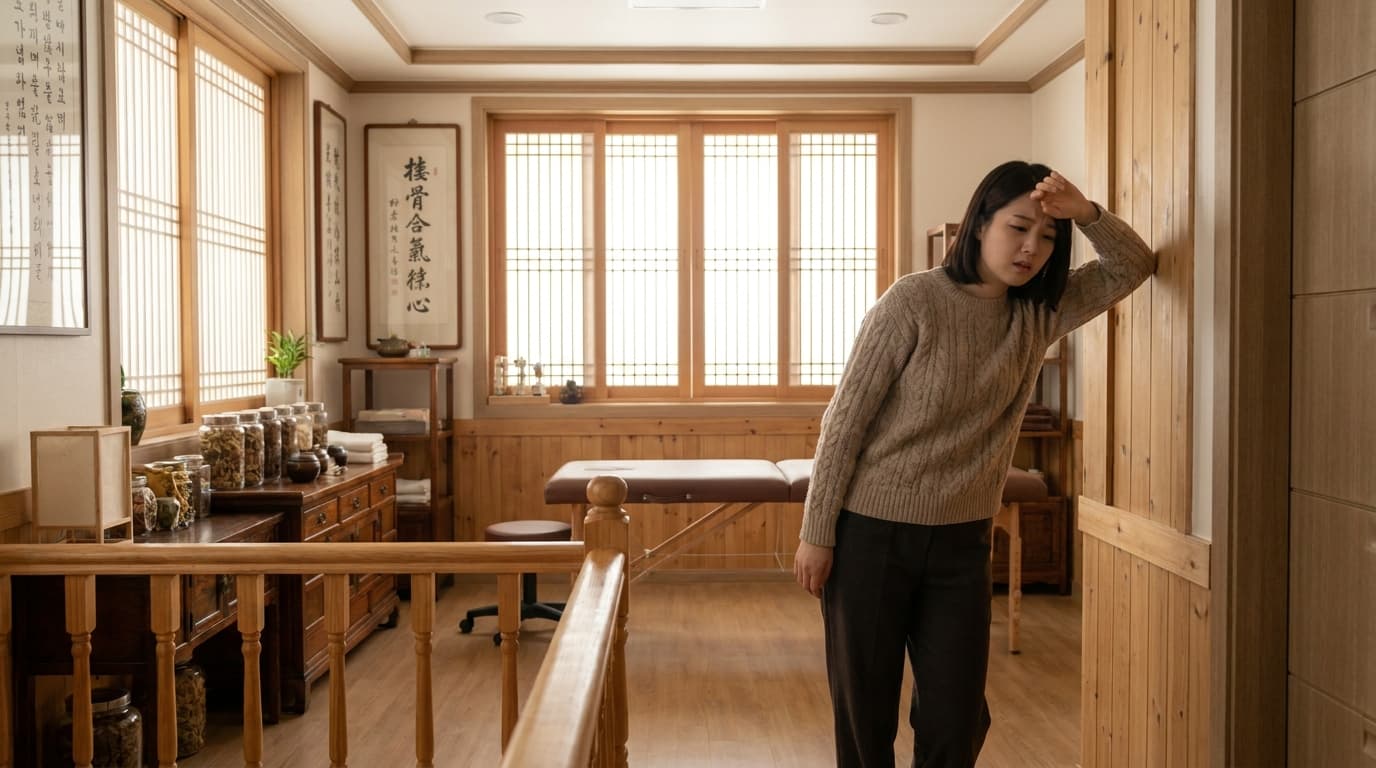
Hello. This is Dalimchae Korean Medicine Clinic.
I have a foggy head and feel dizzy all day long, it might be a warning sign of autonomic imbalance.
Do you often say "I have a foggy head and feel dizzy all day long"? Not feeling refreshed even after getting enough sleep, and experiencing difficulty concentrating as if your head is covered in fog are common symptoms that many people relate to. However, these symptoms may not be simple fatigue, but a signal that an important balance of your body has been broken. In particular, stress and irregular lifestyle habits in modern society overload our body's autonomic nervous system, which is the main cause of inducing such dizziness and brain fog.
💡 [Key Answer] Top 3 most common causes of "foggy head and dizziness all day long": ① Autonomic Imbalance due to excessive stress and brain fatigue ② Decreased Brain Function due to cervical/jaw joint problems and decreased cerebral blood circulation ③ Gut-Brain Axis Dysfunction due to chronic inflammation and toxin accumulation Dalimchae Korean Medicine Clinic restores the harmonious balance between your brain and body through autonomic stabilization treatment.
Why do foggy head and dizziness symptoms persist all day long?
The complaint of "foggy head and dizziness all day long" does not occur from a single cause. These symptoms can appear when the complex systems of our body, especially the brain, autonomic nervous system, and Gut-Brain Axis, weaken. The autonomic nervous system regulates essential functions for life maintenance such as heartbeat, digestion, and sleep, and when balance is broken due to stress or irregular life, it overloads the brain and induces brain fatigue.
This autonomic imbalance affects cerebral blood circulation, which in turn leads directly to decreased cognitive function of the brain, causing a foggy feeling like 'brain fog'. In addition, gut health is closely connected to brain health, so if toxins accumulate in the gut, it can cause systemic inflammatory reactions and negatively affect brain function. Thus, multiple causes act together to induce chronic dizziness and brain fog symptoms.
Chronic dizziness and brain fog, how does Korean medicine approach it?
In Korean medicine, dizziness and brain fog phenomena are not viewed simply as problems of the head alone. We value the harmonious state of our body's qi and blood circulation, organ functions, and autonomic nervous system. In particular, paying attention to the interaction between the brain and autonomic nervous system, we focus on resolving imbalances caused by excessive sympathetic hyperactivity or parasympathetic decrease.
In a systematic review and meta-analysis study by research teams at Kyung Hee University and other domestic and foreign institutions published in Evidence-Based Complementary and Alternative Medicine in 2022, the effectiveness of herbal medicine treatment for Cervicogenic Dizziness was comprehensively analyzed. Targeting 3,862 patients participating in a total of 35 randomized controlled trials, this study reported that herbal treatment alone or in combination with other treatments (manual therapy, acupuncture, etc.) showed significant dizziness improvement effects compared to the control group. The researchers concluded that combining herbal medicine, manual therapy, and acupuncture showed the most reliable effects. These results suggest the potential of combined Korean medicine treatments to improve dizziness.
In addition, in a study by research teams from the Korea Institute of Oriental Medicine and Pusan National University published in Journal of Clinical Medicine in 2024, 17 elderly patients with Mild Cognitive Impairment (MCI) underwent 6 months of combined herbal medicine, acupuncture, and pharmacopuncture treatment, and confirmed significant effects on cognitive function improvement. As a result of the study, the Montreal Cognitive Assessment (MoCA) total score increased by an average of 3.24 points compared to before treatment (95% CI, 1.87 to 4.60; p < 0.0001), and positive changes in prefrontal cortical activity were observed. This shows that brain fog symptoms such as a "foggy head" feeling can be linked to cognitive decline rather than simple fatigue, and Korean medicine treatment can help improve brain function.
These studies suggest that Korean medicine treatment can be an effective alternative to the various causes and complex symptoms of dizziness. Dalimchae Korean Medicine Clinic Songdo Branch provides customized treatment tailored to each patient's symptoms and constitution based on these scientific grounds.
When autonomic balance breaks, the brain cannot rest
Dalimchae Korean Medicine Clinic diagnoses the root cause of foggy head and dizziness symptoms as 'autonomic imbalance' and takes autonomic stabilization treatment to correct it as the core principle. Our body's autonomic nervous system consists of sympathetic and parasympathetic nerves, balancing and regulating all body functions like an automobile's accelerator and brake. If stress, overwork, and irregular life persist, the sympathetic nerve is excessively hyperactive, placing the body in a constant state of tension, which induces fatigue deep inside the brain such as the brainstem, preventing the brain from resting sufficiently.
When the brain cannot rest, symptoms such as decreased concentration, memory impairment, foggy head, and chronic dizziness appear. Dalimchae Korean Medicine Clinic Songdo Branch focuses on lowering the overheated heat of the nervous system and creating an environment where the brain can comfortably rest. In Korean medicine, this is explained as 'Su Seung Hwa Gang (水昇火降)', the concept of restoring the natural circulation of the body where hot energy goes down and cool energy goes up. Through this, autonomic activity indicators such as heart rate variability (HRV) are improved, cerebral blood circulation is promoted, brain fatigue is resolved, and brain function is stabilized.
Foggy head and dizziness self-diagnosis checklist
If 3 or more of the following symptoms apply to you, you can suspect dizziness and brain fog due to autonomic imbalance.
- ◻ It is hard to wake up in the morning, and I don't feel rested even after sleeping.
- ◻ My head is heavy and foggy, and my concentration is poor.
- ◻ I feel easily anxious or restless without special reason.
- ◻ My heart often pounds and I feel breathing discomfort.
- ◻ Digestion is poor, and gas frequently builds up in my stomach.
- ◻ My hands and feet are cold, or conversely, cold sweats frequently occur.
- ◻ My eyes easily fatigue, dry, or blur.
- ◻ The back of my neck or shoulders are always stiff and painful.
- ◻ When I sit and stand up, I feel dizzy or my vision goes dark.
- ◻ I react sensitively to trivial matters and my irritation has increased.
Judgment Criteria:
- 3 or more items apply: Suspected autonomic imbalance-type dizziness and brain fog. Consider professional treatment at a Songdo dizziness Korean medicine clinic.
- 5 or more items apply: Immediate Korean medicine combination treatment is recommended to restore autonomic balance.
FAQ – Questions when you have a foggy head and dizziness
Q. How long can foggy head and dizziness symptoms last? A. Individual differences are large, but if the cause is not properly resolved, it can last chronically from weeks to months, or even years. Dalimchae Korean Medicine Clinic Songdo Branch helps recovery by setting up a customized treatment plan according to symptom severity and the patient's health status.
Q. Dizziness and headaches come together, can they be treated together? A. Yes, dizziness and headaches often appear together due to common causes such as autonomic imbalance or cerebral blood circulation problems. Autonomic stabilization treatment comprehensively improves brain function and smooths blood circulation, effective for relieving both dizziness and headaches.
Q. Can dizziness with unknown causes in hospital tests be treated with Korean medicine? A. Yes, it is possible. Many 'idiopathic dizziness' cases where no special abnormalities are found in Western medical tests often need to be approached from a Korean medicine perspective such as autonomic imbalance, chronic brain fatigue, or qi/blood deficiency. Dalimchae Korean Medicine Clinic diagnoses these sub-health (미병) states and provides fundamental treatment.
Q. What treatments can I receive at Songdo Autonomic Nervous Korean Medicine Clinic? A. At Dalimchae Korean Medicine Clinic Songdo Branch, we improve symptoms through complex Korean medicine treatments such as herbal prescriptions for autonomic stabilization, acupuncture to improve cerebral blood circulation and relieve dizziness, pharmacopuncture, and Chuna therapy to balance the cervical spine and jaw joints. We provide personalized treatment programs according to the patient's condition.
The symptom of foggy head and dizziness all day long is not a problem solved by enduring. You no longer have to ignore the body's signals sent for a long time. If you approach in the right direction, the body responds faster than you think. Bring your symptoms as they are. Dalimchae Korean Medicine Clinic will find the cause together.
Where life blooms. For herbal medicine, it's Dalimchae Korean Medicine Clinic. Check your symptoms similar to mine through the AI consultation on the Dalimchae Clinic website first!
This article is health information compiled by Dalimchae medical staff based on questions frequently received in the treatment room. Medical Supervision | Brain & Autonomic Nervous System Treatment Standards Dalimchae Korean Medicine Clinic Songdo Branch Korean Medicine Doctor Oh Hyunmin (Autonomic Disorder Column)