
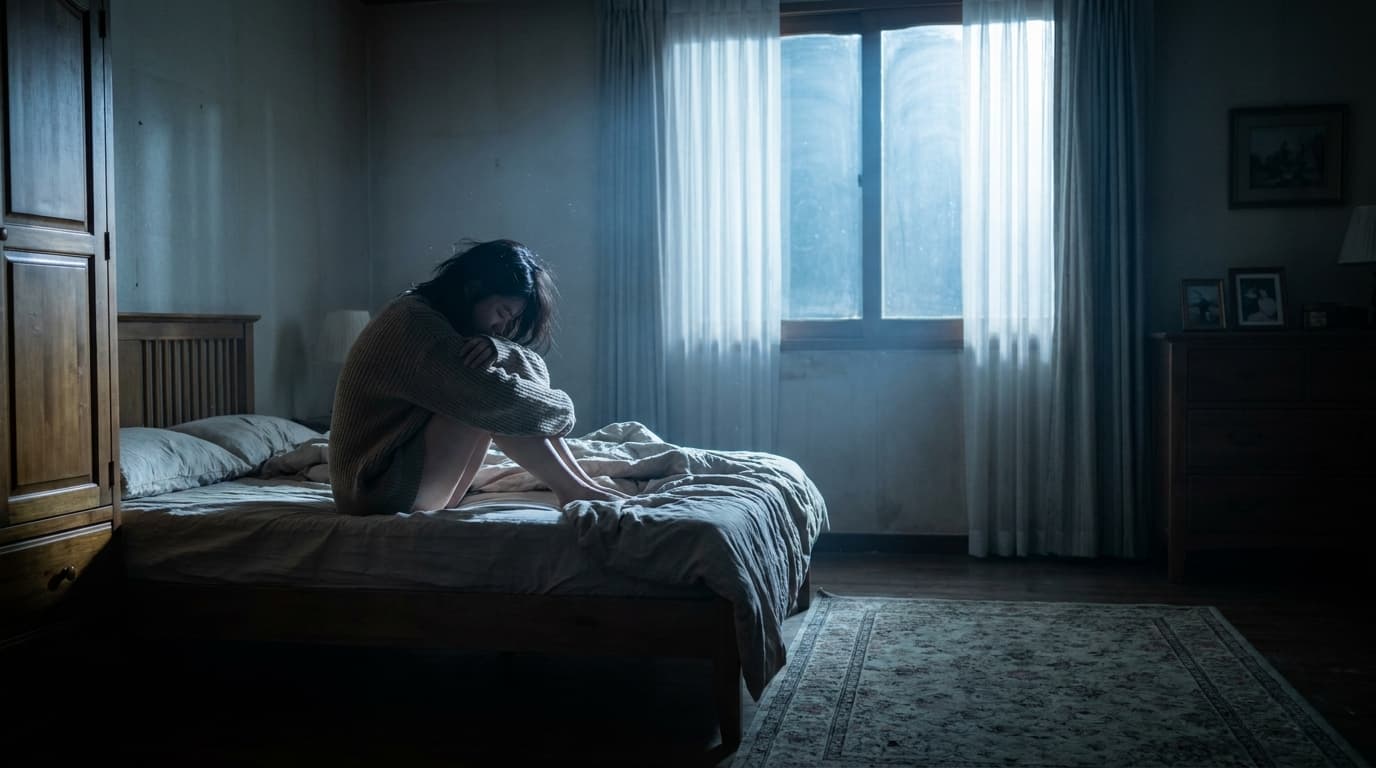
Feeling Depressed and Lethargic: Is it a Simple Emotion or a Sign of Depression?
Have you ever found yourself saying "I feel depressed and lethargic" like a habit? If you feel a dull tightness in your chest for no reason, struggle to sleep at night, and find it difficult just to open your eyes in the morning, it is hard to dismiss this as simply a bad mood. While anyone can experience mild feelings of sadness from time to time, if these emotions persist for days, weeks, or months and begin to affect your daily life, it may be a sign of clinical depression. When comforting yourself with "It's okay, it's okay" no longer works for this cold of the mind, it is time to understand the root cause and begin proper treatment.
💡 Key Takeaways Top 3 causes of feeling depressed and lethargic: ① Autonomic imbalance caused by severe stress / ② Brain function decline and neurotransmitter disruption / ③ Circadian rhythm collapse due to irregular lifestyle habits. Dalimchae Korean Medicine Clinic helps restore physical and mental resilience through "autonomic stabilization" treatment.
Could It Be Depression? Check with a Self-Diagnosis
Distinguishing between temporary sadness and depression is important. While temporary sadness can improve with rest or a change of scenery, depression is a medical condition requiring treatment. Through the following checklist, you can evaluate whether your current symptoms are simple blues or signs of depression requiring active intervention.
[Depression Self-Diagnosis Checklist]
- Feeling sad or depressed most of the day, nearly every day, for no apparent reason.
- Markedly diminished interest or pleasure in all, or almost all, activities most of the day.
- Significant weight loss when not dieting or weight gain, or decrease/increase in appetite nearly every day.
- Insomnia or hypersomnia nearly every day.
- Psychomotor agitation or retardation nearly every day.
- Fatigue or loss of energy nearly every day.
- Feelings of worthlessness or excessive or inappropriate guilt nearly every day.
- Diminished ability to think or concentrate, or indecisiveness.
- Recurrent thoughts of death, recurrent suicidal ideation without a specific plan, or a suicide attempt.
- These symptoms cause clinically significant distress or impairment in social, occupational, or other important areas of functioning.
Criteria:
- 3 or more items: Suspected depression phase. Autonomic dysfunction is likely; professional consultation is recommended.
- 5 or more items (especially including item 1 or 2): Immediate Korean medicine diagnosis and treatment are required.
How Korean Medicine Views Depression
Modern medicine explains depression through neurotransmitter imbalances in the brain, genetic factors, and environmental stress. Korean medicine views depression not simply as a brain disorder, but as a result of overall qi and blood circulation imbalance and lowered organ function. In particular, confusion in the autonomic nervous system is pointed out as a core cause. When stress or overwork continues, the balance of the autonomic nervous system breaks down, directly affecting brain function and emotional regulation. As the brain fails to rest and remains overheated, chronic lethargy, anxiety, sleep disorders, and even physical pain frequently accompany it.
The Principle of Stabilizing the Autonomic Nervous System through Korean Medicine
At Dalimchae Korean Medicine Clinic, Songdo branch, we focus on correcting autonomic imbalance, the root cause of depression. The autonomic nervous system acts like an accelerator (sympathetic) and brake (parasympathetic) in a car, balancing all bodily functions. However, modern stress hyperactivates the sympathetic nervous system, keeping the body in a constant state of tension while preventing the brain from resting. Our autonomic stabilization treatment focuses on lowering the heat in the overheated nervous system and creating an environment where the brain can comfortably rest.
Research consistently shows the effectiveness of Korean medicine in improving depressive symptoms. A 2022 study published in the Journal of Oriental Neuropsychiatry by Ahn et al. examined 102 patients with depression who received 12 weeks of Korean medicine treatment, showing significant improvements in depression (BDI-II), anxiety (BAI, STAI-X-1, STAI-X-2), and anger control. Particularly, moderate-to-severe depression patients recovered to normal levels, and moderate anxiety also returned to normal. Furthermore, a 2024/2026 animal study by the Korea Institute of Oriental Medicine (KIOM) and Kyung Hee University research team confirmed that acupuncture relieves PTSD-induced depression and anxiety via trigeminal pathways by regulating neuroinflammation and P2X7 receptors.
Autonomic Stabilization Treatment at Dalimchae, Songdo
At Dalimchae Korean Medicine Clinic Songdo Branch, we restore autonomic balance and enhance brain resilience through acupuncture, customized herbal medicine, pharmacopuncture, and moxibustion. Customized herbal prescriptions stabilize the hyperactive sympathetic nervous system and replenish deficient qi and blood to induce overall mental and physical calm. Precise pulse wave and autonomic tests objectively evaluate your current status and guide optimal treatment planning.
Q. How long does depression treatment take? A. Typically 3 to 6 months of consistent treatment and management is needed depending on symptom severity and response. Maintenance care after symptom improvement is crucial to prevent recurrence.
Q. Can simple depressive moods be treated with Korean medicine? A. Yes, simple depressive moods can be effectively improved before they develop into clinical depression.
Q. Can depression heal naturally? A. Temporary sadness may resolve naturally, but clinical depression is difficult to heal without active treatment and can worsen or become chronic.
Q. Can depression and insomnia be treated together? A. Yes, depression and insomnia are closely related, and our autonomic stabilization treatment addresses both simultaneously.
Do not ignore the body and mind signals any longer. Bring your current symptoms to Dalimchae Korean Medicine Clinic in Songdo, and let us find the cause together.
Medical Supervision | Department of Brain & Autonomic Regulation, Dalimchae Korean Medicine Clinic Songdo Branch, Korean Medicine Doctor Oh Hyunmin