
Hello. This is Dalimchae Korean Medicine Clinic.
My face is paralyzed, facial nerve palsy treatment, how should I start?
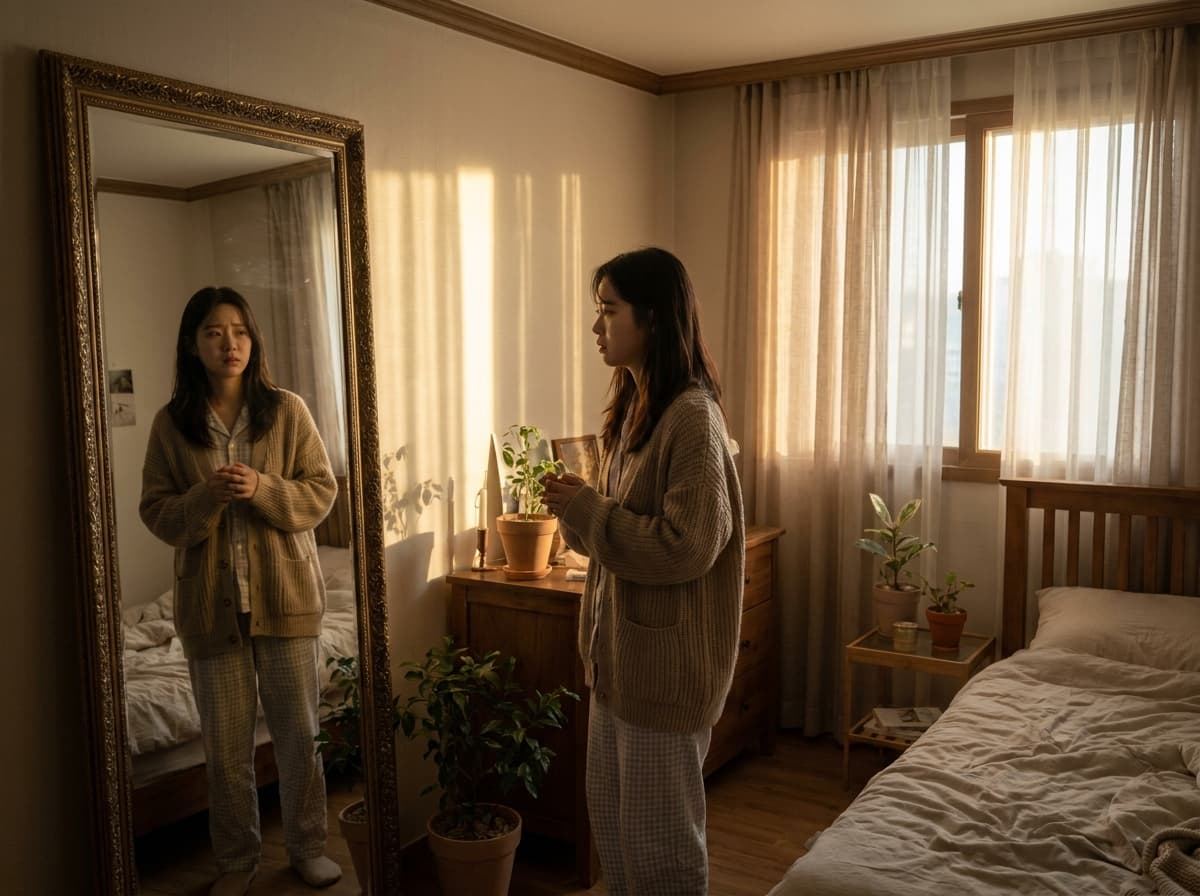
What if one day your face suddenly doesn't move as you want? Your face in the mirror feels strange, and ordinary daily life like laughing or talking can feel like a heavy task. If you are experiencing these symptoms and searching for 'my face is paralyzed,' it is highly likely that facial nerve palsy (Guanwasa) has occurred.
💡 [Core Answer] 3 most common causes of 'my face is paralyzed' (facial nerve palsy): ① Viral infection / ② Decreased immunity / ③ Autonomic imbalance due to stress and overwork Dalimchae Clinic resolves facial nerve palsy with integrative treatment that restores autonomic balance to help recover damaged facial nerves.
Why does facial nerve palsy happen suddenly?
Facial nerve palsy is a disease where paralysis occurs due to inflammation in the 7th cranial nerve, the facial nerve, which is responsible for facial muscle movement. It becomes difficult to make expressions on one side of the face, eyes do not close well, and the mouth may twist to one side. Often referred to as 'the mouth turned' in Korea, it was once considered mainly due to exposure to cold winds leading to decreased immunity, but recently, the incidence is increasing regardless of the season due to routine stress and overwork.
The most common cause is viral infection occurring during a state of low immunity. Influenza and herpes viruses are representative, and when the immune system weakens, viral infection becomes easy, increasing the possibility of Bell's palsy. Additionally, extreme stress, overwork, and lack of sleep break the balance of the autonomic nervous system, further weakening immunity and triggering the onset of facial nerve palsy. Rarely, Ramsay Hunt syndrome caused by the shingles virus, trauma, or tumors can also be the cause.
How does Korean medicine approach facial nerve palsy treatment?
Early treatment of facial nerve palsy is very important. Treatment must start within 4 days, or at least 1 week to 10 days at the latest, to minimize aftereffects and speed up recovery. Dalimchae Clinic Incheon Branch does not see facial nerve palsy simply as a problem of facial nerves but focuses on restoring the balance of the autonomic nervous system deeply related to immunity.
In Korean medicine, facial nerve palsy has been treated through acupuncture, pharmacopuncture, and herbal medicine. Particularly, the effectiveness of Korean medical treatment for facial nerve palsy is being confirmed through various studies.
According to a meta-analysis study published in the journal 『Complementary Therapies in Medicine』 in 2018, acupuncture treatment was found to contribute to increasing the total effective rate of Bell's palsy patients. It showed a relative risk (RR) of 1.11 (1.05-1.17) at a 95% confidence interval (CI), and a RR of 1.56 (1.30-1.87) in the cured rate after treatment. Although qualitative limitations and potential biases of the study were pointed out, it suggests an overall positive trend for acupuncture treatment.
Also, a systematic review and meta-analysis study published in the journal 『PLoS One』 in 2015 analyzed the effect of acupuncture treatment on 1,541 Bell's palsy patients who participated in 14 randomized controlled trials (RCTs). This study reported that acupuncture treatment is significantly related to increasing the effective response rate of Bell's palsy (RR 1.14; 95% CI, 1.04–1.25; p = 0.005). Particularly, significant effects were observed in both the acupuncture-only group and the drug combination group, suggesting that acupuncture can play an important role in facial nerve palsy treatment.
Based on this research data, Dalimchae Clinic goes beyond simply stimulating paralyzed facial muscles and creates an environment where damaged nerves can recover themselves by correcting the autonomic balance of the entire body.
Principle of Dalimchae Clinic's Autonomic Stabilization Treatment
Facial nerve palsy is closely related to the imbalance of the autonomic nervous system. When the sympathetic nervous system is excessively activated due to stress and overwork, immunity decreases, which can cause inflammation in facial nerves or delay recovery. Dalimchae Clinic fundamentally treats facial nerve palsy through 'autonomic stabilization'.
Autonomic stabilization is a treatment principle that calms the state where the brain cannot rest and is overheated, restores the balance between sympathetic and parasympathetic nerves, and maximizes our body's natural healing power. Incheon Facial Nerve Palsy Clinic calms the overheated heat of the nervous system and creates an environment where the brain can rest through Korean medical treatments such as acupuncture, pharmacopuncture, and herbal medicine. In Korean medicine, this is called 'Su-seung-hwa-gang', aiming for an ideal circulation state by lowering the hot energy of the head and raising the cold energy of the lower body.
Acupuncture treatment stimulates facial acupoints to promote Qi and Blood circulation and alleviate inflammation of facial nerves. Particularly, acupuncture treatment accompanied by appropriate stimulation called 'Deuk-gi' is reported to have superior effects on facial nerve function recovery. Also, by directly performing pharmacopuncture effective for nerve regeneration and inflammation alleviation, we help recovery, and herbal medicine prescribed according to each patient's constitution and symptoms helps prevent recurrence by strengthening weakened immunity and restoring autonomic balance. This can be expected to improve autonomic-related symptoms such as headaches or dizziness that can accompany facial nerve palsy.
How does facial nerve palsy treatment proceed?
Incheon Facial Nerve Palsy Clinic, Dalimchae Clinic Incheon Branch, provides systematic steps for facial nerve palsy treatment.
- Precision Diagnosis: Closely identify the patient's symptom onset time, accompanying symptoms, and medical history, and accurately diagnose the degree of paralysis through facial nerve function tests.
- Customized Treatment Plan: Combine various Korean medical treatments such as acupuncture, pharmacopuncture, electroacupuncture, moxibustion, and cupping according to diagnostic results and the patient's constitution, and proceed with herbal medicine prescription for autonomic stabilization.
- Facial Rehabilitation Treatment: Support normal facial function recovery by combining physical therapy, facial muscle exercise education, and Chuna therapy to help recover paralyzed facial muscles. Particularly, facial Chuna therapy is known as an effective Korean medical treatment for normalizing nerves and muscles by correcting distorted facial muscles.
- Recovery Management and Aftereffect Prevention: Minimize the occurrence of aftereffects through continuous management even after treatment, and provide lifestyle habit improvement and immunity strengthening education to prevent recurrence.
Facial nerve palsy, could it be me? Symptom Checklist
If 3 or more of the following apply, suspect facial nerve palsy and receive detailed consultation at Dalimchae Clinic Incheon Branch.
- One eye does not close well and tears up or is dry.
- Wrinkles do not form on the forehead or it is asymmetric.
- There is pain behind the ear or in the face.
- Spill water or food to one side when drinking or eating.
- The corner of the mouth does not rise well or it is difficult to whistle.
- The tongue's sense is dulled or you can't taste well.
- Sounds sound too loud or you react sensitively.
- The face feels stiff or swollen.
If 3 or more apply → Suspect autonomic imbalance type facial nerve palsy → Review Dalimchae Clinic's Korean medicine complex treatment. If 5 or more apply → Immediate visit for precise diagnosis and treatment is recommended.
FAQ: Questions about facial nerve palsy
Q. How long does facial nerve palsy take? A. The treatment period for facial nerve palsy varies depending on the patient's age, health status, onset time, and symptom severity, but it usually takes several months to more than a year. The faster the early treatment, the more the recovery period can be shortened and aftereffects reduced.
Q. Can facial nerve palsy also be treated with Korean medicine? A. Yes, Korean medicine effectively treats facial nerve palsy through various treatments such as acupuncture, pharmacopuncture, herbal medicine, moxibustion, cupping, and Chuna therapy. Particularly, it helps fundamental recovery by focusing on autonomic balance restoration and immunity strengthening.
Q. Can facial nerve palsy recur? A. Although rare, facial nerve palsy can recur. Especially if stress, overwork, or immunity decrease is severe, the risk of recurrence increases, so steady health management and prevention are important.
Q. What are the aftereffects of facial nerve palsy? A. If the treatment timing is missed or sufficient treatment is not received, aftereffects such as facial spasms, facial muscle asymmetry, and synkinesis (unintentional muscle movement when moving specific muscles) can remain. Since this can cause discomfort in daily life, active treatment is necessary.
Facial nerve palsy is not a problem solved by enduring. You no longer have to ignore the signals your body has been sending for a long time. If you approach it in the right direction, your body will react faster than you think. Bring your symptoms as they are. Dalimchae Clinic will find the cause together.
Where life blooms. For herbal medicine, it's Dalimchae Korean Medicine Clinic. Check your symptoms similar to mine through the AI consultation on the Dalimchae Clinic website first!
This article is health information compiled by Dalimchae medical staff based on questions frequently received in the treatment room. Medical Supervision | Dalimchae Clinic Incheon Branch Korean Medicine Doctor Min Jihong (Facial Nerve Palsy Column) based on Brain/Autonomic Nervous System treatment standards.