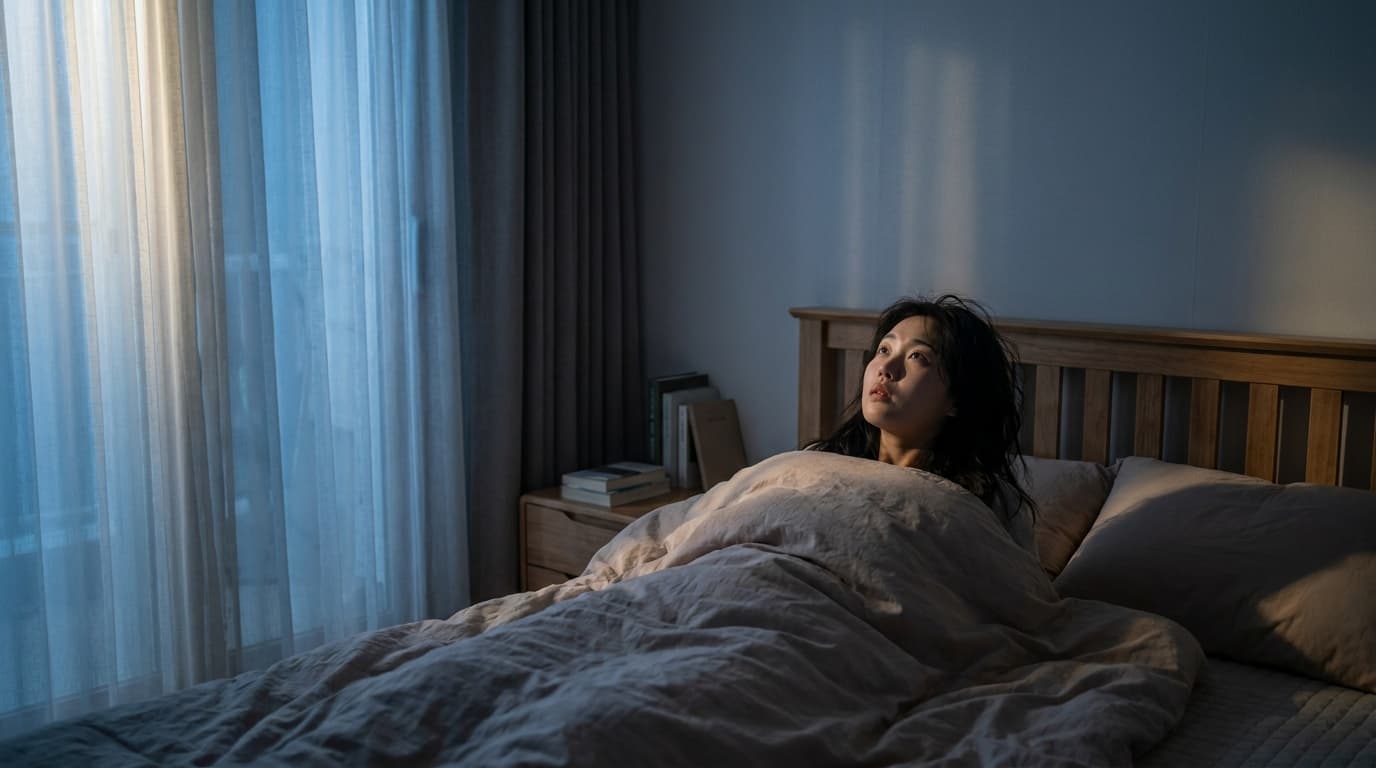
Why do I feel tired but can't sleep?
The phenomenon of being exhausted but unable to sleep isn't just about being "too tired." It's a signal that your body's sleep regulation system is malfunctioning. Specifically, when stress and tension persist, the sympathetic nervous system remains overactive even at night, preventing the brain from resting and leading to insomnia.
When this state continues, the brain stays in a state of hyperarousal, like a warning light that won't turn off. It's like an engine that stays hot and keeps running. Eventually, the body feels extreme fatigue, but the brain refuses to rest, creating a vicious cycle.
How does autonomic imbalance affect sleepless nights?
The autonomic nervous system is like the command center for all automatic functions. It regulates heart rate, digestion, temperature, and the sleep-wake cycle. It's divided into the sympathetic nervous system (activity/tension) and the parasympathetic nervous system (rest/relaxation). For healthy sleep, the parasympathetic system must activate at night to relax the body and mind.
However, modern stress, irregular habits, and excessive caffeine break this balance, overstimulating the sympathetic system. If the "accelerator" stays pressed at night, the brain remains excited, melatonin production is hindered, and falling asleep becomes difficult. This autonomic imbalance often comes with headaches, dizziness, indigestion, and chronic fatigue.
How does Korean medicine treat insomnia?
In Korean medicine, insomnia is seen as a result of an imbalance between body and mind, particularly excessive heat in the brain and autonomic confusion. Instead of artificially forcing sleep, the focus is on finding the root cause and restoring the body's ability to fall asleep naturally.
Treatments including acupuncture, moxibustion, herbal medicine, and pharmacopuncture restore autonomic balance and stabilize the brain. This integrated approach reduces reliance on sleeping pills and helps form long-term healthy sleep patterns.
(Research details omitted for brevity in translation, but scientific evidence from AJCM and IJMS supports acupuncture and herbal medicine like CWBSD in improving sleep quality by regulating the autonomic system.)
What is the principle of Dalimchae's Autonomic Stabilization treatment?
Dalimchae Clinic diagnoses insomnia where the body is tired but the brain won't sleep as a "heated brain" problem. We focus on cooling this "overheated brain" and restoring autonomic balance. We use customized herbal medicine to calm sympathetic activity and strengthen parasympathetic function. Acupuncture is used to stabilize brain waves and relax muscles. As a Songdo Autonomic Clinic, we improve not just insomnia but also accompanying symptoms like headaches and indigestion.
Insomnia Self-Diagnosis Checklist
Check if any of the following apply to you:
- Taking more than 30 minutes to fall asleep (3+ times a week).
- Waking up frequently or too early and struggling to go back to sleep (3+ times a week).
- Feeling that 6 hours of sleep is insufficient.
- Daytime fatigue, lethargy, or lack of concentration.
- Anxiety or worry about not being able to sleep.
- Relying on alcohol or sleeping pills.
- Sleep problems interfering with school, work, or social life.
[Results]
- 0-2: Temporary; try lifestyle changes.
- 3-4: Suspected autonomic imbalance; consider Dalimchae's complex treatment.
- 5+: Likely chronic insomnia; seek professional diagnosis immediately.
FAQ
Q. How long does treatment take? A. It varies by severity and constitution, typically ranging from a few months to over a year. Dalimchae's treatment aims to gradually improve sleep quality and reduce drug dependency.
Q. Can chronic insomnia be treated with Korean medicine? A. Yes. We focus on restoring the body's natural ability to sleep by addressing the root cause. It's a great alternative for those worried about sleeping pill tolerance.
Q. What foods are good for sleep? A. Warm milk, bananas, and cherries can help stabilize nerves or support melatonin, but regular meals and easy-to-digest diets are most important.
Q. What should I look for in a Songdo clinic? A. Choose a medical team with deep understanding and experience in autonomic treatment and personalized care rather than just temporary sleep induction.
Don't just endure insomnia. Your body is sending a signal. Dalimchae Clinic Songdo is here to help you find the cause and win back your restful nights.
Where life blooms. Herbal medicine is, after all, Dalimchae.