
Hello. This is Dalimchae Oriental Clinic.
Excessive Sweating: Is it Just Menopause? What is Your Body Really Saying?
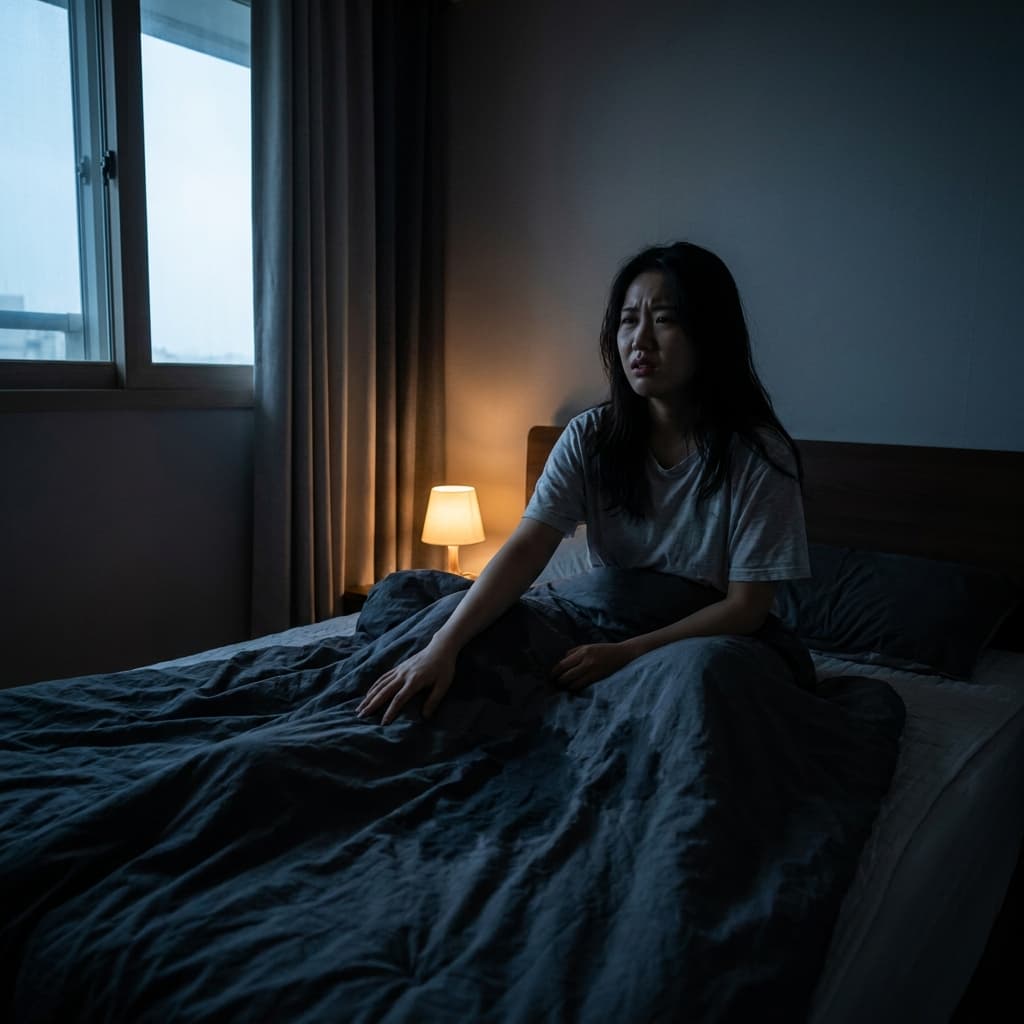
Have you ever experienced waking up from sleep to find your blanket soaked, or cold sweat trickling down your spine even in a cool place? Many people complaining "I have excessive cold sweat" often simply think it's because of menopause or just being tired. However, cold sweat sent by our body can be an important warning signal sent from deep within, beyond simple temperature regulation issues. Especially, cold sweat, which may appear differently from menopausal flushes, is important to identify its exact cause and manage it appropriately.
💡 [Key Answer] 3 most common causes of recurring cold sweat: ① Autonomic nervous system imbalance ② Deficiency of Qi and Blood (Heo-jeung) ③ Specific internal diseases (Menopause, Thyroid, etc.) Dalimchae Oriental Clinic treats the root cause of cold sweat by restoring the body's temperature control system and overall balance through autonomic stabilization.
Why does cold sweat flow especially at night? Is it because of menopause?
Cold sweat, especially the one that flows during sleep (Dohan, 盜汗), is easily confused with 'facial flushing', a representative symptom of menopause. During menopause, facial flushing and perspiration can accompany vascular motor nerve symptoms due to a decrease in female hormones. However, the causes of cold sweat other than menopause are very diverse. In Oriental medicine, cold sweat is divided into 'Jahan (自汗)' and 'Dohan (盜汗)', where Jahan refers to sweat that flows spontaneously during activity, and Dohan refers to sweat that flows during sleep.
Representative causes include autonomic nervous system imbalance due to stress and overwork. Also, cold sweat can easily appear when the body is weak and lacking Qi (Qi deficiency), or when there is heat rising in the body due to a lack of blood or Jin-yeok (Yin deficiency fire). Since cold sweat can also be accompanied by specific diseases such as hyperthyroidism, hypoglycemia, heart disease, tuberculosis, and lymphoma, a precise diagnosis is necessary rather than just dismissing it as simple fatigue.
Principles of how autonomic imbalance induces cold sweat
The autonomic nervous system of our body independently regulates life-sustaining functions such as heart rate, breathing, digestion, temperature regulation, and sweat secretion without conscious effort. The sympathetic nerve excites the body when tense or active, and the parasympathetic nerve stabilizes the body when resting and relaxing. These two nerves maintain our body's homeostasis by balancing each other, and if this balance is broken, various physical discomforts occur.
Especially when the sympathetic nerve is excessively activated due to stress, overwork, or lack of sleep, our body maintains a state of unnecessary tension and excitement. This state can also affect the temperature regulation system, stimulating sweat glands and leading to excessive perspiration. Conversely, if the function of the parasympathetic nerve drops, the body's recovery ability decreases, and cold sweat may appear along with chronic fatigue. Oriental medicine views this autonomic imbalance as a 'state where the harmony of mind and body is broken' and approaches it according to the individual's constitution and symptoms.
How does Oriental medicine diagnose and treat cold sweat?
At Dalimchae Oriental Clinic Incheon Branch, we closely examine the overall condition of the patient to find the cause of cold sweat. The goal is to solve the fundamental cause so that the body can regain its healthy balance on its own, rather than just suppressing the symptoms.
A report by the research team of Sun-joo Ahn and Dong-ho Geum published in the 2021 『Journal of Korean Medicine Rehabilitation』 suggests that autonomic imbalance induces various physical symptoms, including the phenomenon of 'sweating while sleeping'. Like this, Oriental medicine does not see cold sweat simply as a problem of sweat secretion, but approaches it from a complex perspective such as functional decline of internal organs, imbalance of Qi and blood, and confusion of the autonomic nervous system.
Other studies report that acupuncture treatment is effective in improving heart rate variability (HRV), an indicator of autonomic function, and increasing digestive function. Also, in the AIM (Acupuncture in Menopause) study by Avis et al. published in the 2016 journal 『Menopause』, evaluating the effectiveness of acupuncture treatment for women experiencing menopausal symptoms, it showed that acupuncture treatment can provide significant help in alleviating menopausal symptoms including facial flushing and night sweats. Researchers concluded that acupuncture treatment can play an important role in improving the quality of life of menopausal women as a non-pharmacological treatment. These research results are the reason why Dalimchae Oriental Clinic focuses on treating cold sweat through autonomic stabilization.
Dalimchae Oriental Clinic accurately grasps the current state of the body through autonomic function tests along with Oriental medical diagnoses such as pulse diagnosis, tongue diagnosis, and abdominal diagnosis of the patient. Especially by identifying excessive excitement or depression of the autonomic nervous system, it implements autonomic stabilization treatment suitable for the individual. Like cooling an overheated engine, we focus on normalizing the body's automatic regulation function by relaxing the tensed sympathetic nerve and raising the decreased parasympathetic nerve function. Lowering the heat of the nervous system and creating an environment where the brain can rest, this is called Suseunghwagang (水昇火降) in Oriental medicine. This goes beyond simply stopping the sweat, leading to fundamental treatment that increases resistance to stress and raises overall condition to prevent recurrence.
Cold Sweat Symptom Checklist
How many of the following items apply to you?
- □ I sweat enough to soak my blanket or clothes when I fall asleep at night.
- □ Even though it's not hot, cold sweat often flows on my back, head, hands, and feet during the day.
- □ I often feel my heart pounding or feel stuffy.
- □ Feelings of anxiety or tension persist for no reason.
- □ It's hard to fall asleep, or I wake up often even after falling asleep.
- □ Digestion is not good, and there are symptoms of bloating or stuffiness.
- □ I feel tired more easily than usual and often feel lethargy.
- □ There are many cases accompanied by headache or dizziness.
- □ My hands and feet are cold, or I often feel numbness.
- □ Emotional swings are severe, or it's hard to hold back irritation and anger.
[Judgment and Recommended Action]
- If 3 or more apply: Autonomic imbalance-type cold sweat can be suspected. Please review autonomic tests and treatment at Dalimchae Oriental Clinic Incheon Branch.
- If 5 or more apply: It is a stage where immediate autonomic function recovery treatment is needed. We recommend visiting Dalimchae Oriental Clinic Incheon Branch, a Songdo autonomic nerve Oriental clinic, for a precise diagnosis and starting customized treatment.
Q. I have excessive cold sweat, should I visit a hospital? A. Yes, since cold sweat can be a signal of various diseases, if it appears continuously, it is important to visit an Oriental clinic or a hospital to identify the exact cause. Especially since there is a possibility of other medical problems besides menopausal symptoms, a specialist's examination is essential.
Q. Are there other causes besides menopausal cold sweat? A. Yes, besides menopause, cold sweat can appear due to various causes such as autonomic nervous system imbalance, excessive stress, chronic fatigue, deficiency of Qi and blood, thyroid disease, and hypoglycemia. Dalimchae Oriental Clinic Incheon Branch analyzes and treats these complex causes from various angles.
Q. Will Oriental medicine treatment help alleviate cold sweat? A. Oriental medicine treatment can help alleviate symptoms by improving autonomic imbalance and deficiency of Qi and blood, which are the fundamental causes of cold sweat. We regain the balance of the body and normalize temperature control function through customized treatments such as acupuncture, pharmacopuncture, and herbal medicine suitable for the individual.
Q. Can I receive cold sweat treatment at the Incheon Branch? A. Yes, Dalimchae Oriental Clinic Incheon Branch specializes in treating autonomic nervous system diseases including cold sweat. After a precise diagnosis considering individual symptoms and constitution, we establish a systematic Oriental medicine treatment plan to help the body recover.
Cold sweat is not a problem that can be solved by enduring it. You no longer have to ignore the signals your body has been sending for a long time. If you approach it in the right direction, your body will react faster than you think. Bring the symptoms you are experiencing exactly as they are. Dalimchae Oriental Clinic will find the cause together.
Where life blooms. For herbal medicine, it's Dalimchae Oriental Clinic. Check your symptoms first with the AI consultation on the Dalimchae Oriental Clinic website!
This article is health information compiled by the Dalimchae medical staff based on questions frequently received in the treatment room. Medical Supervision | Skin Disease Treatment Standard, Dalimchae Oriental Clinic Incheon Branch, Oriental Doctor Min Ji-hong (Skin Symptom Column)