
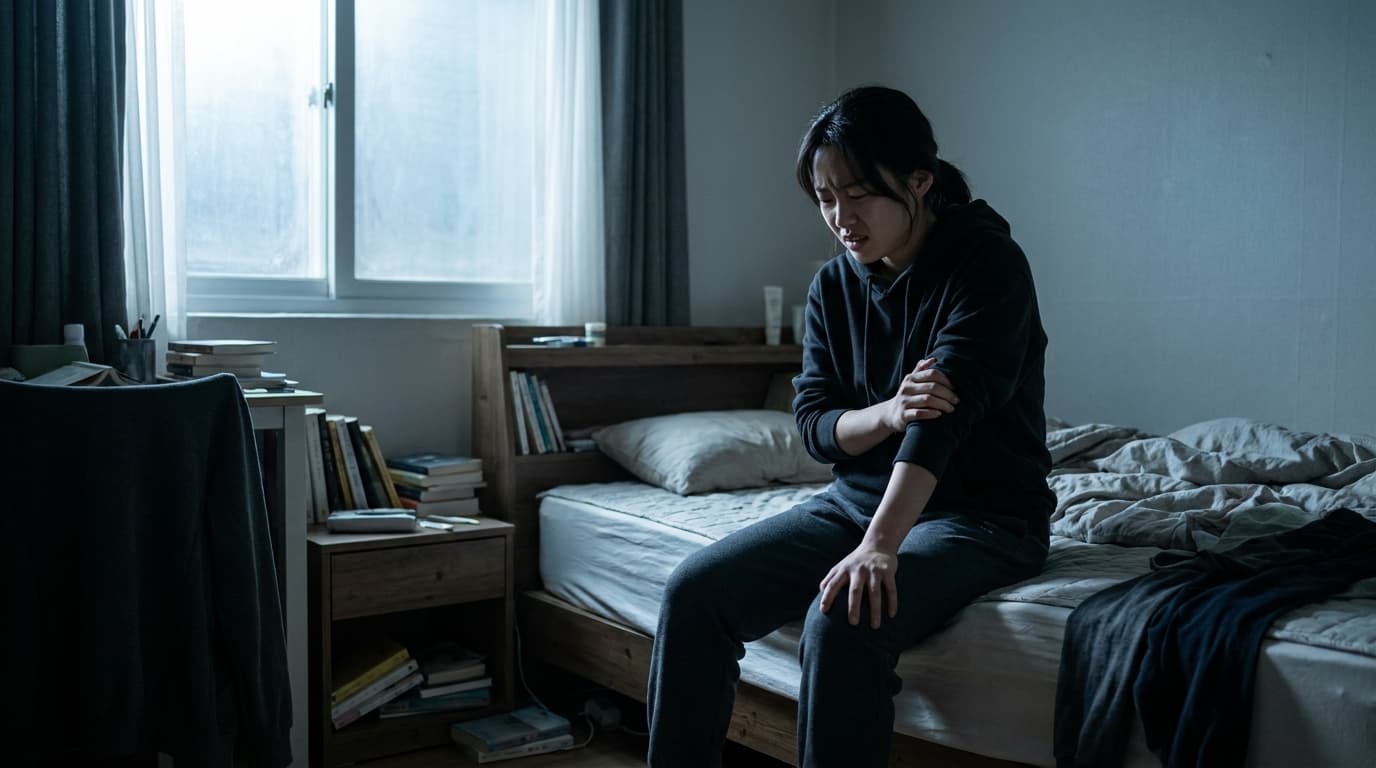
"I've been taking dermatology medications, but it still itches." There is perhaps no expression that better captures the desperation of those suffering from chronic skin conditions. Staying up all night scratching, hesitating to go out because of red, flared-up skin—this is the reality for many. Even with consistent use of ointments and medications prescribed by dermatologists, relief is temporary; as soon as medication stops, symptoms return with a vengeance. Many people feel exhausted and frustrated. Chronic skin problems are often not just surface-level issues, but vital signals sent from deep within our bodies.
💡 [Key Answer] The 3 most common causes of the symptom "It still itches even after taking dermatology meds": ① Immune system disruption / ② Gut health imbalance / ③ Skin barrier function decline. Dalimchae Korean Medicine Clinic restores skin's natural immunity by addressing the root cause inside the body through gut detoxification.
Why does dermatology medication only offer temporary relief? Root causes of chronic skin conditions
Topical steroids and antihistamines are highly effective for suppressing inflammation and relieving itchiness quickly. However, this is akin to pouring cold water on an overheating engine. While it temporarily cools the heat, the problem inevitably recurs unless the underlying cause of engine overheating is resolved. The primary reason chronic skin conditions fail to respond well to dermatology meds or keep recurring is that the problem lies in the internal environment of the body, not just on the surface.
Our skin is closely connected with the immune system, gut health, and the autonomic nervous system. In particular, the gut and skin are linked through the "Gut-Skin Axis." When gut microbiota imbalance (such as leaky gut syndrome) occurs, intestinal permeability increases, allowing toxins and undigested substances to enter the bloodstream. These substances circulate systemically, triggering or worsening skin inflammation. Furthermore, autonomic nervous system imbalances caused by stress or poor lifestyle habits exacerbate immune dysfunction and inflammatory responses, fueling chronic skin conditions.
How does Korean medicine approach chronic skin conditions?
At Dalimchae Korean Medicine Clinic Incheon Branch, chronic skin conditions are not viewed merely as surface symptoms, but as a state of overall body imbalance. We focus particularly on immune disruption and gut health imbalance as key triggers. Chronic symptoms such as persistent itching, redness, and lichenification that resist dermatology treatments can be improved through oriental medicine treatments that use gut detoxification to optimize internal environments and elevate skin regeneration power.
Improving the Gut-Skin Axis to Manage Chronic Skin Conditions
According to a randomized controlled trial published in Frontiers in Pharmacology (2025) by Lee Bong et al., administering Bojungikgi-tang (a traditional herbal medicine) to 26 patients suffering from both atopic dermatitis (AD) and anorexia for 8 weeks showed significant improvement. Compared to the control group, the Bojungikgi-tang group demonstrated statistically significant improvements in SCORAD (SCORing of Atopic Dermatitis) scores and DLQI (Dermatology Life Quality Index) quality of life scores, which were maintained during a 4-week follow-up. Notably, serum IL-1β levels associated with inflammatory responses significantly decreased only in the treatment group, and meaningful changes in gut microbiota composition (such as Gemella, Gemmiger formicilis, and Blautia_uc) were observed, suggesting a therapeutic effect mediated by gut-skin axis modulation. The researchers concluded that Bojungikgi-tang improves atopic dermatitis symptoms by modulating gut microbiota safely.
This research data clearly demonstrates the impact of gut health on skin diseases, serving as an important basis for Dalimchae's gut detoxification approach. At our Incheon branch, we prescribe personalized herbal medicines tailored to each patient's constitution to improve gut environments, reduce inflammation, and strengthen the skin barrier.
Additionally, an 8-week non-comparative clinical study published in KoreaMed Synapse (2018) by Oh Mi-sook et al. administered Korean Red Ginseng (KRG) to 41 patients with mild-to-moderate atopic dermatitis for 8 weeks, resulting in significant reductions in EASI (Eczema Area and Severity Index) scores and transepidermal water loss (TEWL). Notably, patient-reported outcomes such as VAS of pruritus and VAS of sleep disturbance also significantly improved, confirming positive effects on quality of life. The researchers reported that red ginseng can be a safe adjunctive therapy improving clinical symptoms and quality of life in atopic dermatitis patients. This supports Dalimchae's focus on genuinely reducing patient suffering beyond mere inflammation suppression.
How is Dalimchae's Gut Detoxification Treatment Different?
While dermatology medications focus on surface symptoms, Dalimchae's gut detoxification treatment identifies and resolves root causes within the body. The gut, often called our "second brain," is a vital stronghold of the immune system. Toxins accumulated in the intestinal wall and unbalanced gut microflora often trigger systemic inflammation via the bloodstream, which then manifests on the skin.
Gut detoxification goes beyond merely clearing the bowels; it strengthens gut function, fosters an environment for beneficial microbes, and supports intestinal mucosal regeneration. This prevents the influx of unnecessary toxins, regulates immune hypersensitivity, and builds a foundation for the skin to heal itself. For those seeking an Incheon skin clinic for chronic skin conditions, this fundamental approach is crucial. Gut detoxification also helps improve digestive disorders, acid reflux, and irritable bowel syndrome, contributing to overall health enhancement.
Self-Checklist: Could It Be Me? Chronic Skin Conditions
If you check 3 or more items below, consider reviewing Dalimchae's gut detox treatment for root-cause improvement of chronic skin conditions. If 5 or more apply, prompt consultation is recommended.
- Dermatology meds or ointments provide only temporary relief and flare back up when stopped.
- Itching is so severe that it disturbs sleep or wakes you up at night.
- Skin becomes red and scaly, and scratching causes oozing or bleeding.
- Indigestion, frequent bloating, or gas in the abdomen.
- Chronic fatigue and feeling easily exhausted.
- Skin symptoms worsen significantly when stressed.
- Frequent constipation or diarrhea with irregular bowel movements.
- Coexisting allergic conditions such as allergic rhinitis or asthma.
FAQs on Chronic Skin Conditions
Q. Is it okay to combine dermatology medications with Korean medicine treatments? A. Yes, they can be safely combined under professional guidance. Korean medicine helps build skin's natural resilience while reducing steroid dependency and minimizing side effects.
Q. How long does treatment for chronic skin conditions take? A. Treatment duration varies based on individual constitution, symptom severity, and duration. Typically, 3 to 6 months or more of consistent treatment and lifestyle management are required, aiming to lower recurrence rates by improving internal environments.
Q. Can I receive treatment at the clinic even if my skin symptoms are mild? A. Of course. Managing internal causes when symptoms are mild prevents chronic recurrence and stops progression into more severe issues. Get a personalized consultation at Dalimchae Korean Medicine Clinic Incheon Branch.
Q. Can steroid side effects occur after Korean medicine treatment? A. Korean medicine has a different mechanism of action from steroids, so steroid-related side effects do not occur. Rather, it helps manage and reduce rebound phenomena resulting from long-term steroid use.
Chronic skin conditions cannot be solved simply by enduring them. You no longer need to ignore the signals your body has been sending for a long time. With the right approach, the body responds faster than you think. Bring your current symptoms as they are, and we will find the causes together at Dalimchae Korean Medicine Clinic.
Where life blooms. Herbal medicine is, after all, Dalimchae Korean Medicine Clinic. Check symptoms similar to yours first via Dalimchae Korean Medicine Clinic website AI consultation!
Medical Supervision | Skin Condition Treatment Standards, Dr. Yang Yuchan, Incheon Branch, Dalimchae Korean Medicine Clinic (Chronic Skin Condition Column)