
Hello, this is Dalimchae Korean Medicine Clinic.
Cold Hands and Feet, When the Bodys Cold Engine Shows a Warning Light
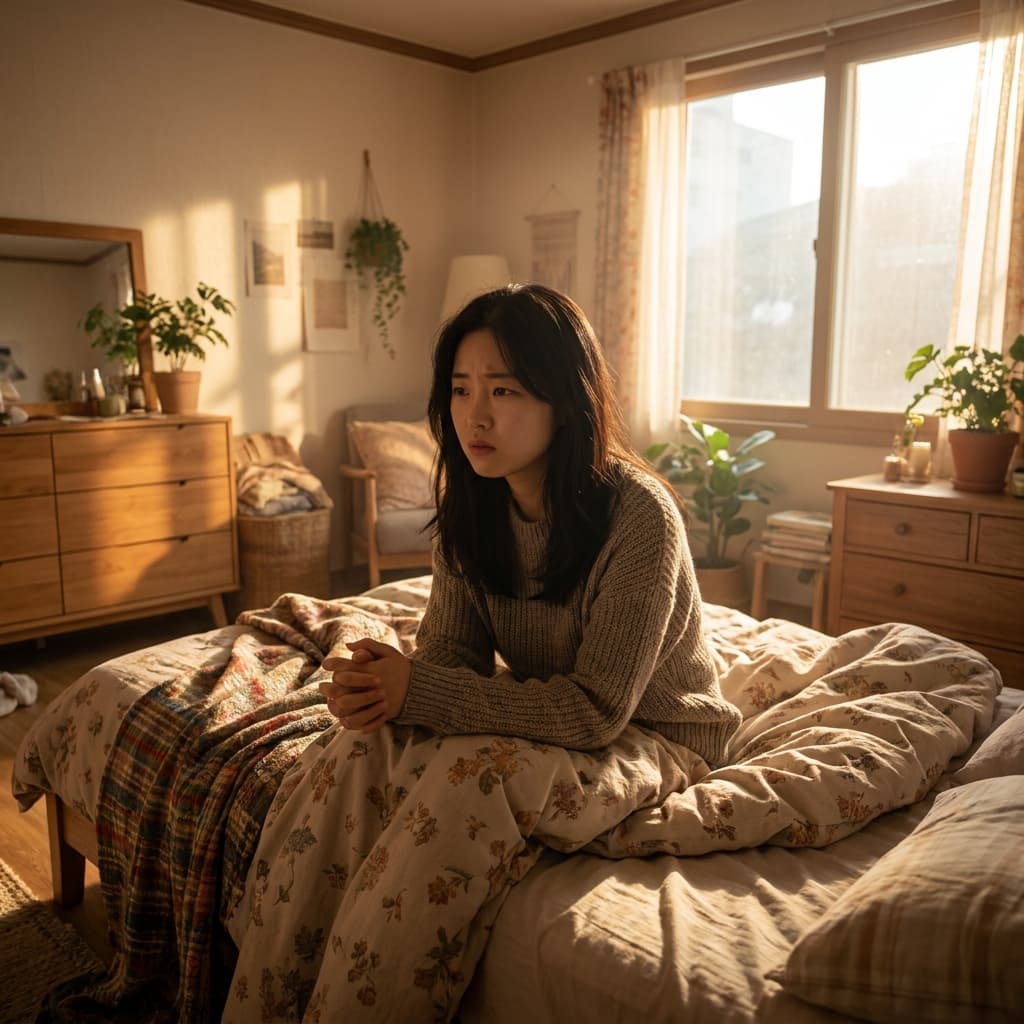
Are you spending the season where thick socks are essential, and warming your hands in hot water helps only temporarily? Whether in summer when hands and feet freeze in the cold air conditioner breeze or in seasons needing warmth, the continuous cry of "my hands and feet are cold" can be an important signal from the body beyond mere inconvenience. Especially for women, the sensation of coldness in hands and feet not only degrades quality of life but can also be a precursor to other health issues. Brushing it off as "my body is naturally cold" ignores our body's constant efforts to maintain balance. This coldness may be a warning light that there is a problem with the bodys "cold engine," and properly understanding and resolving this signal is important.
💡 [Key Answer] The 3 most common causes of "my hands and feet are cold": ① Autonomic nervous system imbalance / ② Peripheral blood circulation disorder / ③ Decreased thermoregulation capacity Dalimchae Korean Medicine Clinic does not just turn off symptoms with constitutional improvement, but creates a body where they do not turn back on.
Why are only my hands and feet cold? 3 Fundamental Causes of Coldness
Coldness in hands and feet is not merely a matter of constitution enduring cold well. If balance breaks down anywhere in our bodys complex system, warmth may not reach the tips of hands and feet. There are three core causes.
First, autonomic nervous system imbalance. When the sympathetic nervous system is excessively activated due to stress or overwork, blood vessels contract, blood circulation decreases, and blood flow to the ends of hands and feet diminishes. This occurs because the autonomic nerves regulating bodily "homeostasis" fail to function properly, leading to overload of the brain and entire nervous system.
Second, peripheral blood circulation disorders. When blood vessels themselves narrow or blood quality becomes murky, making circulation sluggish, warm blood struggles to reach the fingertips and toes. Especially in women, sensitivity to hormonal changes can affect blood vessel contraction and relaxation functions.
Third, overall decreased thermoregulation capacity of the body. When metabolism is not active or organ functions weaken, the bodys ability to generate and maintain heat on its own declines. In this case, localized coldness is felt not only in hands and feet but also in the lower abdomen and waist.
How does Oriental medicine view and treat coldness?
Even when no special abnormalities are found in modern medical examinations, many patients complain of cold hands and feet. In Oriental medicine, such coldness is seen as a signal stemming from overall bodily imbalance rather than a simple symptom. When Qi and Blood circulation is sluggish or internal organ functions decline, lacking "warm Qi" inside the body causes coldness. Especially for women, coldness easily occurs during periods of major hormonal changes such as menstruation, pregnancy, and childbirth.
Dalimchae Korean Medicine Clinic in Incheon focuses on restoring autonomic balance and fundamental organ functions that regulate body temperature and immunity.
Clinical Significance of Oriental Medicine Treatment for Coldness
Recent studies consistently suggest the potential of Oriental medicine treatment for coldness. For example, a clinical study published in PMC in 2024 evaluated 72 female patients suffering from cold hands and feet, comparing acupuncture (AC) and electroacupuncture (EA) groups with a control group. The results confirmed that the acupuncture and electroacupuncture groups showed a statistically significant improvement in hand coldness VAS (Visual Analog Scale) scores compared to the control group throughout the treatment period (p<0.05).
Another study, a retrospective chart review reported in the Journal of Korean Medical Society of Acupotomology in 2022, applied magnetic thermal acupuncture (Hwała 153) to 16 patients with cold hands and feet. Body temperature changes were measured via DITI (Digital Infrared Thermal Imaging) before and after treatment, and it was observed that the temperature of the left hand significantly increased from an average of 29.36℃ to 30.59℃, and the right hand from 29.21℃ to 30.25℃.
Based on these data, Dalimchae Korean Medicine Clinic focuses on deeply improving circulation and restoring the bodys ability to self-regulate temperature.
Creating a Body That Does Not Turn Back On through Constitutional Improvement
Dalimchae Korean Medicine Clinic applies the principle of constitutional improvement treatment for fundamental resolution of coldness. Constitutional improvement aims not to temporarily cover current cold symptoms, but to restore the bodys ability to produce and circulate heat on its own, creating a healthy body where symptoms do not reappear.
We focus on boosting metabolic functions, smoothing circulation in cold hardened blood vessels, and restoring autonomic balance exhausted by stress. Personalized herbal medicine is prescribed based on individual constitution, coldness type, and accompanying symptoms.
My Hands and Feet Are Cold, How Severe Is My Coldness? (Self-Diagnosis Checklist)
Review the items below and check your level of coldness.
- □ Hands and feet always feel cold and do not easily warm up even in warm places.
- □ It is hard to fall asleep because hands and feet feel chilly before going to bed.
- □ Specific areas like the lower abdomen, waist, or knees feel uniquely cold.
- □ When going to cold places, fingers or toes turn white or blue before turning red.
- □ Digestion is poor, gas frequently builds up in the abdomen, or diarrhea/constipation alternates.
- □ Menstrual cramps are severe, cycles are irregular, and the lower abdomen is cold. (Female)
- □ Easily fatigued, lacking energy and lethargic.
- □ Shoulders and neck frequently stiffen, with unexplained aches throughout the body.
Judgment Criteria:
- 3 or more items: Suspect coldness caused by autonomic imbalance and decreased thermoregulation capacity. Consider Dalimchae's complex Oriental medicine treatment.
- 5 or more items: Lifestyle improvements alone may not suffice. Do not ignore your bodys signals and consult Dalimchae Korean Medicine Clinic for accurate diagnosis and active treatment.
Q. How long does treatment for cold hands and feet take? A. Treatment duration varies depending on individual constitution, cause, severity, and accompanying conditions. Generally, about 3 months of intensive treatment and lifestyle management are combined.
Q. Are there home remedies for cold hands and feet? A. Of course. Drinking warm tea, taking half-body baths or foot baths, regular exercise to promote circulation, and ensuring adequate sleep to stabilize the autonomic nervous system help. However, if symptoms are severe, professional help is recommended.
Q. Is coldness more common in women? A. Yes, women experience coldness more commonly than men due to hormonal influences causing blood vessels to contract easily, lower muscle mass resulting in lower heat production, and Qi-Blood consumption from menstruation and childbirth.
Q. Are coldness and blood circulation disorders the same? A. Coldness is a major symptom caused by blood circulation disorders, but not the only one. It can also appear due to autonomic imbalance, metabolic decline, and organ weakness.
Your body is telling you an important story. You no longer need to ignore the signals your body has been sending for a long time. Bring your current symptoms as they are, and Dalimchae Korean Medicine Clinic will find the cause together.
Medical Supervision | Women & Pregnancy Care Standard, Dalimchae Korean Medicine Clinic Incheon Branch, Korean Medicine Doctor Yang Yuchan