
Hello. This is Dalimchae Korean Medicine Clinic.
Cold Hands and Feet, Hot Head? It's a Warning Signal: Your Autonomic Nervous System is Failing.
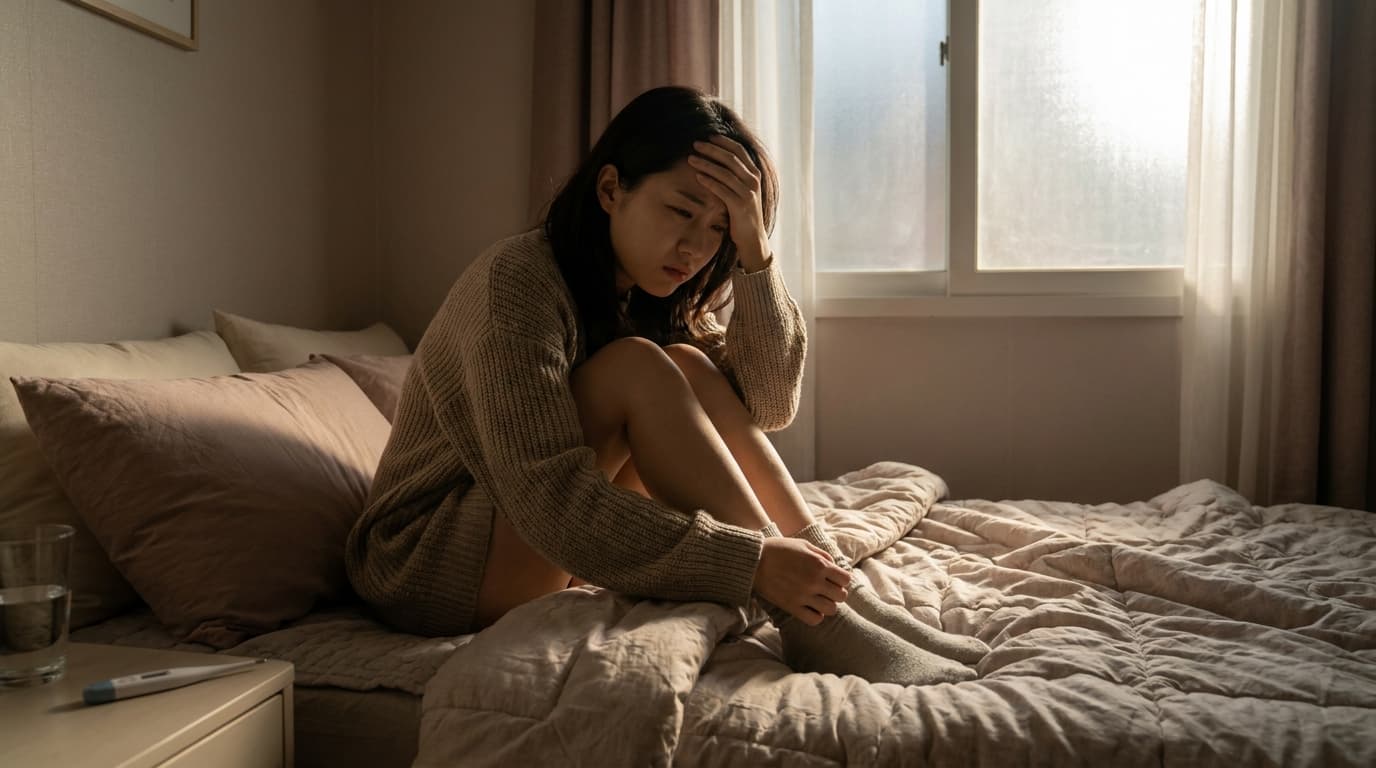
Many people suffer from the discomfort of feeling chilly and cold hands and feet, yet experiencing a hot, flushing sensation in the head or face. At night, the heat in the head makes it hard to sleep, and during the day, the face becomes red or cold sweats break out. It feels as if hot and cold water are mixed inside the body and cannot circulate properly. This symptom, often called 'Sang-yeol-ha-han' (Upper Heat, Lower Cold) in Korean medicine, is not just a minor inconvenience but a serious warning light from the body that should be taken seriously. If left unchecked, it can lead to chronic fatigue, headaches, dizziness, insomnia, and anxiety.
💡 [Key Answer] 3 most common causes of "Cold hands and feet, hot head": ① Autonomic Nervous System Imbalance: Due to stress or overwork, the autonomic nervous system's regulatory function weakens, leading to a loss of temperature control. ② Stress and Overwork: Chronic mental and physical stress causes the sympathetic nervous system to become hyperactive, driving heat toward the upper body. ③ Circulation Disorders: The principle of 'Su-seung-hwa-gang' (cool energy rising, warm energy descending) is broken, causing vital energy and blood circulation to stagnate. Dalimchae Clinic focuses on cooling the overheated brain and warming the lower body to restore circulation and autonomic balance.
Why Do I Have Cold Hands and Feet with a Hot Head? What is the Autonomic Nervous System?
In Korean medicine, there is a saying 'Du-han-jok-yeol' (Cold Head, Warm Feet), which means a healthy state is when the head is cool and the feet are warm. This refers to the natural temperature regulation system called 'Su-seung-hwa-gang'. Like a home boiler system, warm energy from the lower body should rise, and cool energy from the upper body should descend to maintain a constant temperature throughout the body.
However, the excessive stress and irregular lifestyle of modern people break this harmonious system. Stress directly affects our autonomic nervous system, which consists of the sympathetic (active/tense) and parasympathetic (relaxed/stable) systems. Persistent stress hyperactivates the sympathetic nervous system, causing heat to pool in the head while blood circulation to the lower body decreases, making it cold. This 'Sang-yeol-ha-han' state is a powerful warning that your body's signal system is malfunctioning.
How Does Korean Medicine Treat This?
For symptoms caused by autonomic imbalance, simple symptomatic treatments that only lower heat or warm cold areas are rarely effective long-term. Dalimchae Clinic focuses on regaining autonomic balance so the body can regulate its own temperature and circulation.
A 2025 case study in the field of Korean medicine reported on a 30-year-old male patient with various autonomic symptoms such as headaches, lethargy, and heart palpitations. After 4 months of complex Korean medicine treatment including acupotomy, acupuncture, and Chuna therapy, his symptoms improved significantly. The study highlighted that 'Liver Qi Stagnation' is a common type among autonomic patients and that acupuncture and herbal medicine are effective in regulating autonomic balance, improving circulation, and relieving pain without the side effects often associated with general drug treatments.
This approach aligns with Dalimchae's philosophy of stabilizing the autonomic nervous system. A 2011 study in the Yonsei Medical Journal by Lee Young-hee's team showed that applying heat and massage for 2 weeks significantly reduced cortisol (stress hormone) levels (p < 0.003) and norepinephrine levels (p < 0.010) after 4 weeks, inducing relaxation of the autonomic nervous system.

At Dalimchae Clinic Incheon Branch, we focus on 'Autonomic Stabilization' to lower excessive heat in the brain and ensure warm energy reaches the lower body. When autonomic balance is broken, the brain stays in a state of overload. We aim to restore the 'Su-seung-hwa-gang' state using customized herbal medicine, acupuncture, pharmacopuncture, and moxibustion to maximize the body's natural healing power.
Checklist: Is Your Autonomic Nervous System Out of Balance?
If you meet 3 or more of the following, you may have 'Sang-yeol-ha-han' due to autonomic imbalance. If you meet 5 or more, we recommend an immediate consultation.
- Cold hands and feet like ice, but frequent heat in the face or head.
- Hard to fall asleep or frequent waking because the head feels hot at night.
- Face flushes or feels hot easily under stress.
- Cold sweats on the face or head with minor movement or tension.
- Chest feels stuffy, heart palpitations, or frequent anxiety.
- Poor digestion, cold stomach, bloating, or alternating diarrhea/constipation.
- Frequent dizziness or headaches for no apparent reason.
- Constant fatigue and lethargy.
- Stiff neck and shoulders, dry or gritty eyes.
- Easily irritated or prone to mood swings.
FAQ
Q. Why are my hands/feet cold but my face is hot? A. It's usually due to autonomic imbalance from stress and overwork. The sympathetic system is overactive, pulling heat to the head while circulation to the lower body drops.
Q. Can 'Sang-yeol-ha-han' heal naturally? A. Mild cases may improve with lifestyle changes, but chronic cases often require professional treatment to restore the body's fundamental balance.
Q. Is Korean medicine effective for autonomic disorders? A. Yes. Korean medicine addresses the root cause of Qi and Blood imbalance through acupuncture, herbal medicine, and other therapies to restore autonomic harmony.
Q. How long does treatment take? A. It varies by individual, but typically 3 to 6 months of consistent treatment and lifestyle changes yield good results.
Don't just endure the heat in your head and cold in your feet. Listen to your body's signals. At Dalimchae Clinic, we will help you find the cause and restore your health.
Where life blooms. For herbal medicine, it's Dalimchae Korean Medicine Clinic.
Medical Supervision | Autonomic Treatment Standards, Dalimchae Clinic Incheon Branch, Korean Medicine Doctor Min Jihong.