
Hello, this is Dalimchae Korean Medicine Clinic.
Can't Sleep After Shift Work: How to Regain Your Broken Sleep Rhythm with Korean Medicine
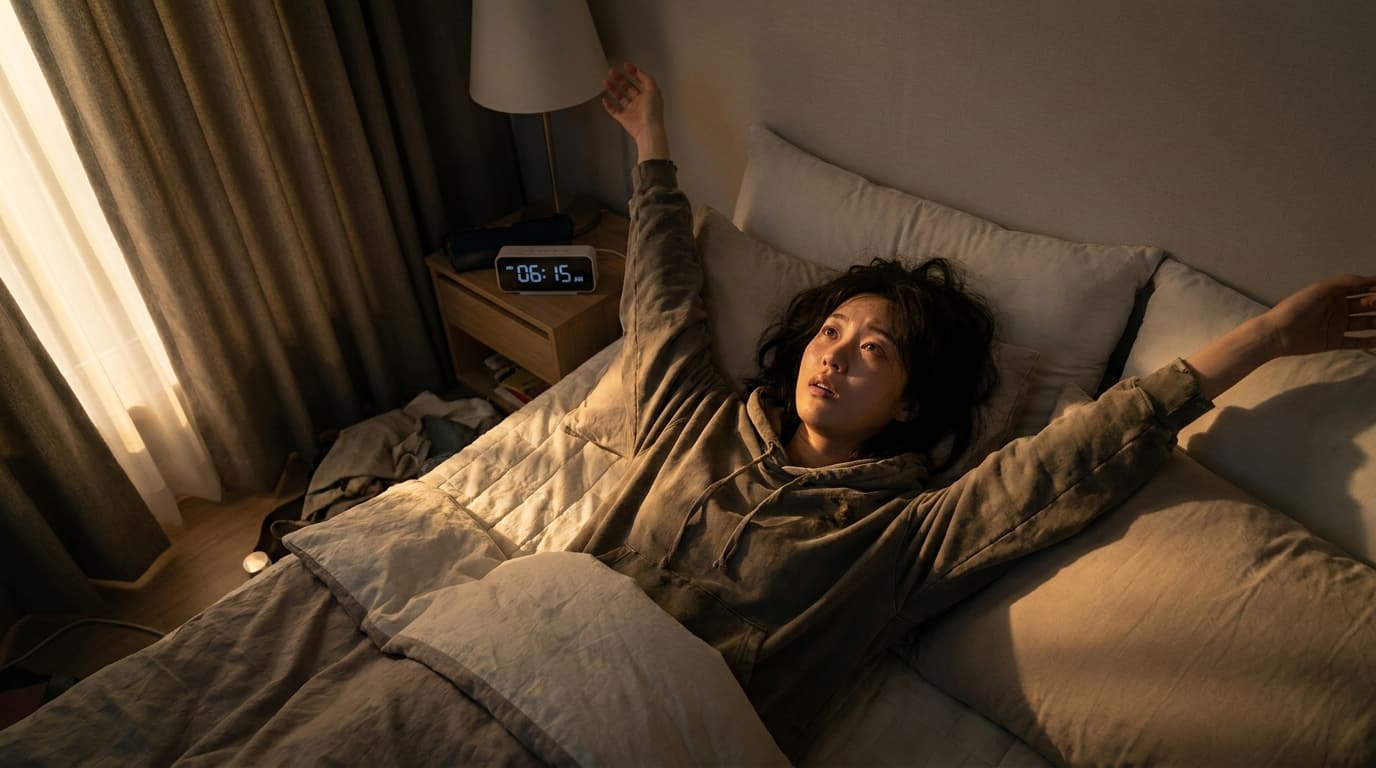
In the dawn of sleeplessness, you toss and turn, then get up from bed and stare at the ceiling. The noise of the workplace you were just working at seems to linger in your ears, and the things you have to do tomorrow cross your mind. "Everyone else sleeps well, why am I the only one like this?" Many people who work shifts are suffering from difficulty falling asleep at night and pouring sleep and fatigue during the day. Beyond the balance of work and life, the environment of shift work where even the sleep rhythm is shaken makes a serious warning light on our body's health beyond just being tired.
💡 [Key Answer] The 3 most common causes of the symptom not being able to sleep after shift work: ① Circadian rhythm disturbance / ② Autonomic nervous system imbalance / ③ Melatonin secretion abnormality and chronic stress Dalimchae Korean Medicine Clinic regains the broken balance of the body through a autonomic stabilization treatment approach to induce deep sleep.
Shift work, why does it keep making your body unable to sleep?
Our bodies move according to a "circadian rhythm" of about 24 hours. When the sun rises, cortisol, an arousal hormone, is secreted to start activity, and when the sun sets, melatonin, a sleep hormone, is secreted to induce sleep. However, shift work artificially reverses this natural biological rhythm. Working at night and sleeping during the day confuses the hormone system, lowering the quality of sleep, which eventually leads to sleep disorders such as insomnia or daytime sleepiness.
In particular, even if you try to sleep during the day after a night shift, the typical symptom is that the brain maintains an arousal state and wakes up in 2-3 hours. This irregularity of the sleep pattern directly affects the autonomic nervous system. As the sympathetic nervous system is enhanced and the activity of the parasympathetic nervous system is decreased, the body maintains a state of tension even when it should rest. Excessive arousal of the brain interferes with deep sleep and causes accompanying symptoms such as headaches and dizziness along with chronic fatigue.
Is it shift work insomnia for me too? Self-diagnosis checklist
If 3 or more of the following items apply, consider seeking expert help for shift work insomnia. If 5 or more, immediate visit and examination are recommended.
- Even if you fall asleep during the day after a night shift, it is not refreshing and it feels like you didn't sleep.
- When you lie in bed at night, you can't fall asleep easily and toss and turn for more than 20 minutes.
- Even if you fall asleep, you wake up frequently, and once you wake up, it's hard to fall asleep again.
- It is difficult to concentrate on work or daily life due to severe drowsiness and fatigue during the day.
- If the work schedule changes, the sleep pattern is completely broken for a few days.
- My nerves became sensitive and my irritation increased because I couldn't sleep.
- Other physical symptoms such as headaches, indigestion, or heart palpitations appear together.
- I feel like it's hard to fall asleep without taking sleeping pills.
- I search for an insomnia clinic in Incheon or look for ways to improve sleep frequently.
The body with reversed day and night, how does Korean Medicine find deep sleep?
Sleep disorders caused by shift work are not simply a problem of "lack of sleep," but a problem of "collapse of balance" in the circadian rhythm and autonomic nervous system. Dalimchae Korean Medicine Clinic in Incheon helps the body regain its fundamental resilience rather than just suppressing symptoms so that it can create a healthy sleep rhythm on its own.
In a study published in the journal Complementary Therapies in Medicine in 2011, a team led by Hwang Deok-sang confirmed the effect of Saam acupuncture on shift-work nurses. As a result of cross-applying Saam acupuncture and placebo acupuncture to 6 night-shift nurses, they confirmed through heart rate variability (HRV) analysis that sympathetic activity significantly decreased and parasympathetic activity increased after Saam acupuncture treatment. Specifically, the sympathetic activity index LF (normalized units) decreased by -17.4, and the LF/HF ratio decreased by -1.691, while the parasympathetic activity index HF (normalized units) increased by 17.41, showing a statistically significant autonomic balance improvement effect. The researchers concluded that these results suggest that Saam acupuncture can alleviate the sympathetic-parasympathetic imbalance caused by night shifts. These data support that Oriental medical treatment can play an important role in restoring the autonomic balance of sleep disorder patients in Incheon.
In addition, a paper by a team led by Yoon Seo-hyun published in the Journal of Korean Medical Science in 2020 analyzed the correlation between shift work intensity and insomnia for 386 nurses in domestic hospitals. In this study, nurses who had three or more consecutive night shifts had a 2.33 times higher risk of insomnia (OR 2.33; 95% CI, 1.29 to 4.20), and those who had three or fewer recovery periods after previous shifts also had a 2.01 times higher risk of insomnia (OR 2.01; 95% CI, 1.08 to 3.73). As a result of the study, 46.5% of all subjects showed insomnia symptoms. This shows that irregular and intense shift work directly affects the occurrence of insomnia, and in particular, consecutive night shifts and short recovery times are major risk factors. This study emphasizes that beyond simply sleeping a lot, securing sufficient recovery time and adjusting work intensity are very important for the sleep health of shift workers. Dalimchae Korean Medicine Clinic in Incheon establishes a personalized treatment plan by carefully identifying each patient's work environment and physical condition based on these research results.
Principles of autonomic stabilization treatment at Dalimchae Korean Medicine Clinic in Incheon
When sleepless nights due to shift work repeat, our body's autonomic nervous system functions like an overheated engine without a brake. The brain maintains an arousal state without a break, the heartbeat becomes faster, and the muscles become tense. Dalimchae focuses on stabilizing the imbalanced autonomic nervous system to create an environment where the brain can rest comfortably.
In Korean Medicine, this is also explained by the principle of "Suseunghwagang (水昇火降)." The head should be cool and the lower abdomen should be warm to circulate the body smoothly and feel comfortable, but stress and irregular life make the energy of "fire (火)" float upward and the energy of "water (水)" go downward, creating a phenomenon that reverses it. Dalimchae Korean Medicine Clinic in Incheon helps regain the balance of the autonomic nervous system through herbal prescriptions suitable for the individual's constitution and symptoms, relaxing the excessively enhanced sympathetic nerves and helping the activity of the parasympathetic nerves. This is a key mechanism for normalizing melatonin secretion and facilitating the entry into a deep sleep stage to induce a good night's sleep. Acupuncture treatment regulates the flow of meridians and relaxes tense muscles, and pharmaco-puncture therapy reduces inflammatory reactions and stabilizes the nervous system, contributing to improving the overall quality of sleep. In particular, for those seeking an Incheon insomnia clinic who complain of chronic fatigue, indigestion, and chest tightness, improvement in systemic symptoms can also be expected through autonomic nervous system treatment.
Q. How long should shift work insomnia be treated? A. The treatment period for shift work insomnia varies depending on the severity of the individual's symptoms, work pattern, and the body's resilience. Usually, great improvement is experienced through 2-3 months of intensive treatment, but steady management is important to prevent recurrence and maintain healthy sleep habits.
Q. Can sleepless symptoms be cured without medicine? A. Yes, it is fully possible. Dalimchae helps the body regain its own sleep rhythm through non-pharmacological Oriental medical treatments such as herbal medicine, acupuncture, and pharmaco-puncture. Even if you are taking sleeping pills, we aim to make a body that can fall asleep even without medicine by gradually reducing them.
Q. I have severe headaches or dizziness because of insomnia. Can they be treated together? A. Yes, they can be treated together. Headaches and dizziness, like insomnia, are often deeply related to autonomic nervous system imbalance. Through autonomic stabilization treatment, not only insomnia but also accompanied headaches and dizziness can be improved together.
Q. I am so tired during the day because I can't sleep. Is this also insomnia? A. Yes, excessive daytime sleepiness and fatigue are also one of the main symptoms of insomnia, which is "daytime functional decline." If you cannot recover enough at night and it interferes with your daily life during the day, it is better to diagnose it as insomnia and start treatment.
Insomnia due to shift work is not a problem that can be solved by enduring it. You no longer have to ignore the signals from your body that you have been sending for a long time. If you approach it in the right direction, your body will react faster than you think. Bring your symptoms as they are. Dalimchae Korean Medicine Clinic will find the cause together.
Where life blooms. For herbal medicine, it's Dalimchae. Check your symptoms via AI consultation on our website!
Medical Supervision | Yang Yu-chan, Korean Medicine Doctor, Incheon Branch (Insomnia Column)