
Hello. This is Dalimchae Oriental Medicine Clinic.
Can't Sleep After Menopause: Recover Peaceful Nights from Menopausal Insomnia
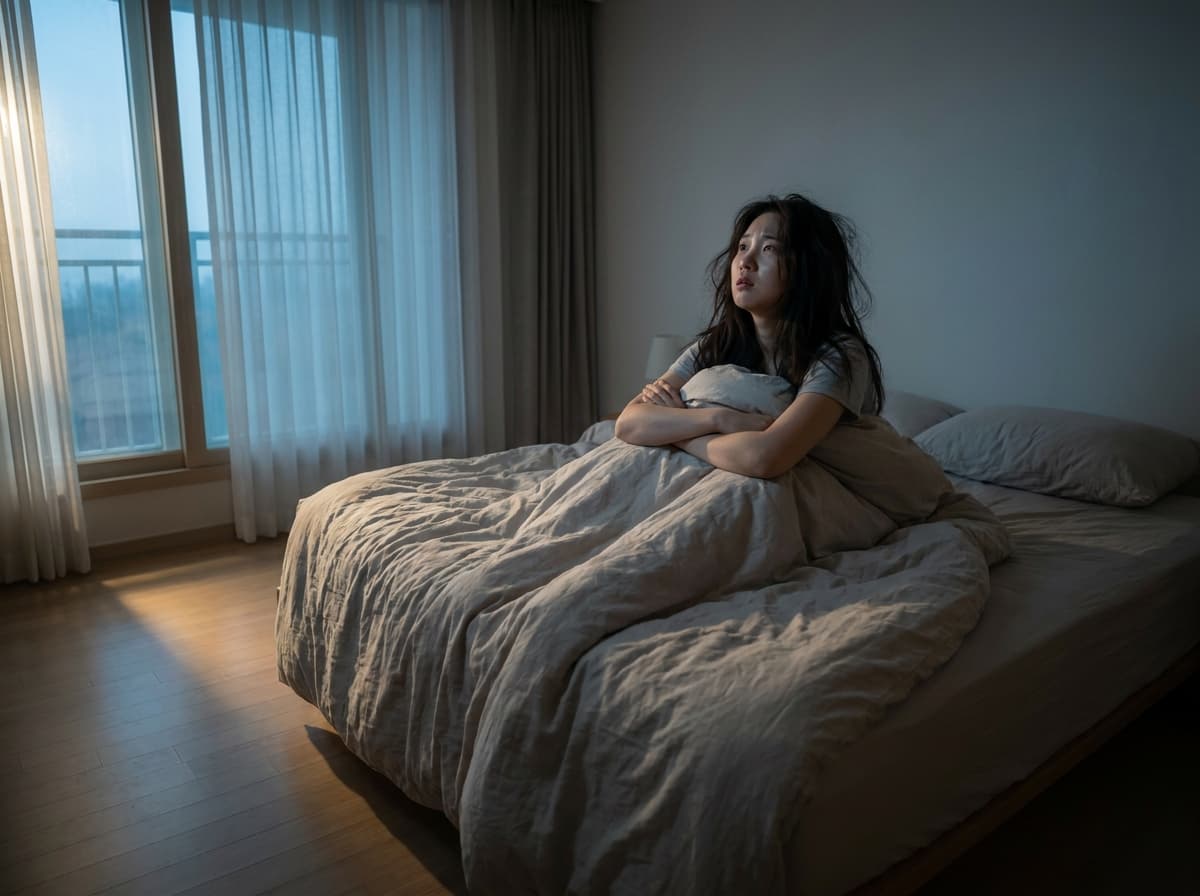
Menopause is a natural time of change in a woman's life, but the various physical and psychological symptoms that come with it can make it difficult for many women. In particular, many people visit our clinic complaining, "I can't sleep at all after menopause." Days of tossing and turning all night, difficulty falling back asleep after waking up in the early morning, and suffering from grogginess and fatigue during the day repeat, often causing quality of life to drop sharply. It probably feels like a brain that cannot sleep is constantly sounding your body's warning light.
💡 Key Answer The three most common causes of "I can't sleep after menopause": ① Hormonal Imbalance: Autonomic nervous system disruption due to decreased estrogen ② Temperature Regulation Abnormality: Sleep disturbance due to hot flashes, night sweats, etc. ③ Psychological Factors: Central nervous system arousal due to menopausal depression and anxiety Dalimchae Oriental Medicine Clinic cools the overheated brain and restores the body's natural rhythm with autonomic stabilization treatment.
Is the reason I can't sleep after menopause due to hormonal changes?
Yes, that's right. One of the biggest causes of post-menopausal insomnia is the decrease in estrogen, a female hormone. Estrogen is closely related to the brain's sleep regulation center and also affects the secretion of melatonin, which induces sleep. When estrogen levels become unstable, the brain's autonomic nervous system balance is easily broken. The sympathetic nervous system becomes excessively excited and the parasympathetic nervous system decreases, keeping the body in a state of tension even at night. This autonomic imbalance sharply lowers sleep quality and becomes the main culprit that prevents deep sleep.
In addition, vasomotor symptoms such as hot flashes, night sweats, and a feeling of upper body heat occur frequently during menopause, and these symptoms become direct causes of sleep disturbance during the night. You lie down to sleep but feel your face burning or night sweats making it hard to fall asleep, and even if you barely fall asleep, you wake up often. Also, depression, anxiety, muscle pain, and nocturia accompanied by menopause are important elements that interfere with sleep. Due to these complex causes, many women are unable to achieve deep sleep after menopause.
Is Oriental medicine treatment effective for menopausal insomnia?
Menopausal insomnia is difficult to fundamentally solve just by relying on sleeping pills. Sleeping pills can provide temporary help, but they can cause dependency or side effects in the long run and do not solve the cause itself, which is hormonal deficiency. Oriental medicine treatment focuses on managing the overall imbalance of the body caused by menopausal changes, such as hormonal balance recovery and autonomic stabilization, as well as the symptom of insomnia itself.
In fact, research results showing that herbal medicine and acupuncture treatment are effective for menopausal insomnia are being continuously announced. In August 2024, a systematic review and meta-analysis study published in the international journal 'Frontiers in Pharmacology' revealed that East Asian Herbal Medicines (EAHM) have significant effects on improving sleep quality and menopausal symptoms in menopausal women with insomnia. According to this study, which analyzed 70 randomized controlled trials (total of 6,035 participants), EAHM significantly improved sleep quality (Pittsburgh Sleep Quality Index, PSQI score) compared to sleep sedatives (MD -2.18, 95% CI -2.56 to -1.80) and also decreased menopausal symptoms evaluated by the Kupperman Index (MD -4.92, 95% CI -6.03 to -3.80). The researchers concluded that herbal medicine can be an effective and safe alternative for sleep quality improvement and menopausal symptom management.
Also, in a randomized controlled trial study 'Acupuncture Improves Peri-menopausal Insomnia' announced by the U-and-Green Korean Medicine Clinic research team in November 2019, 76 women with menopausal insomnia were treated with acupuncture for a total of 10 times over 3 weeks. As a result, the Insomnia Severity Index (ISI) score in the acupuncture treatment group decreased by an average of 11.35 points, showing a statistically significant improvement compared to the placebo group (2.87 points decrease). Polysomnography (PSG) results also showed that the acupuncture treatment group had better sleep status and showed excellent effects in hormonal balance recovery. The researchers noted that acupuncture treatment manages both the symptom of insomnia and the cause of hormonal deficiency simultaneously.
Based on these research data, Dalimchae Oriental Medicine Clinic Incheon branch does not see menopausal insomnia as simply a sleep issue, but proceeds with Oriental medicine treatment considering the characteristics of menopausal women and the overall balance of the body.
Let the brain that cannot sleep rest comfortably with autonomic stabilization treatment.
Dalimchae Oriental Medicine Clinic's autonomic stabilization treatment focuses on correcting the autonomic nervous system imbalance, which is the root cause of menopausal insomnia. The autonomic nervous system regulates all involuntary functions of our body, but this system's harmony is easily broken during menopause due to hormonal changes. It's like the brain cannot rest even at night and maintains a state of tension like an overheated engine.
In Oriental medicine, this state is also seen as a problem of 'Shim-sin-bul-gyo (lack of communication between heart and kidney)' or 'Suseung-hwagang (cooling the head and warming the core)'. That is, it means a state where the circulation is disturbed, where the heart's heat should go down and the kidney's cold energy should go up, along with symptoms of 'Sang-yeol-ha-han (upper body heat and lower body cold)' where the head is hot, the chest is tight, and the feet become cold. Dalimchae Oriental Medicine Clinic Incheon branch focuses on lowering the excessive heat of the nervous system and creating an environment where the brain can rest comfortably. To this end, through customized herbal medicine prescriptions tailored to the individual's constitution and symptoms, we regain the disrupted hormonal balance and stabilize the autonomic nervous system. Also, acupuncture treatment activates the parasympathetic nervous system to calm the excessively excited central nervous system and help improve sleep quality. In particular, we boost the body's recovery by stimulating acupuncture points effective for women's diseases and menopausal insomnia, such as Sanyinjiao (SP6).
Many people visiting the Incheon Menopausal Insomnia Oriental Clinic are falling asleep comfortably all night and regaining an active life during the day through this autonomic stabilization treatment.
Could I also have menopausal insomnia? Self-checklist
If you fall under 3 or more of the following symptoms, you can suspect autonomic imbalance due to menopausal insomnia. We recommend visiting Dalimchae Oriental Medicine Clinic Incheon branch for accurate diagnosis and consultation.
- It takes more than 30 minutes to fall asleep.
- You wake up more than twice during the night and have difficulty falling back asleep.
- You wake up early in the dawn and cannot fall back asleep.
- You feel that total sleep time is insufficient at 6 hours or less.
- You do not feel refreshed even after sleeping and feel tired during the day.
- You feel drowsy and concentration drops during the day.
- You wake up due to night sweats or hot flashes.
- Insomnia significantly interferes with daily life.
- Irritability, anxiety, and depression have intensified recently.
If 3 or more items apply: Suspected autonomic menopausal insomnia → Review comprehensive Oriental medical treatment If 5 or more items apply: Immediate visit for precision diagnosis and start of treatment recommended
FAQ: Frequently asked questions about menopausal insomnia
Q. How long does menopausal insomnia last? A. Menopausal insomnia varies greatly from person to person, but can last from several months to several years or more. It sometimes naturally improves as hormonal changes stabilize, but can also lead to chronic insomnia, so active management is necessary.
Q. Can menopausal insomnia heal naturally? A. Some mild cases may improve naturally, but most menopausal insomnia has clear causes such as female hormone decrease and autonomic nervous system imbalance, and if neglected, symptoms can become severe and worsen other menopausal symptoms. Therefore, it is important to receive help from an expert.
Q. I have other menopausal symptoms along with menopausal insomnia. Are they treated together? A. Yes, Dalimchae Oriental Medicine Clinic's Oriental medicine treatment is effective in managing various accompanied menopausal symptoms together, such as hot flashes, night sweats, anxiety, depression, and fatigue, as well as insomnia. This is because it treats the root of the symptoms by restoring the overall balance of the body.
Q. How is menopausal insomnia treatment conducted at the Incheon branch? A. At Dalimchae Oriental Medicine Clinic Incheon branch, we first identify the patient's constitution, symptoms, and lifestyle through thorough examination and consultation. Afterwards, we combine individual customized herbal prescriptions, acupuncture, moxibustion, and pharmacopuncture to stabilize the autonomic nervous system and maximize the body's recovery to restore comfortable sleep.
The pain of not being able to sleep at all after menopause is not a problem solved by enduring it. You no longer have to ignore the signals your body has been sending for a long time. If approached in the right direction, your body reacts faster than you think. Bring the symptoms you are experiencing as they are. Dalimchae Oriental Medicine Clinic will find the cause together.
A place where life blooms. Herbal medicine is, after all, Dalimchae Oriental Medicine Clinic. Check your symptoms first with the AI consultation on the Dalimchae Oriental Medicine Clinic website!
This article is health information summarized together by Dalimchae medical staff based on questions actually received many times in the consultation room. Medical Supervision | Min Jihong, Oriental Medical Doctor at Dalimchae Oriental Medicine Clinic Incheon Branch, based on women's and pregnancy treatment standards (Menopause Column)
#Menopause #Insomnia #SleepDisorder #AutonomicNervousSystem #IncheonOrientalClinic #MenopausalInsomniaOrientalClinic #PostMenopause #OrientalMedicineTreatment