
Hello. This is Dalimchae Korean Medicine Clinic.
My joints ache and feel cold after a miscarriage. Does postpartum wind syndrome occur after a miscarriage too?
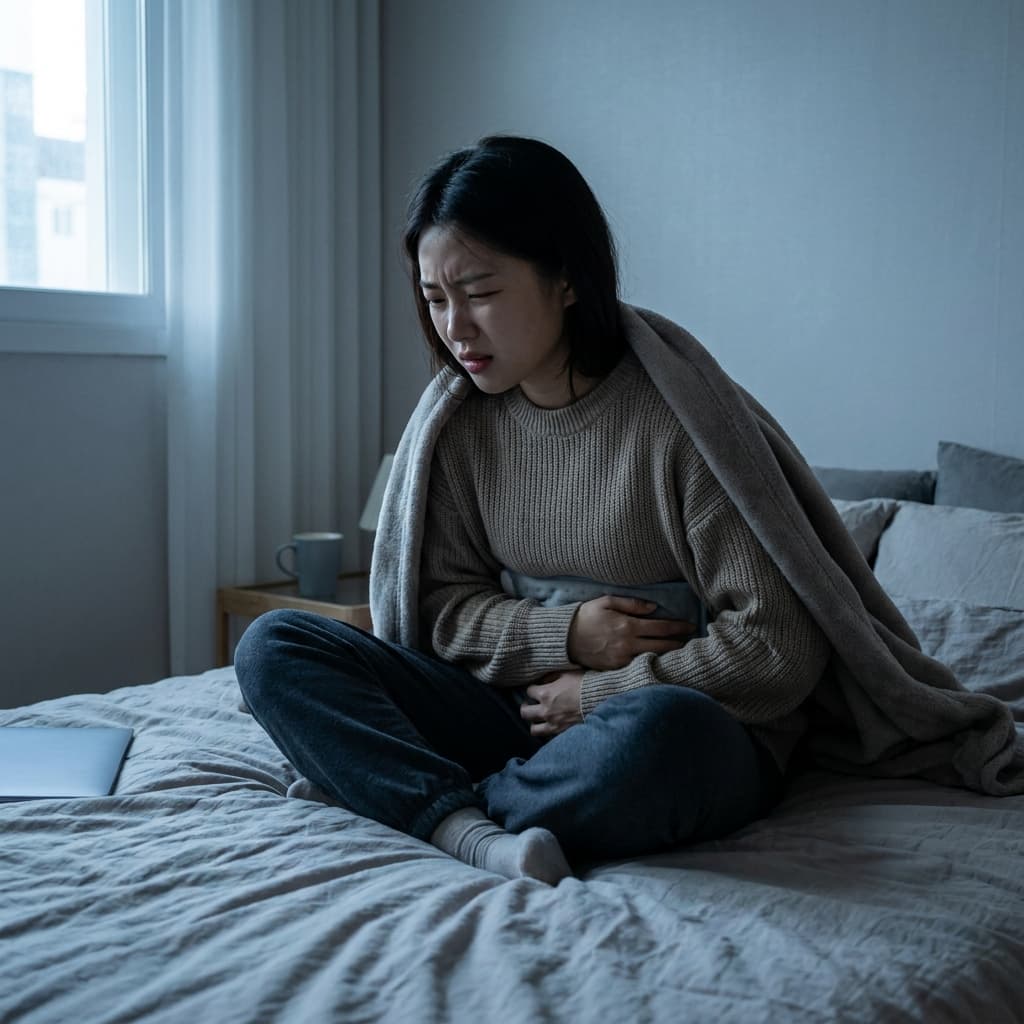
The physical pain that follows an unexpected miscarriage, along with deep grief while waiting for a precious new life, is an indescribably difficult experience. In particular, if you suffer from joint pain and chills after a miscarriage, this may be a miscarriage-related aftereffect similar to postpartum wind syndrome (Sanhupung). Many people mistakenly believe that postpartum care is unnecessary after a miscarriage, or they neglect their own bodies due to emotional loss. However, since a miscarriage puts as much strain on the body as childbirth, various aftereffects can occur without a proper recovery process.
💡 Key Answer The 3 most common causes of joint pain after a miscarriage: ① Sudden hormonal changes and damage to Qi and Blood / ② Stagnation of blood stasis (瘀血) in the uterus / ③ Decline in systemic immunity and autonomic nervous system function. Dalimchae Korean Medicine Clinic restores damaged uterine and systemic functions through fundamental constitutional improvement and prevents chronic aftereffects.
Why do joints ache and feel cold after a miscarriage?
A miscarriage brings about sudden changes in a woman's body that go beyond the loss of the fetus. In particular, the uterine lining is damaged, significant blood loss can occur, and hormonal imbalances are easily triggered, leading to a decline in overall physical function. These changes affect the systemic musculoskeletal system, manifesting as joint chills, joint pain, and muscle pain, which are very similar to 'postpartum wind syndrome' that occurs after childbirth. In Korean medicine, a miscarriage is called 'Bansan' (half-birth), emphasizing that recovery care equivalent to that after childbirth is necessary.
The main reasons for joint pain after a miscarriage are as follows: First, when the Qi and Blood consumed during the miscarriage process are not sufficiently replenished and blood stasis (瘀血) remains in the uterus, obstructing blood circulation. Blood stasis not only slows uterine recovery but can also circulate throughout the body and cause pain and chills in the joints. Second, when the balance of the autonomic nervous system is disrupted due to sudden hormonal changes, the temperature regulation function decreases and coldness spreads throughout the body. Third, the psychological stress and lack of physical recovery after a miscarriage weaken the systemic immunity, making the body react sensitively to even small stimuli.
How can miscarriage aftereffects be overcome with Korean medicine treatment?
Dalimchae Korean Medicine Clinic provides personalized Korean medicine treatment to resolve the physical and mental aftereffects that follow a miscarriage. We focus on uterine recovery issues and symptoms of postpartum wind syndrome, such as joint pain and chills, which many patients visiting Dalimchae seek help for.
According to a 2023 study published in the journal MDPI, titled "Herbal Medicine for Postpartum Pain: A Systematic Review of Puerperal Wind Syndrome (Sanhupung)," the effectiveness of herbal medicine treatment for postpartum pain was systematically analyzed. This study synthesized various clinical trial results and reported that the herbal medicine treatment group showed a statistically significantly superior pain reduction effect compared to the Western medicine treatment group (n=217, RR: -1.40, 95% CI -2.02 to -0.78, p < 0.00001). The researchers concluded that herbal medicine can be an effective treatment for alleviating postpartum pain. These research results suggest that Korean medicine treatment can effectively work for postpartum wind symptoms such as joint pain occurring after a miscarriage.
In addition, a study published in Medicine (Baltimore) in 2026, "Home-based traditional Korean medicine for managing musculoskeletal pain in older adults: A cross-sectional pre-post study," evaluated the effectiveness of Korean medicine treatment for chronic musculoskeletal pain management in elderly patients. This study measured pain levels and quality of life before and after Korean medicine treatment in 46 participants, and as a result, confirmed significant improvements in both pain intensity (Numerical Rating Scale: decreased from 7.61 ± 1.73 to 4.67 ± 1.76, p < 0.001) and quality of life (EQ-5D: improved from 0.472 ± 0.281 to 0.602 ± 0.237, p < 0.001). This supports the result that a Korean medicine approach can be effective for musculoskeletal pain appearing throughout the body after a miscarriage.
Based on these data, Dalimchae Korean Medicine Clinic performs 'constitutional improvement' treatment to help the normal recovery of the uterus by replenishing the Qi and Blood consumed after miscarriage and removing blood stasis. We focus on promoting the regeneration of the damaged uterine lining and restore the function of the ovaries and uterus to prepare the body for the next pregnancy.
Dalimchae's Constitutional Improvement: Creating a body that doesn't get sick again
The core of Dalimchae's post-miscarriage recovery program is 'Constitutional Improvement'. It is a treatment that increases immunity and regenerative power so that the body can maintain health on its own and not get sick again, rather than just temporarily turning off symptoms. After a miscarriage, as the body's balance is broken, coldness can easily penetrate, and the regulatory function of the autonomic nervous system can weaken. Dalimchae carefully diagnoses the individual's constitution, the type of miscarriage, and the state of recovery to prescribe personalized herbal medicine.
Herbal medicine discharges blood stasis and waste from the damaged uterus and maximizes the recovery power of the uterus by replenishing deficient Qi and Blood. In particular, we utilize medicinal herbs effective for uterine lining recovery and immunity enhancement, such as velvet antler, Angelica gigas, and Cnidium officinale, to prevent and improve various aftereffects such as chronic joint pain, chills, indigestion, and insomnia that can appear after a miscarriage. Many people visiting Dalimchae are experiencing a healthy recovery of the uterine environment for the next pregnancy and overall physical condition, beyond simple symptom relief, through constitutional improvement. Remember that postpartum care after a miscarriage is an important preparation stage for the next pregnancy, and only a healthy body can embrace a healthy baby.
Post-miscarriage, could I have postpartum wind syndrome? Self-diagnosis Checklist
If you have the following symptoms in addition to joint pain after a miscarriage, you can suspect post-miscarriage aftereffects or postpartum wind syndrome.
- Joints all over the body (wrists, ankles, knees, waist, etc.) are cold and ache.
- Symptoms worsen when exposed to cold wind.
- Fatigue is severe and energy seems to have dropped.
- Feel suffocated, anxious, or depressed frequently.
- Cannot sleep deeply and often have night sweats.
- Indigestion and poor appetite.
- Face is pale and skin has become rough.
- Menstrual cycle has become irregular or menstrual cramps have worsened.
Judgment Criteria:
- 3 or more items: Suspected stage of post-miscarriage aftereffects (postpartum wind). Consider complex Korean medicine treatment at Dalimchae.
- 5 or more items: Stage requiring immediate recovery treatment. Visit Dalimchae for precise diagnosis and treatment.
Frequently Asked Questions (FAQ)
Q. How long should I do postpartum care after a miscarriage? A. It depends on the type and timing of the miscarriage, but generally, 2-3 weeks of intensive care are needed, and consistent management for at least 3 months is important for uterine lining recovery and preparation for the next pregnancy.
Q. Can joint pain after a miscarriage heal naturally? A. Mild symptoms may improve over time, but if left without proper treatment, they can become chronic and lead to persistent pain or postpartum wind syndrome. In particular, damage to Qi and Blood and blood stasis are difficult to resolve naturally.
Q. When is it best to start taking herbal medicine after a miscarriage? A. It is best to start taking it immediately after the bleeding has subsided to some extent. It helps to quickly discharge blood stasis in the uterus and regenerate the damaged uterine lining, shortening the recovery period and preventing aftereffects.
Q. Does miscarriage aftereffect treatment help with the next pregnancy? A. Yes, post-miscarriage care is the most important preparation process for the next pregnancy. It strengthens uterine and ovarian functions and increases immunity, helping to prevent habitual miscarriage or infertility and create a healthy pregnancy environment.
The pain and chills in your joints after a miscarriage are not a pain you should endure alone. You no longer have to ignore the signals your body has been sending for a long time. If approached in the right direction, the body responds faster than you think. Bring the symptoms you are experiencing as they are. Dalimchae will find the cause together with you.
Where life blooms. Herbal medicine is, after all, Dalimchae Korean Medicine Clinic. Check your symptoms through Dalimchae's AI consultation on our website!
This health information was compiled by the Dalimchae medical team based on frequently asked questions in the consultation room. Medical Supervision | Pregnancy/Postpartum Care Specialist at Dalimchae Songdo, Dr. Oh Hyunmin (Post-miscarriage Recovery Column) #MiscarriageRecovery #MiscarriageAftereffects #PostpartumWind #SongdoMiscarriageClinic #ConstitutionalImprovement #UterineRecovery #SongdoClinic