
Hello. This is Dalimchae Korean Medicine Clinic.
Baby's Face is Red and Bumpy and Won't Go Away? The Truth Every Mom Must Know
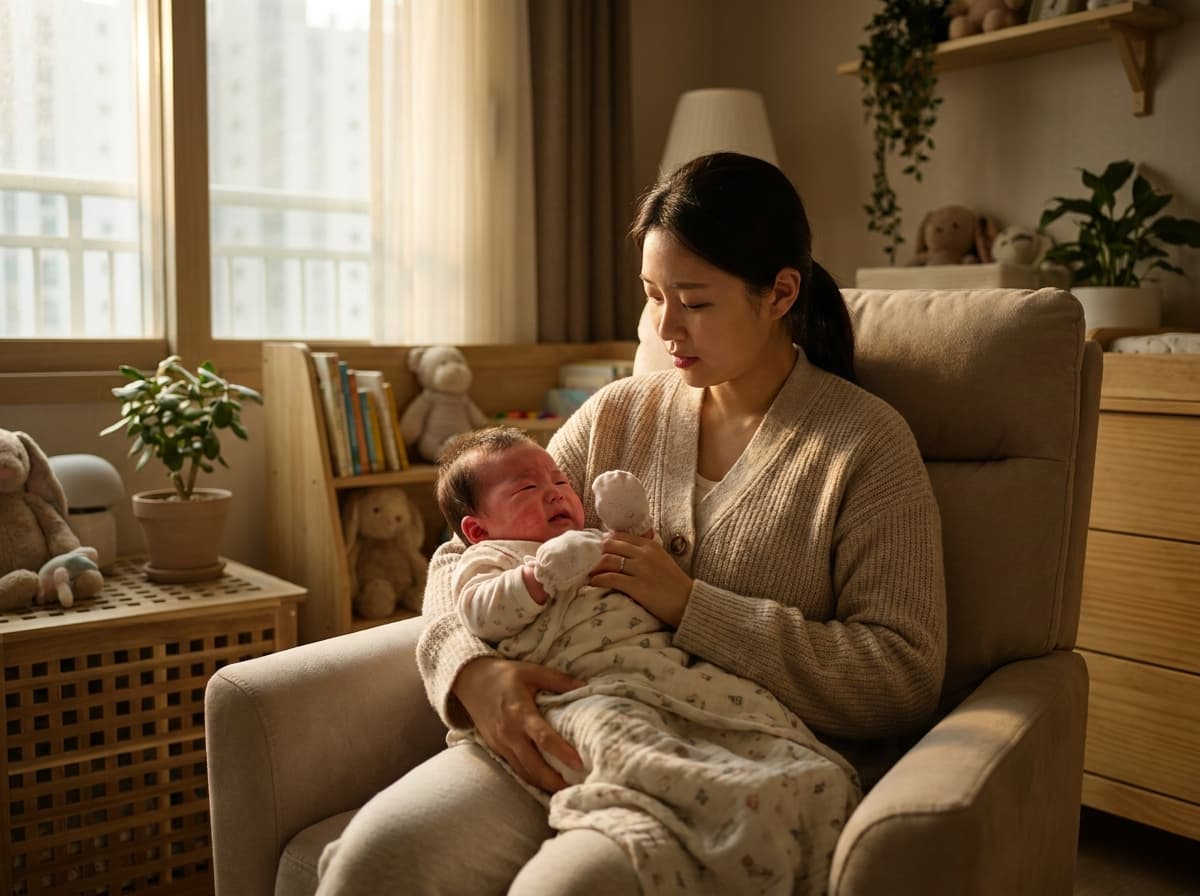
You expected your newborn's skin to be soft, but seeing red, bumpy rashes can be heartbreaking. Many parents find themselves worried, saying, "My baby's face is red and bumpy and it won't go away." Baby skin, with its weak immunity, often reacts easily to small irritations, leading to red and rough skin troubles. Simply dismissing these as 'heat rash' or 'eczema' and leaving them untreated can lead to chronic skin problems.
💡 [Core Answer] The 3 most common causes why a baby's face stays red and bumpy: ① Internal toxins and inflammatory reactions due to immature gut function ② Weakened skin barrier and immune imbalance ③ Environmental factors (temperature, humidity, irritants) and imbalance of body heat Dalimchae Clinic resolves the root cause of skin inflammation by strengthening the baby's weak gut function and correcting the unbalanced immune system through a gut detox treatment approach.
Why do baby skin troubles keep recurring?
A baby's skin is thinner and weaker than an adult's, making it vulnerable to external stimuli. Since their immune system is still immature, they are prone to various skin issues. 'Infant eczema,' often called heat rash, typically appears between 1 to 3 months of age as red, bumpy millet-like rashes on the face, forehead, and behind the ears. This can be exacerbated by increased sebum secretion due to hormones received from the mother during pregnancy, dry skin, changes in temperature and humidity, or exposure to irritating environments.
However, many parents are unaware that skin troubles are deeply linked to internal body issues, especially gut health. In Korean medicine, baby skin troubles are not seen just as surface symptoms but as a manifestation of internal imbalances, particularly immature gut function and toxins like 'damp-heat' or 'phlegm-stagnation' accumulated in the body. If the gut barrier is weak, harmful substances can enter the bloodstream and cause skin inflammation. Dalimchae Clinic in Songdo treats the root of skin problems by supplementing the baby's immature gut function and detoxifying internal toxins.
Why do skin problems persist even when tests are 'normal'?
Many parents visit hospitals for baby skin troubles but feel frustrated when they receive a 'normal' diagnosis without a clear solution. This is because skin problems can be complex signals of overall body imbalance, including the immune system and the gut-brain axis. Subtle imbalances, difficult to find in general tests, can continuously affect the baby's skin.
Korean medicine explains this through the concepts of 'Pyo-chi' (treating the surface) and 'Bon-chi' (treating the root). While it's important to alleviate surface inflammation, 'Bon-chi'—correcting constitutional bias and immune imbalance—must occur to prevent recurrence and restore healthy skin. A baby's gut health is directly linked to immunity; an imbalance between beneficial and harmful gut bacteria affects immune responses and worsens skin inflammation. Therefore, Dalimchae Clinic, a Songdo baby dermatitis clinic, provides personalized treatment by closely diagnosing the baby's constitution and gut health.
How is Korean medicine treatment different for baby dermatitis?
Dalimchae Clinic focuses on the 'gut detox' treatment principle for the fundamental resolution of baby dermatitis. Gut detox aims to strengthen the baby's weak gut function and discharge toxins and waste accumulated in the gut barrier to reduce skin inflammatory reactions. This helps increase immunity and restore skin barrier function.
A 2013 study from Kyung Hee University Korean Medicine Hospital showed that among 29 hospitalized patients with severe atopic dermatitis, complex Korean medicine treatment (including herbal medicine, acupuncture, and wet dressings) resulted in the SCORAD score significantly decreasing from an average of 60.63 to 37.37. This suggests that Korean medicine can effectively reduce the clinical severity of atopic dermatitis. Additionally, a 2018 study in the Journal of the Korean Society of Immunology showed that 41 patients with mild to moderate atopic dermatitis who took red ginseng extract for 8 weeks had significantly reduced EASI (Eczema Area and Severity Index) scores and transepidermal water loss (TEWL), along with a notable decrease in itching and sleep disturbance VAS scores (p=0.026).
Based on this data, Dalimchae Clinic prescribes customized herbal medicine considering the baby's sensitive gut and immune system, directly alleviates skin inflammation through acupuncture and pharmaco-acupuncture, and helps restore the skin barrier using Korean medicine topicals. Particularly, following the principle that 'toxins accumulated in the gut barrier create systemic inflammation through the blood,' we proceed with treatment believing that if the baby's immature gut function improves, the inflammatory reactions on the skin will naturally decrease. In this process, not only chronic skin diseases like atopy or hives but also related diseases like indigestion (phlegm-stagnation) can be improved.
If your baby has these symptoms, consult Dalimchae Clinic Songdo! (Self-Diagnosis Checklist)
Is your child suffering from skin troubles? Check through the list below.
- Red and bumpy rashes repeatedly appear on the face, neck, and folds of arms and legs.
- The baby frequently tosses and turns at night or fusses due to itching.
- Skin is dry and scales occur frequently without a specific reason.
- The baby has weak digestion, vomiting often, or suffers from frequent constipation or diarrhea.
- Skin symptoms tend to worsen after consuming certain foods.
- Skin rashes seem to improve but soon worsen again repeatedly.
If 3 or more apply: Baby skin immune imbalance suspected → Consider the gut detox treatment of Dalimchae Clinic in Songdo. If 5 or more apply: We recommend finding the root cause and starting treatment through immediate Korean medicine consultation.
Q. How long does baby dermatitis treatment take? A. The duration depends on the severity of symptoms, the baby's constitution, and response to treatment. Usually, symptoms improve within weeks to months through steady management and Korean medicine treatment.
Q. Can baby face bumps heal naturally? A. Some neonatal eczema, called 'heat rash,' may improve naturally within 3 months. However, if skin barrier function is weakened or immune imbalance is present, natural healing is difficult, and if left untreated, it can progress to chronic atopic dermatitis.
Q. My baby has both dermatitis and indigestion; can they be treated together? A. Yes. Since Dalimchae Clinic sees gut function as the main cause of baby dermatitis, we focus on improving both indigestion and dermatitis simultaneously through gut detox. As gut health improves, skin inflammatory reactions naturally decrease.
Discomfort on a baby's small, fragile skin is not something that gets resolved by just enduring. You no longer have to ignore the signals the baby's body has been sending. If you approach it in the right direction, the baby's body responds faster than you think. Bring the symptoms as they are. Dalimchae Clinic will find the cause together.
Where life blooms. For herbal medicine, it's Dalimchae Clinic.
Medical Supervision | Oh Hyunmin, KMD at Dalimchae Clinic Songdo (Inflammatory Skin Disease Column)