
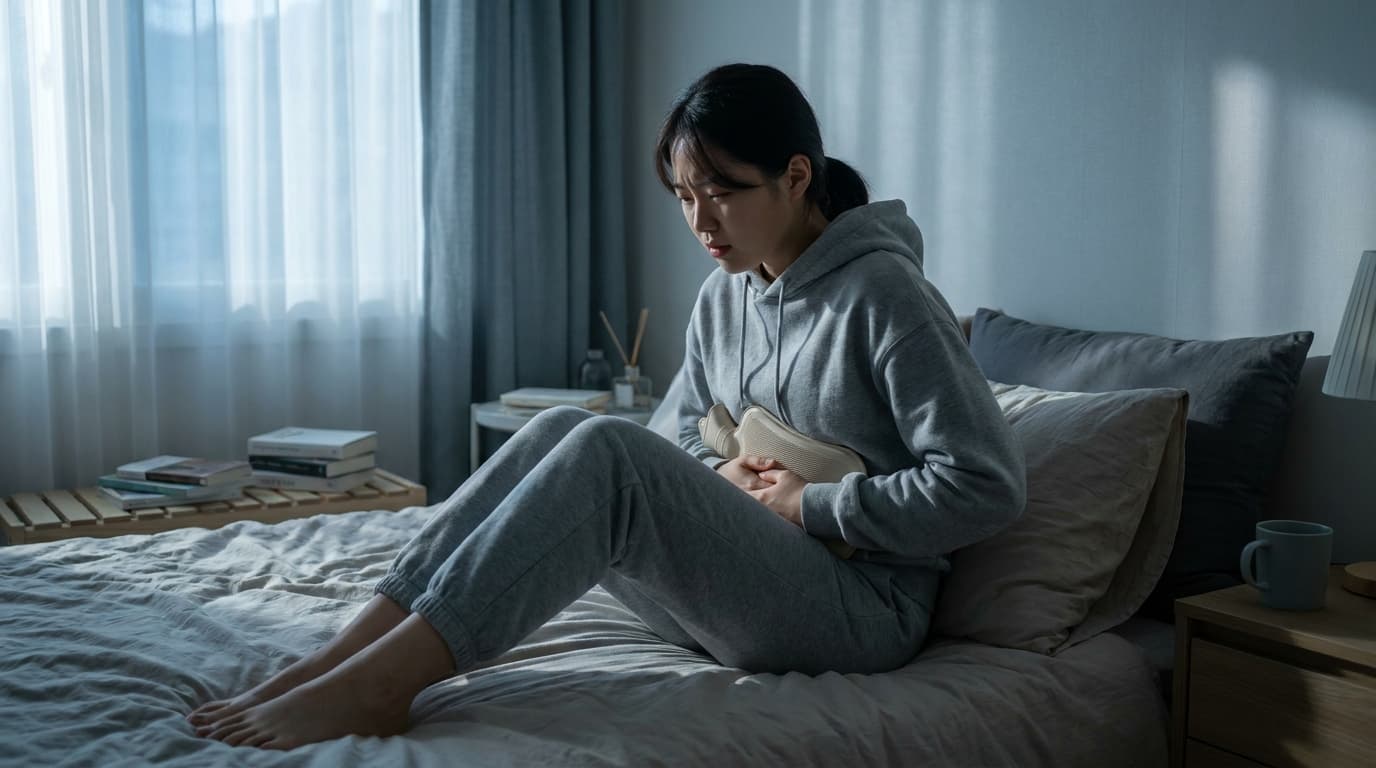
Hello. This is Dalimchae Korean Medicine Clinic.
Adenomyosis: Can You Endure Without Hysterectomy? Regaining Quality of Life with Korean Medicine
Many women are filled with a sense of despair, wondering if "eventually hysterectomy is the only answer" due to the pain and bleeding that comes every month and an increasingly enlarging uterus. Especially for those planning a pregnancy or wanting to preserve their uterus, adenomyosis feels like a threat beyond simple physical discomfort, affecting important parts of their lives. Many people visiting Dalimchae Clinic in Songdo for adenomyosis are desperately looking for options other than surgery.
💡 [Key Answer] 3 most common causes of adenomyosis: ① Stagnation of blood stasis in the uterus / ② Coldness in the lower abdomen / ③ Decreased uterine immunity Dalimchae Clinic fosters the power for the uterus itself to become healthy by regaining the body's balance through constitutional improvement.
Adenomyosis, why do people talk about hysterectomy?
Adenomyosis is a disease where endometrial tissue penetrates and proliferates into the muscular wall of the uterus. It's like weeds taking root in the uterine wall, making the entire uterus enlarged and causing severe symptoms such as menstrual pain, excessive menstruation, and irregular bleeding. In particular, it is common to be accompanied by anemia and extreme fatigue due to heavy bleeding, which significantly lowers the quality of daily life. Unlike uterine fibroids, adenomyosis does not have clear boundaries of lesions, making partial removal surgery difficult. Therefore, hysterectomy is often suggested as a universal treatment when symptoms worsen. However, many women want to manage adenomyosis without such hysterectomy, and the desire for conservative treatment grows even more when considering pregnancy and childbirth.
The real cause of adenomyosis, could it be 'blood stasis' and 'coldness' in the body?
In Korean medicine, adenomyosis is viewed as a symptom resulting from an imbalance in uterine health beyond simple tissue proliferation. The main causes include the following:
- Blood Stasis (瘀血) Stagnation: 'Blood stasis', where waste products accumulate and blood clumps together due to poor blood circulation in the uterus and pelvis, is pointed out as a key factor in the occurrence of adenomyosis. Blood stasis can promote abnormal proliferation of endometrial tissue and cause inflammatory reactions, leading to severe menstrual pain and excessive bleeding.
- Lower Abdomen Coldness: 'Lower abdomen coldness', where cold energy stays in the lower abdomen, lowers the function of the uterus and further interferes with blood circulation. This becomes a factor that worsens female diseases such as adenomyosis.
- Decreased Uterine Immunity and Lack of Qi and Blood: When the circulation of Qi and blood throughout the body weakens and immunity drops, the uterus's ability to resist and recover from lesions on its own weakens. This creates an environment where endometrial tissue can easily grow abnormally.
This perspective of Korean medicine provides clues to approach in the direction of improving the fundamental environment of the uterus when it is 'normal' on examination or when symptom improvement is difficult even with Western medication.
Korean medicine treatment can be a new alternative for adenomyosis management.
Recent clinical studies are steadily suggesting the possibility of Korean medicine treatment for adenomyosis.
According to a systematic literature review and meta-analysis study published in the international journal "Pharmaceuticals (Basel)" in June 2025, 1,259 adenomyosis patients (including 14 randomized controlled trials) who received herbal medicine treatment after High-Intensity Focused Ultrasound (HIFU) showed significantly superior results compared to the HIFU-only treatment group. As a result of the study, herbal medicine combined treatment showed excellent efficacy in reducing uterine volume (MD = -11.84, p < 0.00001) and adenomyosis lesion volume (MD = -2.86, p < 0.00001), decreasing serum CA125 levels (SMD = -1.49, p < 0.00001) and estradiol (E2) levels (SMD = -1.28, p < 0.0001), and improving menstrual pain (MD = -0.54, p < 0.00001). Researchers concluded that herbal medicine can be an effective and safe adjunctive therapy for adenomyosis management. These research data support the importance of uterine environment improvement treatment that Dalimchae Clinic aims for.
In addition, a domestic case study reported in "Frontiers in Medicine" in October 2025 confirmed that after administering herbal medicine (Gamibojungikgi-tang) for 12 months to a 40-year-old adenomyosis patient who did not respond to conventional treatment, menstrual pain significantly decreased from NRS 7-8 to 1-2, hemoglobin levels normalized, and ultrasound examination also confirmed a decrease in the size of adenomyosis and improvement in uterine structure. The patient's quality of life also improved significantly, and there were no side effects. In this way, Korean medicine treatment can contribute not only to symptom relief but also to increasing the uterus's own recovery power.
How does Dalimchae Clinic's 'constitutional improvement' treatment help with adenomyosis?
Dalimchae Clinic's 'constitutional improvement' treatment does not stop at simply reducing pain and suppressing bleeding. With the goal of "making a body that doesn't turn back on instead of just turning off symptoms," we focus on resolving the root cause of adenomyosis.
- Removing Blood Stasis and Improving Blood Circulation: By resolving blood stasis accumulated in the uterus and pelvis and facilitating stagnant blood circulation, we inhibit abnormal proliferation of uterine tissue and reduce inflammation. This directly helps reduce menstrual pain and excessive menstruation.
- Lower Abdomen Warming and Uterine Function Strengthening: By warming the cold lower abdomen and promoting the circulation of Qi and blood in the uterus, we make the uterine environment healthy. Through this, the uterus itself restores its original function and prevents symptoms from recurring.
- Whole Body Immunity and Autonomic Balance: We manage adenomyosis that can worsen due to stress and fatigue by increasing overall body immunity and regaining the balance of the autonomic nervous system. This contributes to restoring harmonious function of the entire body and improving not only uterine health but also the overall quality of life. Dalimchae Clinic, an adenomyosis clinic in Songdo, maximizes the natural healing power of the uterus with delicate prescriptions tailored to individual constitutions and symptoms.
Is there really another way besides hysterectomy?
Recently, the prevalence and incidence of adenomyosis among Korean women have been increasing, and at the same time, the rate of uterine-preserving surgery has also significantly increased from 7.51% to 21.29% over 15 years. This shows a movement of many women trying to manage symptoms while preserving the uterus instead of the extreme choice of hysterectomy. Especially for those planning a pregnancy or suffering from infertility, treating adenomyosis without surgery is very important. Dalimchae Clinic keeps pace with this trend, restores the function of the uterus, and fundamentally improves symptoms such as menstrual pain, excessive menstruation, and irregular bleeding, helping women maintain a healthy uterus and improve their quality of life. If you suffer from other female diseases such as uterine fibroids and infertility along with adenomyosis, integrated management is even more necessary.
✔️ Adenomyosis Symptom Checklist
Check how many of the following items apply to you.
- Menstrual volume is abnormally high, and the menstrual period lasts more than 7 days.
- Menstrual pain is getting worse, and painkillers do not work well.
- Irregular bleeding occurs frequently even when it is not the menstrual period.
- I feel anemia, dizziness, and chronic fatigue due to frequent bleeding.
- The lower abdomen is always cold or there is a stinging pain.
- I feel pain during sexual intercourse or have chronic discomfort in the pelvis.
- I feel the urge to urinate frequently or urgently.
- I feel discomfort or pain during bowel movements.
Judgment Criteria:
- 3 or more apply: Adenomyosis suspected stage. We recommend interest in uterine health and expert consultation.
- 5 or more apply: There is a need to review active diagnosis and complex Korean medicine treatment. Immediate visit for precise diagnosis and consultation is recommended.
Q. How long should I be treated for adenomyosis to see an effect? A. The treatment period for adenomyosis varies depending on the severity of the patient's symptoms, the duration of the disease, and individual constitution. Generally, through steady treatment for 3 to 6 months or more, improvement in symptoms and changes in the uterine environment can be expected, and it is important to check the treatment progress through regular checkups.
Q. Can adenomyosis be completely eliminated with Korean medicine? A. Korean medicine treatment aims to restore the normal function of the uterus, inhibit the progression of lesions, and resolve discomfort caused by symptoms, rather than completely eliminating adenomyosis lesions. It is very helpful in improving the quality of life, as symptoms such as menstrual pain and excessive menstruation improve significantly and the size of the uterus decreases.
Q. Are there other surgical treatments besides hysterectomy? A. Adenomyosis often makes uterine-preserving surgery difficult because the boundaries of the lesions are unclear, but recently, non-invasive or minimally invasive uterine-preserving treatments such as High-Intensity Focused Ultrasound (HIFU) are being tried. Korean medicine treatment can be an effective adjunctive therapy for preventing recurrence and managing recovery after such procedures.
Q. I have both adenomyosis and uterine fibroids, can they be treated together? A. Yes, adenomyosis and uterine fibroids are often accompanied in about 57% of patients. Dalimchae Clinic views that both diseases stem from problems in the environment within the uterus and proceeds with integrated treatment to restore the overall health of the uterus through constitutional improvement.
Adenomyosis is not a problem solved by enduring. You no longer have to ignore the signals your body has been sending for a long time. If you approach in the right direction, the body responds faster than you think. Bring your symptoms exactly as they are. At Dalimchae Clinic in Songdo, we will find the cause together and help you regain a healthy uterus.
Where life blooms. For herbal medicine, it's Dalimchae Korean Medicine Clinic. Check your symptoms similar to mine through the AI consultation on the Dalimchae Clinic website first!
This article is health information compiled by Dalimchae medical staff based on questions frequently received in the treatment room. Medical Supervision | Women's Health & Pregnancy Standards Dalimchae Clinic Songdo Branch Korean Medicine Doctor Oh Hyunmin (Adenomyosis Column)