
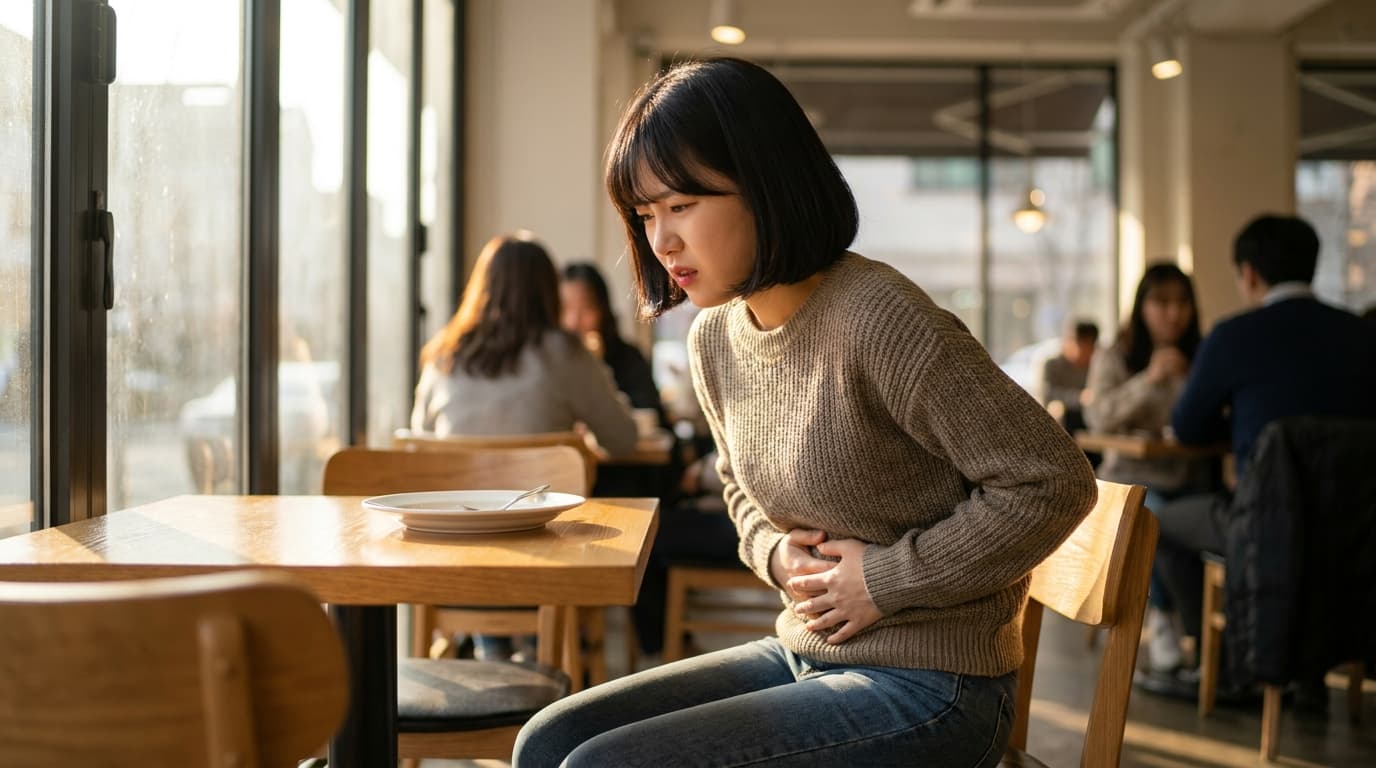
Why You Need to Rush to the Bathroom Right After Eating
Hello. This is Dalimchae Oriental Clinic. # Why You Need to Rush to the Bathroom Right After Eating: Is It a Red Flag for Gut Health? Does the sudden urge to use the restroom during a meeting after lunch, or feeling discomfort and needing to find a restroom right after eating at an important appointment, sound like your story? If the situation of having to go to the bathroom right after eating repeats, this may not be a simple habit, but an important warning signal from our body. In many cases, it occurs due to a complex combination of various causes such as sensitive reactions in the stomach, stress, and gut environmental imbalance. These symptoms not only significantly reduce the quality of daily life, but can also lead to larger health problems such as surprising changes in the gut, so it is important to identify the exact cause and start appropriate treatment. 💡 **Key Answer** 3 most common reasons why you need to rush to the bathroom right after eating: ① **Irritable Bowel Syndrome (IBS)** / ② **Gut-Brain Axis Dysfunction** / ③ **Gut Microbiome Imbalance** Dalimchae Oriental Clinic fundamentally resolves post-meal discomfort by correcting disturbed gut function through **gut detoxification**. ## Why Did Defecating Right After Meals Become a Common Problem? The desire to use the restroom right after a meal is medically closely related to the 'Gastrocolic reflex'. When food enters the stomach, the colon is reflexively activated to induce bowel movements, which is a natural physiological phenomenon. However, if this reflex is excessively hyperactive or the sensitivity of the gut itself increases, simply eating can cause abdominal pain and an immediate urge to defecate. Especially when the balance of the autonomic nervous system in the gut is broken due to stress or irregular eating habits, these symptoms can become even worse. Gut health is also closely connected to brain health. This is called the 'Gut-Brain Axis', where the gut and brain constantly exchange information through the nervous system, hormones, and immune system. If psychological factors such as stress or anxiety affect the gut-brain axis, gut motility can be abnormally hyperactive, inducing post-meal hypersensitive reactions. ## Irritable Bowel Syndrome May Be the Main Culprit of Post-Meal Defecation Problems One of the most representative causes of frequent post-meal defecation is 'Irritable Bowel Syndrome (IBS)'. This is a functional gastrointestinal disorder in which chronic changes in bowel habits such as abdominal pain, abdominal discomfort, diarrhea, or constipation occur without specific organic problems. About 10% of the world's population suffers from it, and patients with diarrhea-type irritable bowel syndrome (IBS-D) in particular suffer greatly from the immediate urge to defecate after eating. These symptoms can also cause serious disruptions in social life and interpersonal relationships. In a study published in the 2026 journal *Integrative Medicine Research* by researchers including Dr. Kim Hyung-jun and Dr. Choi Yu-jin from the Korea Institute of Oriental Medicine and Prof. Kim Jin-sung and Prof. Ha Na-yeon from Kyung Hee University, the efficacy and safety of the herbal medicine 'Kwakjeongtang-gami' were evaluated in 60 adult patients with diarrhea-type irritable bowel syndrome (IBS-D). As a result of a 4-week randomized, double-blind, placebo-controlled clinical trial, the overall symptom improvement rate of the patient group taking Kwakjeongtang-gami reached 55.2%, which was more than twice as high as the 26.7% of the placebo group. In particular, the Kwakjeongtang-gami group showed consistently higher improvement rates than the placebo group in abdominal pain intensity and stool consistency response rates, and no drug-related side effects occurred during the treatment period, proving the safety of long-term use. The researchers emphasized that these results suggest the possibility of fundamental treatment for irritable bowel syndrome by directly regulating gut inflammatory responses beyond temporary symptom relief. Based on these research data, Dalimchae Oriental Clinic relieves post-meal discomfort caused by irritable bowel syndrome through gut detoxification treatment that improves not only symptoms but also the fundamental environment of the gut. Additionally, in a study published in *Evid Based Complement Alternat Med* in 2013 by the research team of Kyung Hee University College of Korean Medicine, the combination effect of herbal medicine (Gwakhyangjeonggi-san) and probiotics mixture was analyzed in 53 patients with diarrhea-type irritable bowel syndrome (D-IBS) through a double-blind, randomized, placebo-controlled trial. During the 8-week treatment period, it was confirmed that the 'Proportion of Responders (PR)' for total IBS symptoms significantly improved in the herbal medicine and probiotics combination group compared to the placebo group. In addition, a synergistic effect of increasing the number of beneficial gut bacteria was also observed. The research team concluded that the combination therapy of herbal medicine and probiotics can help alleviate overall IBS symptoms by synergistically increasing the number of beneficial gut microorganisms. In this way, Dalimchae Oriental Clinic helps restore healthy bowel habits by improving the gut microbial environment and restoring the autonomous function of the gut, going beyond simply suppressing symptoms through herbal medicine treatment. ## Could I Have Irritable Bowel Syndrome Too? Self-Diagnosis Checklist If 3 or more of the following symptoms apply to you, you are likely to have irritable bowel syndrome. (Based on Rome IV diagnostic criteria) * Abdominal pain tends to improve after a bowel movement. * Changes in stool frequency are accompanied (frequent diarrhea or constipation). * Changes in stool form are accompanied (watery or hard stools). * You feel an urge to defecate with abdominal pain within 30 minutes after a meal. * Abdominal bloating and discomfort frequently appear. * Diarrhea and constipation appear repeatedly. * Symptoms become worse when you are stressed. * You experience other digestive symptoms such as indigestion or reflux esophagitis together. **Judgment Criteria:** * If 3 or more apply: Suspected irritable bowel syndrome stage. Initial consultation and treatment for gut function improvement can be considered. * If 5 or more apply: Advanced irritable bowel syndrome stage. Immediate visit for precise diagnosis and active Korean medicine treatment is recommended. ## How Is Dalimchae Oriental Clinic's 'Gut Detoxification' Treatment Different? Dalimchae Oriental Clinic does not view the cause of the inconvenience of 'going to the bathroom right after eating' simply as a gut function problem. We focus on the imbalance of the **gut-brain axis**, where the gut and brain are closely connected, and the damage and inflammation of the intestinal barrier caused by stress and irregular lifestyle habits, namely 'gut toxins'. Toxins accumulated on the intestinal barrier create systemic inflammation through the blood, which in turn causes a vicious cycle that deteriorates gut function. Dalimchae Oriental Clinic's gut detoxification treatment proceeds with the following principles: 1. **Individualized Herbal Medicine Prescription:** According to the patient's constitution and symptoms, herbal medicine is prescribed to detoxify gut toxins, alleviate inflammation of the intestinal barrier, and normalize the peristaltic function of the gut. This aims to solve the fundamental problem by increasing the recovery power of the gut itself, rather than simply suppressing diarrhea. Based on rich clinical experience in Songdo Oriental Clinic regarding irritable bowel syndrome, we present effective prescriptions for various symptoms such as abdominal pain, diarrhea, and constipation. 2. **Gut Function Strengthening Acupuncture Treatment:** Acupuncture treatment based on meridian theory helps the circulation of qi and blood in the gut, regulates overly hyperactive gut motility, and restores the balance of the gastrocolic reflex. This contributes to relieving abdominal pain and normalizing bowel habits, and is effective in calming sensitive guts. 3. **Lifestyle and Diet Management:** No matter how good the treatment is, it is difficult to sustain the effect without accompanying lifestyle improvements. Dalimchae Oriental Clinic analyzes each patient's overall lifestyle patterns, such as diet, sleep, and stress management, to provide practical guidelines for gut health. This is essential for preventing relapse and maintaining gut health. This integrated gut detoxification treatment not only eliminates the symptom of 'going to the bathroom right after eating', but also restores overall digestive health and restores the balance of the gut-brain axis, laying the foundation for the body to maintain health on its own. Songdo Gut Health Oriental Clinic, Dalimchae Oriental Clinic Songdo Branch does its best so that your gut can find comfort again. ## FAQ **Q. Can the symptom of going to the bathroom right after eating heal naturally?** A. Symptoms caused by temporary stress or dietary problems may improve naturally. However, if it repeats chronically or interferes with daily life, it may be another cause such as irritable bowel syndrome, so it is recommended to receive a professional examination. **Q. How long do I need to be treated for post-meal bowel problems to see results?** A. The duration of treatment may vary depending on the individual's symptom severity and cause. Usually, through 4 weeks or more of steady treatment and lifestyle improvements, gradual improvement of symptoms can be expected. Dalimchae Oriental Clinic Songdo Branch establishes a customized treatment plan after accurate diagnosis. **Q. I am suffering from irritable bowel syndrome and reflux esophagitis together; can they be treated together?** A. Yes, irritable bowel syndrome and reflux esophagitis often appear together due to gut-brain axis imbalance and gut health problems. Dalimchae Oriental Clinic's gut detoxification treatment focuses on regulating the function of the entire digestive system and stabilizing the gut-brain axis, so it is effective in improving both symptoms simultaneously. The inconvenience of going to the bathroom right after eating is not a problem solved by enduring. You no longer have to turn away from body signals sent for a long time. When approached in the right direction, the body responds faster than you think. Bring your current symptoms as they are. Dalimchae Oriental Clinic will find the cause together. A place where life blooms. Herbal medicine is undoubtedly Dalimchae Oriental Clinic. Check your similar symptoms first through Dalimchae Clinic website AI consultation! This health information was compiled together by Dalimchae medical staff based on questions frequently received in the clinic room. Medical Supervision | Gut and Digestive Treatment Standard, Dalimchae Oriental Clinic Songdo Branch, Korean Medicine Doctor Oh Hyunmin (Bowel Problem Column) #IBS #PostMealDefecation #GutTrouble #SongdoIBS #GutDetox #SongdoOrientalClinic #KoreanMedicineTreatment #PostMealDiarrhea