
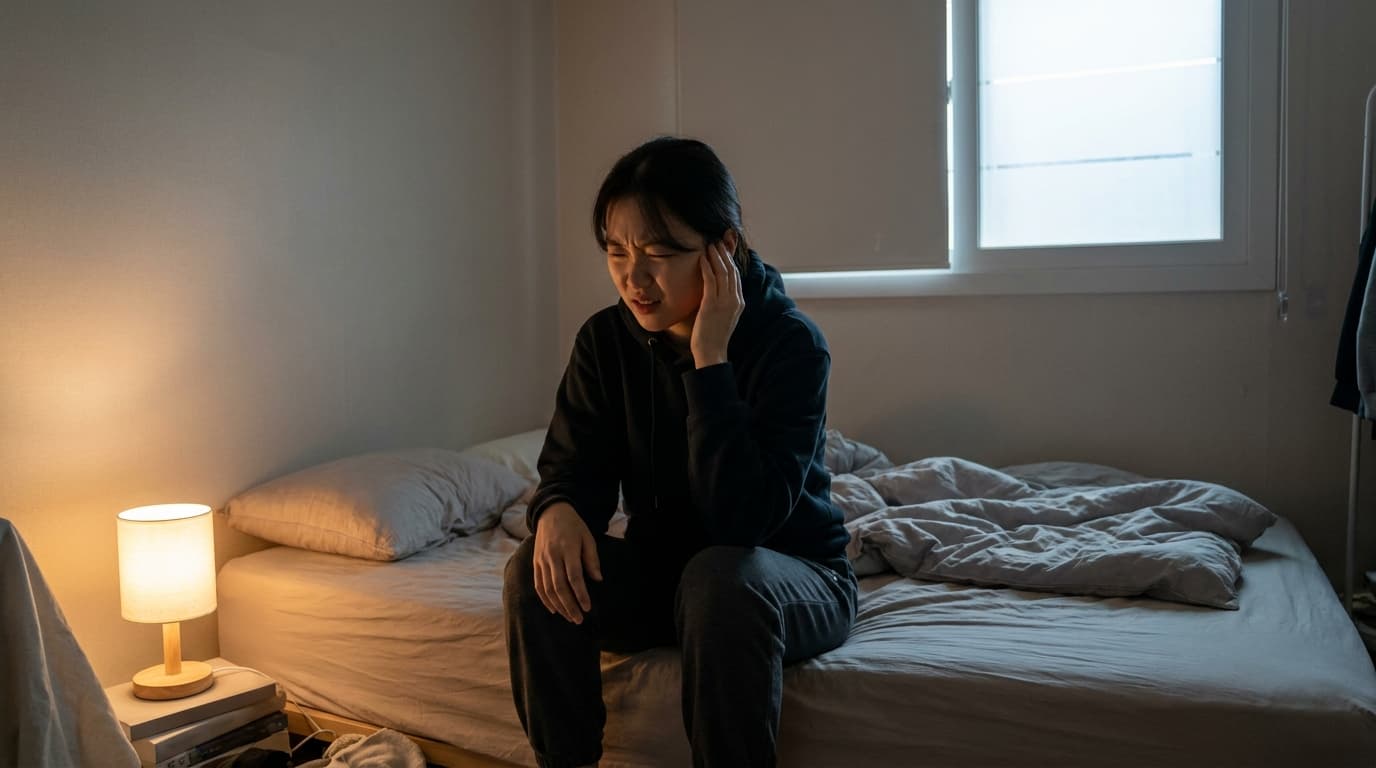
Why Words Dont Come to Mind When Speaking Could It Be a Warning Light from the Brain
Hello. This is Dalimchae Korean Medicine Clinic. # Why Words Don't Come to Mind When Speaking, Could It Be a Warning Light from the Brain? Have you ever hesitated during a conversation because what you wanted to say suddenly wouldn't come to mind, or felt frustrated when a familiar word just wouldn't slip out? If you brushed it off as mere forgetfulness or simple fatigue, now is the time to heed the small warning lights your body is sending. These symptoms can be signals of declining cognitive function, beyond simple inconvenience. In particular, excessive brain fatigue and autonomic nervous system imbalance are often cited as primary causes. 💡 **[Key Answer]** Top 3 most common reasons why **words don't come to mind when speaking**: ① **Brain Fatigue & Stress**: Chronic stress and sleep deprivation impair brain function. ② **Autonomic Imbalance**: Sympathetic hyperactivity keeps the brain overly active, making relaxation and recovery difficult. ③ **Cerebral Blood Flow & Neurotransmitter Issues**: Decreased blood flow to the brain or neurotransmitter imbalances reduce cognitive function. Dalimchae Korean Medicine Clinic increases brain resilience and improves cognitive function through **autonomic stabilization treatment**, solving the root cause of the symptoms. ## Is word-blocking during conversation just simple forgetfulness? Many people worry, "Am I getting dementia?" when they experience situations where words don't come to mind or they can't express what they want to say during conversation. However, this does not necessarily mean dementia. Rather, it is highly likely that the brain has been used excessively, leading to accumulated fatigue, or that autonomic balance has been broken due to stress. Our brains are vulnerable to stress, and persistent tension can impair brain function, affecting cognitive ability, especially language ability. Going beyond simple memory decline, this can be an early sign of 'cognitive function decline' where problems arise across the entire process of acquiring, storing new information, and properly retrieving stored information. ## Brain Overload: A Signal Sent by the Autonomic Nervous System The autonomic nervous system, which regulates all functions of our body, consists of the sympathetic and parasympathetic nervous systems. The sympathetic nervous system arouses the body in tense, stressful situations, while the parasympathetic nervous system is responsible for rest and recovery. Modern people's excessive stress continuously activates the sympathetic nervous system, preventing the brain from resting. The brain heats up like an 'overheated engine' constantly processing and judging information, but failing to relax properly when it should rest, accumulating 'brain fatigue'. This can lead to impaired concentration, memory decline, and cognitive decline symptoms such as language disorders where words don't come to mind when speaking. This is similar to a computer lagging due to overload. ## Cognitive Function Decline from a Korean Medicine Perspective: Autonomic Stabilization Treatment to Let the Brain Rest In Korean medicine, cognitive function decline is not viewed merely as a brain problem, but as a systemic functional imbalance and qi-blood circulation disorder of the five viscera and six bowels, such as the heart, liver, spleen, and kidneys. In particular, autonomic imbalance caused by stress and brain fatigue acts as a core cause of brain function decline. Dalimchae Korean Medicine Clinic Incheon Branch focuses on relieving brain overload and restoring autonomic balance to create an environment where the brain can recover on its own. According to a study by research teams led by Professor Park Jung-mi of the Department of Internal Korean Medicine at Gangnam Kyung Hee University Hospital published in the SCIE-grade international journal <Brain Imaging and Behavior> in March 2026, 73 patients with amnestic mild cognitive impairment (36 in the Kamigwibi-tang administration group, 37 in the placebo control group) were administered the herbal medicine 'Kamigwibi-tang' for 24 weeks. As a result, while the placebo group showed a tendency for decreased activity in various brain regions involved in memory and cognitive regulation, the Kamigwibi-tang administration group showed that the activity of those brain regions was maintained relatively stably or increased in some aspects. In particular, significant differences in brain activity changes between the two groups were confirmed during memory and working memory tasks, and connectivity between memory-related brain regions significantly increased after administration. The researchers concluded that these results suggest that Kamigwibi-tang may influence alleviating memory-related brain function decline in patients with mild cognitive impairment. Additionally, in a study published in the international journal <Frontiers in Neurology> in October 2025 by the Association of Korean Medicine of Seoul, combining herbal medicine and acupuncture treatment in 2,242 elderly patients with mild cognitive impairment aged 60 and older confirmed significant increases in cognitive function assessment tools CIST and MoCA scores. Cognitive function improvement appeared in both the herbal medicine and acupuncture combination group (MoCA increased from 17.7 to 21.4 points, +3.7 points) and the acupuncture-only group (MoCA increased from 17.0 to 20.6 points, +3.6 points), and no serious side effects were reported. These studies show that Korean medicine treatments can play a positive role in regulating brain function and improving cognitive abilities. Dalimchae Korean Medicine Clinic, an Incheon cognitive function clinic, resolves cognitive decline problems through autonomic stabilization treatment that lowers the heat of the brain neural system and creates an environment where the brain can rest, based on these data. ## Dalimchae Korean Medicine Clinic's 'Autonomic Stabilization' Treatment Creating an Environment Where the Brain Can Rest When autonomic balance collapses, the brain cannot rest and remains in continuous tension. This state is like a main circuit breaker being left on, causing overload to all electricity in the house. Dalimchae Korean Medicine Clinic Incheon Branch helps the brain sufficiently rest and recover by lowering excessively hyperactive sympathetic nerves and boosting impaired parasympathetic functions through autonomic stabilization treatment. Specifically, it utilizes herbal prescriptions tailored to each patient's constitution and symptoms to calm excessive excitation of the brain nervous system and improve qi-blood circulation. This is not simply suppressing symptoms, but a process of strengthening the brain's resilience so that the brain itself regains healthy functions. In addition, heart rate variability (HRV) tests and other examinations accurately diagnose the current state of the autonomic nervous system, and accompanying acupuncture, pharmacopuncture, and moxibustion treatments are combined to activate brain functions and regulate neurotransmitter balance. Such treatments stabilizing the brain and autonomic nerves can also have positive effects on brain and autonomic diseases such as headaches, dizziness, and insomnia, beyond word-blocking during conversation. ## Cognitive Function Decline, Could It Be Me? Self-Checklist If 3 or more of the following apply to you, you are advised to suspect cognitive function decline and autonomic imbalance, and consult an expert to review herbal combination treatments for brain function recovery. If 5 or more apply, immediate visits are recommended. * Appropriate words do not come to mind immediately during conversation, causing frustration. * You frequently forget recent appointments or important tasks. * You occasionally feel confused or disoriented in familiar streets. * Your concentration is diminished, causing difficulty in reading or work. * Learning or remembering new things is much harder than before. * You are easily irritated by trivial matters and have severe emotional fluctuations. * Sleep quality is degraded, such as difficulty falling asleep at night or waking up frequently. * You feel chronic fatigue and do not feel refreshed even after resting. * Your judgment is blurred compared to before, making it hard to make decisions. ## FAQ: Frequently Asked Questions About Cognitive Function Decline **Q. How long do symptoms of words not coming to mind when speaking last?** A. The duration of these symptoms varies depending on the cause. It may be a temporary symptom due to brain fatigue or stress, but if there are fundamental problems such as autonomic imbalance or mild cognitive impairment, it can persist for a long time. Dalimchae Korean Medicine Clinic Incheon Branch accurately identifies the cause of symptoms and provides individualized customized treatments. **Q. Can cognitive function decline be treated with Korean medicine?** A. Yes, Korean medicine treatment is an effective approach for cognitive function decline. In Korean medicine, brain function decline is viewed as systemic imbalance, and cognitive function is restored through autonomic stabilization, qi replenishment, and cerebral blood flow improvement. In particular, herbal prescriptions improving brain function, along with acupuncture, moxibustion, and pharmacopuncture treatments, help enhance brain resilience and improve language function. **Q. Can symptoms of words not coming to mind when speaking recover naturally?** A. If temporary fatigue or stress is the cause, it can improve through sufficient rest and stress management. However, if chronic brain fatigue, autonomic imbalance, or early cognitive function decline is the cause, natural recovery without active treatment is difficult, and symptoms may intensify. **Q. Memory decline and difficulty finding words occur together; can they be treated together?** A. Yes, memory decline and difficulty finding words both fall under the category of cognitive function decline and are closely related to imbalances in brain function and the autonomic nervous system. Dalimchae Korean Medicine Clinic focuses on treating the root causes of both symptoms together to comprehensively improve overall brain function and cognitive abilities. The frustration of words not coming to mind when speaking is not a problem solved by enduring it. You no longer need to ignore the signals your body has been sending for a long time. Approaching in the right direction makes the body react faster than expected. Bring the symptoms you are currently experiencing as they are. Dalimchae Korean Medicine Clinic will find the cause together with you. Where life blooms. For herbal medicine, it's Dalimchae Korean Medicine Clinic. Check your symptoms through AI consultation on the Dalimchae website first! Medical Supervision | Brain & Autonomic Nervous System Treatment Standards Dalimchae Korean Medicine Clinic Incheon Branch Korean Medicine Doctor Yang Yuchan (Cognitive Function Decline Column)