
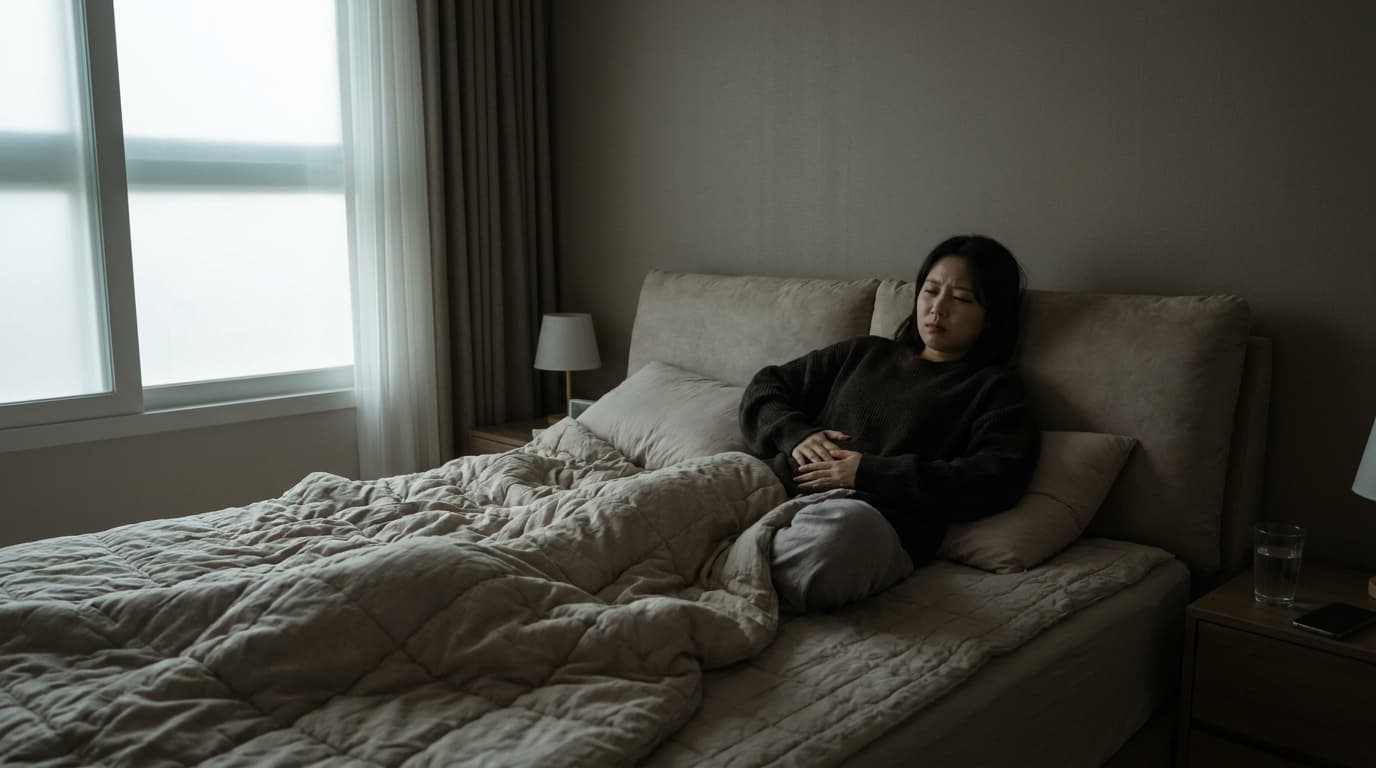
Why is my body so exhausted before menstruation? Could herbal treatment be an alternative to birth control pills?
Every month, the period before menstruation is a time of suffering for many women. Going beyond simple discomfort, it is common to complain that "my body feels so exhausted before menstruation" and experience major disruptions in daily life. Swinging emotions, extreme pain, indigestion, unprovoked irritation—all these symptoms disappear like magic with the start of menstruation, only to return relentlessly next month and wear you down. Are you perhaps considering taking birth control pills for this recurring pain? Dalimchae Korean Medicine Clinic proposes herbal treatment to restore the fundamental balance of the body so that premenstrual discomfort never returns, going beyond mere symptom relief. 💡 **[Core Answer]** Top 3 most common causes of **Premenstrual Syndrome (PMS)**: ① Delicate fluctuations in hormonal balance / ② Autonomic nervous system imbalance due to stress / ③ Poor lifestyle habits and diet. Dalimchae Korean Medicine Clinic corrects bodily imbalance through **constitutional improvement**, resolving the root cause of premenstrual discomfort. ## Why do we think of birth control pills when our bodies feel exhausted before menstruation? Premenstrual syndrome (PMS) is so common that 80% of women of childbearing age experience it, and about half suffer from symptoms severe enough to disrupt daily life. Western medicine views the rapid hormonal fluctuations during the menstrual cycle as the main cause. For this reason, oral contraceptives are used as a treatment option to suppress ovulation and maintain consistent hormone levels to prevent symptom onset. In particular, it can help alleviate mental symptoms such as mood changes, depression, and irritation, and is sometimes effective in reducing menstrual cramps or bleeding volume. However, taking birth control pills is not a perfect solution for every woman. While birth control pills directly regulate hormones to quickly suppress symptoms, this does not change the fundamental state of the body, so symptoms may reappear once medication is stopped. In addition, there are concerns about side effects such as increased risk of blood clots, leading many to hesitate on long-term use or seek alternatives. It is also noted that if symptoms do not improve with birth control pills, psychological or environmental factors may be greater than hormonal influences. ## What is the difference between birth control pills and herbal treatment? While birth control pills rapidly suppress symptoms through hormone regulation, Dalimchae Korean Medicine's herbal treatment focuses on **constitutional improvement** so that the body can maintain a healthy menstrual cycle on its own. In Korean medicine, premenstrual syndrome is understood not merely as a hormone problem, but as a type of **Gyeonghaengbyeong (menstrual disorder)** caused by intertwined complex factors such as stagnation of qi and blood circulation (giul), dysfunction of internal organs, and stress. Birth control pills artificially regulate the menstrual cycle by externally administering hormones such as estrogen and progesterone. In contrast, herbal treatment does not directly use hormone medications, but strengthens the body's natural healing power to help recover hormone balance on its own. The goal is to smooth qi and blood circulation, regulate autonomic nervous system imbalances caused by stress, and strengthen the functions of internal organs to restore overall bodily harmony. This is a process of building a body where a healthy menstrual cycle is naturally maintained rather than just temporarily masking symptoms. ## How does Korean medicine view premenstrual syndrome? Korean medicine does not limit the various symptoms of premenstrual syndrome solely to female hormone issues. Due to stress, liver qi (gangi) stagnates (ulche), blocking qi and blood circulation, which leads to emotional instability, indigestion, breast pain, and more. It also explains that phlegm (dam-eum) or blood stasis (eohyeol) caused by decreased spleen and stomach (biwi) function can accumulate, causing edema, fatigue, and pain. This Korean medicine perspective focuses on reducing the body's hypersensitive response to hormonal changes and alleviating symptoms through systemic circulation and functional recovery. This aligns with the **constitutional improvement** treatment pursued by Dalimchae Korean Medicine. Herbs are formulated according to individual constitutions and symptoms, acupuncture promotes qi and blood circulation, and moxibustion warms the body to make the functions of the uterus and ovaries healthy. A 2014 systematic review published in *BMC Complementary and Alternative Medicine* analyzed 19 clinical studies from 2002 to 2012 (8 acupuncture, 11 herbal medicine) and found that both acupuncture and herbal treatments showed significant effects in alleviating PMS and Premenstrual Dysphoric Disorder (PMDD) symptoms. The researchers confirmed a symptom reduction rate of over 50% compared to initial symptoms in the herbal treatment group, emphasizing safe application. Furthermore, a 2009 study on Korean women published in the *Journal of Alternative and Complementary Medicine* reported that manual acupuncture and moxibustion significantly reduced PMS symptom severity. These research findings suggest that Korean medicine treatments can be an effective and safe alternative for women suffering from premenstrual syndrome. ## How is the herbal treatment for premenstrual syndrome conducted at Dalimchae Korean Medicine Clinic? At Dalimchae Korean Medicine Clinic Songdo Branch, we provide the following customized treatment process to fundamentally improve premenstrual syndrome: 1. **Precision Diagnosis and Cause Analysis:** We thoroughly assess individual constitutions, symptom patterns, lifestyle habits, and stress levels. Through traditional Korean diagnoses such as pulse diagnosis, abdominal examination, and tongue diagnosis, along with autonomic nervous system tests, we analyze the current state of the body and the root causes of imbalance. 2. **Customized Herbal Prescription:** Based on diagnostic results, we prescribe personalized herbal medicine that improves qi and blood circulation, relieves stagnant energy, and harmonizes internal organs. For example, for severe liver qi stagnation due to stress, Soyosan formulas are used, and for pain primarily caused by blood stasis, Sobokchuk-eo-tang formulas are modified and utilized. Herbal medicine not only suppresses symptoms but helps the body maintain a healthy state on its own. 3. **Acupuncture and Pharmacopuncture Therapy:** Acupuncture at specific meridian points facilitates smooth qi and blood circulation, relieves pain, and helps restore autonomic nervous system balance. In particular, effective points for women's health such as Taechong, Samumgyo, and Jigi are utilized. In addition, pharmacopuncture liquid refined from carefully selected herbs is injected into acupoints to deliver medicinal efficacy quickly and effectively, helping strengthen the functions of the uterus and ovaries. 4. **Moxibustion and Thermal Therapy:** Moxibustion on the lower abdomen and lower back warms the body, eliminates uterine coldness, and promotes qi and blood circulation. This is effective not only in relieving menstrual cramps but also in increasing overall circulatory capacity to improve premenstrual syndrome symptoms. 5. **Lifestyle Management and Dietary Therapy:** Proper lifestyle habits such as regular exercise, adequate sleep, stress management, and a balanced diet are essential for managing premenstrual syndrome. Reducing caffeine, alcohol, refined carbohydrates, and salty foods can be helpful. Dalimchae Korean Medicine Clinic provides coaching across these lifestyle habits to maximize treatment efficacy. This integrative herbal treatment can also have a positive impact on treating various women's health conditions such as menstrual cramps, infertility, endometriosis, and uterine fibroids. ## Songdo Premenstrual Syndrome, making fundamental changes through constitutional improvement. The **constitutional improvement** pursued by Dalimchae Korean Medicine goes beyond temporarily eliminating uncomfortable symptoms to create 'a body where symptoms are not just turned off, but do not turn back on.' Premenstrual syndrome is a signal from the body that repeats every month. True health can only be recovered by paying attention to this signal and finding and resolving the root causes causing bodily imbalance. Many people visiting **Songdo Premenstrual Syndrome Clinic** are recovering healthy menstrual cycles and improving their quality of life through this fundamental treatment. Dalimchae Korean Medicine Clinic Songdo Branch helps the body find balance on its own and build resilience through customized treatments considering individual characteristics. --- ### **Premenstrual Syndrome Self-Checklist** If you match 3 or more of the items below, suspect premenstrual syndrome; if 5 or more, consider immediate Korean medical diagnosis and treatment. * Emotional fluctuations become severe and you become sensitive starting 1-2 weeks before menstruation. * Irritation or anger easily rises even over trivial matters. * Feelings of depression or anxiety worsen and you feel lethargic. * Breasts feel heavy or painful, and the lower abdomen feels bloated or swollen. * General pain such as headaches, back pain, and muscle aches appear. * Appetite for sweet foods or specific foods increases explosively. * Digestion is poor and constipation or diarrhea alternates. * Fatigue is severe and you don't feel refreshed even after sleeping. * Cognitive functions such as decreased concentration and forgetfulness occur. * Weight increases or your body swells more than usual. **If 3-4 matched:** Suspect early premenstrual syndrome → Improve lifestyle habits and consider combined Korean medical treatment. **If 5 or more matched:** Severe premenstrual syndrome → Visit Dalimchae Korean Medicine Clinic Songdo Branch recommended. --- **Q. How long does herbal treatment for premenstrual syndrome take?** A. The duration of herbal treatment for premenstrual syndrome varies depending on individual symptom severity, constitution, and the body's recovery capacity. Generally, meaningful improvement can be expected through 3 to 6 months of steady treatment and management. **Q. Are menstrual cramps treated together?** A. Yes, premenstrual syndrome and menstrual cramps often share the common cause of qi and blood circulation imbalance. Dalimchae Korean Medicine's treatment improves circulation in the uterus and pelvic cavity, helping alleviate both premenstrual syndrome and menstrual cramps. **Q. Can premenstrual syndrome improve without birth control pills?** A. Of course. Dalimchae Korean Medicine's treatment does not directly administer hormones like birth control pills do, but helps the body recover hormone balance and stabilize the autonomic nervous system on its own. Through this, premenstrual syndrome symptoms can be naturally improved without birth control pills. **Q. What tests are conducted at Dalimchae Korean Medicine Clinic Songdo Branch?** A. At Dalimchae Korean Medicine Clinic Songdo Branch, along with detailed interviews, we conduct traditional Korean diagnoses such as pulse and abdominal examinations, as well as HRV (Heart Rate Variability) tests to assess autonomic nervous system balance, precisely grasping each patient's physical condition. Based on this, we establish a 1:1 customized treatment plan. Premenstrual syndrome is not a problem solved by endurance. You no longer need to turn away from the signals your body has been sending for a long time. Approached in the right direction, the body responds faster than you think. Bring the symptoms you are experiencing as they are. Dalimchae Korean Medicine Clinic will find the cause together with you. Where life blossoms. Herbal medicine is Dalimchae Korean Medicine Clinic. Check your similar symptoms first through the Dalimchae Korean Medicine Clinic website AI consultation! This health information was compiled together by Dalimchae medical staff based on frequently asked questions in the clinic room. Medical Supervision | Dalimchae Korean Medicine Clinic Songdo Branch Korean Medicine Doctor Oh Hyunmin (Premenstrual Syndrome Column) #PremenstrualSyndrome #PMS #ConstitutionalImprovement #SongdoClinic #IncheonWomensHealth #AutonomicNerve #HerbalTreatment Infertility Pregnancy Preparation