
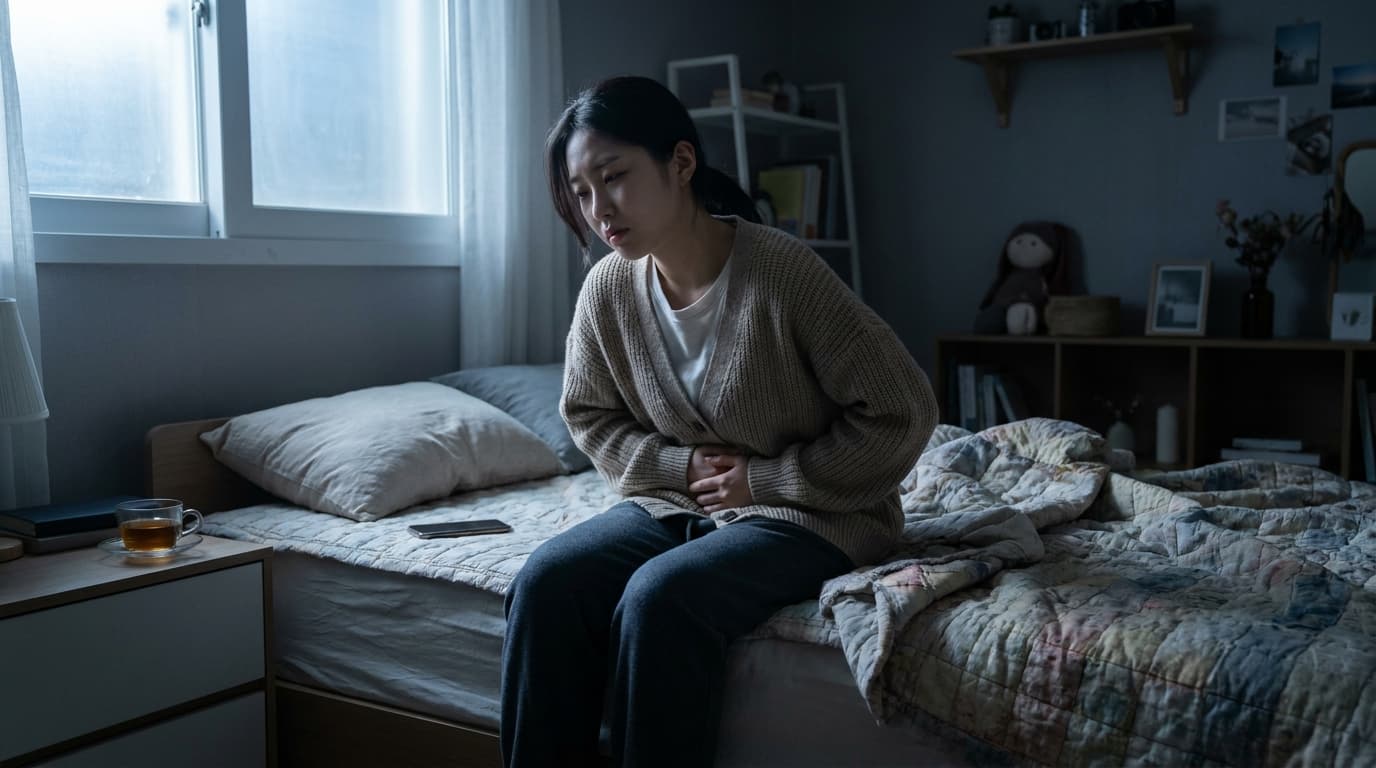
Why Does the Lower Abdominal Pain Persist After a Miscarriage?
Hello, this is Dalimchae Korean Medicine Clinic. # Why Does the Lower Abdominal Pain Persist After a Miscarriage? An unexpected miscarriage leaves deep scars on body and mind. Especially when lower abdominal pain or discomfort persists after a miscarriage, many people feel great anxiety alongside severe pain, wondering if something is wrong with their bodies. While people naturally think body care is essential after childbirth, they often overlook its importance after a miscarriage, failing to recover properly and suffering from chronic aftereffects. Lower abdominal pain after a miscarriage is an important signal sent by the body. 💡 **[Key Takeaways]** Top 3 causes of lower abdominal pain after a miscarriage: ① Stagnation of intrauterine blood stasis (瘀血): Residual waste and blood fail to discharge properly after miscarriage, causing pain in the uterus. ② Circulatory disturbance due to qi and blood damage: Sudden loss of vital energy and blood during the miscarriage process lowers circulation in the uterus and whole body. ③ Hypersensitive reaction due to autonomic imbalance: Mental shock and physical stress stimulate the autonomic nervous system and amplify pain sensation. Dalimchae Korean Medicine Clinic helps prevent miscarriage aftereffects and prepares for a healthy next pregnancy by restoring the balance of uterine recovery and overall health through **constitutional improvement treatment**. ## Why Does the Lower Abdominal Pain Hurt? Could It Be Blood Stasis? One of the main causes of lower abdominal pain after miscarriage is 'blood stasis' (瘀血). Blood stasis refers to bad blood that does not circulate properly and clots in our body. During the miscarriage process, the endometrium is damaged, and unexpelled placental tissue or blood debris remains inside the uterus, forming blood stasis. This blood stasis hinders the normal contraction and recovery of the uterus, inducing lower abdominal pain. Like a clogged drain, it hinders uterine circulation and increases the risk of inflammation or adhesion. In Oriental medicine, miscarriage is called 'half-birth' (半産) and is considered to require careful care equivalent to or greater than childbirth. In particular, if procedures such as dilation and curettage (D&C) are performed, the risk of intrauterine adhesion (Asherman's syndrome) may increase, which can become a cause of future infertility or habitual miscarriage. Therefore, after a miscarriage, it is very important to effectively remove blood stasis and help regenerate damaged endometrium. ## Why Is Post-Miscarriage Care So Important? A miscarriage goes beyond simply losing a fetus; it brings major changes and burdens to a woman's body. As the hormonal system that changed rapidly during pregnancy abruptly returns to its original state, physical confusion and energy depletion occur severely. Without proper body care, various post-miscarriage aftereffects (postpartum wind) such as chronic fatigue, indigestion, cold hands and feet, and joint pain can be experienced, and in severe cases, it can lead to psychological problems such as depression or anxiety. Research results also show that the more miscarriage experiences are repeated, the higher the probability of miscarriage in the next pregnancy. The probability of recurrent miscarriage after the first miscarriage increases to 15%, after the second miscarriage to 35%, and after the third miscarriage to 45~50%. This suggests that the uterine environment did not recover sufficiently after the miscarriage, or the fundamental cause that caused the miscarriage was not improved. Therefore, post-miscarriage care is an essential process that goes beyond simply easing painful symptoms to healthily recover the uterus and lay a solid foundation for the next pregnancy. ## What Makes Oriental Medicine Post-Miscarriage Recovery Treatment Special? At Dalimchae Korean Medicine Clinic, we provide customized Oriental medicine treatment considering each patient's body condition and constitution for lower abdominal pain and general recovery after a miscarriage. The core goals are to remove intrauterine blood stasis, regenerate damaged endometrium, and smooth qi and blood circulation to restore body balance. A clinical study of 12 patients with post-miscarriage aftereffects conducted at Dongshin University Korean Medicine Hospital in 2006 showed that Oriental medicine treatment (herbal medicine, acupuncture, moxibustion) had a significant effect on patients with post-miscarriage aftereffects. The overall symptom improvement rate of patients reached an average of 57.72%, with joint pain at 68.6%, lower abdominal pain and cold hands and feet at 44%, and dizziness at 43.5%. The researchers concluded that these results demonstrate the efficacy of Oriental medicine treatment for various aftereffects occurring after miscarriage. In addition, in a 2015 study of 72 threatened miscarriage patients at Osaka Medical College Hospital in Japan, the herbal medicine (Gunggui Gyoae-tang granules) intake group showed significantly shorter hemostasis time compared to the Western medicine (hCG injection) administration group. While the herbal medicine intake group took an average of 2.9 ± 3.5 days, the Western medicine group took 23.2 ± 12.8 days, showing a statistically significant difference (p<0.05). In addition, the disappearance period of intrauterine hematoma was shortened by more than two times in the herbal medicine intake group, and the hematoma reduction rate was also statistically significantly higher in the herbal medicine group compared to the control group (longest length: 42.3 ± 10.5% vs 7.5 ± 3.8%; shortest length: 71.5 ± 48.2% vs 15.3 ± 16.8%). This suggests that Oriental medicine treatment stabilizes the intrauterine environment and effectively removes blood stasis to help uterine recovery. Based on these data, Dalimchae Korean Medicine Clinic in Songdo focuses on alleviating physical and psychological aftereffects including lower abdominal pain after miscarriage and restoring uterine function. In particular, if you are planning your next pregnancy, it is important to receive constitutional improvement treatment with sufficient time to strengthen the uterus and create a healthy implantation environment. Acupuncture treatment can also be safely applied during pregnancy and is effective in relieving pain. ### Dalimchae Korean Medicine Clinic's Constitutional Improvement Treatment: Making a Body That Doesn't Turn Back On, Rather Than Just Turning Off Symptoms Dalimchae Korean Medicine Clinic's post-miscarriage recovery treatment goes beyond simply quieting current pain or discomfort. Through the fundamental treatment principle of **constitutional improvement**, we aim to correct bodily imbalances that could have caused the miscarriage and create a healthy body so that unnecessary pain does not occur again. After a miscarriage, the functions of internal organs tend to deteriorate overall along with rapid qi and blood loss. If this state persists, uterine recovery is delayed, and immunity weakens, making it a vulnerable body easily affected by small stresses. Dalimchae Korean Medicine Clinic discharges residual blood stasis and waste in the uterus through herbal prescriptions, regenerates damaged endometrium, replenishes systemic qi and blood, and strengthens uterine and ovarian functions. At the same time, we combine acupuncture and moxibustion treatments to promote blood circulation in the pelvic cavity and enhance the recovery power of the uterus and surrounding tissues. This is like fertilizing the soil so that healthy seeds can take root well. Just as you must make the soil itself healthy rather than just planting seeds to get good results next time, Dalimchae Korean Medicine Clinic improves the constitution of the body after miscarriage to create the optimal state for the next pregnancy. This constitutional improvement process helps improve various symptoms that easily occur after miscarriage, such as irregular menstruation, menstrual cramps, chronic fatigue, and indigestion. It is also an important treatment that lays a solid foundation for a healthy pregnancy for those who have experienced infertility or habitual miscarriage. ## Lower Abdominal Pain After Miscarriage: Could It Be Me? Symptom Checklist If you check 3 or more of the following items, you may be in a state requiring post-miscarriage recovery management. Consult Dalimchae Korean Medicine Clinic in Songdo to start accurate diagnosis and customized treatment. * Lower abdominal pain or tightness lasting 2 weeks or more after miscarriage. * Decreased menstrual volume, worsening menstrual cramps, and irregular menstrual cycles after miscarriage. * Overall coldness in body, such as cold hands and feet and chilly lower abdomen. * Extreme fatigue and lethargy without specific reason. * Increased anxiety, such as being startled by small sounds or pounding heart. * Severe mood swings and frequent depression. * Difficulty falling asleep and waking up frequently compared to usual. * Experiencing postpartum wind symptoms such as aching joints or chilling whole body. **When 3 or more items apply:** You may have difficulty in the post-miscarriage recovery process. Consider Dalimchae Korean Medicine Clinic's combination therapy. **When 5 or more items apply:** Immediate visit and consultation are recommended to start active treatment for body and mind recovery. ## FAQ **Q. When is it best to start taking herbal medicine after a miscarriage?** A. Herbal medicine after a miscarriage may vary depending on the type of miscarriage and whether a procedure was performed, but generally, it is recommended to start taking it from the point bleeding stops to help uterine recovery and blood stasis discharge. Dalimchae Korean Medicine Clinic in Songdo prescribes according to the patient's recovery speed. **Q. What symptoms can occur besides lower abdominal pain after a miscarriage?** A. Besides lower abdominal pain, various physical and mental aftereffects such as postpartum wind (joint pain, chilling), chronic fatigue, indigestion, cold hands and feet, menstrual irregularity, deepened menstrual cramps, dizziness, depression, and insomnia can occur. **Q. How long should I wait to prepare for pregnancy again after a miscarriage?** A. Generally, a sufficient recovery period of at least 3 months is recommended until the uterus is fully recovered and becomes optimal for the next pregnancy. Dalimchae Korean Medicine Clinic Songdo branch provides concurrent uterine environment improvement treatment for the next pregnancy preparation. **Q. What treatments can I receive at Dalimchae Korean Medicine Clinic Songdo?** A. Dalimchae Korean Medicine Clinic Songdo branch helps blood stasis removal, uterine recovery, and qi and blood replenishment through personalized herbal prescriptions, and induces pain relief and systemic recovery by combining acupuncture, moxibustion, and pharmacopuncture treatments. Related conditions like infertility or menstrual cramps are also managed together. Lower abdominal pain after a miscarriage is not a problem solved by enduring it. You no longer need to ignore the body's signals you have sent for a long time. Approaching in the right direction makes the body react faster than expected. Bring the symptoms you are experiencing as they are. Dalimchae Korean Medicine Clinic will find the cause together. Where life blossoms. Herbal medicine is Dalimchae Korean Medicine Clinic. Check similar symptoms with Dalimchae Korean Medicine Clinic homepage AI consultation first! This article is health information organized together by Dalimchae medical staff based on questions frequently received in the clinic room. Medical Supervision | Dalimchae Korean Medicine Clinic Songdo Branch Korean Medicine Doctor Oh Hyunmin (Post-Miscarriage Recovery Column)