
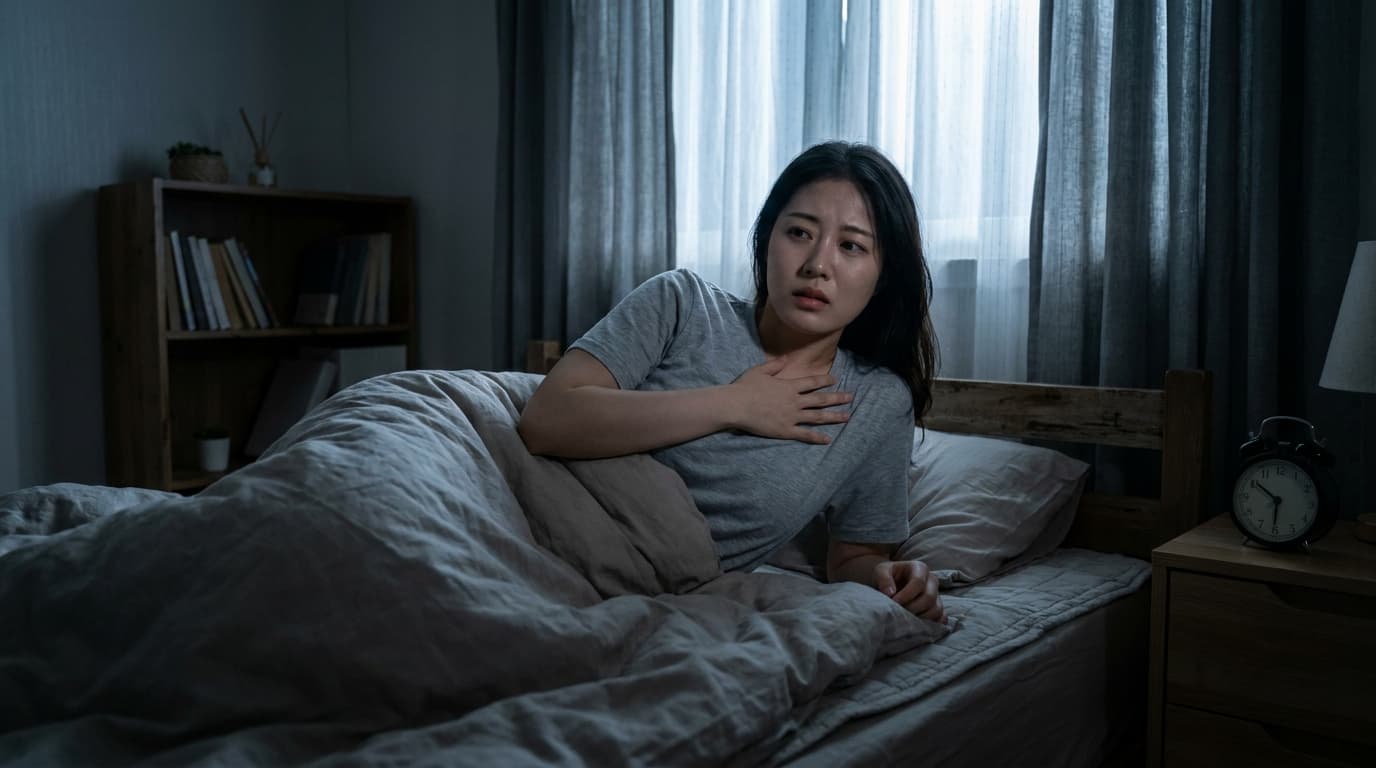
Why Does My Chest Flutter for No Reason It Is an SOS Signal From Your Brain
Hello, this is Dalimchae Clinic. # Do You Experience Sudden Chest Flutters for No Reason? It Is an SOS Signal From Your Brain. In the midst of a peaceful daily life, there are times when your heart suddenly races and an overwhelming sense of anxiety washes over you. You rush to the emergency room, only to be told that all test results are "normal." When this situation repeats, you can't help but feel confused and helpless, wondering if a serious illness is hidden in your body or if you appear strange to others. However, this symptom is by no means your unique experience; it can be an important signal sent by your body and brain. 💡 **[Key Answer]** The 3 most common causes of **"Why does my chest flutter for no reason?"**: ① **Autonomic Imbalance** / ② **Brain Hyperactivation Due to Chronic Stress** / ③ **Weakened Heart Regulation Due to Visceral Functional Decline** Dalimchae Clinic resolves the root cause of anxiety and heart palpitations through **Autonomic Stabilization Treatment**, helping you restore brain-body balance and regain a healthy daily life. ## Is Sudden Chest Flutter and Anxiety Due to the Autonomic Nervous System? Yes, that is correct. One of the main causes of sudden heart flutters or pounding without a special reason is imbalance in the autonomic nervous system. Our autonomic nervous system consists of the sympathetic and parasympathetic nervous systems, which act like a seesaw to regulate essential life-sustaining functions such as heart rate, breathing, and digestion. However, when this balance is disrupted by factors such as stress, overwork, and lack of sleep, the sympathetic nervous system becomes overly active, and the heart begins to beat unnecessarily fast like an overheated engine. This autonomic imbalance does not just manifest as heart palpitations; it is accompanied by various physical and mental symptoms such as anxiety, restlessness, stuffiness, indigestion, insomnia, dizziness, and headaches. In particular, anxiety and restlessness are primary psychological and psychiatric symptoms in patients with autonomic imbalance, and heart palpitations are the most common physical symptom. This is like a warning light sent by the brain to the body. The brain and autonomic nervous system are closely connected; when the brain is exposed to excessive stress, it affects the autonomic nervous system, bringing changes to indicators such as Heart Rate Variability (HRV). ## What If Test Results Are Normal, But Heart Palpitations Are Severe? Many people visit the hospital complaining of heart palpitations and anxiety, only to be told "there is nothing specifically wrong" after undergoing electrocardiograms and blood tests. This simply means modern medicine did not find a pathological lesion, by no means implying that the discomfort you feel is fake. In Korean medicine, such symptoms are approached as functional abnormalities of the autonomic nervous system, namely 'autonomic ataxia'. According to a clinical survey of Korean medicine doctors published in the 'Journal of Oriental Neuropsychiatry' in March 2024, among patients with autonomic ataxia, 88% reported 'anxiety/restlessness' and 59% experienced 'heart palpitations' as their chief complaints. This important statistic demonstrates that patients actually experience severe anxiety and physical symptoms even when test results show no specific abnormalities. Furthermore, a study by Wonkwang University research team published in the 'International Journal of Neuroscience' in 2005 administered herbal medicine (Odam-tang-gamibang) or placebo to 20 adults. The herbal medicine group showed a decrease in heart rate and improvement in Heart Rate Variability (HRV). Specifically, the Low Frequency to High Frequency power ratio (LF/HF ratio) decreased, suggesting stabilization of sympathetic-parasympathetic functions of the autonomic nervous system (p \< 0.05). The researchers concluded that herbal medicine has a positive effect on autonomic stabilization and emotional state improvement. These data support why Dalimchae Clinic treats heart palpitations and anxiety from the root by core principle of autonomic stabilization. ## How Does Korean Medicine Treatment for Anxiety and Chest Flutters Differ? At Dalimchae Clinic, symptoms like "chest flutters for no reason" are not dismissed as mere neurotic issues. We determine that the autonomic nervous system, the body's natural regulatory system, has broken down, and delve deep into its causes from a Korean medicine perspective. In Korean medicine, anxiety and heart palpitations fall under the category of 'gyeonggye (惊悸)' or 'jeongchung (怔忡)', and are diagnosed as primarily arising from functional decline of the heart and gallbladder, as well as Qi stagnation and phlegm-dampness due to stress. These occur when the heart beats excessively or weakens, and simultaneously result from shaken functions of organs governing the mind. Dalimchae Clinic's autonomic stabilization treatment operates on the following principles: * **Customized Herbal Prescription:** Prescribing herbal medicine tailored to the patient's constitution and symptoms to restore autonomic balance and calm the brain. Prescriptions like Odam-tang (溫膽湯) series or Gwibi-odam-tang (歸脾溫膽湯) gamibang, which improve heart palpitations, anxiety, and insomnia, have research cases showing meaningful effects on anxiety symptom relief and HRV improvement. * **Autonomic Acupuncture Treatment:** Applying acupuncture to acupoints effective in autonomic regulation to suppress sympathetic hyperactivity and activate parasympathetic nerves. In particular, ear acupuncture (auricular acupuncture) stimulating vagus nerve branches distributed in the ear can help stabilize heart rate and relieve tension. * **Lifestyle Improvement Guidance:** In parallel with medication, guiding lifestyle habits helpful for autonomic health such as stress management, sleep pattern control, and dietary therapy to maximize treatment efficacy and prevent recurrence. A case report published in the 'Journal of Korean Medical Qigong' in 2023 reported that a panic disorder patient was able to discontinue psychotropic medication, experienced eased anxiety symptoms, and maintained daily life solely through Korean medicine treatments such as herbal medicine, acupuncture, and cupping therapy. The patient's Beck Anxiety Inventory (BAI) score greatly improved, heart palpitations and anxiety eased within half a month of treatment, and panic attack episodes vanished after two months. This aligns with Dalimchae Clinic's fundamental treatment direction as an Incheon anxiety disorder clinic. ## Autonomic Stabilization Treatment Helps Harmonious Recovery of Brain and Body Dalimchae Clinic's 'autonomic stabilization' treatment goes beyond merely easing symptoms; it focuses on resolving the root imbalance of the autonomic nervous system and helping the brain break free from an overheated state to find its own balance. When autonomic balance breaks down, the brain operates excessively like a factory running non-stop. This leads to persistent unnecessary tension and anxiety, manifesting in various physical symptoms such as heart palpitations, dizziness, headaches, and insomnia. Incheon Dalimchae Clinic focuses on lowering excessive heat in the nervous system and creating an environment where the brain can comfortably rest. In Korean medicine, this is also expressed as 'Suseung-hwagang' (water ascending, fire descending). In other words, heat concentrated in the head is lowered while lower body energy is boosted, achieving overall circulation and harmony so the autonomic nervous system recovers its original function. Through this process, the brain stabilizes, and the overly tense bodily system relaxes, freeing patients from chest flutters and anxiety to regain peace of mind. Thus, Dalimchae Clinic's autonomic stabilization treatment pursues fundamental health through the harmonious recovery of brain and body. ## Could I Also Have Autonomic Ataxia? Symptom Checklist If you match 3 or more of the following items, you should suspect autonomic ataxia; if 5 or more, it is recommended to visit Incheon Dalimchae Clinic for precise diagnosis and consultation: * You frequently feel your heart beating fast or fluttering suddenly. * You feel anxious, restless, and stuffy for no particular reason. * You suffer from insomnia, such as difficulty falling asleep at night or waking up frequently. * You have poor digestion, a bloated stomach, or neurogenic gastrointestinal disorders. * Unexplained headaches or dizziness occur frequently. * You experience cold sweats, cold hands and feet, or numbness. * Your neck and shoulders frequently stiffen, feel sore, and hurt. * You experience difficulty breathing or a stuffy chest. **Match 3 or More:** Suspected autonomic imbalance -> Review lifestyle improvements and autonomic regulation treatments. **Match 5 or More:** High possibility of autonomic ataxia -> Professional Korean medicine treatment strongly recommended. --- ## FAQ **Q. Chest flutters for no reason—is it because of stress?** A. Yes, chronic stress disrupts the balance of the autonomic nervous system and is a major cause of heart palpitations and anxiety symptoms. Persistent stress leads to sympathetic hyperactivity, raising heart rate and amplifying anxiety. **Q. Can chest fluttering symptoms heal naturally?** A. Symptoms from temporary stress can improve through sufficient rest and stress management, but chronic autonomic imbalance is difficult to recover from naturally. Leaving it unattended can lead to more severe conditions like panic disorder or anxiety disorder, making early treatment important. **Q. I have insomnia along with heart palpitations when anxious—can they be treated together?** A. Yes, anxiety, heart palpitations, and insomnia are closely related symptoms associated with autonomic imbalance and can be simultaneously improved through Korean medicine autonomic stabilization treatment. Restoring brain-body balance allows all these symptoms to improve together. **Q. What tests does the Korean medicine clinic use to diagnose the autonomic nervous system?** A. At Incheon Dalimchae Clinic, listening to the patient's medical history and symptoms through interviews is most important, and Heart Rate Variability (HRV) testing is used to objectively evaluate autonomic activation, balance state, and stress index to establish customized treatment plans. --- Symptoms like **"chest flutter for no reason"** are not problems solved by enduring them. You no longer need to ignore the signals your body has been sending for a long time. When approached in the right direction, the body responds faster than you think. Bring the symptoms you are currently experiencing just as they are. Dalimchae Clinic will find the cause together with you. A place where life blossoms. Herbal medicine is Dalimchae Korean Medicine Clinic. Check symptoms similar to yours first via Dalimchae Clinic's homepage AI consultation! Medical Supervision | Brain & Autonomic Treatment Standard: Incheon Dalimchae Clinic Korean Medicine Doctor Yang Yuchan (Anxiety Disorder Column)