
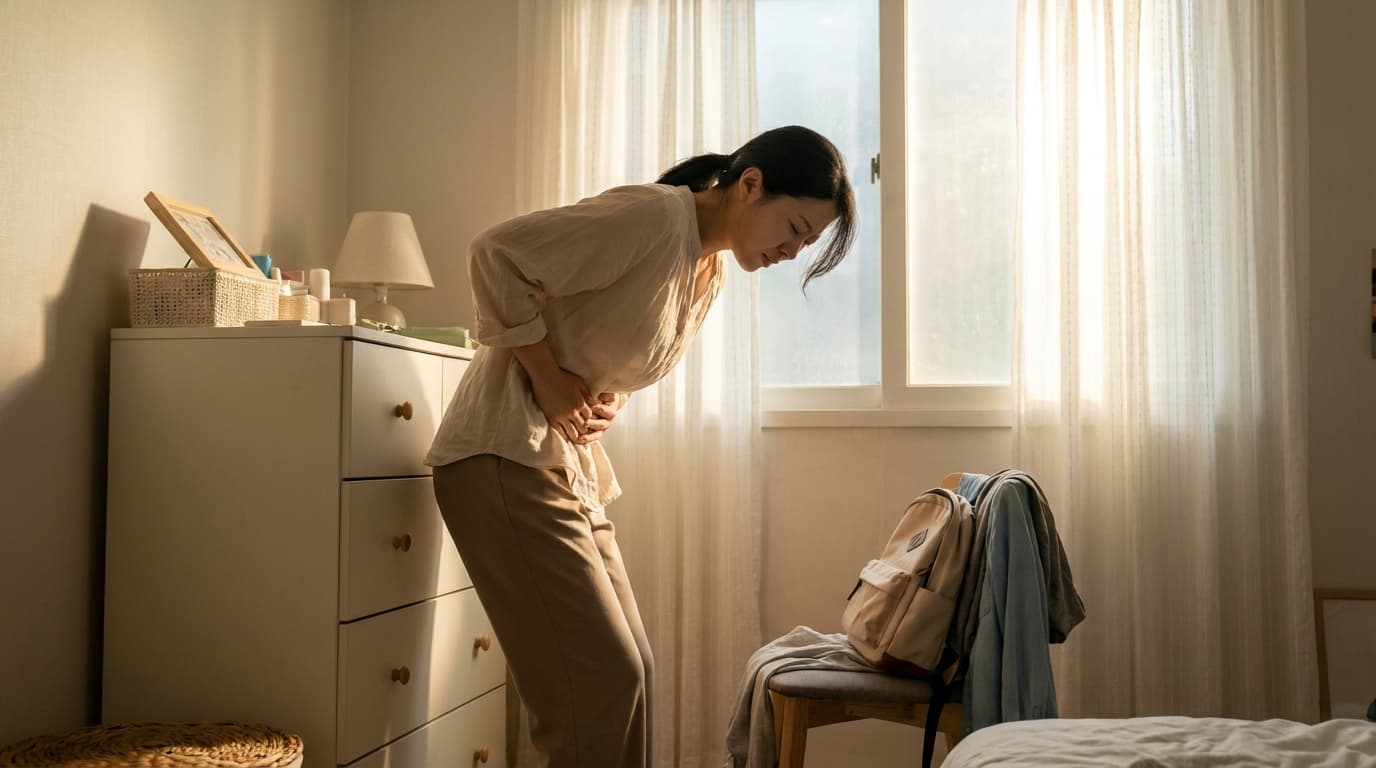
Why Does Diarrhea Strike on Your Way to Work?
Hello, this is Dalimchae Korean Medicine Clinic. # Why Does Diarrhea Strike on Your Way to Work? Abdominal pain and diarrhea that strike every morning as soon as you open your eyes and prepare for work. For many, rushing between the restroom and the office on days with important meetings or appointments has become a daily routine. Repeating excuses like "I was late because my stomach hurt" is exhausting, and the anxiety of not knowing when pain might strike next makes even using public transportation terrifying. If you've been told at the hospital that nothing is wrong and given vague answers blaming stress, this column will help. 💡 **[Core Answer]** Top 3 common causes of **morning commute diarrhea**: ① Hyperactivation of the autonomic nervous system due to severe **stress** / ② Impaired intestinal function due to **gut-brain axis** imbalance / ③ Microscopic **inflammatory response** in the intestinal mucosa and increased barrier permeability. Dalimchae Korean Medicine Clinic resolves the root causes of these intestinal issues through **intestinal detoxification** therapy to restore a healthy gut environment. ## Repeated Diarrhea on Your Way to Work: Could It Be 'Irritable Bowel Syndrome'? "Morning commute diarrhea" goes beyond simple morning stomach aches—it is one of the representative manifestations of **Irritable Bowel Syndrome (IBS)**. IBS is a functional gastrointestinal disorder where chronic abdominal pain, bloating, diarrhea, or constipation recur without structural abnormalities in the colon. In particular, diarrhea-predominant IBS comes with the agony of having to clutch your stomach and dash to the restroom at crucial moments, significantly impairing the patient's quality of life. ## How Do Stress and the Gut Connect to Cause Pain and Diarrhea? While the exact cause of IBS remains unclear, psychological stress is known to heavily influence symptoms. Our brain and gut are closely connected via a neural network called the **Gut-Brain Axis**. When stressed, the brain secretes stress hormones that signal the gut, affecting intestinal motility. This causes the gut to react hypersensitively or causes digestive enzyme secretion problems, directly triggering abdominal pain and diarrhea. In Korean medicine, stress is termed 'Chiljeong-sang' (seven emotions injury), where excessive emotional shifts affect internal organs and induce illness. Emotions like anxiety or tension can stagnate liver qi and impact digestive function, worsening gastrointestinal motility disorders and gut microbiome imbalances, thereby aggravating IBS. ## How Does Korean Medicine Treat Irritable Bowel Syndrome? Because Western medical tests often reveal no special abnormalities, IBS is classified as a 'functional disorder'. However, recent research highlights microscopic intestinal mucosal inflammation and increased intestinal immune cell activity as key causes, with active research into treatments regulating them. Controlling these inflammatory responses and restoring gut-brain axis balance are the core of Korean-medicine-based treatment. In May 2026, a research team led by Professor Go Seok-jae of Gangnam Kyung Hee University Hospital published a study in the pharmaceutical journal 'Pharmaceuticals' confirming that the herbal formula 'Banhasasim-tang' can improve IBS symptoms by regulating internal inflammatory signaling pathways. Network pharmacology and animal experiments showed Banhasasim-tang suppressed inflammation by targeting inflammatory signaling, improving intestinal dysfunction and pain. Specifically, animal experiments demonstrated significant improvements in colon length reduction, stool consistency changes, and pain behavior in IBS models, along with decreased inflammatory cytokine levels. This suggests Banhasasim-tang directly regulates the core cause—intestinal inflammation—beyond mere symptom relief. Also in May 2026, joint researchers from the Korea Institute of Oriental Medicine and Kyung Hee University published a study in 'Integrative Medicine Research' presenting clinical evidence that 'Gwakjeongtang-gami' significantly improves symptoms in diarrhea-predominant IBS patients. A randomized double-blind placebo-controlled trial of 60 adult patients with Rome IV criteria diarrhea-predominant IBS showed that patients taking Gwakjeongtang-gami had a treatment response rate more than double that of the placebo group, with an overall symptom improvement rate of 55.2% (surpassing the placebo group's 26.7%) with statistical significance. Zero drug-related adverse reactions occurred during the trial, suggesting Gwakjeongtang-gami is a safe treatment option for IBS patients needing relief. A systematic literature review published by Kyung Hee University in December 2025 analyzing 16 studies found that herbal medicine treatment showed significantly superior effects over single Western medicine, placebo, or probiotics in total efficacy score, abdominal pain, diarrhea, bloating symptom scores, and relapse rate reduction in IBS. Furthermore, the herbal treatment group showed a significantly lower adverse reaction rate than the single Western medicine group with no serious adverse events reported, confirming its safety. These findings provide solid evidence for Dalimchae Korean Medicine Clinic in Songdo to offer safe and effective care for IBS patients. ## Dalimchae's Intestinal Detoxification Therapy Solves the Root Problem At Dalimchae Korean Medicine Clinic, IBS causing morning commute diarrhea and chronic abdominal pain is treated through the core principle of **Intestinal Detoxification**. Toxins accumulated in the intestinal barrier travel through the blood to create systemic inflammation, leading to impaired gut function and weakened immunity. In Korean medicine, this is also expressed as 'Damjeok' (phlegm accumulation), where waste builds up on the outer wall of the stomach, causing it to harden. Dalimchae's intestinal detoxification therapy restores gut health through the following approaches: * **Improvement of Intestinal Environment:** Prescribing customized herbal medicine tailored to individual constitution and symptoms to reduce harmful gut bacteria and promote beneficial bacteria, fostering a healthy microbiome. This improves intestinal barrier permeability and reduces micro-inflammatory responses. * **Autonomic Regulation:** Stabilizing the autonomic nervous system overactive due to stress, smoothing communication between brain and gut. As the brain relaxes, the gut's hypersensitive reactions subside, easing abdominal pain and diarrhea. * **Enhancement of Gastrointestinal Function:** Promoting stomach and intestinal motility and normalizing digestive enzyme secretion to enhance nutrient digestion and absorption. This relieves strain on the gut and improves indigestion and bloating. * **Detoxification and Elimination:** Eliminating toxins and waste accumulated in the gut and supporting intestinal barrier recovery to reinforce the gut's detoxification functions. This intestinal detoxification therapy goes beyond merely suppressing diarrhea symptoms; it treats the root cause of IBS to prevent recurrence and fundamentally restore gut health. ## Could You Also Have IBS? Self-Checklist If you match 3 or more of the following items, you are advised to suspect IBS and consult a specialist: * Abdominal pain or discomfort recurs at least 3 days a month over the past 3 months. * Abdominal pain or discomfort is somewhat relieved after bowel movements. * Bowel movement frequency is unusually too frequent or too rare compared to normal. * Stool form is abnormal, with alternating diarrhea and constipation. * Stress or tension immediately makes your stomach hurt or creates the urge to use the restroom. * Waking up in the morning or on your commute frequently brings sudden stomachaches and diarrhea. * You frequently experience abdominal bloating, fullness, or frequent flatulence. * Eating food immediately triggers stomach pain or diarrhea. **3+ matches → Suspect impaired gut function & autonomic imbalance → Consider Dalimchae complex therapy** **5+ matches → Immediate visit and professional diagnosis recommended.** --- **Q. Is morning commute diarrhea a sign of IBS?** A. Repeated morning abdominal pain and diarrhea are classic symptoms of IBS, often vulnerable to stress and tension, manifesting as colon functional disorders. **Q. Is IBS really related to stress?** A. Yes, deeply so. Stress directly affects the gut-brain axis, triggering intestinal hypersensitivity and impairing digestive motility to worsen symptoms. **Q. Can IBS be treated with Korean medicine?** A. Korean medicine treatment effectively and safely addresses the root causes of IBS: intestinal inflammation, gut-brain axis imbalance, and autonomic nervous system issues. As a Songdo IBS clinic, Dalimchae restores gut health through personalized care. **Q. Can IBS and acid reflux be treated together?** A. Yes, both conditions often involve digestive functional issues and autonomic imbalance, allowing simultaneous treatment. Dalimchae provides integrated care improving overall digestive health. --- Morning commute diarrhea is not a problem to simply endure. You no longer need to ignore the signals your body has been sending for a long time. Approaching it the right way makes the body respond faster than you think. Bring the symptoms you are experiencing just as they are. Dalimchae Korean Medicine Clinic Songdo branch will find the cause together with you. Where life blossoms. Herbal medicine is Dalimchae Korean Medicine Clinic. Check your symptoms first via Dalimchae's website AI consultation! This health information was compiled by Dalimchae medical staff based on frequent clinical questions. Medical Supervision | Digestive Care Standard, Dalimchae Korean Medicine Clinic Songdo Branch, Korean Medicine Doctor Oh Hyun-min (Bowel Issue Column)