
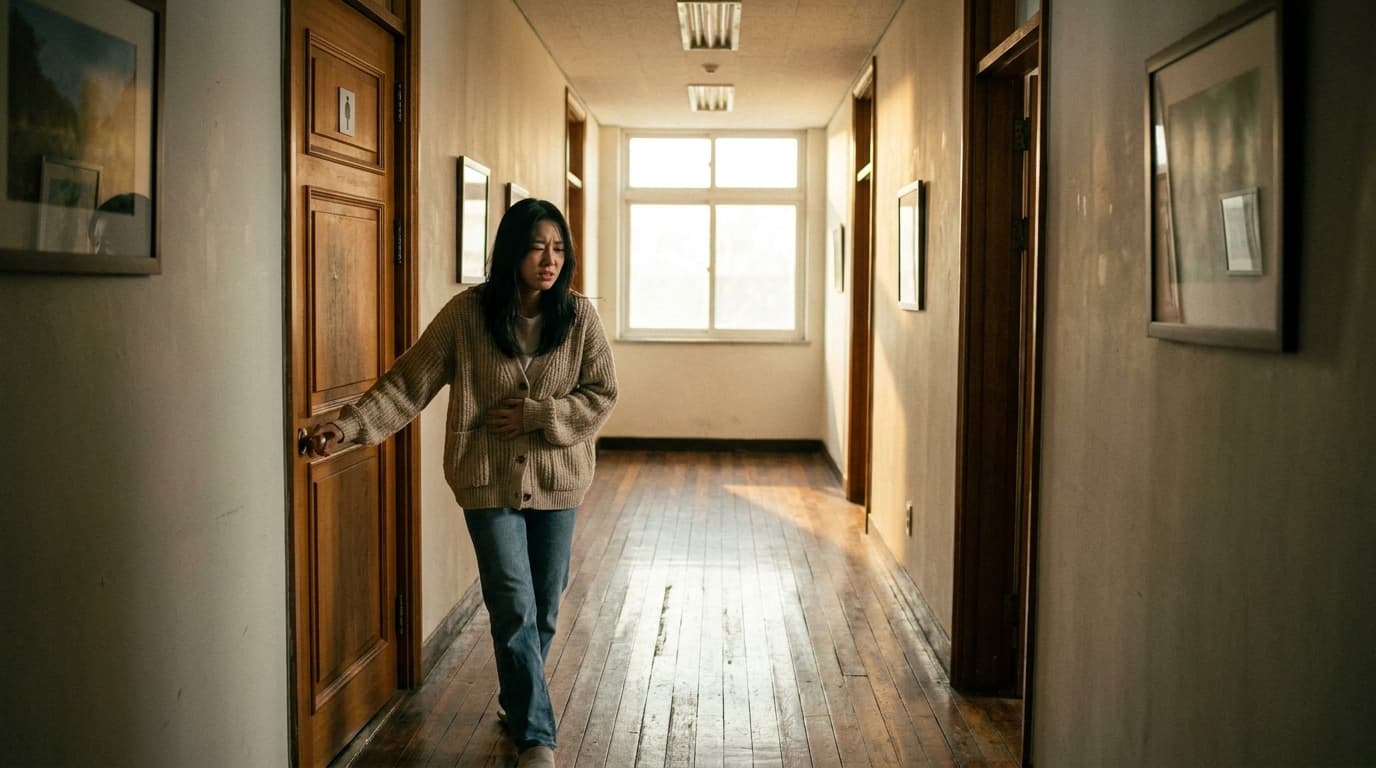
Why do you still feel unemptied after a bowel movement? Not simple constipation but this
Hello. This is Dalimchae Oriental Medical Clinic. # Do you still feel unemptied after a bowel movement? Not simple constipation but 'this' The feeling of incomplete evacuation after a bowel movement, or lingering residue, is a common discomfort experienced by many. Even after sitting on the restroom for a long time or straining, the unrefreshing and uncomfortable feeling persists, greatly reducing the quality of daily life. Often, people try to solve it with simple laxatives, only to fall into a vicious cycle where gut function weakens and bowel activity becomes more irregular. However, this incomplete evacuation sensation is not just a simple constipation symptom, but can stem from gut environment problems or 'gut-brain axis' dysfunction connecting the gut and the brain. 💡 **[Core Answer]** **The 3 most common causes of "feeling unemptied after a bowel movement":** ① Decreased intestinal motility and functional constipation / ② Visceral hypersensitivity due to gut-brain axis imbalance / ③ Intestinal toxin accumulation and weakened intestinal barrier function Dalimchae Oriental Medical Clinic helps fundamentally improve bowel movements by restoring gut function and balancing the gut-brain axis through **intestinal detoxification**. ## Why do you still feel unemptied and experience lingering residue after a bowel movement? Many people consider incomplete evacuation simply as constipation, but in reality, complex causes such as decreased intestinal motility or signaling imbalance between the gut and brain often interact. Especially in modern society where stress and tension deepen, functional abnormalities in the 'Gut-Brain Axis' closely connecting the brain and gut frequently cause gut sensation to become hypersensitive or motility to decrease. When this happens, even after passing stool, you feel as though your gut hasn't emptied fully. ## Why you suffer from lingering residue even when medical exams are 'normal' Many people show no special abnormalities in Western medical exams yet complain of chronic lingering residue and discomfort. This is more likely a functional problem rather than a structural one—meaning abnormalities in gut movement or sensory regulation ability. For instance, irritable bowel syndrome patients have hypersensitive visceral senses in the gut, causing severe discomfort or lingering residue even when a normal amount of stool is present. Stress becomes a major factor amplifying this gut hypersensitivity. ## How does traditional Korean medicine view gut health? Traditional Korean medicine views the gut not merely as a digestive organ, but as a core organ significantly influencing overall qi/blood circulation and immunity. Lingering residue or chronic constipation is interpreted not simply as a stool problem, but as related to imbalances in the five organs and six viscera, especially decreased spleen/stomach function governing digestion or stagnation of liver qi hindering gut movement. When this imbalance persists, waste products (referred to in Korean medicine as 'Damjeok') accumulate on the intestinal walls, further lowering gut function and letting toxins spread throughout the body, triggering various symptoms such as decreased immunity or skin issues. Dalimchae Oriental Medical Clinic Songdo branch provides treatment aimed at fundamental recovery of gut function from this perspective. ## Is herbal medicine effective in improving lingering residue and functional constipation? Herbal medicine treatment for chronic bowel disorders such as lingering residue focuses on promoting intestinal motility, improving the gut environment, and harmonizing overall bodily functions. In an 8-week double-blind study by Cheng CW et al. published in the 2011 <American Journal of Gastroenterology>, 120 functional constipation patients taking a bowel-lubricating herbal formula showed a significant increase in complete spontaneous bowel movement frequency compared to the placebo group, with decreased straining and rescue medication use. This study suggested that herbal medicine can positively impact bowel pattern improvement and discomfort reduction in functional constipation patients. Researchers concluded that herbal medicine contributes to lubricating action and motility improvement in the gut. Furthermore, a retrospective study by Cho Jun-ho et al. published in 2022 in the <Journal of Korean Medicine> analyzed the efficacy of the herbal formula 'Majainhwan' on constipation in Parkinson's disease patients. In this study of 68 patients, 'effective' results in bowel improvement were observed in 86.4% of outpatients and 95.8% of inpatients after taking Majainhwan. Notably, bowel interval decreased significantly (p\<0.05), and safety was confirmed with mostly mild side effects (diarrhea). These research results demonstrate that herbal medicine can be a valid alternative to regulate gut function and smooth bowel activity, resolving lingering residue and constipation. Dalimchae Oriental Medical Clinic Songdo branch provides customized intestinal detoxification treatment tailored to individual symptoms and constitutions based on these medical insights and clinical data. ## Restore lost gut vitality with Dalimchae Oriental Medical Clinic's 'Intestinal Detoxification' Dalimchae Oriental Medical Clinic Songdo branch centers its treatment on 'intestinal detoxification' to resolve the root cause of lingering residue. Intestinal detoxification goes beyond simply emptying the gut; it removes toxins accumulated on the intestinal walls and fosters the gut's own self-healing capacity. When toxins accumulate on intestinal walls, harmful bacteria proliferate, and the intestinal barrier can be damaged, leading to 'leaky gut syndrome'. This allows toxins and inflammatory substances to spread through the bloodstream throughout the body, causing various health problems such as chronic fatigue, skin issues, and decreased immunity. At Dalimchae Oriental Medical Clinic, we thoroughly diagnose individual gut health status and constitution, prescribing herbal medicine that activates sluggish gut movement and improves the intestinal microbiome environment. We also combine treatments supporting gut detoxification to strengthen the intestinal barrier, restore gut-brain axis balance, and help the gut find a healthy bowel rhythm on its own. Through this, we help improve various digestive diseases such as lingering residue, abdominal bloating, indigestion, acid reflux, and irritable bowel syndrome. If you are looking for a Songdo constipation clinic, experience precise diagnosis and customized treatment at Dalimchae Oriental Medical Clinic Songdo branch. ## Are you also caught in the trap of 'lingering residue'? Self-diagnosis checklist Check how many of the following apply to you: * Have bowel movements less than 3 times a week. * Must strain excessively for 10 minutes or more when passing stool. * Frequently feel unrefreshed and uncomfortable even after a bowel movement. * Stool is hard and lumpy, making it difficult to pass. * Stool comes out too thin or broken like rabbit droppings. * Feel like the anus is blocked during bowel movements, or sometimes need to scoop it out with fingers. * Suffer from abdominal bloating, stuffiness, and frequent gas. * Bowel activity problems occur when under stress. **[Criteria]** * **3 or less items:** May be a mild bowel habit issue. Try managing through lifestyle improvements. * **4-5 items:** Can suspect gut function decline and chronic lingering residue. Consider consultation and treatment at a Songdo digestive clinic. * **6 or more items:** May have serious gut health issues. Immediate precise diagnosis and oriental medicine complex treatment are recommended. ### FAQ Section **Q. Why does lingering residue occur even after using the restroom?** A. Lingering residue can occur primarily due to decreased intestinal motility, 'gut-brain axis' imbalance where gut-brain communication has issues, and accumulation of intestinal toxins. Stress, irregular eating habits, and insufficient water intake are also causes. **Q. Can I continue taking laxatives?** A. Long-term laxative use can decrease the gut's self-movement function or create tolerance to the medication. This can actually worsen constipation or entrench lingering residue, so finding a fundamental treatment method is important. **Q. How does Songdo Dalimchae Oriental Medical Clinic treat lingering residue?** A. Dalimchae Oriental Medical Clinic Songdo branch activates intestinal motility and improves the intestinal microbiome environment through intestinal detoxification treatment. We focus on restoring gut-brain axis balance and enhancing gut self-healing capacity through personalized herbal prescriptions and acupuncture tailored to each patient's constitution and symptoms. **Q. Can lingering residue and irritable bowel syndrome be treated together?** A. Yes, lingering residue is a major symptom of irritable bowel syndrome. Dalimchae Oriental Medical Clinic helps comprehensively improve abdominal pain, diarrhea, constipation, and lingering residue caused by irritable bowel syndrome through intestinal detoxification treatment solving gut-brain axis balance, restoring overall gut health. Suffering without relief after using the restroom is not a problem solved by enduring. You no longer need to ignore the body signals sent for a long time. Approaching in the right direction makes the body respond faster than expected. Bring the symptoms you are experiencing as they are. Dalimchae Oriental Medical Clinic will find the cause together. Where life blooms. Herbal medicine is Dalimchae Oriental Medical Clinic. Check symptoms similar to yours first via Dalimchae Oriental Medical Clinic homepage AI consultation! This article is based on questions frequently received in the clinic room, organized together by Dalimchae medical staff. Medical Supervision | Intestinal & Digestive Care Standard, Dalimchae Oriental Medical Clinic Songdo Branch Korean Medicine Doctor Oh Hyunmin (Bowel Problem Column)