
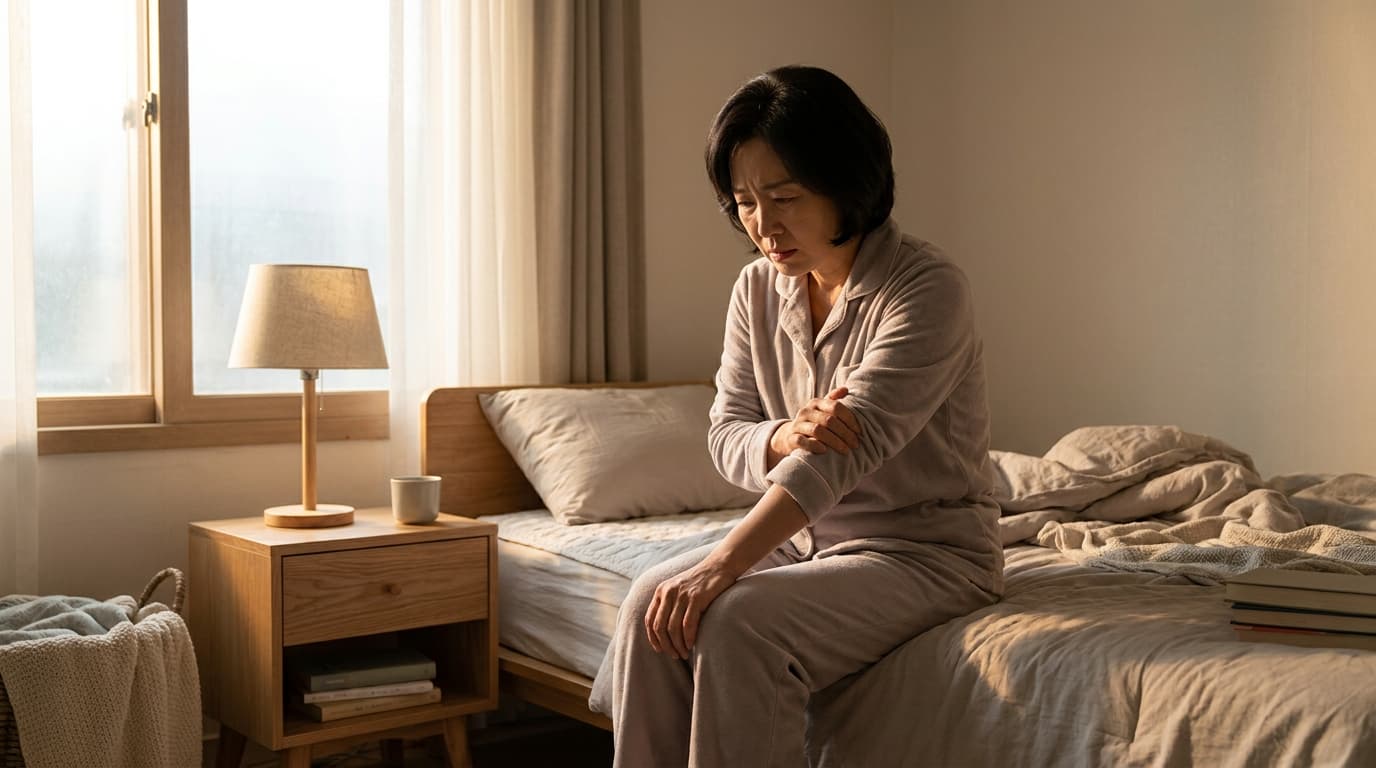
Why Are Your Limbs Stiff and Movements Slow? Don't Miss Early Signs of Parkinson's Disease
Hello, this is Dalimchae Korean Medicine Clinic. # Why Are Your Limbs Stiff and Movements Slow? Don't Miss Early Signs of Parkinson's Disease Have you ever suddenly felt your arms and legs feeling stiff, or noticed a significant slowdown in your walking speed? You might have experienced difficulty using a spoon, writing, or even finding your facial expressions becoming rigid. Could these symptoms simply be a natural part of aging? Not necessarily. Stiff limbs and slow movements can be early signs of Parkinson's disease. Beyond motor symptoms, various non-motor symptoms such as sleep disorders, constipation, and depression can accompany it, significantly reducing your quality of life. Through this article, let's understand the early signs of Parkinson's disease and how to regain a healthy life through active Oriental medicine treatment. 💡 **Key Takeaways** Top 3 causes of stiff limbs and slow movements: ① Damage to dopamine neurons in the brain / ② Autonomic nervous system imbalance / ③ Brain inflammation and oxidative stress Dalimchae Korean Medicine Clinic approaches the root cause of Parkinson's disease by stabilizing the autonomic nervous system to activate brain functions and control inflammation. ## Why Do Parkinson's Disease Patients Experience Stiff Limbs and Slow Movements? Parkinson's disease is a progressive neurodegenerative disorder that occurs when dopamine-secreting neurons in a specific part of the brain, especially the substantia nigra in the midbrain, gradually become damaged. Dopamine is an essential neurotransmitter that smoothly regulates our body's movements. When dopamine is deficient, problems arise in the signaling system from the brain to the muscles, resulting in various motor symptoms such as tremors, rigidity, bradykinesia (slow movement), and postural instability. Furthermore, Parkinson's disease does not only cause motor symptoms; it often leads to autonomic nervous system imbalance, causing complex non-motor symptoms such as sleep disorders, constipation, olfactory decline, depression, and cognitive decline. Because these symptoms can appear 5 to 20 years before motor symptoms, recognizing and addressing early signals is extremely important. ## What Are the Early Symptoms of Parkinson's Disease Besides Tremors? It is easy to think of "tremors" as the representative symptom of Parkinson's disease, but tremors do not appear in all Parkinson's patients. Rather, in the early stages, stiffness ("rigidity") or slowed movement ("bradykinesia") often appears first. Due to these atypical early symptoms, people often mistake them for simple aging and miss the treatment window. In particular, if you notice the following changes in daily life, you should be cautious as they may be early signs of Parkinson's disease: handwriting becoming smaller, difficulty with fine hand movements such as buttoning clothes or using chopsticks, decreased arm swinging while walking, and shuffling gait changes. Changes such as a expressionless face or a softer voice may also appear. **Parkinson's Disease Early Self-Diagnosis Checklist** If 3 or more of the following items apply to you, they may be early signs of Parkinson's disease, so we recommend consulting medical staff for an accurate diagnosis. * Hand, arm, or leg trembles when at rest. * You feel a stiff sensation in one part of your body. * Your walk has become slower and your stride shorter than usual. * When writing, the character size gradually shrinks. * Routine actions such as washing your face or eating have become clumsy and slow. * Severe snoring/talking in sleep or excessive body movement during sleep. * Severe constipation and decreased sense of smell. * Severe depression, anxiety, or lethargy. * Posture becomes stooped forward and it is difficult to maintain balance. **[Diagnostic Criteria]** 3 or more items apply → Suspected early Parkinson's disease → Detailed consultation recommended at Dalimchae Korean Medicine Clinic Incheon Branch. 5 or more items apply → Active comprehensive diagnosis and treatment review required. ## How Does Oriental Medicine Treatment Drive Physical Changes in Parkinson's Disease? Dalimchae Korean Medicine Clinic Incheon Branch focuses on the root causes of Parkinson's disease—autonomic nervous system imbalance and decreased brain function—to provide integrative Oriental medicine treatment. Oriental medicine treatment aims to reduce damage to dopamine neurons, activate brain functions to improve motor and non-motor symptoms, and enhance the overall quality of life. A 2025 study published in the journal 'Neurodegenerative Disease and Treatment' conducted a narrative review of the clinical efficacy and mechanistic insights of acupuncture treatment in Parkinson's patients. This study revealed that acupuncture treatment showed clinically significant effects not only on motor symptoms such as tremor and bradykinesia, but also on non-motor symptoms like sleep disorders and depression, as well as cognitive function improvement. Furthermore, it suggested that acupuncture treatment contributes to slowing the progression of Parkinson's disease through neuroprotective effects such as preventing alpha-synuclein accumulation in dopamine neurons, alleviating apoptosis and oxidative stress, and regulating dopamine-related neuroinflammation. The researchers concluded that acupuncture can serve as a complementary treatment with multifaceted therapeutic potential for Parkinson's disease. Additionally, another study published in the 'International Journal of General Medicine' in 2025 reported the results of a systematic review and meta-analysis on the efficacy of various acupuncture methods in alleviating Parkinson's symptoms. Analyzing 50 randomized controlled trials (totaling 3,248 patients), acupuncture demonstrated significantly superior efficacy compared to conventional medicine across all UPDRS (Unified Parkinson's Disease Rating Scale) domains, showing the strongest effect particularly on treatment-related motor complications (Standardized Mean Difference (SMD): –2.16; 95% CI: –3.10 to –1.22). The researchers concluded that acupuncture, especially electroacupuncture, provides benefits across motor, non-motor, and psychological domains as a useful adjuvant therapy to standard Parkinson's treatment, and provides strong evidence to integrate into personalized Parkinson's management strategies when applied with optimized parameters. Based on these research data, Dalimchae Korean Medicine Clinic focuses on restoring brain function and improving symptoms in Parkinson's patients through the **autonomic stabilization** treatment principle. The autonomic nervous system is a crucial system regulating our body's vital functions; when its balance collapses, the brain cannot rest sufficiently and functions like an overheated engine. This can influence the onset and progression of degenerative brain diseases such as Parkinson's. At Dalimchae Korean Medicine Clinic, acupuncture, pharmacopuncture, and herbal medicine treatments are used to calm excessive excitation of the nervous system and create an environment where the brain can recover and regenerate on its own. This helps protect dopamine neurons and alleviates both motor symptoms (tremor, rigidity, bradykinesia) and non-motor symptoms (sleep disorders, anxiety, depression), helping patients regain vitality in daily life. In particular, Dalimchae Korean Medicine Clinic Incheon Branch provides customized treatments considering each patient's individual symptoms and constitution to maximize therapeutic effects. ## Is It Possible to Combine Oriental Medicine Treatment and Western Medications for Parkinson's Disease? Many Parkinson's patients wonder about combining Oriental medicine treatment and Western medication. In conclusion, combining them can produce complementary effects and yield more positive treatment outcomes. Western pharmacological treatment is effective in rapidly improving motor symptoms through dopamine supplementation, but long-term use can cause various side effects such as wearing-off phenomena, dyskinesia, and delayed onset phenomena. According to a study published in 'Frontiers in Pharmacology' in 2023, a meta-analysis of 13 randomized controlled clinical trials involving 843 Parkinson's patients showed that combination therapy of herbal medicine and Western medicine significantly improved total UPDRS scores compared to the placebo group (Mean Difference (MD) = -8.03, 95% CI: -10.27 to -5.79, p \< 0.00001). This study showed that herbal medicine was also more beneficial in UPDRS I-III, PDQ-39 (Parkinson's Disease Questionnaire-39), and NMSS (Non-Motor Symptoms Scale) evaluations. Moreover, a 2026 domestic big data study by the Kyung Hee University Korean Medicine Hospital research team published in the international journal 'Parkinson's Disease' revealed that the Parkinson's patient group receiving parallel Oriental medicine treatment had about 10% lower use of levodopa-family medications for motor symptom treatment and about 10% lower overall mortality risk compared to the non-treatment group. On the other hand, the use of medications for non-motor symptoms such as insomnia, depression, and anxiety showed a 37% higher tendency in the Oriental medicine group, suggesting that Oriental medicine treatment may contribute to resolving unmet medical demands for non-motor symptoms. These research results show that Oriental medicine treatment stabilizes the effects of Western drugs, reduces side effects, and contributes to improving non-motor symptoms, thereby enhancing overall quality of life. Dalimchae Korean Medicine Clinic Incheon Branch establishes safe and effective Oriental medicine treatment plans considering interactions with Western medications the patient is taking. Chronic non-motor symptoms such as fatigue, sleep disorders, indigestion, and depression that were difficult to resolve with Western medication alone can be improved through the delicate Oriental medicine treatment of Dalimchae. ## FAQ: Frequently Asked Questions About Parkinson's Disease **Q. Is management impossible after treatment for Parkinson's disease?** A. As a degenerative disease, Parkinson's disease focuses more on 'management' and 'symptom relief' rather than a complete cure concept at present. However, with consistent management and active treatment from the early stages, you can slow the disease's progression and effectively control motor and non-motor symptoms, greatly improving your quality of life. **Q. When is the best time to start Oriental medicine treatment after a Parkinson's diagnosis?** A. Early diagnosis and early treatment are crucial for Parkinson's disease. Combining Oriental medicine treatment from when early symptoms begin to appear can slow disease progression, reduce side effects of Western medications, and be more effective in overall symptom management. Setting up a personalized treatment plan through consultation at Dalimchae Korean Medicine Clinic Incheon Branch is important. **Q. Can non-motor symptoms of Parkinson's disease also be improved with Oriental medicine treatment?** A. Yes, non-motor symptoms of Parkinson's disease (sleep disorders, constipation, depression, anxiety, etc.) are areas that can be effectively improved with Oriental medicine treatment. Herbal medicine, acupuncture, and pharmacopuncture treatments help balance the autonomic nervous system and activate brain function to alleviate these symptoms. **Q. What tests are used to diagnose Parkinson's disease at Dalimchae Korean Medicine Clinic in Incheon?** A. Dalimchae Korean Medicine Clinic Incheon Branch comprehensively evaluates patient status through Western diagnostic methods combined with traditional Oriental pattern identification (byeonjeung). We assess the patient's physical state, autonomic activity, and balance using pulse wave examinations and autonomic balance tests to establish a personalized treatment plan. Stiff limbs and slow movements in Parkinson's disease are not problems to be endured. You no longer need to ignore the signals your body has been sending for a long time. With the right direction of approach, the body responds faster than you think. Bring the symptoms you are currently experiencing just as they are. Dalimchae Korean Medicine Clinic Incheon Branch will help you find the cause together. A place where life blossoms. Herbal medicine is Dalimchae Korean Medicine Clinic. Check symptoms similar to yours first through the Dalimchae Korean Medicine Clinic homepage AI consultation! This health information was compiled together by the medical staff of Dalimchae based on questions frequently asked in the clinic. Medical Supervision | Min Jihong, Korean Medicine Doctor at Dalimchae Korean Medicine Clinic Incheon Branch, Brain & Autonomic Nervous System Treatment Standard (Parkinson's Disease Column) #Parkinson #Rigidity #Bradykinesia #AutonomicNervousSystem #IncheonParkinsonClinic #BrainDisease #OrientalMedicine #SleepDisorder