
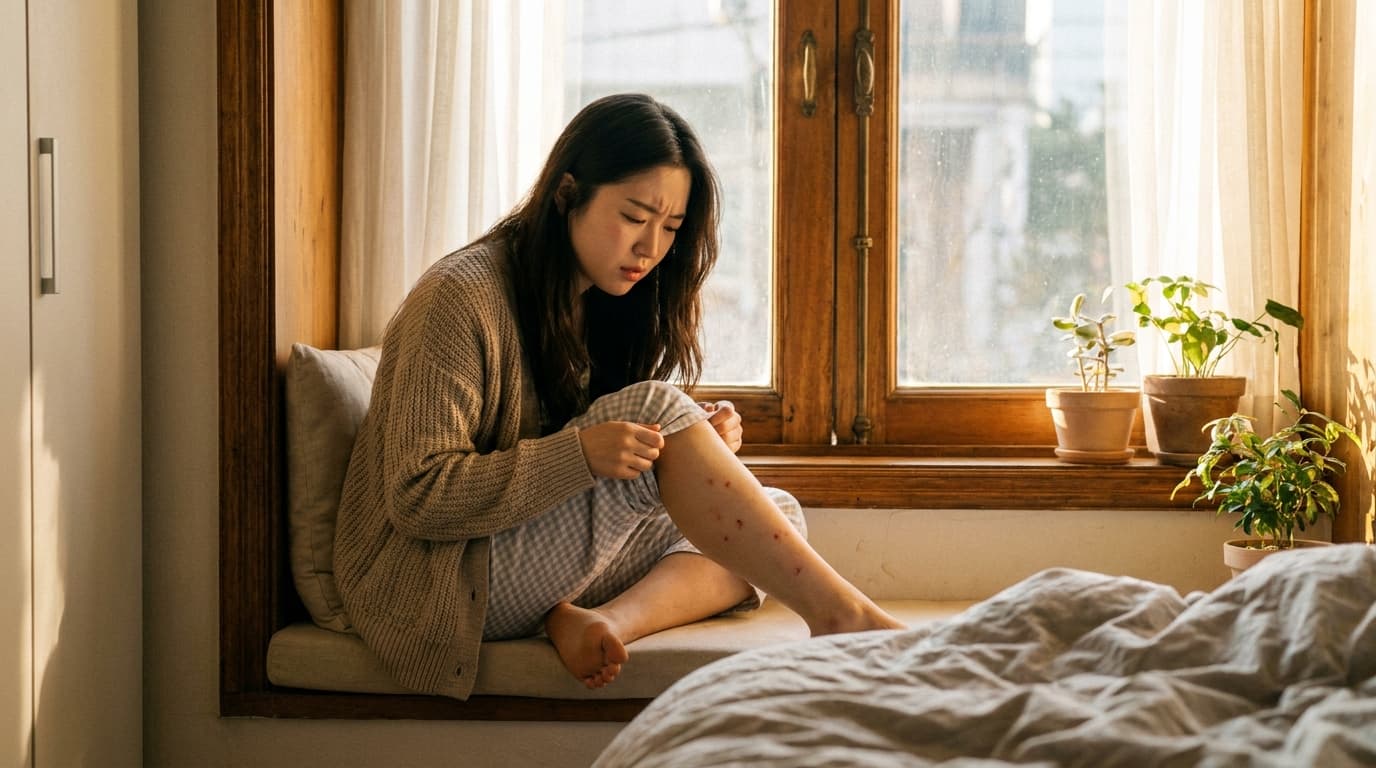
Why Are There Red Spots on My Legs Even Though It Doesnt Itch Could It Be Purpura Dont Be Surprised
Hello, this is Dalimchae Korean Medicine Clinic. # Red Spots Spreading All Over Legs Without Itching? Could It Be 'Purpura'? Don't Be Surprised. When red spots suddenly start appearing all over your legs one day, it can be quite alarming. Especially when red spots spread noticeably without any itching or pain, you might worry if it's a serious condition. Such red spots on legs without itching are likely 'purpura', a sign of internal immune system abnormality rather than a simple skin problem. 💡 **[Key Answer]** Top 3 most common causes of **red spots spreading all over legs without itching**: ① Vascular inflammation due to immune system abnormality / ② Excessive stress and accumulated fatigue / ③ Gut environment imbalance. Dalimchae Korean Medicine Clinic treats the root cause of purpura by restoring skin immunity through gut detoxification and autonomic nervous stabilization. ## Why Do Red Spots on Legs Appear? Hidden Causes of Purpura Red spots appearing on the skin can have various causes, but red spots occurring mainly on the legs or arms without itching are likely 'purpura'. Purpura is skin bleeding spots caused by damaged capillaries leaking blood outside the skin. One of the most common forms is 'Henoch-Schönlein purpura (HSP)' or 'IgA Vasculitis'. Such purpura occurs when inflammation develops in small blood vessels inside the body due to an overactive immune response. As the body's immune system reacts to viral or bacterial infections, certain drugs, or severe stress, it attacks and damages blood vessel walls. This vascular inflammation mainly appears as red spots on gravity-affected areas like legs and buttocks, and in severe cases, can be accompanied by systemic symptoms such as joint pain, abdominal pain, and kidney involvement. If tests show no special abnormalities but symptoms persist, you must find deep internal causes related to immune imbalance. ## How Effective Is Oriental Medicine Treatment in Improving Purpura Symptoms? While Western medicine mainly uses steroids or immunosuppressants for skin bleeding disorders like purpura, these often focus on symptom relief and carry concerns of side effects or recurrence. Oriental medicine views purpura not just as a skin problem, but as an imbalance in the body's immune system, gut environment issues, and resulting 'blood heat (血熱)' or 'stagnant blood (瘀血)', aiming for fundamental treatment. There are actual research results supporting the effectiveness of oriental medicine treatment. A 2014 study published in the international journal 'J Pharmacopuncture' reported a case where 5 patients with allergic purpura (HSP) accompanied by 'Yin deficiency (陰虛)' symptoms were treated solely with an herbal medicine called Jarotang. As a result, both leg purpura and abdominal pain symptoms that didn't respond to steroids disappeared, and improved states were maintained without recurrence for 6 months post-treatment. Based on this, researchers concluded Jarotang can be effective in treating Yin deficiency type HSP patients. These data align with Dalimchae Korean Medicine Clinic's treatment philosophy approaching purpura fundamentally through autonomic nervous stabilization and gut detoxification. Furthermore, according to a systematic review and meta-analysis on IgA vasculitis published in 2020 (Na-Kyung Cho), combining herbal medicine with conventional symptomatic treatment showed statistically significant superior effects over symptomatic treatment alone in treating allergic purpura. Specifically, it showed superior improvements in total efficacy rate (Odds Ratio=5.0, p\<0.00001), symptom disappearance time (Mean Difference=-2.61 days, p\<0.00001), and recurrence rate (Odds Ratio=0.16, p\<0.0001). This suggests oriental medicine treatment can positively affect purpura recovery and reduce recurrence. Dalimchae Korean Medicine Clinic Incheon Branch provides customized herbal treatments tailored to patients' symptoms and constitution based on these research results to help rapid recovery and prevent recurrence. ## Warning Light of the Immune System, Purpura! Could It Be Me Too? Purpura is easy to overlook initially, but if not properly managed, it can lead to chronic recurrence or cause complications in other organs such as the kidneys. Therefore, rather than ignoring the symptom of red spots spreading on legs, it is important to pay attention to signals your body sends. **✅ Purpura Symptom Checklist** If 3 or more of the following apply to you, suspect purpura due to immune imbalance and consult an expert. * Red or purple spots appear on legs or buttocks and do not disappear when pressed. * Accompanied by joint pain (mainly knees, ankles). * Experiencing unexplained abdominal pain, nausea, or vomiting. * Fatigue does not resolve easily and condition is sluggish often. * History of recent upper respiratory infections like cold or sore throat. * Vulnerable to stress and sensitive. * Symptoms suspecting hematuria or proteinuria in urine (cola-colored urine, etc.) appear. If 3+ apply → Suspect immune imbalance type purpura → Consider complex oriental treatment. If 5+ apply → Immediate hospital visit and precise diagnosis recommended. ## Strengthening the Roots of Immunity Through Gut Detoxification: Dalimchae Purpura Treatment Dalimchae Korean Medicine Clinic Incheon Branch interprets purpura as an 'inflammatory reaction' caused by overheating of our body's immune system. Especially in oriental medicine, the immense impact of gut health on immunity is emphasized through the 'Gut-Brain Axis' theory. Toxins accumulated in the gut barrier can travel through the blood to spread throughout the body, disturbing the immune system and inducing vascular inflammation. This is like a car engine overheating and turning on a warning light. Overheated immune responses damage blood vessel walls and cause purpura symptoms like leg red spots. Dalimchae Korean Medicine Clinic applies **gut detoxification** treatment principles to manage these root causes. Beyond simply suppressing symptoms, it focuses on discharging toxins inside the gut and strengthening gut barrier function to regain immune balance. 1. **Customized Herbal Prescription:** Prescribing herbal medicine tailored to the patient's constitution and symptoms to calm gut inflammation, discharge toxins, and recover damaged blood vessels. The goal is to purify blood and regulate immunity to prevent purpura recurrence. 2. **Acupuncture and Pharmacopuncture:** Performing acupuncture on meridians related to immune responses to restore autonomic nervous balance, and using pharmacopuncture therapy to promote blood circulation, suppress inflammation, and reduce skin bleeding. 3. **Dietary and Lifestyle Management:** Helping patients build their own immunity through diet therapy assisting gut detoxification and lifestyle improvement guidance for stress management. Such complex oriental medicine treatment focuses not only on visible symptoms of purpura but also on improving hidden immune imbalances and gut problems together to create a body where symptoms do not turn back on. Gut detoxification treatment can also be a very important approach for those suffering from chronic dermatitis or allergic diseases. ## FAQ: Answering Your Questions About Purpura **Q. How long does purpura last?** A. The duration of purpura varies by patient, but generally lasts from weeks to months. With proper treatment, symptoms improve rapidly, but in some patients, it may persist for months or recur, making steady management important. **Q. Can purpura with red spots on legs without itching be treated with oriental medicine?** A. Yes, purpura without itching can also be sufficiently treated with oriental medicine. Oriental medicine views purpura as vascular inflammation caused by immune imbalance, aiming for symptom improvement and recurrence prevention by improving root causes through gut detoxification and immune regulation. **Q. Can purpura heal naturally?** A. Some mild purpura may improve naturally, but most require active treatment. Especially when systemic symptoms like joint pain, abdominal pain, or kidney involvement accompany, receiving expert diagnosis and treatment is important to prevent complications. **Q. Can other skin conditions accompanying purpura be treated together?** A. Dalimchae Korean Medicine Clinic Incheon Branch integrally treats other skin conditions like atopy and hives centered around immune imbalance and gut environment issues alongside purpura. Strengthening the whole body's immune system helps improve various skin symptoms. Purpura, where red spots spread all over legs without itching, is not a problem solved by enduring. You no longer need to ignore the body's signals sent for a long time. When approached in the right direction, the body responds faster than you think. Bring the symptoms you are experiencing as they are. Dalimchae Korean Medicine Clinic will find the cause together. Where life blooms. Herbal medicine is Dalimchae Korean Medicine Clinic. Check symptoms similar to yours first through Dalimchae Korean Medicine Clinic homepage AI consultation! This health information was organized together by Dalimchae medical staff based on questions frequently received in the treatment room. Medical Supervision | Skin Disease Treatment Standard: Dalimchae Korean Medicine Clinic Incheon Branch Oriental Medical Doctor Yang Yuchan (Purpura Column)