
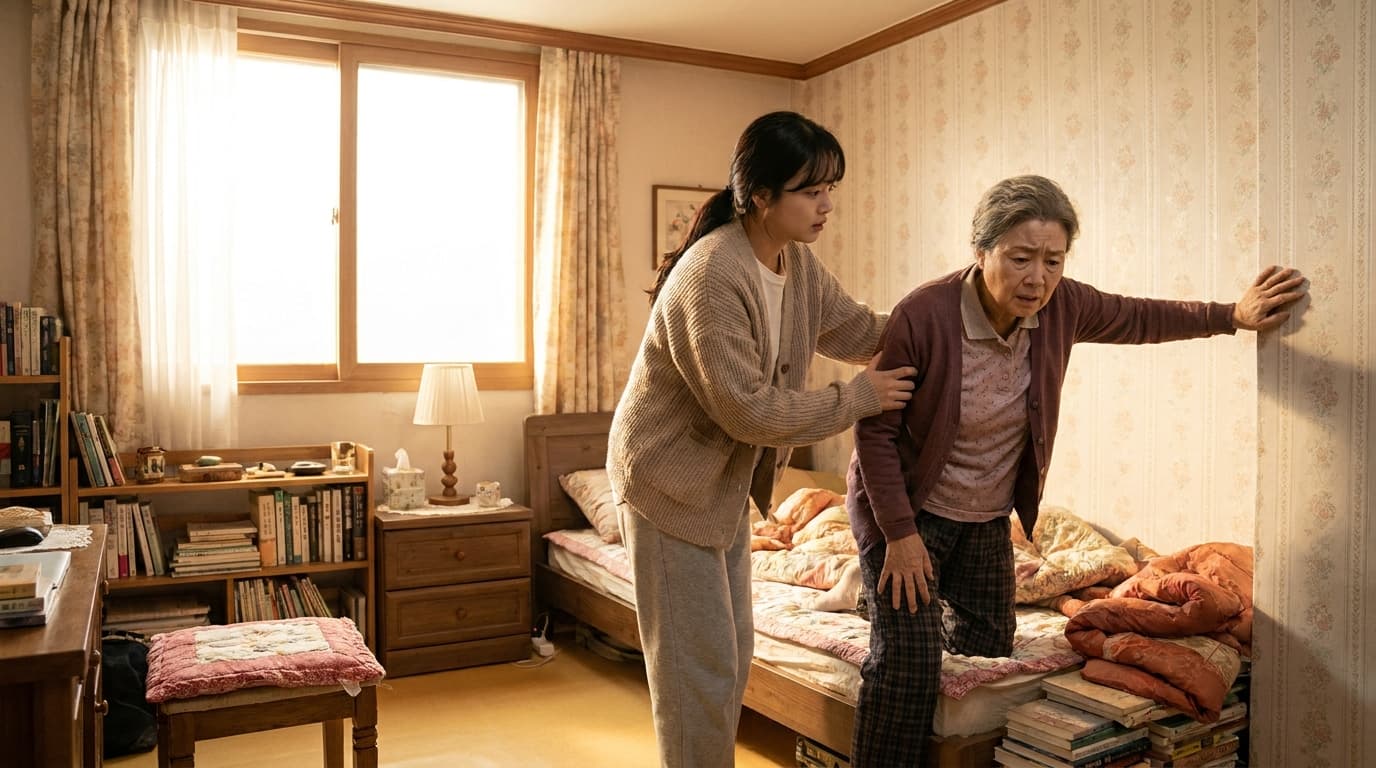
Why Am I Keep Stumbling Could It Be a Red Flag for My Parents Health
Hello, this is Dalimchae Korean Medicine Clinic. # Why Am I Keep Stumbling? Could It Be a Red Flag for Parents Health? "My elderly parents keep stumbling," is something many people say. When walking up and down stairs, or even just walking on flat ground, having difficulty keeping balance makes children anxious that it might be a serious illness. Passing it off lightly by simply saying "it's because of getting older" is hard when parents show clear anxiety and concern about falling. Dizziness not only lowers vitality in daily life, but also significantly reduces the quality of life. 💡 **Key Answer** Top 3 most common causes of 'I keep stumbling': ① Autonomic nervous system imbalance / ② Vestibular organ or brain function decline / ③ Aging-related balance sense weakening Dalimchae Korean Medicine Clinic restores brain and body balance through **autonomic stabilization** to solve the root cause of dizziness. ## Is Stumbling Natural as We Age? The Real Cause of Dizziness Many people accept losing balance and stumbling with age as a natural aging phenomenon. However, while aging brings decline in various bodily functions, there are important underlying causes often missed. Especially if examinations show no special abnormalities yet you continue to feel dizzy and unsteady, the possibility of hidden autonomic nervous system issues cannot be ruled out. When the balance between the brain and body breaks down, the brain fails to properly regulate subtle movements, leading to gait disorders or decreased balance. ### How Can Dizziness Be Approached Through Korean Medicine? In Korean medicine, dizziness is termed 'Hyeonhun (眩暈)'. 'Hyeon' refers to dark vision or blurred objects, while 'Hyeon' refers to the spinning sensation making standing difficult. For chronic dizziness without clear causes in Western medical exams, Korean medicine looks at overall imbalances such as organ function decline, Qi and blood deficiency, blood stasis, and phlegm. Dizziness due to autonomic imbalance is often exacerbated by stress and fatigue. Dalimchae Korean Medicine Clinic provides personalized treatment by thoroughly identifying these complex causes. On February 7, 2024, a case report published in the 『Journal of Korean Medicine』 showed significant symptom improvement in an 83-year-old male patient suffering from chronic dizziness and balance disorder for over 10 years, treated with Gamiboik-tang (a variation of Sipjeondaebo-tang) and acupuncture. Diagnosed with presbystasis, the patient previously could not enter crowded indoor spaces due to severe dizziness, but after 2 weeks of taking Gamiboik-tang, general dizziness improved and entering crowded spaces became possible. Body balance test results also improved significantly. Researchers concluded that combined Gamiboik-tang and acupuncture treatment showed favorable results in improving body balance tests and subjective symptoms of elderly dizziness. Another study published in 「Frontiers」 in 2023 involving 2,242 Korean elderly people with mild cognitive impairment (MCI) showed that combined herbal medicine and acupuncture treatment significantly improved cognitive function. Specifically, the herbal medicine combination group showed a 74.2% improvement rate, and the acupuncture-only group showed 69.2%. CIST, MoCA, and GDS-SF scores improved significantly compared to pre-treatment (all p\<0.05), with CIST scores improving more in the combination group (coefficient 0.58; 95% CI, 0.10–1.08). This suggests that herbal and acupuncture treatments positively impact brain function and nervous system health closely related to dizziness. Dalimchae Korean Medicine Clinic aims to restore overall brain and autonomic nervous system function. We help those visiting **Songdo Dizziness Korean Medicine Clinic** regain a healthy life through integrated treatment. ## Autonomic Stabilization Creates an Environment Where the Brain Can Rest One of the core treatment principles of Dalimchae Korean Medicine Clinic is **autonomic stabilization**. The brain and autonomic nerves are closely connected like two sides of a coin. When autonomic balance collapses, the brain cannot rest and becomes overly excited or suppressed, causing dizziness, headaches, insomnia, and anxiety. This process is like an overheated engine consuming unnecessary energy and exhausting itself. The autonomic nervous system automatically regulates life activities 24/7, such as heartbeat, blood pressure, respiration, digestion, body temperature, and sleep rhythms. Persistent overwork or mental tension excessively activates the sympathetic nervous system and weakens parasympathetic function, accelerating nervous system energy depletion. When the nervous system reaches its limit, the brain's control center sounds false alarms, triggering physical symptoms, anxiety, and sleep disorders. At Dalimchae Korean Medicine Clinic Songdo Branch, we precisely identify autonomic imbalance through Korean medicine diagnosis and HRV tests. Afterwards, we lower nervous system heat, create an environment for the brain to rest, and provide 1:1 customized herbal treatment supplementing Qi and blood. Korean medicine calls this 'Suseunghwhang', aiming for a balanced state where the head is cool and the lower abdomen is warm. This autonomic stabilization treatment greatly helps those suffering from chronic headaches, tinnitus, and dizziness together. Patients looking for **Songdo Autonomic Korean Medicine Clinic** are recovering their health at Dalimchae Korean Medicine Clinic by finding deep-rooted causes. ### **Autonomic Imbalance Dizziness Self-Diagnosis Checklist** If 3 or more items apply, suspect autonomic imbalance dizziness, and 5 or more warrant immediate consultation. * ✓ When sitting and standing up, vision turns dark or dizzy. * ✓ Dizziness tends to worsen with stress or tension. * ✓ Dizziness persists despite normal hospital test results. * ✓ Frequently feel heart palpitations, stuffiness, or indigestion. * ✓ Poor sleep quality, hard to fall asleep or waking up often. * ✓ Fatigue does not resolve even with sufficient rest. * ✓ Decreased balance sense leading to frequent stumbling or falling. * ✓ Frequently feel unexplained anxiety, nervousness, or depression. ## FAQ: Questions About Dizziness Answered by Dalimchae Korean Medicine Clinic **Q. How long does elderly dizziness treatment take?** A. Since elderly dizziness is often complex and chronic, treatment duration depends on patient state, constitution, and cause. However, consistent Korean medicine treatment and lifestyle improvements yield meaningful improvement within weeks to months. **Q. What is the relationship between dizziness and autonomic nerves?** A. Autonomic nerves manage involuntary functions like heartbeat and blood pressure regulation. Broken autonomic balance causes unstable blood pressure or poor cerebral blood flow, inducing dizziness. Stress and tension are major factors worsening autonomic imbalance. **Q. Hospital tests are normal. Will Korean medicine help?** A. Yes, it can help greatly. Dizziness without organic abnormalities in hospital tests often hides Korean medical causes like autonomic imbalance, Qi deficiency, and blood stasis. Dalimchae Korean Medicine Clinic helps improve symptoms through personalized Korean medicine treatment targeting these root causes. **Q. Can dizziness heal naturally?** A. Temporary dizziness may resolve naturally, but chronic recurring dizziness is hard to recover from on its own. Especially elderly dizziness, if neglected, increases fall risk and psychological anxiety, making active treatment important. Dizziness is not a problem solved by enduring. You no longer need to ignore the signals your body has sent for a long time. Approaching in the right direction makes the body react faster than expected. Bring your current symptoms as they are. We will find the cause together at Dalimchae Korean Medicine Clinic Songdo Branch. Where life blooms. Herbal medicine is Dalimchae Korean Medicine Clinic. Check your similar symptoms first through the Dalimchae Korean Medicine Clinic website AI consultation! This health information was organized together by Dalimchae medical staff based on frequent questions in the consultation room. Medical Supervision | Brain & Autonomic Treatment Standard Dalimchae Korean Medicine Clinic Songdo Branch Korean Medicine Doctor Oh Hyun-min (Dizziness Column)