
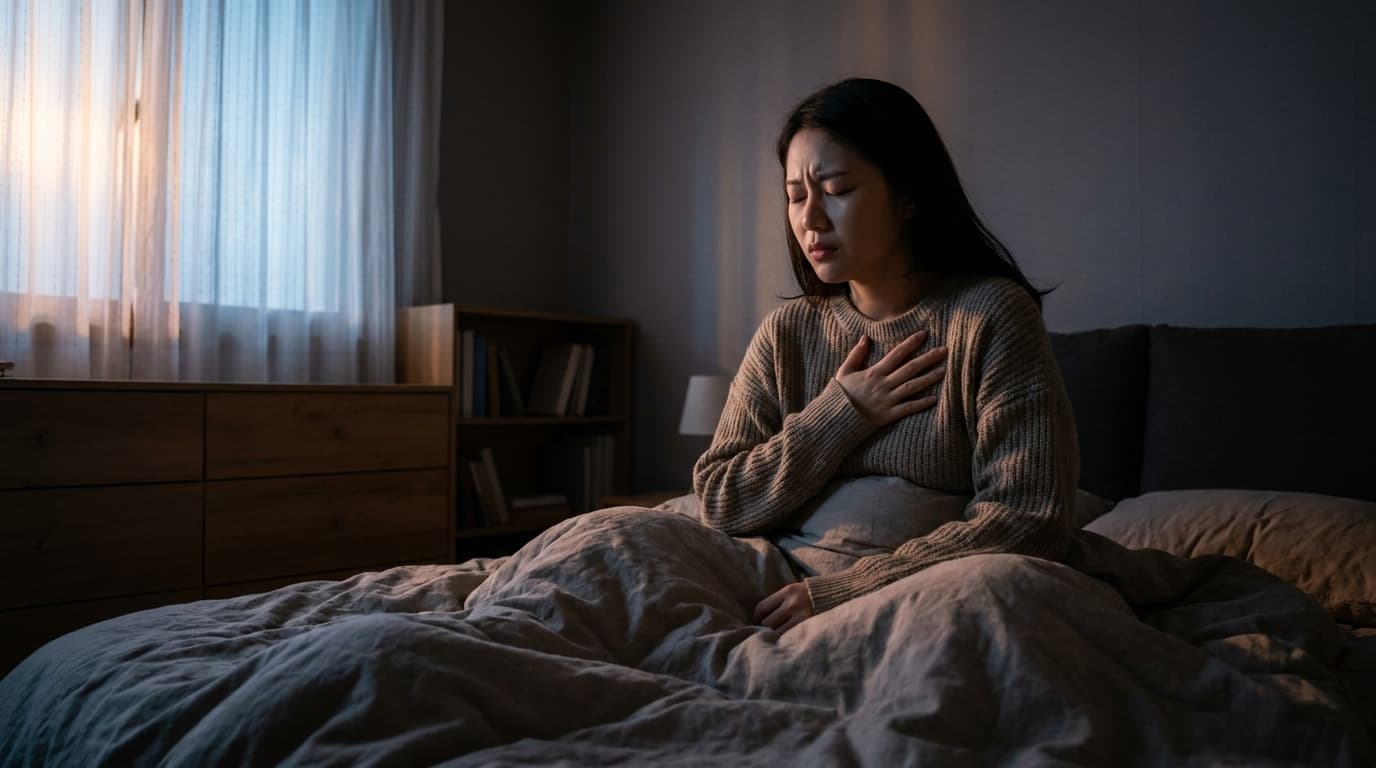
When your chest suddenly feels tight and anxious is it panic disorder or autonomic imbalance
Hello, this is Dalimchae Korean Medicine Clinic. # When your chest suddenly feels tight and anxious, is it panic disorder or autonomic imbalance? Sometimes your chest suddenly feels tight, and your heart races so fast that it's hard even to breathe. The surrounding air feels unfamiliar, and you might be overwhelmed by anxiety that something is about to happen. When these symptoms repeat, you worry, "Could this be panic disorder?" or "Is there something wrong with my autonomic nervous system?" These physical and psychological discomforts that threaten daily life are hard to dismiss as mere passing symptoms. What on earth is happening to my body? 💡 **Core Answer** Top 3 most common causes when your chest suddenly feels tight and anxious: ① Autonomic imbalance / ② Excessive stress and brain function overload / ③ Chronic physical tension and environmental factors. Dalimchae Korean Medicine Clinic helps relieve tension and restore balance in the brain and body through autonomic stabilizing treatment approach. ### **What is the difference between panic disorder and autonomic imbalance?** Panic disorder and autonomic imbalance are easily confused because both cause various physical discomforts centered around the common symptom of 'anxiety'. However, the two conditions are distinct concepts and can be closely connected. * **Panic disorder** is characterized by sudden 'panic attacks' where extreme fear suddenly appears along with heart palpitations, shortness of breath, dizziness, and cold sweats. This is accompanied by 'anticipatory anxiety' fearing the recurrence of attacks, which can lead to avoidance behavior avoiding specific places or situations. Panic disorder is a type of anxiety disorder diagnosed in psychiatry. * **Autonomic imbalance** refers to a wide range of physical symptoms caused by a disruption in the balance of the autonomic nervous system, which consists of the sympathetic and parasympathetic nerves. In Korean medicine, autonomic imbalance is also explained as 'disharmony of yin and yang', and can be caused by various factors such as stress, lack of sleep, overwork, and hormonal changes. Autonomic imbalance tends to present chronic multiple physical symptoms rather than specific sudden attacks. In short, panic disorder is a symptom close to an 'acute attack' where the autonomic nervous system is severely overloaded, while autonomic imbalance can be seen as a 'chronic imbalance' state where the regulatory capacity of the autonomic nervous system is generally weakened. Many panic disorder patients also suffer from autonomic imbalance, or severe autonomic imbalance leads to panic attacks. In other words, autonomic imbalance can be one of the main causes of panic disorder. ### **Why does autonomic imbalance occur? What role does the brain play?** Our bodies constantly respond to external environmental changes and try to maintain internal balance. An important role in this process is played by the autonomic nervous system. The sympathetic nervous system tensions the body, expends energy, and helps cope with crisis situations, while the parasympathetic nervous system relaxes the body, stores energy, and helps rest and recovery. When these two nerves achieve proper balance, a healthy body and mind can be maintained. However, modern people are prone to falling into an 'autonomic imbalance' state where the sympathetic nervous system is excessively hyperactive and the parasympathetic nervous system is weakened due to excessive stress, irregular lifestyle habits, and lack of sleep. If this imbalance persists for a long time, our body sends various abnormal signals without being able to rest properly, like an overheated engine. The brain acts as the general headquarters of the autonomic nervous system. In particular, brain regions that regulate stress and emotions, such as the amygdala and hypothalamus, are deeply involved in autonomic nervous activity. When stress repeats, these brain regions are overly activated, continuously stimulating the sympathetic nervous system, and eventually reducing the regulatory capacity of the autonomic nervous system. This can lead not only to simple physical symptoms but also to psychological problems such as anxiety, depression, and insomnia. ### **How does Korean medicine view and treat panic disorder and autonomic imbalance?** Korean medicine approaches conditions like panic disorder and autonomic imbalance from a 'mind-body monism' perspective. In other words, body and mind are seen as organically connected, and organ functions and emotional factors are interpreted as having a great influence on disease occurrence. In particular, functional abnormalities of organs such as 'heart', 'liver', 'kidney', and 'gallbladder' are seen as closely related to symptoms like anxiety, agitation, and heart palpitations. At Dalimchae Korean Medicine Clinic, for patients with panic disorder and autonomic imbalance who show no special abnormalities on tests or do not improve with western medicine, we find the root of the symptoms in autonomic nervous system imbalance and focus on fundamental **autonomic stabilization** treatment. Lowering the heat of the overactive nervous system and creating an environment where the brain can rest — in Korean medicine, this is called 'water up and fire down' (Su Seung Hwa Gang) — is an important process to restore our body's natural resilience. A study published on July 5, 2024, in the journal 『Healthcare (Basel)』 retrospectively analyzed the effects of Korean medicine treatment (acupuncture, herbal medicine, psychotherapy, chuna therapy, aromatherapy, etc.) on 67 patients with anxiety disorders. As a result of the study, 4 weeks after Korean medicine treatment, patients' anxiety indices (STAI X-1, STAI X-2, BAI), depression indices (BDI-II), and anger indices (AKI-K-I, AKI-K-O) significantly decreased (p\<0.0001), and quality of life (EQ-5D, EQ-VAS) also significantly increased (p\<0.0001). The researchers concluded that Korean medicine treatment can be effective in improving clinical symptoms and quality of life in patients with anxiety disorders. As such, Korean medicine treatment helps improve not only anxiety symptoms but also accompanying depression and overall quality of life. In addition, a paper by Yoo Jong-ho et al. published in 『Journal of Oriental Neuropsychiatry』 in 2015 reported the therapeutic effect when administering herbal medicine (Haeul-hwan) to panic disorder patients. This study suggests that herbal medicine treatment can have a positive effect on improving panic disorder symptoms. Based on these studies, Dalimchae Korean Medicine Clinic Incheon Branch meticulously analyzes each patient's symptoms and constitution to provide customized Korean medicine treatment that stabilizes the excited autonomic nervous system and strengthens overall bodily functions. ### **What makes Dalimchae Korean Medicine Clinic's autonomic stabilization treatment different?** Dalimchae Korean Medicine Clinic's autonomic stabilization treatment aims not simply to suppress symptoms, but to correct the autonomic nervous system imbalance which is the root cause, creating a body that can recover on its own. Many people visiting the Incheon autonomic clinic have lost their body's regulatory capacity due to chronic stress and fatigue. We help patients' bodies regain their natural balance through the following methods: 1. **Herbal medicine prescription for brain rest:** Customized herbal medicines are prescribed according to individual constitution and symptoms to calm excessive nervous system excitement and help the brain rest sufficiently. This contributes to recovering nerve cells damaged by stress and restoring neurotransmitter balance to alleviate anxiety and physical symptoms. 2. **Autonomic regulating acupuncture treatment:** Acupuncture is applied to specific acupoints to regulate autonomic nervous system balance and relax hypersensitive nerves. Acupuncture treatment is effective in stabilizing the sympathetic nervous system and activating the parasympathetic nervous system to reduce stress response. In particular, it promotes cerebral blood flow and cerebrospinal fluid circulation, helping brain function recovery. 3. **Inducing psychological stability:** Through Korean medicine counseling, we empathize with the emotional difficulties experienced by patients and explore stress management methods together. This is an essential factor in enhancing treatment efficacy and preventing recurrence. 4. **Lifestyle improvement guidance:** We guide lifestyle habits helpful for autonomic health, such as proper sleeping habits, regular exercise, and diet management, helping patients maintain a healthy balance on their own. This integrated approach is a great help for those looking for an Incheon panic disorder clinic to move beyond simply solving symptoms and reclaim a healthy and vibrant daily life. Dalimchae Korean Medicine Clinic Incheon Branch treats various symptoms associated with autonomic imbalance, such as headaches, dizziness, and insomnia, pursuing overall health promotion. ### **Could I also have panic disorder or autonomic imbalance? (Symptom Checklist)** If 3 or more of the items below apply, you can suspect autonomic imbalance, and if 5 or more apply, it is recommended to consider accurate diagnosis and treatment through consultation with the medical staff at Dalimchae Korean Medicine Clinic Incheon Branch. * Frequently experience sudden chest tightness and difficulty breathing. * Feel heart beating rapidly or sinking without special reason. * Intense anxiety and fear suddenly rush in, leading to a panic state. * Feel dizzy and lightheaded, sometimes feeling like fainting. * Hands and feet are cold or numb, and cold sweats occur frequently. * Suffer from insomnia, such as difficulty falling asleep or waking up frequently. * Repeat indigestion, chronic dyspepsia, constipation, or diarrhea. * Suffer from chronic fatigue and malaise with lack of energy. * Neck or shoulders are frequently stiff and rigid. * Mood swings are severe, and easily irritated or depressed. **Q. How long do panic disorder and autonomic imbalance need to be treated?** A. Treatment duration may vary depending on the degree of individual symptoms, cause of onset, and lifestyle habits. Usually, consistent treatment for 3 to 6 months or more is required, and management for recurrence prevention is important even after symptoms improve. **Q. Can Korean medicine treatment be combined with western medicine?** A. Yes, Korean medicine treatment can help enhance treatment efficacy and gradually reduce western medicine dosage when combined with western medicine. It must be conducted safely in consultation with medical staff. **Q. Can autonomic imbalance get better naturally?** A. Mild stress or temporary imbalance can improve solely through lifestyle improvement. However, if symptoms repeat or interfere with daily life, receiving professional treatment is important, and leaving it unattended can develop into depression or panic disorder. **Q. Are heart palpitations and indigestion treated together?** A. Yes, since autonomic imbalance affects not only the cardiovascular system but also the digestive system, heart palpitations and indigestion can be improved together through treatment that balances the autonomic nervous system. Panic disorder and autonomic imbalance are not problems solved by enduring. You no longer need to ignore the body's signals sent for a long time. Approached in the right direction, the body responds faster than you think. Bring your current symptoms as they are. Dalimchae Korean Medicine Clinic will find the causes together with you. Where life blossoms. Herbal medicine is Dalimchae Korean Medicine Clinic. Check your similar symptoms first through Dalimchae Korean Medicine Clinic's homepage AI consultation! This article is based on frequently asked questions in the treatment room, health information compiled together by Dalimchae medical staff. Medical Review | Brain and Autonomic Treatment Standard Dalimchae Korean Medicine Clinic Incheon Branch Korean Medicine Doctor Yang Yuchan (Autonomic Column) #PanicDisorder #AutonomicImbalance #AutonomicDysfunction #AnxietyDisorder #Palpitations #IncheonAutonomicClinic #IncheonPanicClinic #OrientalTreatment