
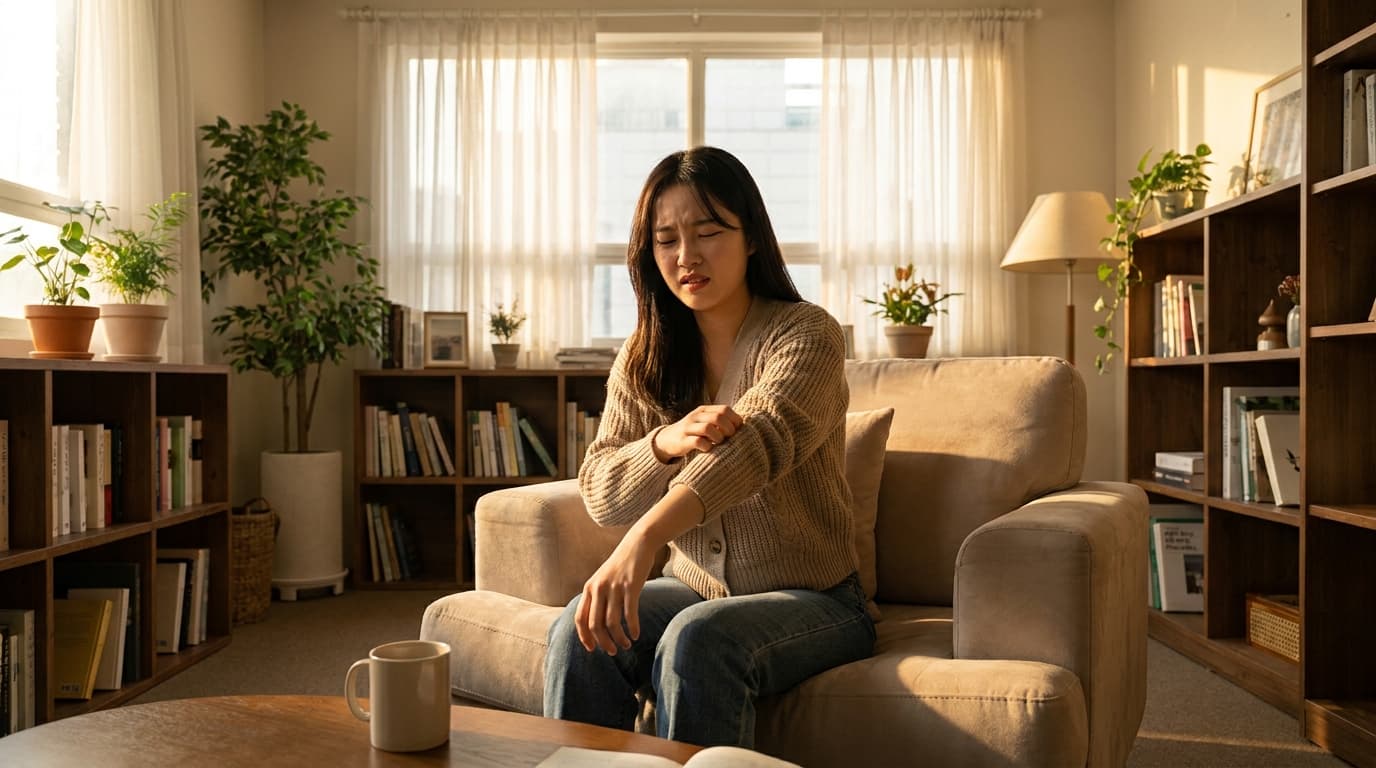
When Skin Suddenly Itches and Turns Red It May Not Be a Simple Allergy
Hello, this is Dalimchae Korean Medicine Clinic. # When your skin suddenly itches and turns red, it may not be a simple allergy. During a peaceful daily life, your skin might suddenly itch and turn red. You might brush it off as a passing hive, but the itching gets worse, and the red rash becomes even more vivid as you scratch. The hospital may diagnose it as an "allergy," but even after taking antihistamines, it only works temporarily, and you might feel overwhelmed, wondering where to start amid recurring symptoms. These skin issues are likely warning signs sent by the internal imbalance of our body, rather than simply external stimuli. 💡 **[Core Answer]** Top 3 most common causes of sudden itchy and red skin (hives): ① **Internal toxin accumulation** / ② **Immune imbalance** / ③ **Stress and autonomic nervous system disturbance** Dalimchae Korean Medicine Clinic helps fundamentally improve skin immunity through **intestinal detoxification** to prevent symptom recurrence and help you regain healthy skin. ## Why does skin suddenly itch and turn red? Sudden itching and red rashes on the skin, namely hives, are deeply connected to our body's complex immune system. Especially in modern Korean medicine, such skin reactions are interpreted not merely as skin problems, but as the result of internal organ health, particularly gut health and immune imbalance. Toxins accumulated inside the body damage the gut barrier, allowing harmful substances to travel through the blood and spread throughout the body, causing inflammatory reactions in the skin. This mechanism can be explained through the concept of the "Gut-Brain-Skin Axis," suggesting that gut health directly affects skin status. When the immune system overreacts or malfunctions, the skin is often the first organ to send signals. ## How does Korean medicine view chronic hives that are not resolved by general skin medications? While many people experience temporary symptom relief from acute hives using antihistamines, those who progress to chronic hives lasting 6 weeks or recurring often feel the limitations of Western medicine alone. In Korean medicine, such chronic hives are diagnosed not merely as surface skin problems, but as stagnation of internal "wind-heat" or "damp-heat," or as a result of weakened spleen and stomach function. This is closely related to immune imbalance caused by weakened gut function preventing proper toxin elimination and accumulation in the body. A randomized double-blind placebo-controlled pilot study published in the Frontiers journal in 2018 investigated 78 patients with chronic hives, reporting on 56 patients included in final analysis who received a herbal combination prescription (Sopungsan and Cheongsangbangpung-tang) for 56 days. The results showed that the herbal treatment group had a significantly lower weekly urticaria activity score (UAS7) of 9.9 ± 9.2 compared to 15.6 ± 10.8 in the control group (p=0.038), showing a more positive effect on symptom relief. Notably, a progressive decrease in symptom severity was observed in the herbal medication group (p\<0.001), and a significant change in the inflammation-related cytokine interferon-γ, showing a decrease of approximately 30.8% compared to baseline, was confirmed (p=0.013). The researchers concluded that these results indicate the feasibility and tolerability of herbal medicine as an adjuvant therapy for chronic hives. Furthermore, another study published in the Medicine journal in 2025 meta-analyzed 14 clinical studies published over the past 10 years, confirming significant therapeutic efficacy, low side effects, and low recurrence rates when applying Korean medicine treatment to a total of 1,192 chronic hives patients. The overall effective rate of Korean medicine treatment showed a relative risk (RR) of 1.23 (95% CI [1.16–1.29], P\<0.00001), and the side effect incidence rate (RR = 0.23, P\<0.00001) and recurrence rate (RR = 0.24, P\<0.00001) were also remarkably low. This study emphasizes that Korean medicine treatment is effective, safe, and stable in improving chronic hives symptoms. Based on these data, Dalimchae Korean Medicine Clinic aims to identify the root cause of skin symptoms, restore gut health, and regain the balance of the immune system. ## Dalimchae Korean Medicine Clinic's 'Intestinal Detoxification' Treatment Fundamentally Resolves Skin Issues. Skin diseases are usually "warning lights" inside the body. In particular, sudden itchy and red hives can be a strong signal that toxins accumulated in the gut barrier are creating systemic inflammation via the blood. Dalimchae Korean Medicine Clinic Songdo Branch connects the root cause of these skin problems with gut function and maximizes the body's natural healing power through "intestinal detoxification" treatment. Intestinal detoxification goes beyond simply clearing the bowels; it improves the intestinal environment and strengthens the gut barrier to prevent harmful substances from entering the bloodstream. Our gut is the immune organ that first contacts external substances, and when the gut barrier is damaged, "Leaky Gut Syndrome" occurs, allowing toxins and undigested food particles to penetrate into the blood. These substances circulate throughout the body and induce inflammatory reactions in various organs, including the skin. Dalimchae Korean Medicine Clinic helps promote the growth of beneficial gut bacteria and the regeneration of the intestinal mucosa through herbal prescriptions to restore damaged gut barriers. Through this process, internal toxins are naturally eliminated, and the hypersensitive immune system regains stability while skin inflammation gradually subsides. Intestinal detoxification treatment goes beyond suppressing visible skin symptoms; it prevents the recurrence of skin diseases and contributes to overall health promotion. When gut health is restored, digestive function improves, and the body's detoxification capacity is enhanced, allowing you to feel positive changes not only in your skin but in your overall bodily condition. This aligns with Dalimchae Korean Medicine Clinic's constitutional improvement treatment philosophy: "Not putting out the fire, but making the body so the fire doesn't light up again." ## If you have these symptoms, suspect chronic hives. If you match 3 or more of the checklist below, it is important to suspect chronic hives and internal imbalance, and consult a professional to find the root cause. * Your skin suddenly swells red and itches severely. * Skin rashes persist for 6 weeks or appear repeatedly. * General skin medications like antihistamines show no or only temporary response. * Frequent digestive problems such as indigestion, abdominal pain, constipation, or diarrhea. * Skin symptoms tend to worsen when stressed. * You notice skin troubles worsening after consuming certain foods. * Frequent fatigue, lethargy, and low overall condition. * Nighttime itching disrupts your sleep. **When 3 or more match → Suspect skin problems due to decreased gut function → Consider Dalimchae Korean Medicine combination treatment** **When 5 or more match → Immediate clinic visit and precise diagnosis recommended** --- **Q. How long do hives last?** A. Hives improving within 6 weeks are classified as acute hives, and those lasting or recurring for 6 weeks or more as chronic hives. Chronic hives can last for months to years and frequent recurrences can cause significant discomfort for patients. **Q. Can chronic hives be treated with Korean medicine?** A. Yes, chronic hives can be sufficiently improved with Korean medicine treatment. In Korean medicine, the root cause of hives is viewed as internal immune imbalance and internal toxin accumulation, and recurrence is prevented and symptoms are alleviated through intestinal detoxification and constitutional improvement treatments. **Q. Can hives heal naturally?** A. Acute hives often improve naturally over time or by avoiding the causative substance. However, chronic hives have hard-to-find causes and do not easily heal naturally, requiring professional diagnosis and consistent treatment. **Q. I have indigestion along with hives, can they be treated together?** A. Yes, hives and indigestion can be improved together through "intestinal detoxification" treatment. Intestinal toxins caused by decreased digestive function are a major cause of skin problems, so restoring gut health can improve both symptoms. --- Sudden itchy and red skin is not a problem solved by enduring. You no longer need to ignore the signals your body has been sending for a long time. When approached in the right direction, your body reacts faster than you think. Bring the symptoms you are experiencing right now as they are. Dalimchae Korean Medicine Clinic will find the cause together. The place where life blooms. Herbal medicine is Dalimchae Korean Medicine. Check similar symptoms first through the Dalimchae Korean Medicine Clinic homepage AI consultation! This article is health information organized together by Dalimchae medical staff based on questions frequently received in the clinic room. Medical Supervision | Skin Disease Treatment Standard Dalimchae Korean Medicine Clinic Songdo Branch Korean Medicine Doctor Oh Hyunmin (Allergic Skin Disease Column) #Hives #SkinItching #AllergicDermatitis #IntestinalDetox #SongdoClinic #SongdoSkinClinic #ImmuneImbalance #SkinRash