
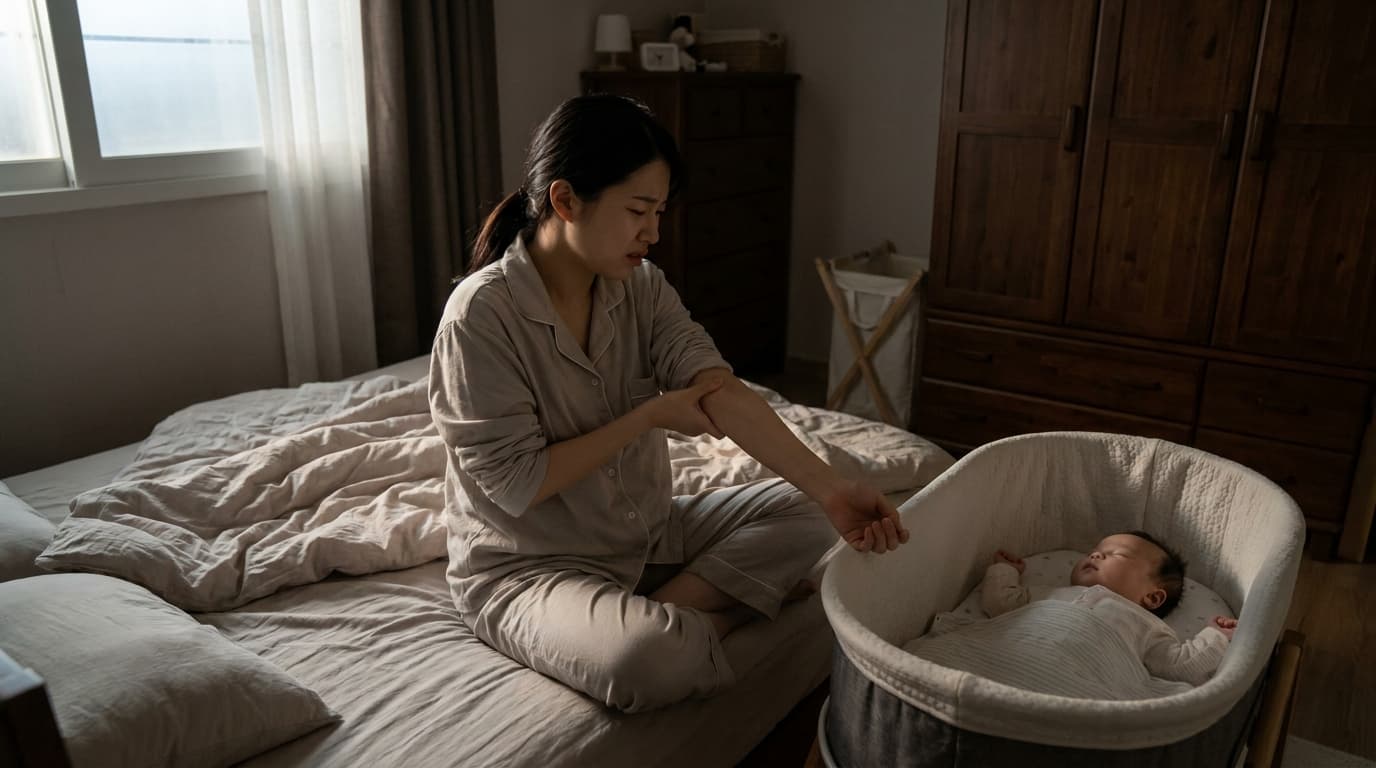
When Postpartum Skin Itches Hormonal Changes and Fundamental Care for Sanhu Itching
Hello, this is Dalimchae Korean Medicine Clinic. # Is Your Skin Itchy After Childbirth? Sanhu Itching Caused by Hormonal Changes Must Be Treated from the Root The joy of carrying and bringing a new life into the world is brief, and a mother's body undergoes tremendous changes. In particular, sudden skin itching and red rashes after childbirth bring unexpected suffering. Many mothers suffer alone, unable to sleep due to worsening itching every night and hesitating to take medicine for fear it might harm the baby. This complaint of 'skin is itchy after childbirth' may not be a simple skin problem, but a sign of deep changes inside the body. 💡 **[Key Answer]** **Top 3 most common causes of 'skin is itchy after childbirth':** ① Sudden hormonal changes and decreased immunity / ② Excessive qi/blood consumption and um-blood deficiency / ③ Postpartum stress and sleep deprivation Dalimchae Korean Medicine Clinic helps restore body balance weakened after childbirth through **constitutional improvement** and fosters the skin's self-healing power to achieve root resolution of itching. ## Why does skin suddenly itch after childbirth? Is it really because of hormones? Postpartum skin itching often continues from gestational pruritus that occurred during pregnancy or suddenly appears out of nowhere. In particular, 'sanhu pruritus' broadly refers to various skin itching symptoms appearing in a woman's body after childbirth. Along with itching, various skin disease symptoms such as hives, seborrheic dermatitis, nummular eczema, dyshidrotic eczema, atopy, and psoriasis may accompany it. One of the causes of these symptoms is rapid hormonal changes and decreased immunity after childbirth. Women consume a massive amount of qi and blood while going through pregnancy and childbirth, which Korean medicine diagnoses as 'um-blood deficiency'. Um-blood plays a role in controlling inflammation and heat in the human body; when this substance becomes deficient, heat accumulates in the skin, inducing itching and rashes. ## How does Korean medicine approach postpartum skin itching? At the Songdo branch of Dalimchae Korean Medicine Clinic, postpartum itching is not viewed simply as a surface skin problem, but is treated in connection with the mother's overall recovery process. For mothers who are breastfeeding or reluctant to take Western medicine out of concern for harming the baby, Korean medicine treatment can be a more suitable alternative. Herbal medicine prescriptions using natural herbs help manage itching while restoring the mother's health without affecting breast milk. A paper by Park Sung-jun and other researchers published in the 「Journal of Korean Medicine」 in 2022 suggests that Korean medicine treatment can have a meaningful effect on improving postpartum pruritus. This study reported a case where a 37-year-old postpartum pruritus patient who did not respond to antihistamines and topical steroids was treated with a Korean medical complex treatment centered on Galgeunhwageumhwaryeontang. After a month of treatment, the patient's pruritus score (NRS) decreased significantly from 10 before treatment to 2 after treatment, and red blisters disappeared without recurrence. The researchers explained that Galgeunhwageumhwaryeontang can contribute to skin barrier recovery and decreased inflammatory response through anti-inflammatory action. These research results support the importance of the fundamental constitutional improvement treatment pursued by Dalimchae Korean Medicine Clinic as a Songdo postpartum itching clinic. In addition, a large-scale multi-center research protocol on the safety of herbal postpartum medicine scheduled for publication in 2026 is raising confidence in postpartum herbal medicine treatment. Conducted across 15 Korean medicine clinics with 1,000 mothers, this study will systematically investigate side effects and treatment patterns of postpartum herbal medicine to build safety data. ## Dalimchae Korean Medicine Clinic's Constitutional Improvement: Treatment Creating a 'Body That Does Not Turn On Again' At Dalimchae Korean Medicine Clinic, we aim to **improve constitution** so that the mother's body recovers on its own and creates a healthy state where symptoms do not recur. Rather than simply suppressing symptoms, we focus on finding and solving the root causes inside the body that induce them. We replenish qi, blood, and um-blood depleted by childbirth, enhance lowered immunity, and treat skin heat and inflammation. Through this, skin barrier function is improved, helping you regain a comfortable daily life without itching. In particular, at Dalimchae Korean Medicine Clinic Songdo Branch, we maximize treatment effects by combining precise herbal prescriptions tailored to each mother's constitution and symptoms with acupuncture and moxibustion treatments. ## Self-Checklist: Could It Be Postpartum Itching? If 3 or more of the following apply to you, suspect postpartum itching and consider consulting with the medical staff at Dalimchae Korean Medicine Clinic Songdo Branch. * Skin suddenly becomes dry and keratin flakes frequently after childbirth. * Itching worsens significantly at night or dawn, making it difficult to fall asleep. * Unable to endure itching, scratching leads to skin redness or wounds. * Millet-like rashes or hives rise on specific areas (abdomen, limbs, back). * Itching tends to worsen during breastfeeding. * Allergies or skin sensitivity that did not exist before childbirth have appeared. * Frequently experience extreme stress or fatigue, and mood swings are severe. * Palms-sized rashes appear or rashes repeat for over a week. **If 3 or more apply → Suspect postpartum itching → Consider Korean medical complex treatment** **5 or more apply → Immediate visit recommended for precise diagnosis and treatment** ## FAQ: Frequently Asked Questions About Postpartum Skin Itching **Q. How long does postpartum itching last?** A. Postpartum itching varies greatly by individual, but usually lasts from several weeks to months after childbirth. Without proper treatment and management, it can become chronic or worsen, so early treatment is important. **Q. Can I receive Korean medicine treatment while breastfeeding?** A. Yes, Dalimchae Korean Medicine Clinic provides safe Korean medicine treatment for breastfeeding mothers. Using natural herbs, it helps improve the mother's physical condition and alleviate itching without affecting the baby. **Q. Can postpartum itching heal naturally?** A. While some mild cases may improve naturally, most postpartum itching is accompanied by fundamental causes such as hormone imbalance, decreased immunity, and qi/blood deficiency. Therefore, leaving it unattended can worsen or chronicize symptoms, making active treatment desirable. **Q. I have both postpartum itching and sanhupung, can they be treated together?** A. Yes, sanhupung is a broad term for all sequelae occurring after childbirth, which can include skin itching, cold sensations, excessive sweating, and depression in addition to joint pain. Dalimchae Korean Medicine Clinic's constitutional improvement treatment helps overall recovery of the mother, making it effective in improving postpartum itching and sanhupung symptoms together. Skin itching after childbirth is not a problem solved by enduring it. You no longer need to turn away from the body's signals sent for a long time. Approaching in the right direction makes the body react faster than you think. Bring the symptoms you are experiencing as they are. The Songdo branch of Dalimchae Korean Medicine Clinic will find the cause together. Where life blooms. Herbal medicine is Dalimchae Korean Medicine Clinic. Check symptoms similar to yours first through the AI consultation on the Dalimchae Korean Medicine Clinic website! This article is health information organized together by Dalimchae medical staff based on questions actually received often in the consultation room. Medical Supervision | Skin Disease Treatment Standard Dalimchae Korean Medicine Clinic Songdo Branch Korean Medicine Doctor Oh Hyun-min (Chronic Skin Disease Column) p\<0.05