
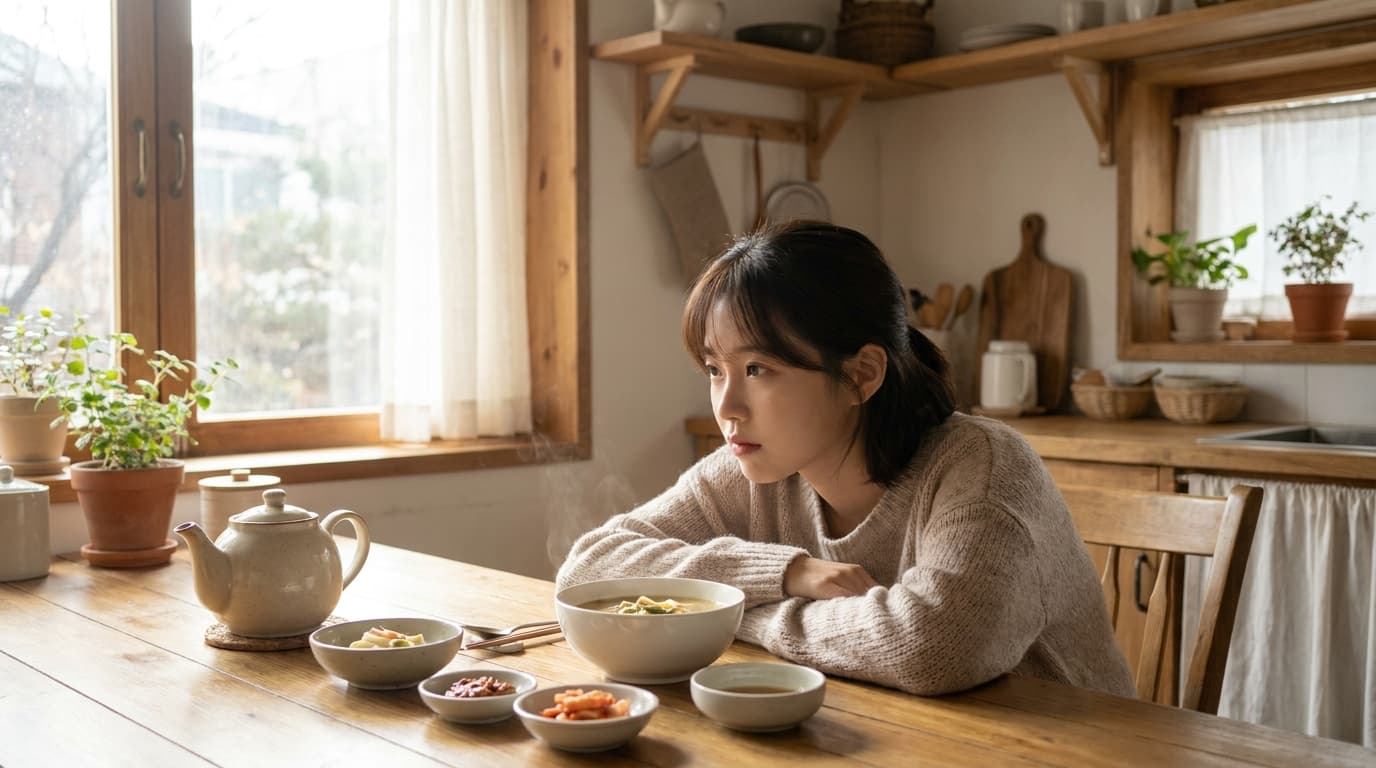
When Parents Do Not Want to Eat, Is It Just a Simple Loss of Appetite?
Hello. This is Dalimchae Korean Medicine Clinic. # When Parents Do Not Want to Eat, Is It Just a Simple Loss of Appetite? When people think "it's natural to lose your appetite as you age," they often dismiss a decrease in their parents' food intake as nothing special. However, behind the simple words "I have no appetite," various health problems may be hidden due to decreased digestive function, loss of vital energy, and further nutritional imbalance. Loss of appetite in parents can significantly degrade the quality of life in old age and cause serious complications, requiring special attention and active care. 💡 **Core Answer** Top 3 most common causes when parents don't want to eat: ① Decreased digestive enzyme and gastric peristalsis due to aging ② Weakened appetite center function due to systemic fatigue and chronic inflammation ③ Gut microbial imbalance and barrier function damage Dalimchae Korean Medicine Clinic helps restore appetite on your own through intestinal detoxification and restoration of digestive function and systemic energy. ## Elderly Loss of Appetite, Why Is It Not Just 'No Appetite'? Loss of appetite in the elderly does not simply mean a dull sense of taste or lack of appetite. As we age, various functions of our body naturally decline, and changes in the digestive tract in particular greatly affect appetite. Slowing gastric peristalsis, reduced digestive enzyme secretion, and difficulty swallowing food due to decreased saliva secretion work together to make eating itself difficult. In addition, chronic diseases or medications being taken can be major culprits in lowering appetite. Drug side effects can cause nausea and indigestion, and persistent pain or discomfort from illness naturally reduces food intake. Psychological factors such as loneliness and depression, or cognitive decline such as dementia, also act as important causes of decreased appetite in old age. ## How Does Loss of Appetite in Old Age Affect Our Body? Nutritional imbalance caused by reduced food intake has a fatal impact on the health of the elderly. In particular, insufficient protein, vitamin, and mineral intake leads to decreased muscle mass (sarcopenia), decreased bone density, and weakened immunity, resulting in easily fracturing upon small impacts or becoming vulnerable to infection. This ultimately becomes a major factor accelerating the state of "frailty." In a 2023 study by Moon et al. published in "PLoS One" investigating the association between frailty and nutritional status among 558 elderly people living in domestic long-term care facilities, 75.8% of the subjects were in a state of malnutrition (malnutrition or at risk of malnutrition), and malnourished elderly people had a 10.35-fold higher risk of frailty compared to normal nutritional status elderly people (95% CI: 3.78-28.36). This clearly shows that loss of appetite in old age and the resulting nutritional imbalance are major factors inducing frailty. The researchers emphasized the need for active intervention to improve the nutritional status of the elderly population. Thus, when parents don't want to eat, rather than dismissing it as simply having no appetite, it is necessary to recognize it as a signal threatening health from the perspective of intestinal changes and actively manage it. In particular, many people visiting Songdo loss-of-appetite oriental clinics complain of general lethargy and indigestion caused by such nutritional imbalance. ## How Does Korean Medicine View Elderly Loss of Appetite? In Korean medicine, the loss of appetite in the elderly is not viewed merely as a stomach problem. It is interpreted as the result of a systemic imbalance that appears as overall qi, blood, and body fluids become deficient and the functions of the internal organs decline. In particular, weakness of the spleen and stomach (biyi) and deficiency of qi and blood are considered core causes of decreased appetite. The spleen and stomach are responsible for digestion and absorption, and when they become weak, food cannot be digested properly, and the ability to absorb nutrients decreases, naturally reducing appetite. In addition, waste products such as phlegm (dam-eum) or blood stasis (eo-hyeol) accumulate in the body, hindering qi and blood circulation, which lowers organ function and induces loss of appetite. This is consistent with 'chronic inflammation' or 'gut microbial imbalance' in Western medicine. From this perspective, Korean medicine treatment aims not simply to stimulate appetite, but to restore systemic energy and organ function so that the body can restore healthy eating habits on its own. ## How Does Dalimchae's 'Intestinal Detox' Treatment Restore Appetite? At Dalimchae Korean Medicine Clinic, 'intestinal detox' treatment is intensively applied to resolve the root cause of elderly loss of appetite. The intestine is not just an organ responsible for digestion and absorption, but an important organ deeply involved in immunity and systemic health. Toxins accumulated in the intestinal wall travel through the blood to create systemic inflammation, which in turn negatively affects digestive function and the appetite center. Intestinal detox treatment breaks this chain of vicious cycles, restores intestinal health, and maximizes the body's natural healing power. In a narrative review by Ryu et al. published in the "Journal of Clinical Medicine" in 2024, it was suggested that herbal prescriptions such as Insamyangyeongtang (IYT) have therapeutic effects on weight gain, muscle mass improvement, and nutritional status improvement in frail elderly people. This review reported that when Insamyangyeongtang was administered for 9 or 14 months to 3 Alzheimer's disease patients accompanied by loss of appetite and weight loss, all patients showed an increase in weight, muscle mass, and weight excluding body fluid. The researchers concluded that Insamyangyeongtang can help treat frailty due to qi and blood deficiency, and improve loss of appetite and nutritional status. These research results support that Dalimchae Korean Medicine Clinic's intestinal detox and vital energy reinforcement treatment can contribute to the overall health promotion of the elderly beyond simply relieving symptoms. Dalimchae Korean Medicine Clinic's intestinal detox treatment complexly applies herbal medicine prescriptions, acupuncture, moxibustion, etc., tailored to individual constitutions and symptoms. Through this, intestinal toxins are removed, damage to the intestinal wall is repaired, and gastrointestinal peristalsis is activated to normalize digestive and absorption functions. In addition, vital energy reinforcement herbal medicine restores systemic vitality and strengthens immunity to comprehensively manage health in old age. These treatments help improve various problems accompanied by loss of appetite, such as indigestion, chronic fatigue, and weakened immunity. Songdo branch of Dalimchae Korean Medicine Clinic, responsible for Songdo senior health, helps your parents regain a healthy dining table through personalized treatment. ## Parents' Loss of Appetite, Self-Diagnosis Checklist Check how many of the following items apply to your parents: * Weight has decreased by 5kg or more in the last 3 months. * Frequently say "I have no appetite" or "I don't know the taste of anything I eat." * Complain of frequent indigestion or poor digestion during meals. * Meal portion has decreased to less than half of usual. * Hesitate to eat the next meal due to feeling bloated and uncomfortable after eating. * Lacking energy, everything is a bother, and reluctant to move. * Complain of frequent dizziness or fatigue. * Frequent chronic constipation or diarrhea. **Criteria and Recommended Action:** * **3 or more items apply:** Suspected stage of elderly loss of appetite. Consider Korean complex treatment for intestinal function improvement and vital energy reinforcement. * **5 or more items apply:** Risk of nutritional imbalance and progression of frailty. Immediate expert consultation and precise examination are recommended to find the cause and start treatment. * **7 or more items apply:** Risk of severe nutritional imbalance and health deterioration. It is recommended to immediately visit a specialized oriental clinic such as Dalimchae Korean Medicine Clinic Songdo Branch for comprehensive medical care. ## FAQ: Questions About Parents' Loss of Appetite **Q. How long should treatment for elderly loss of appetite take?** A. The duration of treatment may vary depending on the cause of loss of appetite, individual health status, and lifestyle habits. Generally, 1 to 3 months of steady treatment and management are needed to restore intestinal function and vital energy, and management to prevent recurrence is important even after symptoms improve. **Q. What can I do at home for parents who don't want to eat?** A. Serve soft and easy-to-digest food in small, frequent portions. Utilizing various spices and ingredients to stimulate taste, and helping with hydration through warm tea or soup dishes is also good. Creating a comfortable and enjoyable atmosphere for mealtime is important. **Q. Loss of appetite and indigestion come together, can they be treated together?** A. Yes, loss of appetite and indigestion are representative accompanying symptoms of elderly loss of appetite, and are fundamentally deeply related to intestinal function problems. Dalimchae Korean Medicine Clinic's intestinal detox treatment aims to improve digestive function and promote appetite simultaneously, so the two symptoms can be treated together. When parents don't want to eat, it is not a problem solved by enduring. You no longer have to ignore the body's signals sent over a long time. When approached in the right direction, the body responds faster than you think. Bring the symptoms you are experiencing as they are. Dalimchae Korean Medicine Clinic will find the cause together. Where life blooms. Herbal medicine is Dalimchae Korean Medicine Clinic. Check your similar symptoms first with AI consultation on the Dalimchae Korean Medicine Clinic website! Medical Review | Intestinal & Digestive Treatment Standards, Dr. Oh Hyunmin, Songdo Branch, Dalimchae Korean Medicine Clinic (Appetite Problem Column)