
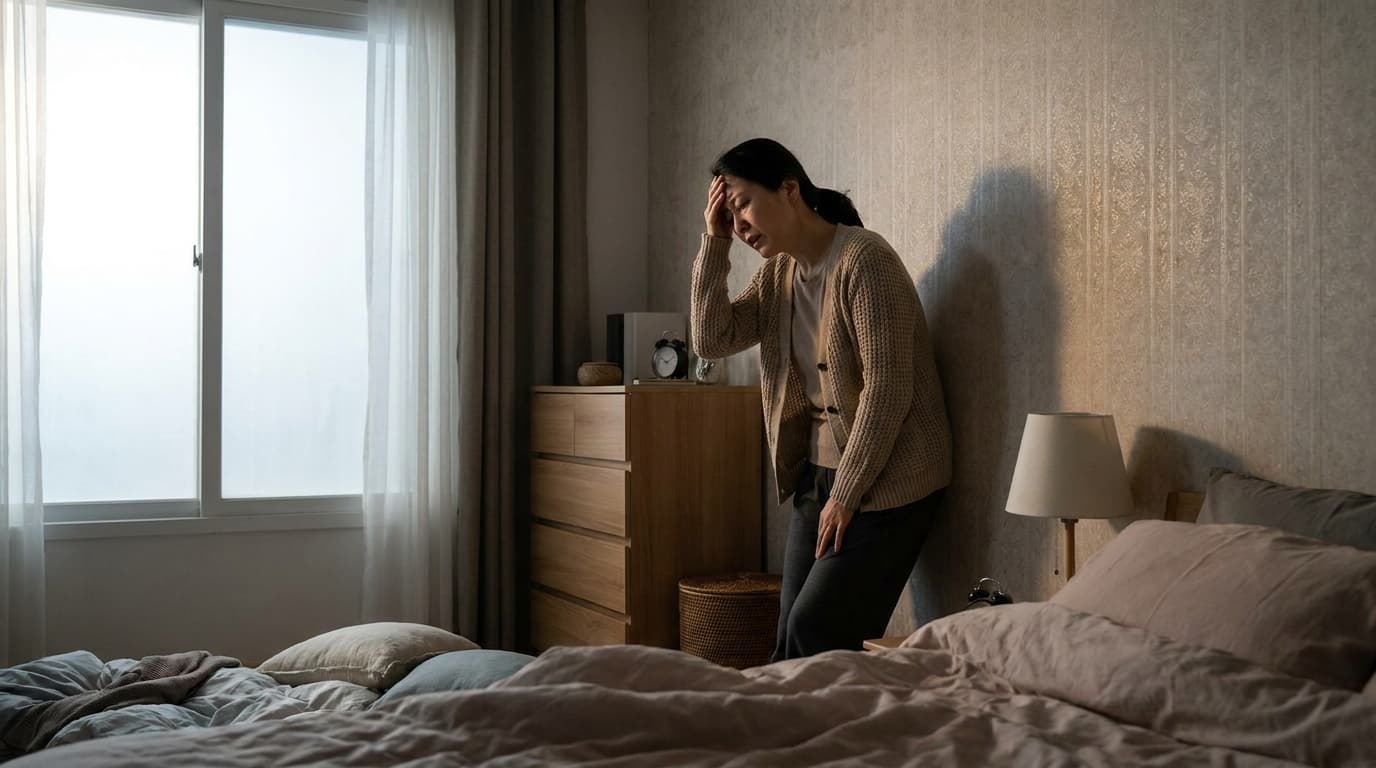
Trembling and Dizziness in Your 40s Could This Be a Warning Sign from Your Autonomic Nervous System
Hello. This is Dalimchae Oriental Medicine Clinic. # Trembling and Dizziness in Your 40s: Could This Be a Warning Sign from Your Autonomic Nervous System? Have you ever noticed your hands trembling slightly while looking in the mirror, or experienced a spinning sensation of the world whenever you stand up or turn your head? Especially entering your 40s, many people feel anxious about bodily changes they haven't felt before. Worried that it might be a serious condition or that you might collapse, you visit the hospital for checkups, only to feel frustrated when told there is nothing particularly wrong. Such unexplained trembling and dizziness can significantly degrade your daily life quality and even cause mental stress. 💡 **[Key Answer]** 3 most common causes of unexplained trembling and dizziness in your 40s: ① Autonomic imbalance / ② Stress and chronic fatigue / ③ Minor functional decline of the brain nervous system Dalimchae Oriental Clinic restores the balance of your overheated brain and body through autonomic stabilization treatment, returning you to a healthy daily life. ## Why Do Hands Tremble and Dizziness Occur Unexplainedly in Your 40s? Many people visit hospitals for unexplained trembling and dizziness but feel anxious without receiving a clear diagnosis. While Western medicine tends to treat symptoms related to autonomic dysfunction as independent conditions rather than using the term autonomic ataxia, Korean medicine views these symptoms as 'autonomic ataxia', where autonomic balance is broken. Particularly, your 40s is a period prone to autonomic instability due to numerous physical and mental changes. Excessive work stress, menopausal hormonal shifts, irregular lifestyle habits, and accumulated chronic fatigue leave our body's autonomic nervous system overloaded. The autonomic nervous system is divided into sympathetic and parasympathetic nerves, regulating all unconscious functions in our body. It handles essential life-maintaining functions such as heart rate, blood pressure, digestion, temperature regulation, and sleep. When the balance between these two nerves breaks, abnormal signals appear throughout the body, much like an engine overheating or a fuse box switch malfunctioning. Trembling can manifest as nervous system hypersensitivity or involuntary fine muscle contractions, while dizziness is closely related to decreased brainstem function responsible for balance or autonomic blood flow imbalance. ## How Does Autonomic Imbalance Cause Trembling and Dizziness? The autonomic nervous system operates through a close network between the brain and systemic organs. When sympathetic nerves become excessively hyperactive due to stress or chronic fatigue, our body maintains a constant 'tension state'. This tension can constrict blood vessels and accelerate heart rate, affecting blood flow to the brain. If blood flow to the brain is not smooth, brain oxygen supply becomes deficient, causing dizziness. Additionally, an overly excited nervous system can induce subtle trembling or muscle spasms. Autonomic imbalance can be objectively confirmed through Heart Rate Variability (HRV) testing. HRV analyzes minute interval changes in heartbeat to evaluate autonomic activity and balance status. The healthier the autonomic nervous system operates, the greater and more diverse the heartbeat interval variations, meaning our body flexibly copes with stress. Conversely, as imbalance worsens, HRV figures appear unstable, signaling high brain fatigue and decreased recovery capacity. In such situations, the body overreacts even to mild stimuli, leading to trembling, dizziness, and severe related conditions like insomnia or headaches. ## How Does Korean Medicine Treat Trembling and Dizziness Caused by Autonomic Imbalance? Korean medicine focuses on restoring the root cause—autonomic balance—to enhance brain and body resilience, rather than merely suppressing symptoms of trembling and dizziness caused by autonomic imbalance. This is why Western medicine patients experiencing medication side effects like dizziness and insomnia consider Korean medicine treatment. Dalimchae Oriental Clinic provides customized Korean medicine treatment tailored to individual constitutions and symptoms based on the principle of autonomic stabilization. In a clinical study published in 2022 in 'The Journal of Internal Korean Medicine', 8 weeks of complex Korean medicine treatment including Cheongsimondam-tang-gamibang and acupuncture applied to 1 patient with psychogenic tremor showed significant improvement: Fahn Tolosa Marin rating (FTM) scale score improved from Grade 4 in limbs and trunk at admission to Grade 2 in upper limbs and trunk and Grade 0 in lower limbs at discharge. Furthermore, Beck Anxiety Inventory (BAI) score dropped significantly from 38 to 7, confirming positive effects on mental stability. The researchers concluded that Korean medicine alone holds the potential to improve psychogenic tremor. In another clinical case study published in 2025, 20 sessions of integrated Korean medicine treatment including thread embedding therapy, Chuna therapy, acupuncture, and cupping applied over 4 months to 1 patient with autonomic dysfunction showed improvements: anxiety (BAI) score from 37 to 23, headache severity (MIDAS) score from 40 to 2, and gastrointestinal symptoms (GSRS) score from 6 to 3. The patient reported relief from tension headaches, enhanced mood and energy, improved digestion, and reduced autonomic symptoms without side effects. These data demonstrate that Korean medicine approaches are effective in improving various physical symptoms caused by autonomic imbalance. Dalimchae Oriental Clinic focuses on lowering overheated nervous system heat and creating an environment where the brain can rest—known in Korean medicine as Subunghagang (water rises, fire descends)—helping patients' bodies restore balance on their own. Especially for those seeking Incheon autonomic clinics for trembling or dizziness in their 40s, such personalized treatment can be an excellent alternative. ## Should I Suspect Autonomic Ataxia If Checkup Results Are Normal But I Keep Feeling Unwell? Yes, absolutely. If you enter your 40s experiencing unexplained trembling and dizziness yet receive 'normal' test results at the hospital, you need to suspect autonomic ataxia. Modern medical examinations often find no structural abnormalities, but functional problems of the autonomic nervous system are frequently the actual root cause. Dalimchae Oriental Clinic Incheon Branch goes through systematic diagnostic processes to accurately identify autonomic problems amidst these ambiguous symptoms. Through pulse wave tests and autonomic function tests, we objectively evaluate your current autonomic state and establish an optimal personalized treatment plan. In addition to trembling and dizziness, many patients complain of headaches, insomnia, chronic fatigue, indigestion, and anxiety together. This means that because the autonomic nervous system is involved in almost all bodily functions, a single imbalance can manifest as systemic symptoms. Many patients visiting Songdo autonomic clinics initially visit for specific symptoms, but through consultation discover the common root of autonomic imbalance. ### Trembling, Dizziness, and Autonomic Imbalance Self-Checklist If 3 or more of the following apply to you, you can suspect trembling and dizziness due to autonomic imbalance. * Hands or body frequently tremble even when staying still. * You feel dizziness when standing up, turning your head, or in specific postures. * Your head feels unclear and constantly foggy. * It is difficult to fall asleep at night, you wake up frequently, and sleep doesn't feel refreshing. * Digestion is poor, stomach feels bloated, and gas frequently accumulates. * Chest feels stuffy or heart pounds frequently. * You feel anxious or edgy without special reason. * Fatigue accumulates chronically so that rest does not make you feel refreshed. * Hands and feet are frequently cold or sweat profusely. * Headaches or migraines occur frequently. **Judgment Results:** * **3-4 items apply:** Early suspicion stage of autonomic imbalance. Consider lifestyle improvements and expert consultation for root cause identification and preventive treatment. * **5 or more items apply:** High possibility that symptoms due to autonomic ataxia have advanced. We recommend immediately reviewing precise diagnosis and Korean complex treatment at Dalimchae Oriental Clinic Incheon Branch. ## FAQ – Frequently Asked Questions About Trembling and Dizziness in Your 40s **Q. Can trembling and dizziness in your 40s improve on their own?** A. Trembling and dizziness due to autonomic imbalance can sometimes appear as temporary condition drops, but if chronic stress and poor lifestyle habits persist, they are difficult to improve on their own. Rather, symptoms can worsen and develop into other conditions like insomnia or panic disorder, making it important to identify causes and treat early. **Q. How long does Korean medicine treatment for autonomic ataxia take?** A. Treatment duration varies greatly depending on individual symptom severity, onset cause, lifestyle habits, and constitution. Initial stages can improve within relatively short periods, while chronic or multi-symptom conditions may require steady treatment and management. Dalimchae Oriental Clinic establishes tailored treatment plans suited to each individual to assist optimal recovery. **Q. Can anxiety and indigestion accompanying trembling be treated together?** A. Yes, autonomic ataxia frequently accompanies various symptoms such as anxiety, depression, indigestion, and cold hands and feet alongside trembling and dizziness. Korean medicine treatment goes beyond simply suppressing individual symptoms to restore overall autonomic balance, helping all these related symptoms improve simultaneously. Dalimchae Oriental Clinic approaches integratively to comprehensively resolve your discomfort. Trembling and dizziness in your 40s are not problems solved by enduring. You no longer have to turn away from body signals sent for a long time. When approached in the right direction, the body responds faster than you think. Bring your current symptoms as they are. Dalimchae Oriental Clinic will find the cause together. A place where life blooms. Herbal medicine is undoubtedly Dalimchae Oriental Clinic. Check your similar symptoms first through Dalimchae Clinic website AI consultation! This health information was compiled together by Dalimchae medical staff based on questions frequently received in the clinic room. Medical Supervision | Brain & Autonomic Nervous System Treatment Standard, Dalimchae Oriental Clinic Incheon Branch, Korean Medicine Doctor Min Jihong (Autonomic Ataxia Column)