
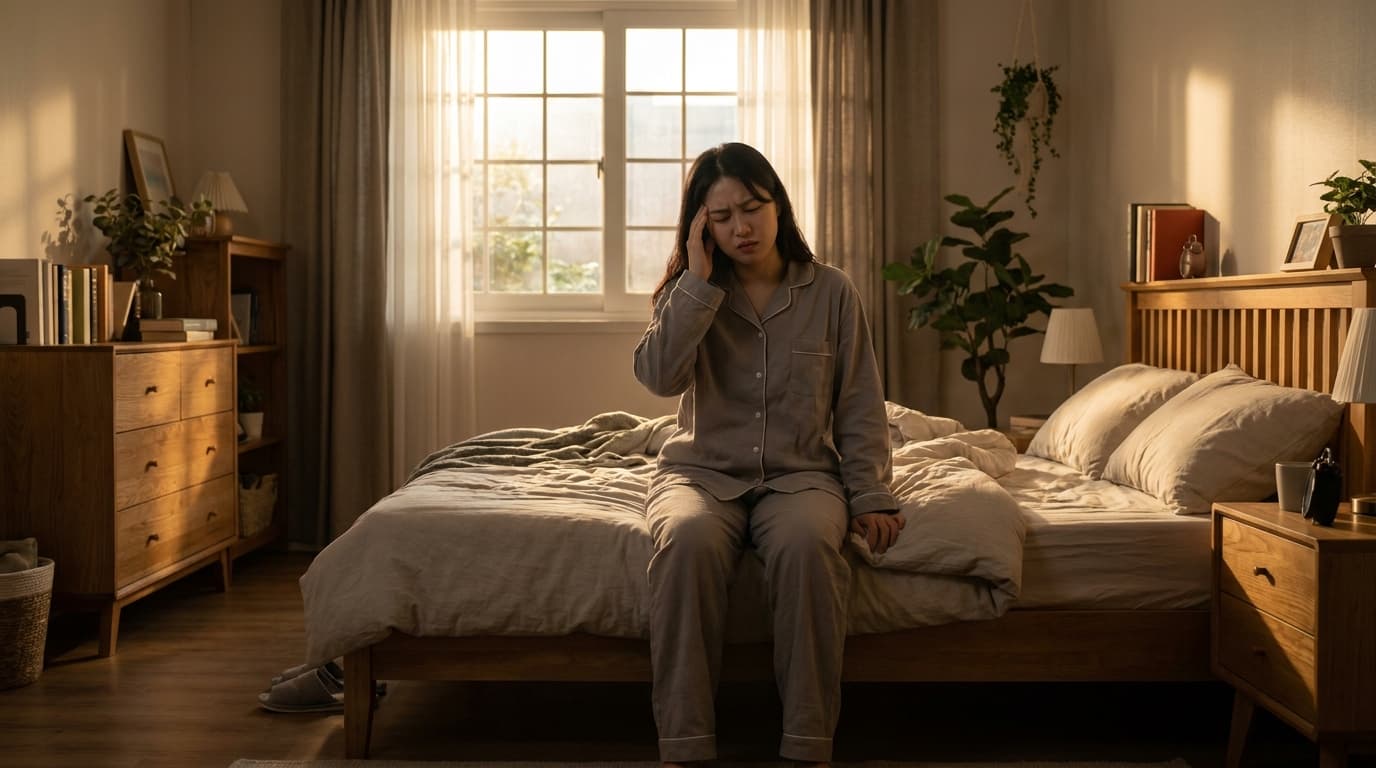
Throbbing one sided headache and nausea Your brain is failing to rest
Hello, this is Dalimchae Korean Medicine Clinic. # Throbbing one sided headache and nausea? Your brain is failing to rest. Have you ever experienced a throbbing pain pressing mercilessly on one side of your head, accompanied by nausea as if the world is spinning? Many people dismiss these symptoms as mere fatigue or stress and push through with painkillers. However, if the symptoms repeat and worsen, they may be an important warning sign from our body. In particular, migraine sufferers who complain of "a throbbing one-sided headache and nausea" often experience significant difficulties in daily life. Many feel frustrated when medical tests show no specific abnormalities. These symptoms can actually be an emergency message sent by the brain and autonomic nervous system. 💡 **[Key Answer]** The 3 most common causes of "throbbing one-sided headache and nausea": ① Autonomic nervous system imbalance caused by excessive stress ② Reduced cerebral blood flow and inflammatory response ③ Damjeok (stagnation/phlegm) due to impaired stomach function Dalimchae Korean Medicine Clinic helps calm the overheated brain and restore physical comfort through autonomic stabilization treatment. ## Why do we experience throbbing one-sided headaches and nausea? Emergency signal of the autonomic nervous system Migraines are often characterized by pulsating pain on one side of the head, accompanied by nausea, vomiting, and hypersensitivity to light or sound. Autonomic nervous system imbalance is pointed out as one of the fundamental causes of these symptoms. The autonomic nervous system in our body consists of the sympathetic and parasympathetic nervous systems, which automatically regulate essential life functions such as heartbeat, digestion, and blood pressure regulation. Modern people's stress, irregular lifestyles, and overwork excessively hyperactivate the sympathetic nervous system, disrupting autonomic balance. When the sympathetic nervous system is excessively activated, the constriction and relaxation of cerebral blood vessels become irregular, leading to an imbalance in brain neurotransmitters and triggering headaches. In addition, this imbalance affects the digestive system, accompanied by symptoms such as nausea or vomiting. Simply suppressing pain is not enough to solve the root problem, making treatment to restore autonomic balance crucial. ## How does Korean medicine treatment help with migraines and autonomic imbalance? In Korean medicine, headaches are divided into external and internal causes. Migraines, in particular, are considered to arise from pathogenic factors such as wind, fire, phlegm (dam), and blood stasis (eohyeol), as well as disharmony in organ functions such as the liver, spleen, and kidney. Here, 'dam' refers to unnecessary waste accumulated in the body, caused by impaired stomach function, which can be a source of headaches and nausea. Recent studies suggest that Korean medicine treatment has a positive effect on improving migraines and autonomic imbalance. In a 2024 study published in the international journal 'American Translational Research' by Shi and colleagues, 60 migraine patients were divided into an acupuncture-only group and an acupuncture combined with ear acupressure (auricular acupuncture) group to analyze their effects on autonomic function, heart rate variability (HRV), and mental state. The results showed that the combined group experienced a significant improvement in autonomic dysfunction compared to the acupuncture-only group (\(\chi^2\)=8.161, p=0.043), with heart rate variability (SDNN) increasing from 90.11±13.22 ms to 106.33±17.22 ms, confirming enhanced autonomic activity and restored balance (p=0.018). The researchers concluded that combining acupuncture and ear acupressure is effective in improving autonomic imbalance and alleviating clinical symptoms in migraine patients. These data support that Dalimchae Korean Medicine Clinic's autonomic stabilization treatment plays an important role in restoring the balance between the brain and body. Furthermore, in a 2025 case study reported in Health Chosun by Professor Kwon Seung-won and Lee Han-gyul's research team at Kyung Hee University Korean Medicine Hospital, a 73-year-old refractory migraine patient unresponsive to medication for 3 years was prescribed herbal formulas containing cinnamon ('Gejigayonggolmoryotang' and 'Sihogayonggolmoryotang'). As a result, the Numerical Rating Scale (NRS, 0-10) for pain decreased from 10 to 5 on day 42, and to 2 by day 146, showing near-complete resolution. The researchers concluded that cinnamon played a crucial role in alleviating migraine symptoms by inhibiting inflammatory cytokine production. This demonstrates that herbal medicine treatment can help regulate brain inflammatory responses and resolve the root cause of pain. The Songdo branch of Dalimchae Korean Medicine Clinic focuses on Korean medicine treatments that restore autonomic balance and eliminate toxins and inflammation within the body. Beyond merely reducing pain, we address the root cause—autonomic imbalance—to help the brain calm down and function comfortably. ## Dalimchae Korean Medicine Clinic's Autonomic Stabilization Treatment: Giving Your Brain a Rest Dalimchae Korean Medicine Clinic's autonomic stabilization treatment is based on the therapeutic philosophy: "When autonomic balance collapses, the brain cannot rest." A brain running nonstop like an overheated engine creates a vicious cycle of fatigue and pain. We break this vicious cycle and create an environment where the brain can recover on its own. Such treatments focus on lowering excessive heat in the nervous system and creating an environment where the brain can comfortably rest and recover. In Korean medicine, this is called 'Suseunghwagang' (water rises, fire descends), aiming for the ideal bodily state where the head is cool and the lower abdomen is warm. Pharmacopuncture therapy injects refined herbal extracts into acupuncture points around the spine and abdomen to stabilize the autonomic nervous system, improve cerebral blood flow, and promote nerve regeneration. In addition, customized herbal medicine prescriptions tailored to the patient's constitution and symptoms help regulate overall bodily functions and restore autonomic balance. This comprehensive Korean medicine treatment can be a hopeful alternative for many people searching for an "Incheon headache Korean medicine clinic." It is effective in simultaneously improving various symptoms caused by autonomic issues, such as headaches, nausea, dizziness, insomnia, and anxiety. ## Throbbing one-sided headache and nausea? Autonomic Migraine Self-Checklist If 3 or more of the following apply to you, your migraine is likely caused by autonomic imbalance. Consider complex Korean medicine treatment at the Songdo branch of Dalimchae Korean Medicine Clinic. If 5 or more apply, immediate clinic visit is recommended. * Back of the neck and shoulders are frequently stiff and tense. * Headaches worsen and nausea occurs when stressed. * Difficulty falling asleep at night or waking up frequently during sleep. * Frequent heart palpitations and feelings of anxiety. * Frequent indigestion, feeling stuffy or bloated. * Cold hands and feet, or excessive sweating in specific areas. * Frequent dizziness or vertigo. * Feeling unrefreshed and heavy-bodied upon waking. ## FAQ Section: Questions about Migraines and Korean Medicine Treatment **Q. One-sided throbbing headache and nausea—why does this happen?** A. It is primarily a migraine symptom caused by a combination of excessive stress, cerebral blood flow issues, and Damjeok from impaired stomach function, leading to autonomic imbalance. Hyperactivation of the sympathetic nervous system is cited as a major cause. **Q. Can migraines be cured with Korean medicine treatment?** A. Yes, Korean medicine treatment not only relieves migraine pain but also helps prevent recurrence by improving the root cause—autonomic imbalance. Through acupuncture, pharmacopuncture, and herbal medicine, we expect improvements in cerebral blood flow circulation, inflammation control, and nerve stabilization. **Q. I have both headaches and nausea—can they be treated together?** A. Yes, headaches and nausea often appear simultaneously due to autonomic imbalance and impaired stomach function. At Dalimchae Korean Medicine Clinic, we do not view these symptoms separately, but interpret them as interconnected bodily signals to provide integrated treatment. **Q. Where is the headache treatment Korean medicine clinic in Incheon?** A. The Songdo branch of Dalimchae Korean Medicine Clinic specializes in treating headaches, particularly migraines caused by autonomic imbalance. Through customized Korean medicine treatments tailored to your symptoms and constitution, we help resolve root causes and restore a healthy daily life. Throbbing one-sided headaches and nausea are not problems to be endured. You no longer have to ignore the body's signals sent over a long time. Approached in the right direction, the body responds faster than you think. Bring the symptoms you are experiencing just as they are. The Songdo branch of Dalimchae Korean Medicine Clinic will find the cause together. Where life blooms. Herbal medicine is Dalimchae Korean Medicine Clinic. Check symptoms similar to your own through the AI consultation on the Dalimchae Korean Medicine Clinic website! This article is health information compiled together by Dalimchae medical staff based on questions frequently received in the consultation room. Medical Supervision | Neurology & Autonomic System Treatment Standard, Songdo Branch of Dalimchae Korean Medicine Clinic, Korean Medicine Doctor Yang Yu-chan (Headache Column)