
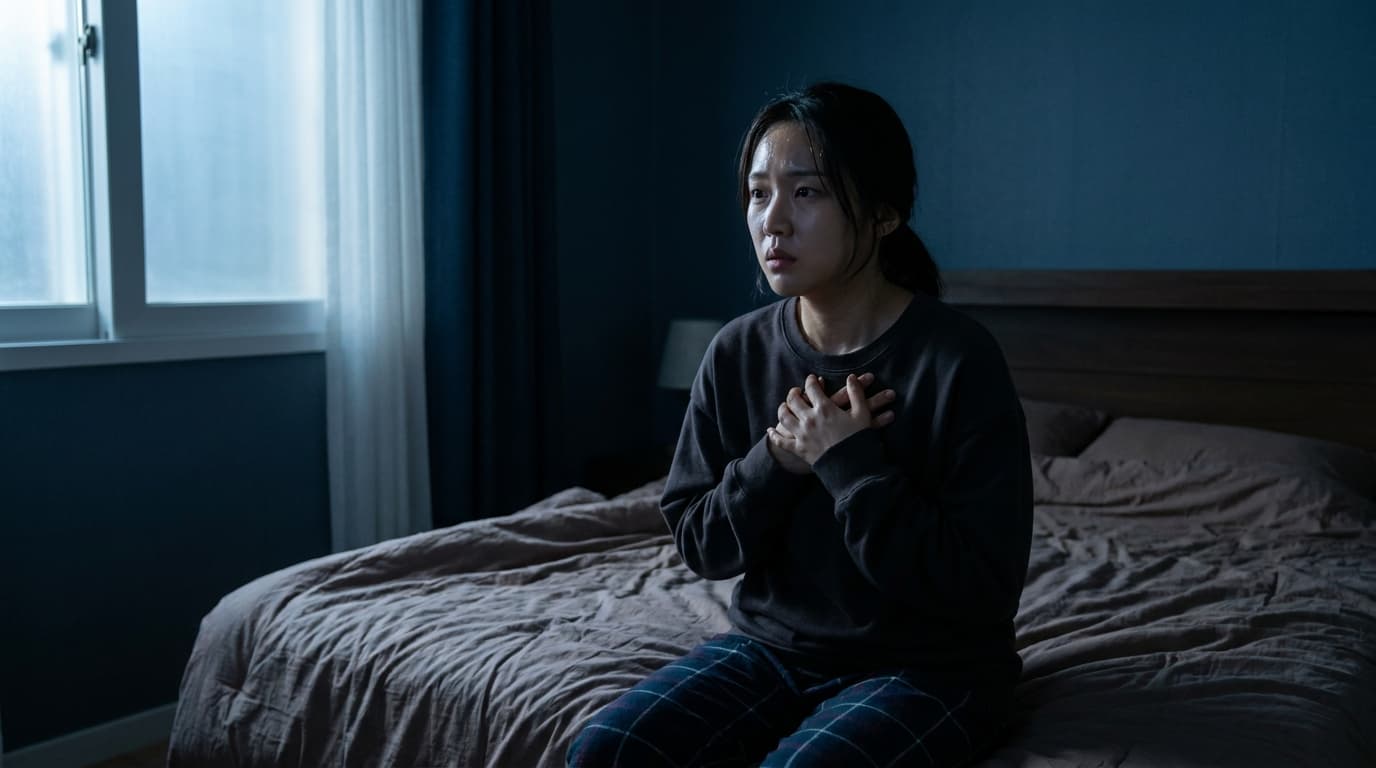
Suddenly My Heart Pounds and Sweats Could It Be Early Symptoms of Anxiety Disorder or Panic Disorder
Hello. This is Dalimchae Korean Medicine Clinic. Suddenly your heart pounds frantically, cold sweat flows for no reason, and your whole body feels weak. Have you ever experienced this? When many people experience these symptoms, they are gripped by anxiety wondering "Could I have a serious illness?" or "Could this be panic disorder?" Even when visiting the hospital, many feel even more frustrated receiving a diagnosis that there is nothing particularly wrong. Today at Dalimchae Korean Medicine Clinic, we will explain in detail the real causes of such sudden heart pounding and cold sweat symptoms, along with Korean medicine solutions. Core Answer: The 3 most common causes of "suddenly my heart pounds and sweats": 1. Autonomic imbalance / 2. Anxiety disorder and panic disorder / 3. Excessive stress accumulation Dalimchae Korean Medicine Clinic takes a therapeutic approach to restore autonomic balance, stop excessive warning reactions, and boost the body's recovery capacity. What is the real cause of this discomfort of sudden heart pounding and cold sweat? Sudden heart pounding (palpitations) and cold sweat are likely strong warning signals sent by our body's autonomic nervous system. The autonomic nervous system, as the name suggests, regulates essential functions for maintaining life such as heartbeat, blood pressure, digestion, body temperature regulation, and sweat secretion regardless of our will. This autonomic system is largely divided into the sympathetic nervous system, which tensions and awakens the body, and the parasympathetic nervous system, which relaxes and recovers the body. If stress, overwork, irregular lifestyle habits, and lack of sleep continue, the sympathetic nervous system becomes excessively hyperactive while parasympathetic function decreases, leading to imbalance in the autonomic nervous system. In this state of autonomic imbalance, our body reacts abnormally as if in an emergency situation, making the heart beat rapidly and secreting sweat excessively for body temperature regulation. This is one of the main causes of sudden heart pounding and cold sweat without any reason. If there is no heart problem but it keeps pounding, should we suspect autonomic nerves? Yes, that is correct. If palpitations recur even when no organic abnormalities are found in cardiology tests, the possibility of autonomic imbalance is very high. Because the autonomic nervous system directly regulates heartbeat, when its balance breaks, the heartbeat can feel abnormally fast or irregular. Particularly, sensitive individuals vulnerable to stress can easily hyperactivate their sympathetic nerves even to routine stimuli. Consequently, autonomic imbalance is frequently confirmed through Heart Rate Variability (HRV) tests. This is utilized as an objective indicator measuring the activity level of the autonomic nervous system through subtle changes in heartbeat. In Korean medicine, such autonomic imbalance is viewed as a state where the harmony of body and mind is broken, and approached integratively. How do anxiety and stress manifest as bodily symptoms? Brain, gut, and autonomic nervous system form a complexly connected single network. Chronic stress and anxiety overload the brain, breaking the balance of the autonomic nervous system, which in turn affects the whole body including the heart, digestive organs, and sweat glands, manifesting as various physical symptoms. Particularly, heart pounding, cold sweat, shortness of breath, and dizziness frequently accompany early symptoms of anxiety disorder or panic disorder. If these physical symptoms repeat, a vicious cycle can ensue where anxiety such as "Will I collapse again?" or "Is something major going to happen?" further worsens the symptoms. How does Korean medicine help treat autonomic imbalance? In Korean medicine, autonomic imbalance is not viewed merely as a nervous system problem, but comprehensively handles functional abnormalities of internal organs, imbalance of Qi and blood circulation, and mental issues. It focuses on lowering heart heat and creating an environment where the brain can rest—cooling the overheated engine and normalizing the circuit breaker switch. According to a study published in MDPI Journal of Clinical Medicine in 2024, it was reported that Korean medicine treatment for patients with anxiety disorder showed clinically meaningful results. This study retrospectively analyzed medical records of 67 patients who received Korean medicine treatments such as acupuncture, herbal medicine, Chuna therapy, and aromatherapy for at least 4 weeks. As a result, patients' anxiety indices (STAI X-1, STAI X-2, BAI) decreased statistically significantly (p\<0.0001), and depression indices (BDI-II) also improved significantly (p\<0.0001). Particularly, quality of life (QoL) indices (EQ-5D, EQ-VAS) also significantly improved (p\<0.0001). The researchers concluded that these results suggest Korean medicine treatment can be effective in improving clinical symptoms and quality of life for patients with anxiety disorder. Additionally, in a study published in Human Psychopharmacology: Clinical and Experimental journal in 2004, the effect of herbal medicine (Ondamtang-gamibang) was evaluated using a randomized placebo-controlled trial on 40 medical students under stress. The herbal medicine group consisting of 20 people showed statistically significant decreases in systolic blood pressure, norepinephrine, and cortisol blood concentrations compared to the placebo group. Furthermore, they showed positive changes in psychological variables such as anxiety, depression, stress, and emotional states. The researchers stated that these results suggest herbal medicine can help stabilize the sympathetic nervous system, lower blood pressure and catecholamine levels, and alleviate stress-related psychophysiological symptoms. Based on these data, Dalimchae Korean Medicine Clinic Incheon branch helps individuals suffering from sudden heart pounding and cold sweat to restore autonomic balance fundamentally and regain stability by themselves, rather than simply suppressing symptoms. Principles of Autonomic Stability Treatment at Dalimchae Korean Medicine Clinic Dalimchae Korean Medicine Clinic applies 'autonomic stability' treatment to help our body escape excessive warning reactions and take true rest by restoring autonomic balance. When autonomic balance breaks, the brain cannot rest and remains in a constant state of tension. This state is like an overheated engine running endlessly, eventually inducing various physical symptoms such as heart pounding, cold sweat, insomnia, dizziness, and headaches. We focus on strengthening weakened organ functions, circulating stagnant Qi and blood, lowering nerve system heat, and creating an environment where the brain can rest. In Korean medicine, this is called 'Suseunghwagang', focusing on correcting autonomic balance through treatment that circulates cool upward and warm downward. Among those visiting Incheon Autonomic Korean Medicine Clinic, many complain of headaches, dizziness, and insomnia along with heart pounding. Since these symptoms are also connected problems of autonomic imbalance, they must be treated from an integrated perspective. Does My Autonomic System Stand Okay? Symptom Checklist Check how many of the following items apply to you: - Heart frequently pounds and chest feels stuffy without special reason. - Sudden cold sweat even when not hot, or heavy sweating at night. - Easily anxious and jittery, frequent annoyance for no reason. - Difficulty falling asleep even when lying down to sleep, or waking up frequently and feeling tired. - Chronic indigestion, gastrointestinal discomfort, frequent constipation or diarrhea. - Unexplained headaches or dizziness frequently appearing. - Cold or numb hands and feet, feeling lethargic. - Symptoms tend to significantly worsen after excessive stress. Judgment Criteria: - 3 or more items apply: Suspected autonomic imbalance stage. It is recommended to check causes and establish management plans through detailed consultation at Dalimchae Korean Medicine Clinic Incheon branch. - 5 or more items apply: State requiring active autonomic control treatment. We recommend seeking help from Incheon heart pounding Korean medicine clinic before symptoms become chronic. FAQ: Questions When Suddenly Heart Pounds and Cold Sweats Occur Q. Is sudden heart pounding panic disorder? A. Sudden heart pounding and cold sweat are representative symptoms of panic disorder. However, they can also appear due to other causes such as autonomic imbalance or hyperthyroidism, so accurate diagnosis is important. It is recommended to consult medical staff to identify causes rather than self-diagnose. Q. How long should autonomic imbalance be treated? A. Treatment duration for autonomic imbalance varies depending on individual symptom severity, chronic duration, constitution, and lifestyle habits. Generally, sufficient improvement can be expected in about 3 to 6 months with consistent treatment and lifestyle management. Q. Can Korean medicine also treat heart pounding and cold sweat? A. Yes, Korean medicine treats the root cause of autonomic imbalance inducing heart pounding and cold sweat. Through acupuncture, herbal medicine, moxibustion, cupping, etc., it regulates autonomic balance and increases resistance to stress. Particularly, Incheon Autonomic Korean Medicine Clinic provides customized treatments tailored to individual constitution and symptoms. Q. Is it okay to take western medicine and herbal medicine together? A. In most cases, herbal medicine and western medicine are prescribed to minimize interactions, but if you are taking western medicine, you must inform the Korean medicine doctor. The doctor will determine safe and effective herbal prescriptions considering the drugs you are taking. Sudden heart pounding and cold sweat are not problems solved by enduring. You no longer need to turn away from the bodily signals sent for a long time. If you approach in the right direction, the body responds faster than you think. Bring your current symptoms as they are. We will find the causes together at Dalimchae Korean Medicine Clinic Incheon branch. A place where life blooms. Herbal medicine is Dalimchae Korean Medicine Clinic. Check your similar symptoms first through Dalimchae Korean Medicine Clinic homepage AI consultation! This article is health information compiled by Dalimchae medical staff based on questions frequently received in the clinic room. Medical Supervision | Brain & Autonomic Practice Standard Dalimchae Korean Medicine Clinic Incheon Branch Korean Medicine Doctor Min Ji-hong (Autonomic Dysfunction Column) #autonomicdysfunction #heartpounding #coldsweat #panicsymptom #incheonautonomicclinic #anxietydisorder #stress #incheonclinic Brain & Autonomic - Autonomic