
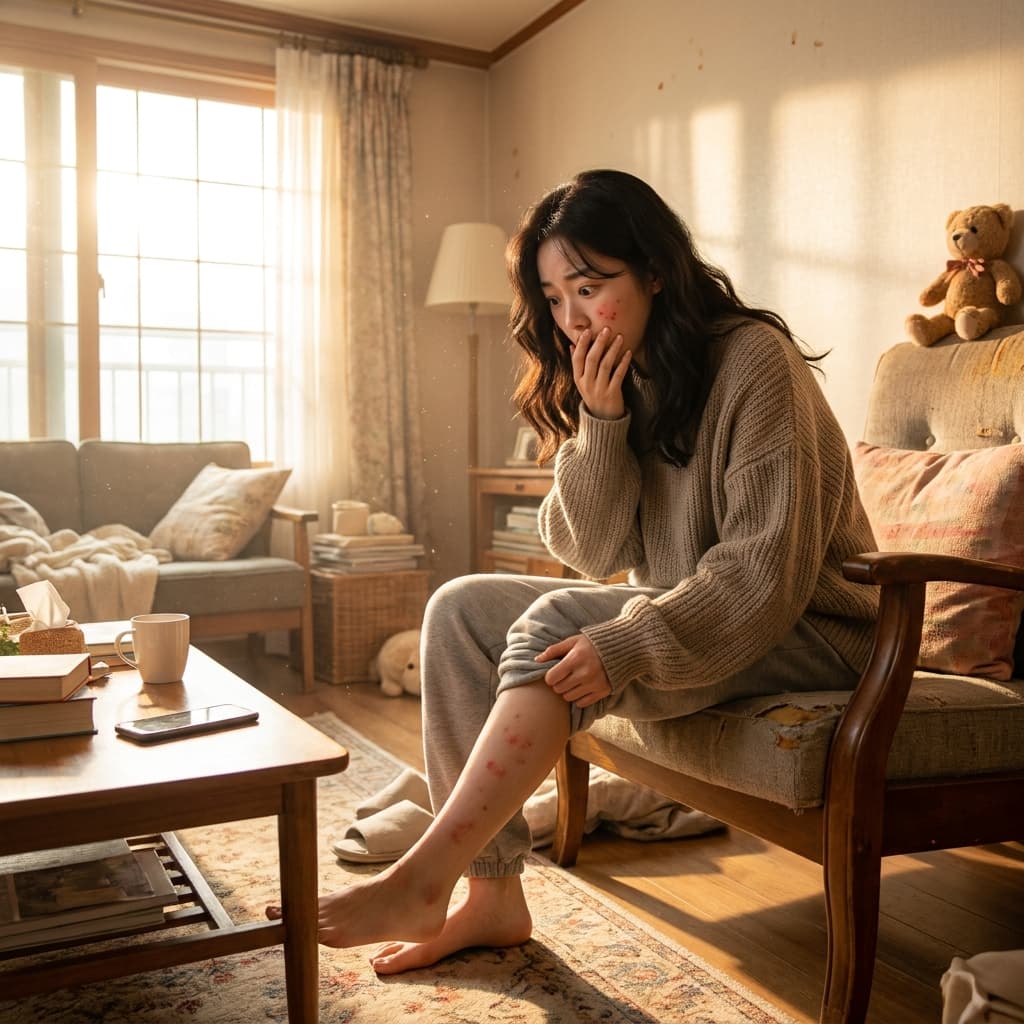
Sudden Red Spots on Legs Could It Be This
Hello. This is Dalimchae Oriental Medicine Clinic. # Sudden Red Spots on Your Legs, Could It Be Because of 'This'? If you suddenly see red spots appearing on your legs one day, you might be surprised. It's easy to dismiss them lightly, thinking 'Did I bump into something?' or 'Is it because I'm tired?', but if they don't disappear over time or start to spread, it might not be a simple problem. In particular, 'purpura,' which occurs when blood vessels weaken or the immune system malfunctions, has complex causes beyond the symptoms visible on the surface of the skin. 💡 **[Key Answer]** The 3 most common causes of **sudden red spots on the legs**: ① Vascular damage and inflammation / ② Immune system disruption / ③ Gut health imbalance Dalimchae Oriental Medicine Clinic restores the fundamental immune system through **gut detoxification** to return you to healthy skin without recurrence. ## Red spots on the legs, why is it purpura? Purpura is a general term for diseases in which small blood vessels under the skin burst and blood leaks out, appearing as red or purple spots. They look like bruises at first glance, but a characteristic feature is that the color does not disappear when pressed. These **red spots on the legs** caused by purpura are not just a problem with the skin surface, but can be a sign of an abnormality in our body's blood vessels and immune system. In particular, allergic purpura (Henoch-Schönlein purpura) commonly occurs in children, but it also appears in adults. Initially, it mainly appears on the feet and legs, but if it worsens, it can spread to the entire body, such as the abdomen, buttocks, and arms. ## Purpura, an abnormal signal of the 'gut-skin axis,' not a simple skin problem In oriental medicine, the root cause of skin problems has long been understood in connection with the inside of the body, especially the digestive system. Recently, a similar concept, the 'Gut-Skin Axis' theory, has been attracting attention in Western medicine as well. This theory explains that gut health and the skin are closely connected, and that an imbalance in gut microbiota can be a major cause of skin diseases. Gut microbes are deeply involved in regulating our body's immune system and inflammatory responses. If the balance of gut microbes is broken due to stress, poor eating habits, environmental toxins, etc., the permeability of the intestinal wall increases (leaky gut syndrome), and toxins and inflammatory substances inside the gut can spread throughout the body through the blood. When this inflammatory reaction affects skin blood vessels, skin purpura symptoms can appear. In particular, **Songdo Purpura Oriental Medicine Clinic** identifies the root cause of purpura from this gut-skin axis perspective and approaches treatment accordingly. ## Herbal medicine treatment contributes to alleviating symptoms and kidney complications of purpura Purpura requires caution, especially because of the possibility of kidney involvement. In the case of allergic purpura, kidney complications can occur in about 1-5% of pediatric patients and 8-11% of adult patients, which carries the risk of leading to chronic renal failure. For this reason, for purpura, it is important to not only alleviate symptoms but also prevent recurrence and complications through fundamental immune system recovery. A systematic literature review study published in 『Complementary Therapies in Medicine』 in 2015 analyzed the effectiveness of combined herbal medicine treatment in 1,112 pediatric Henoch-Schönlein purpura (HSP) patients (including 15 clinical trials, ages 1-16). The study results showed that herbal medicine adjuvant treatment significantly reduced the risk of kidney damage (6 trials, RR 0.47, 95% CI 0.31-0.72, I(2)=0%). In addition, it was found to shorten the purpura disappearance period by an average of 3.60 days (5 trials, mean difference -3.60 days, 95% CI -4.21 to -2.99, I(2)=23%). Besides this, it also had a positive effect on alleviating joint pain and abdominal pain. The researchers concluded that these results suggest that herbal medicine can be effective in reducing the risk of kidney damage and shortening the purpura disappearance period in pediatric HSP patients. In addition, a study analyzing clinical papers in Korea published in the 『Journal of Korean Medicine Ophthalmology & Otolaryngology & Dermatology』 in 2019 analyzed 20 clinical papers related to the oriental medicine treatment of purpura and vasculitis published in Korea from 2000 to 2019. According to this study, herbal medicine was the most frequently used treatment, and more than half of the patients were under 19 years old, with upper respiratory tract infection, stress, and fatigue mentioned as major triggers. In particular, there were many cases where oriental medicine treatment was chosen because there was no response to Western treatment or because of side effects. Dalimchae Oriental Medicine Clinic Songdo Branch provides optimal herbal medicine treatment for individuals by comprehensively considering the symptoms of purpura as well as the patient's age, constitution, and triggering factors based on these research data. ## Dalimchae Oriental Medicine Clinic's 'Gut Detoxification' Treatment Principle Dalimchae Oriental Medicine Clinic sees the root cause of purpura, which appears as **red spots on the legs**, as a disruption of the immune system due to an imbalance in gut health, and makes 'gut detoxification' treatment the core. Our body's intestinal wall goes beyond a simple digestive organ and is an important immune organ where more than 70% of immune cells are distributed. If the intestinal wall is damaged and harmful substances penetrate, they spread throughout the body through the blood, causing chronic inflammation, which can affect skin blood vessels and worsen purpura. Gut detoxification treatment aims to improve the imbalanced gut microbial environment and normalize gut function by discharging toxins accumulated in the intestinal wall. Through this, the immune system stabilizes, and as excessive inflammatory reactions subside, skin purpura symptoms gradually improve. Herbal medicine can act as a prebiotic that can regulate gut microbial composition and have a positive effect on intestinal permeability and immune response. This gut detoxification treatment has a deep connection not only with purpura but also with various skin diseases such as atopy and hives. **Songdo Skin Oriental Medicine Clinic** resolves the root cause of skin diseases from this gut-skin axis perspective to create a healthy body without recurrence. ## Purpura Symptom Checklist If 3 or more of the following items apply to you, suspect purpura and consult a specialist. * □ Red or purple spots appeared on the legs or feet, but they do not disappear when pressed. * □ The spots were small at first, but they appear to get larger or spread. * □ Symptoms appeared after recently suffering from a cold or being under severe stress. * □ Other symptoms such as joint pain, abdominal pain, and indigestion appear together. * □ There are symptoms suspected of kidney involvement, such as red urine or protein in the urine (foamy urine, etc.). * □ The skin lesions are accompanied by an itchy or stinging sensation. * □ Similar symptoms appeared and then disappeared repeatedly before. **If 3 or more apply:** Suspect purpura (especially allergic purpura) and recommend reviewing Dalimchae Oriental Medicine Clinic's precise diagnosis and combined oriental medicine treatment. **If 5 or more apply:** We recommend that you visit the clinic immediately for professional examination and consultation. Adult purpura carries a high risk of kidney complications, so early diagnosis and treatment are important. ## FAQ Knowledge Snippet **Q. Red spots suddenly on my legs, do they sometimes go away on their own?** A. Some mild purpura, especially pediatric allergic purpura, may heal naturally after about 2 weeks. However, the possibility of recurrence is high, and adult purpura has a low natural healing rate and a high risk of kidney complications, so if symptoms persist or worsen, active treatment must be considered. **Q. What symptoms can appear if purpura worsens?** A. If purpura worsens, gastrointestinal symptoms such as abdominal pain, joint pain, and vomiting may appear, along with kidney involvement symptoms such as hematuria and proteinuria. Although rare, it can lead to central nervous system involvement or severe bleeding complications, so early response is important. **Q. How long does purpura oriental medicine treatment take?** A. The duration of purpura treatment varies depending on the patient's age, severity of symptoms, degree of chronicity, and presence of accompanying symptoms. In children, improvement often occurs within 1-2 months, but in adults, it is more likely to progress chronically, requiring more consistent treatment. Dalimchae Oriental Medicine Clinic helps with rapid recovery and prevention of recurrence through personalized treatment for each individual. **Q. Are there any foods or lifestyle habits to avoid during purpura treatment?** A. Purpura can be caused by weakened immunity, poor eating habits, stress, and overwork. During treatment, it is important to reduce intake of instant foods, processed foods, and excessive sugar that can cause immune disruption, and maintain lifestyle habits that increase immunity by managing stress with sufficient sleep and appropriate exercise. **Sudden red spots on your legs** can be an important signal your body is sending. You no longer have to ignore the signals your body has been sending for a long time. If you approach it in the right direction, your body reacts faster than you think. Bring the symptoms you are experiencing just as they are. Dalimchae Oriental Medicine Clinic Songdo Branch will find the cause together and restore your body's balance to gift you a healthy daily life. Where life blooms. For herbal medicine, it's Dalimchae Oriental Medicine Clinic. Check for symptoms similar to mine through the AI consultation on the Dalimchae Oriental Medicine Clinic website first! This article is health information compiled by the Dalimchae medical staff based on questions frequently received in the consultation room. Medical Supervision | Dermatological Treatment Standard, Dalimchae Oriental Medicine Clinic Songdo Branch, Oriental Doctor Oh Hyun-min (Purpura Column) #Purpura #RedSpots #SkinBleeding #GutDetox #SongdoPurpuraOrientalMedicineClinic #ImmuneImbalance #OrientalMedicineTreatment #SkinImmunity #SongdoOrientalMedicineClinic