
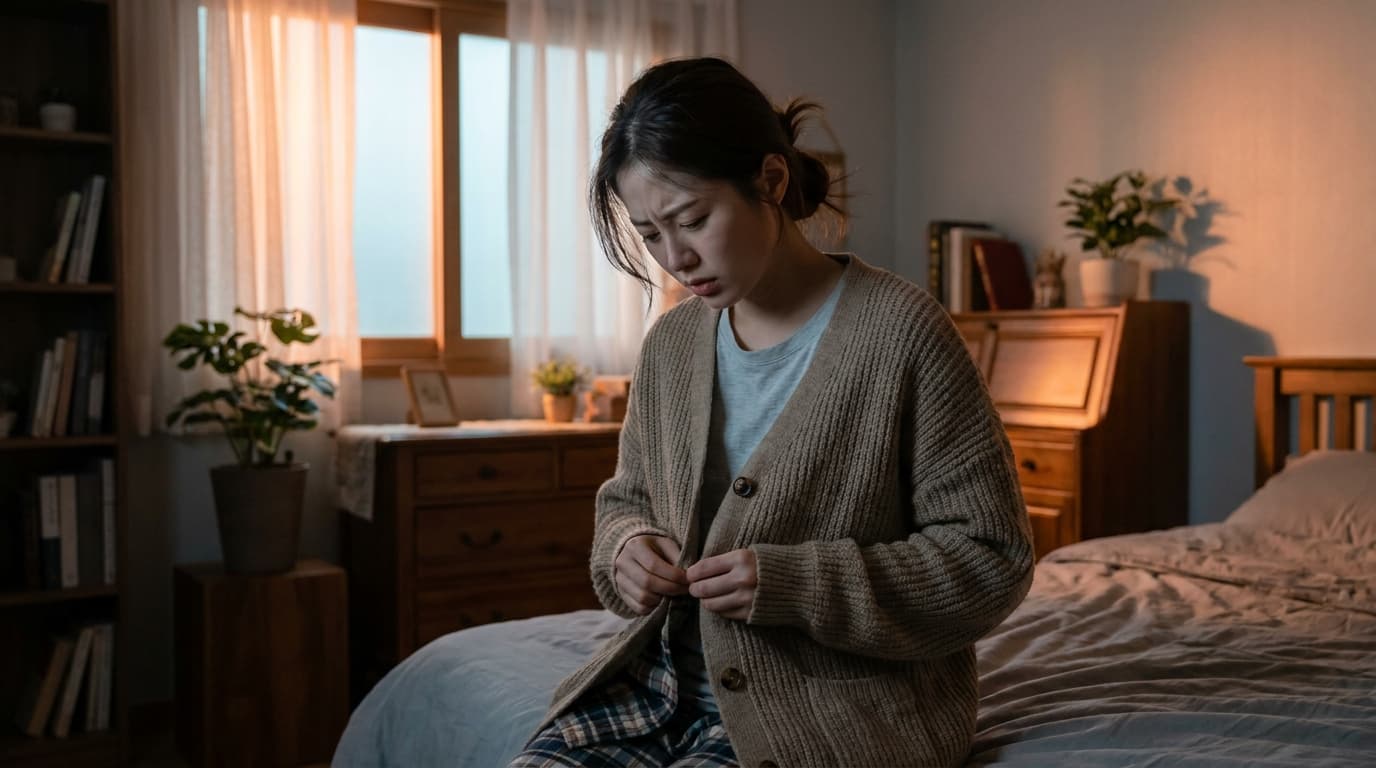
Sudden Hand Stiffness Early Signs of Parkinsons Disease
Sudden Hand Stiffness: Early Signs of Parkinson's Disease? Restoring Brain Nerve Function Hello, this is Dalimchae Korean Medicine Clinic. # Sudden Hand Stiffness: Early Signs of Parkinson's Disease? Restoring Brain Nerve Function Have you ever experienced a sudden moment where your familiar hand movements felt burdensome? Many people feel frustrated and anxious when delicate buttoning or precise use of chopsticks doesn't go as planned. While you might worry if this is simply the beginning of aging, such subtle changes could be an important warning signal from our brain. In particular, behind the complaint of "sudden hand stiffness," the shadow of a neurodegenerative disease like Parkinson's disease cannot be ruled out. 💡 **[Core Answer]** Top 3 causes of **sudden hand stiffness**: ① Early Parkinson's disease due to dopaminergic neuronal damage / ② Subtle decline in brain nerve function / ③ Autonomic imbalance due to excessive stress. Dalimchae Korean Medicine Clinic focuses on treatments that restore brain nerve function and regain overall body balance through **autonomic stabilization**. ## Q. Sudden Hand Stiffness: Is It Just Aging? Many people dismiss hand dullness or subtle tremors as natural phenomena of aging. However, if buttoning buttons, writing, or using chopsticks—tasks that were easy in youth—begin to become difficult, we must suspect subtle changes in the central nervous system beyond simple aging. This is especially true if these symptoms start in one hand or progressively worsen. This could be an early sign of Parkinson's disease, which appears as dopamine neurons in the brain gradually degenerate. When brain nerve function degradation begins, our body sends warning signals in various ways, and hand dullness is one of the symptoms that most greatly impacts daily life. ## Q. What Are the Early Signs of Parkinson's Disease? Parkinson's disease is mainly known for motor symptoms, but as the disease progresses, non-motor symptoms also appear, significantly degrading the patient's quality of life. In the early stages, subtle changes such as the following may appear: * **Tremor (Resting Tremor):** Usually appearing at rest, tremors can start in the fingers or wrists and gradually spread to the entire arm. * **Rigidity:** Muscles in the limbs or torso become stiff and movements become unnatural. * **Bradykinesia (Slowness of Movement):** Movements become slow, stride shortens, and daily activities like buttoning or washing take a long time. Micrographia (smaller handwriting) may also appear. * **Postural Instability:** Difficulty maintaining balance or unstable gait. * **Non-Motor Symptoms:** Constipation, olfactory loss, sleep disorders (REM sleep behavior disorder), depression, masked facies, fatigue, and pain can sometimes appear even before motor symptoms. These symptoms are deeply connected with dopamine neuron damage in the brain as well as abnormalities in areas regulating the autonomic nervous system, such as the brainstem. In particular, as dopamine neuron damage progresses, the balance of the nervous system breaks down, easily leading to autonomic nervous system dysfunction. ## Q. Does Oriental Medicine Help with Parkinson's Disease? While modern medicine controls symptoms through dopamine replacement therapy and other methods, it is difficult to stop the disease progression itself or manage it effectively post-treatment. Moreover, limitations such as drug side effects or reduced efficacy from long-term use exist. For these reasons, interest in oriental medical treatments among Parkinson's patients is increasing. In fact, studies show that Parkinson's patients in Korea and other countries are actively utilizing complementary oriental medical treatments. According to a study published in the 2025 *Healthcare (Basel)* journal, the utilization rate of oriental medical services among Korean Parkinson's patients gradually increased from 2010 to 2019, with 10.6% of all Parkinson's patients receiving oriental treatment at least once in 2019. This is an increase of over 65% in 10 years, with acupuncture taking the highest proportion. This shows that many patients actively utilize oriental medicine treatments to control symptoms and improve quality of life. In Oriental medicine, Parkinson's disease is viewed under the category of "Jin-jeon (Tremor)," focusing on resolving systemic imbalances such as sleep disorders, depression, and indigestion, as well as motor symptoms like tremors and rigidity. In particular, treatments restoring the balance of the autonomic nervous system closely connected with brain nerve function play an important role in enhancing the quality of life for Parkinson's patients. ## Q. How Does Dalimchae's Autonomic Stabilization Treatment Approach Parkinson's Disease? At Dalimchae Korean Medicine Clinic Incheon Branch, motor symptoms like hand dullness, tremors, and rigidity, and non-motor symptoms like anxiety, depression, and sleep disorders caused by Parkinson's disease are not viewed as isolated problems. The fundamental cause is sought in brain nerve function decline and autonomic nervous system imbalance, approached through **autonomic stabilization** treatment. The autonomic nervous system is a crucial regulatory system controlling all unconscious functions in our body. It deeply participates in heart rate, digestion, respiration, body temperature regulation, as well as brain function and motor ability. If the balance of this autonomic system breaks down, the brain cannot rest like an overheated engine, causing nervous system overload and various problems. Particularly for Parkinson's patients, non-motor symptoms caused by autonomic dysfunction (constipation, sleep disorders, orthostatic hypotension, etc.) commonly accompany and can appear even before motor symptoms. Dalimchae Korean Medicine Clinic lowers excessive heat in the nervous system and creates an environment where the brain can recover and rest on its own. In oriental medicine, this is called **Suseung Hwakang (Water Up, Fire Down)**, emphasizing maintaining a cool head and warm lower abdomen to achieve balanced whole-body circulation. This approach contributes not only to improving motor symptoms like tremors and rigidity, but also to alleviating non-motor symptoms that impair quality of life in Parkinson's patients, such as depression, anxiety, and sleep disorders. According to a 2024 *Acupuncture Treatment of Autonomic Nervous Dysfunction in Patients with Parkinson's Disease: A Narrative Review*, acupuncture is reported to reduce autonomic dysfunction and improve quality of life in Parkinson's patients with few side effects. Researchers explained that acupuncture can suppress apoptosis of dopaminergic neurons, regulate protein degradation systems, improve immune function, and exert antioxidant effects to reduce motor and non-motor symptoms. Furthermore, in a study published in *Frontiers in Neurology* in 2022 involving 60 idiopathic Parkinson's disease patients treated for 6 weeks with the herbal medicine 'Ukgansan' and acupuncture, statistically significant improvements were confirmed in mobility (p\<0.007), activities of daily living (p\<0.042), and the PDQ-39 summary index (p\<0.048) among patients with accompanying anxiety symptoms. Researchers concluded that combining Ukgansan and acupuncture has significant potential to improve the quality of life of Parkinson's patients with anxiety. Dalimchae's autonomic stabilization treatment focuses on multi-faceted improvement of various Parkinson's symptoms by restoring the balance of the autonomic nervous system closely linked to brain nerve function. ## Check Your Body's Signals for Parkinson's Disease If 3 or more of the following items apply to you, checking your brain nerve function and autonomic nervous system may be necessary. We recommend consulting with the medical staff at Dalimchae Korean Medicine Clinic Incheon Branch to find the exact cause. **[Parkinson's Disease Suspected Symptom Checklist]** * Handwriting has gradually become smaller since some time ago. * Delicate hand movements such as buttoning clothes or using chopsticks are difficult. * Tremors appear in hands, feet, or chin while sitting or resting. * One arm or leg feels stiff and movements are sluggish. * Dragging feet or shortened stride often occurs when walking. * Facial expression changes have decreased, and people around say you look expressionless. * Depression or anxiety frequently visits without special reason. * Sleeping habits have become severe, such as shouting or moving the body while sleeping. * Chronic constipation has worsened and is not well-controlled by medication. * Dizziness or lightheadedness occurs when standing up from a seat. * **3 or More Applicable:** Suspicion of early Parkinson's disease or brain nerve function decline → Consider oriental complex treatment through precise consultation at Dalimchae Korean Medicine Clinic Incheon Branch. * **5 or More Applicable:** Immediate visit recommended for professional diagnosis and treatment. Prompt examination is required if accompanied by headaches or dizziness. ## Q&A: Answering Your Questions About Parkinson's Disease **Q. How fast does Parkinson's disease progress?** A. While there are individual differences, it is generally a slowly progressive neurodegenerative disease. In the early stages, motor symptoms are mild or non-motor symptoms predominate, but over time, motor symptoms become more distinct and impair daily life. **Q. Can Parkinson's disease be treated with oriental medicine?** A. Oriental medicine treatments can help delay the progression of Parkinson's disease, alleviate motor symptoms such as tremors, rigidity, and bradykinesia, as well as non-motor symptoms (depression, anxiety, sleep disorders, constipation, etc.), and improve quality of life. In particular, treatments balancing the autonomic nervous system contribute to systemic recovery. **Q. Can Parkinson's disease heal naturally?** A. Parkinson's disease is not a condition that is managed and healed naturally. However, through early diagnosis and active treatment, symptoms can be effectively managed, the progression speed of the disease slowed, and quality of life improved. Treatments focused on improving brain function are especially important. **Q. Can oriental treatment be combined with western medical treatment?** A. Yes, many Parkinson's patients gain synergistic effects by combining western medication and oriental treatment. Oriental treatment can help reduce side effects of western drugs and assist in alleviating non-motor symptoms not improved by medication, playing a complementary role. **Q. Is there anything I can do in daily life to prevent Parkinson's disease?** A. Regular aerobic exercise, a balanced diet, and sufficient sleep are important for protecting brain health. Additionally, stress management is essential to maintaining autonomic balance, so finding peace of mind through meditation or hobbies is helpful. Sudden hand stiffness. Do not overlook these small signals sent by your body. You no longer need to ignore the signals your body has been sending for a long time. When approached in the right direction, the body responds faster than you think. Bring the symptoms you are experiencing as they are. Dalimchae Korean Medicine Clinic will find the cause together with you. Where life blooms. Herbal medicine is Dalimchae Korean Medicine Clinic. Check your similar symptoms first through the Dalimchae Korean Medicine Clinic homepage AI consultation! This information was compiled together by Dalimchae medical staff based on frequently asked questions in the treatment room. Medical Supervision | Yang Yu-chan, Korean Medicine Doctor at Dalimchae Korean Medicine Clinic Incheon Branch (Brain & Autonomic Division, Parkinson's Column)