
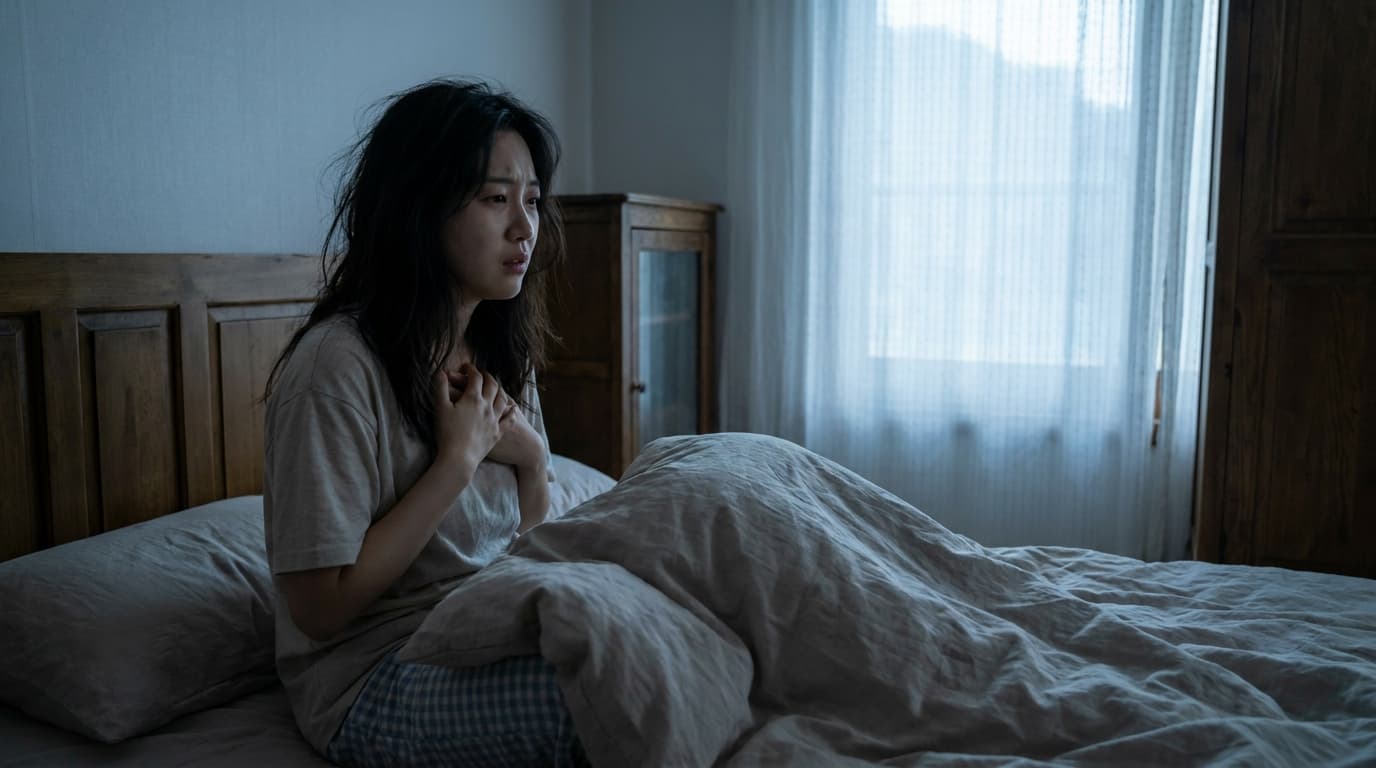
Sudden Choking and Fearful Anxiety Panic Disorder Becomes Harder If You Endure It
Hello, this is Dalimchae Korean Medicine Clinic. # Sudden Choking and Fearful Anxiety? Panic Disorder Becomes Harder If You Endure It. Have you ever experienced a sudden, unannounced racing heart, shortness of breath, and an intense fear of dying? Even after going to the hospital and getting examined, getting only 'normal' results for heart, lungs, and brain was probably frustrating and confusing. When this situation repeats, 'anticipatory anxiety' often sets in, making daily life difficult out of the thought "What if another attack comes?". Enduring it alone gradually exhausts body and mind into a deep quagmire. These symptoms are not mere stress but a strong warning from our body's autonomic nervous system—panic disorder. 💡 **[Key Answer]** Top 3 most common causes of the symptom "Sudden choking and anxious feeling like dying": ① Excessive hyperactivation of the autonomic nervous system / ② Imbalance in brain function / ③ Mental and physical weakness caused by chronic stress. Dalimchae Korean Medicine Clinic resolves the root cause of panic disorder by restoring the balance of the hypersensitive brain and body through **autonomic stability**. ### Panic attacks: Why do we feel terror of dying even when tests are 'normal'? Panic disorder occurs due to abnormal activation of the brain's fear circuit and the autonomic nervous system. When our body detects a threat, it activates the sympathetic nervous system to increase heart rate, accelerate breathing, and tense muscles, preparing a 'fight or flight' response. While essential for survival, in panic disorder patients, the brain malfunctions this warning system even in situations without actual threats. Even when blood tests or ECGs show no abnormality, the suffering felt by the patient is real, and this can be confirmed as autonomic imbalance through Heart Rate Variability (HRV) exams. Such autonomic ataxia has a high correlation with panic disorder. ### Panic disorder: Which is more effective, herbal medicine or Western medication? Panic disorder treatment largely consists of Western medication (antidepressants, anti-anxiety drugs) and oriental medicine treatment. Western medication is effective for immediate symptom relief, but may entail side effects like drowsiness, dependency, and withdrawal symptoms. In contrast, oriental medicine treatment focuses on relieving symptoms while restoring the body's fundamental balance to prevent recurrence. Importantly, rather than judging one treatment as absolutely superior, selecting appropriate treatments or combining them considering the patient's symptoms, condition, and constitution is vital. Particularly when acute attacks are severe, combining Western and oriental treatments—controlling symptoms with Western meds while addressing constitutional causes with oriental treatment—can be effective in lowering recurrence rates. In fact, a study supported by the Korea Institute of Oriental Medicine (KIOM) announced that oriental medical treatment positively affects clinical symptoms and quality of life in anxiety disorder patients. According to a retrospective study published in PubMed on July 5, 2024, administering oriental medical treatment (acupuncture, psychotherapy, Chuna therapy, aromatherapy, herbal medicine, etc.) for 4 weeks or longer to 67 anxiety disorder patients showed that anxiety (STAI X-1, STAI X-2, BAI), depression (BDI-II), and anger (AKI-K-I, AKI-K-O) scores all significantly decreased (all p\<0.0001 or p\<0.05), and quality of life (EQ-5D, EQ-VAS) also significantly improved (p\<0.0001). This suggests that oriental medical treatment can contribute to improving mental health and overall quality of life in anxiety disorder patients. Additionally, as reported in Yakup.com in June 2012, a paper published in the journal of 'The Society of Korean Medicine for Shanghan Geumgwe' by Bucheon Korean Medicine Clinic Director Noh Young-beom introduced a case analysis and review of action mechanisms of prescribing 'Yeonggyegamjopang' treating two panic disorder patients confirmed in Western medicine over 3 months. In particular, a female patient who suffered from panic disorder for 4 years had a BAI (Beck Anxiety Inventory) score of 36 indicating 'extreme anxiety state', but showed improvement in heart palpitations and anxiety symptoms within half a month of treatment, and complete disappearance of attack symptoms after two months. The researchers explained that this result contributed to the herbal medicine 'Yeonggyegamjopang' improving autonomic regulation abnormalities, pointing out that symptoms specified in Shanghanlun resemble modern panic disorder symptoms. These studies serve as the reason why Dalimchae Korean Medicine Clinic focuses on oriental treatments that balance the autonomic nervous system and stabilize brain functions. ### How is Dalimchae Korean Medicine Clinic's autonomic stability treatment conducted? Dalimchae Korean Medicine Clinic Songdo branch views panic disorder as a problem caused by 'autonomic imbalance', focusing on treatments that help the brain stabilize on its own. Our body's autonomic nervous system consists of sympathetic and parasympathetic nerves; when this balance breaks due to stress or overwork, the brain becomes excessively excited and sensitive, leading to panic attacks and similar symptoms. Lowering the heat of the nervous system and creating an environment where the brain can rest—termed 'Suseunghagang' in Korean medicine—is the core of Dalimchae Korean Medicine Clinic's autonomic stability treatment. * **Herbal Medicine Treatment:** Customized herbal medicine is prescribed according to individual constitution and symptom patterns to stabilize the heart and gallbladder (Simdam) and promote qi and blood circulation. This calms the hypersensitive brain, restores autonomic balance, and helps govern anxiety and terror. Many seeking Songdo panic disorder Korean medicine clinic experience symptom improvement through herbal medicine treatment. * **Acupuncture & Pharmacopuncture:** Acupuncture is administered to meridians effective in autonomic regulation to stabilize brain function, and pharmacopuncture refined from specific medicinal herb extracts alleviates inflammation and promotes qi and blood circulation. * **Lifestyle Management & Counseling:** Alongside lifestyle corrections like regular sleep, proper exercise, and caffeine restriction, psychological counseling helping understand panic disorder and manage anxiety supports recovery for patients at our Songdo clinic. Dalimchae Korean Medicine Clinic strives beyond merely suppressing symptoms to restore autonomic balance, empowering the body to recover health on its own. This is true treatment that lowers recurrence rates and helps patients maintain a healthy life. ### Could I also have panic disorder? Self-checklist Check how many of the following questions apply to you: * Sudden extreme terror or discomfort arises unexpectedly. * Heart pounds severely and chest feels stuffy or hurts. * Difficulty breathing or a choking sensation occurs. * Sweating, body shaking, or trembling symptoms occur. * Dizziness, vertigo, or fainting sensation occurs. * Fear of dying or losing control washes over. * Numbness or tingling sensory abnormalities in hands and feet. * Digestive symptoms such as nausea and abdominal discomfort accompany. * Fear of another panic attack causes avoidance of specific places or situations. **[Criteria]** * **3 or more items apply:** May be early panic disorder symptoms due to autonomic imbalance. We recommend considering Songdo autonomic nervous Korean medicine clinic consultation. * **5 or more items apply:** Panic disorder is likely considerably progressed. Immediate visit to receive expert diagnosis and active treatment is important. ### FAQ: Frequently Asked Questions about Panic Disorder **Q. Can panic disorder be treated with herbal medicine?** A. Yes, panic disorder is diagnosed with various causes such as Simdamheogeop in Korean medicine, and can be treated by stabilizing the autonomic nervous system and improving brain function through tailored herbal medicine prescriptions matching individual constitution and symptoms. Many clinical cases report symptom improvement and post-treatment management solely with herbal medicine. **Q. How should one cope during a panic attack?** A. When a panic attack strikes, sit or lean in a safe place, practice slow abdominal breathing, and try to focus on the current situation. Tell yourself "This symptom will pass" and escape situations triggering excessive thoughts or anxiety. **Q. Can panic disorder medical treatment and oriental treatment be combined?** A. Yes, especially when acute attacks are severe, combining treatments—quickly controlling symptoms with Western medicine while improving root causes like autonomic imbalance with oriental treatment—is very effective in lowering recurrence rates and recovery. **Q. How long does panic disorder treatment take?** A. The treatment duration varies depending on symptom severity, duration of illness, presence of comorbid conditions, and individual response. Generally, consistent treatment and management over several months to years are required, and with steady treatment, it is a condition that can sufficiently improve. Panic disorder is not a problem solved by enduring it. You no longer need to ignore the body signals sent for a long time. Approaching in the right direction makes the body react faster than you think. Bring the symptoms you are experiencing as they are. Dalimchae Korean Medicine Clinic will find the cause together. Where life blooms. Herbal medicine is Dalimchae Korean Medicine Clinic. Check symptoms similar to yours first through the AI consultation on the Dalimchae Korean Medicine Clinic website! Medical Supervision | Department of Brain & Autonomic Nervous System Treatment Standards, Songdo Branch of Dalimchae Korean Medicine Clinic, Korean Medicine Doctor Oh Hyunmin (Panic Disorder Column)