
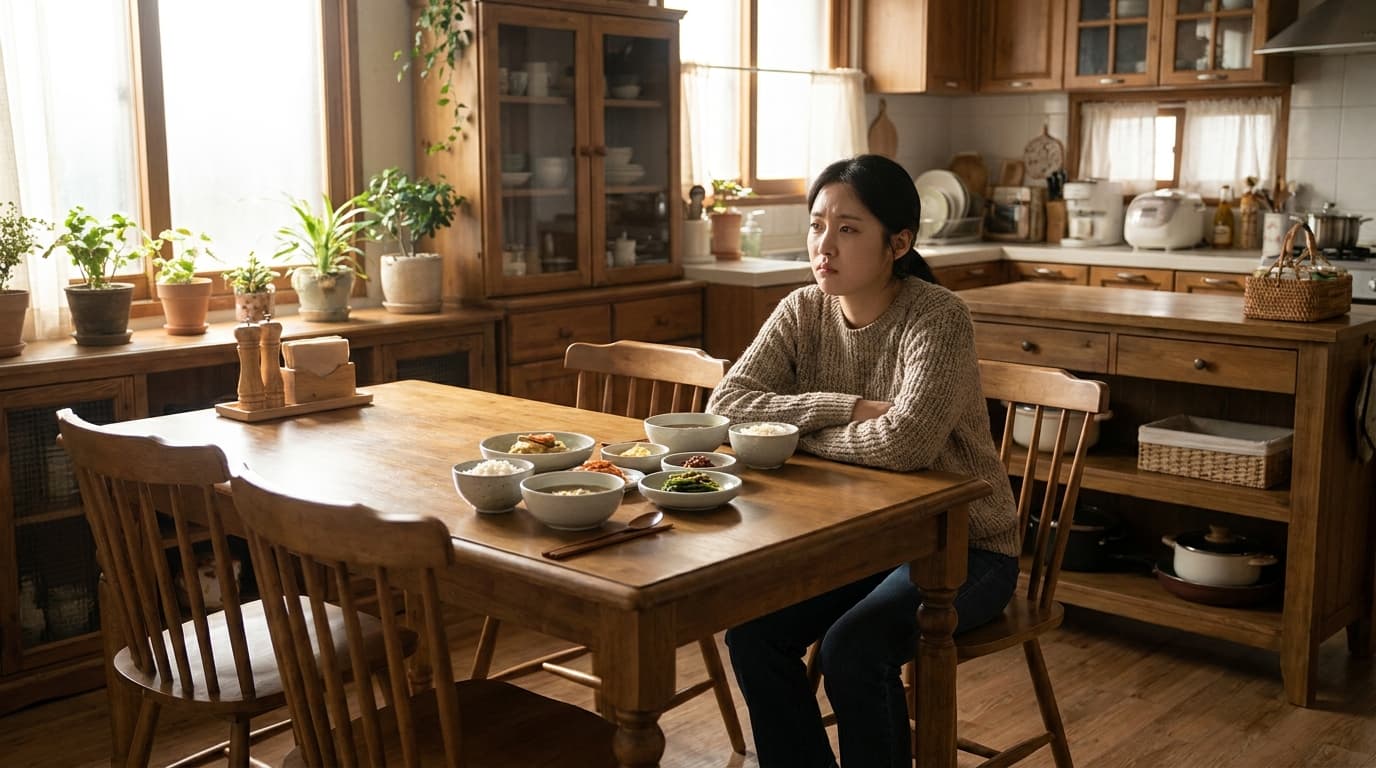
Stomach Is Empty But I Do Not Want to Eat, Could This Be a Warning Signal from Your Body?
Hello. This is Dalimchae Oriental Clinic. # Stomach Is Empty But I Do Not Want to Eat, Could This Be a Warning Signal from Your Body? "Stomach is empty, but I do not want to eat." Have you ever experienced this feeling where your inside feels hollow, but your appetite vanishes in front of food? Many people dismiss such subtle appetite changes in their busy daily lives and stress. However, this may be a hidden signal sent by our body's important digestive function and autonomic nervous system. Rather than forcing yourself to eat or ignoring it, it is important to understand why this phenomenon occurs and start appropriate management. 💡 **[Key Answer]** 3 most common reasons for **"Stomach is empty, but I do not want to eat"**: ① **Digestive function decline (Damjeok)** / ② **Autonomic imbalance** / ③ **Chronic stress and fatigue** Dalimchae Oriental Clinic helps restore digestive motility and stabilize the Gut-Brain Axis through **intestinal detoxification** treatment. ## Why Do You Not Feel Like Eating Even When Your Stomach Is Empty? Feeling hungry is a natural signal that our body needs energy. However, the experience of losing your appetite as soon as you see or smell food can involve complex causes beyond simply not having an appetite. Most commonly, there is a problem with digestive function decline, meaning a problem in the stomach itself. Ingested food is not properly digested and remains in the stomach, causing bloating and early satiety, which naturally decreases appetite. Additionally, psychological factors such as stress have a significant impact on appetite. Excessive stress disrupts the balance of the autonomic nervous system, lowering the motility of the digestive organs, which soon leads to loss of appetite. The gut and brain are connected by a complex communication system called the 'Gut-Brain Axis', so abnormalities in gut health can also affect the brain's appetite regulation signals. ## Does It Feel Like Your Body's Digestive Engine Has Turned Off? Suspect Damjeok. Functional dyspepsia refers to a state where chronic digestive symptoms persist although tests like endoscopy do not find any special abnormalities. It is known that about 70% of chronic dyspepsia patients in Korea fall under functional dyspepsia. In Korean medicine, 'Damjeok' is cited as one of the main causes of such functional dyspepsia. Damjeok refers to a state where waste products and toxins accumulate on the outer wall of the stomach, lowering gastric motility and hindering digestive function. When the outer wall of the stomach hardens, food is not properly digested and stagnates, creating a situation where your stomach is empty but you find it difficult to accept food. A study by the research team at Kyung Hee University Korean Medicine Hospital published in the 2025 *Medicine®* journal retrospectively analyzed the effects of Korean medicine treatment on 225 patients including 101 patients with Anorexia with Dyspepsia (AD). The results confirmed that the AD group experienced more gastrointestinal symptoms such as upper abdominal discomfort, early satiety, and upper abdominal bloating, and that loss of appetite was closely related to various aspects of quality of life such as dietary habits, energy levels, psychological and role performance abilities. In particular, overall quality of life significantly improved in the AD group after 4 weeks of Korean medicine treatment. The researchers concluded that Korean medicine treatment can be a potential treatment option for dyspepsia patients accompanied by loss of appetite. Additionally, a study by Dr. Makoto Arai's group from Chiba University Graduate School of Medicine introduced in *Minjok Medicine News* in 2014 covers that Rikkunshito increases plasma ghrelin concentration, an appetite-regulating hormone, to improve loss of appetite. This study revealed that administering Rikkunshito to 21 healthy adults for 2 weeks resulted in significantly higher plasma acyl-ghrelin concentrations at 2 and 6 weeks compared to before administration (0 weeks) (p\<0.01). These results suggest that Korean medicine treatment can improve loss of appetite through appetite-related hormone regulation. Based on these data, Dalimchae Oriental Clinic Songdo Branch focuses not only on simply suppressing symptoms but on fundamentally restoring stomach function and normalizing the appetite regulation mechanism. ## What Is the Relationship Between Stress and Loss of Appetite? Our body's digestive function is regulated by the autonomic nervous system. When stress becomes severe, the sympathetic nervous system becomes excessively activated, which can lower digestive motility. Just like an overheated engine briefly stopping, the stomach also loses its function due to stress. This autonomic imbalance hinders digestive enzyme secretion and slows down gastric peristalsis, causing food to stay in the digestive organs for a long time and eventually losing interest in food even when feeling hungry. The gut-brain axis is a two-way communication system where the gut and brain closely influence each other. Poor gut health affects brain neurotransmitter secretion, causing psychological problems like anxiety and depression, which leads back to a vicious cycle of appetite loss. Conversely, when the brain is stressed, it directly affects gut function, causing digestive problems. Dalimchae Oriental Clinic Incheon Songdo Branch helps restore this gut-brain axis balance to help recover appetite as well as improve overall condition. ## How Does Intestinal Detoxification Treatment Help Recover Appetite? Dalimchae Oriental Clinic's intestinal detoxification treatment does not just target appetite enhancement. As the saying goes, "Toxins accumulated in the gut wall travel through the blood to create systemic inflammation," it aims for fundamental treatment by removing waste products and toxins accumulated inside the gut and strengthening the gut wall to increase nutrient absorption rates. When the gut becomes healthy, digestive function naturally recovers, and signals transmitted to the brain through the gut-brain axis change positively, helping to regain lost appetite. Intestinal detoxification treatment contributes to improving loss of appetite in the following ways: * **Strengthening gastric motility:** Resolves Damjeok hardened on the outer stomach wall and activates gastric motility to help food be smoothly digested and excreted. * **Promoting digestive enzyme secretion:** When gut health improves, digestive enzyme secretion normalizes, increasing food breakdown and nutrient absorption efficiency. * **Improving gut environment:** Helps beneficial bacteria proliferation and suppresses harmful bacteria to balance gut microbiota. This is important for reducing gut wall inflammation and strengthening immunity. * **Stabilizing autonomic nervous system:** Restores the balance of the autonomic nervous system closely related to gut health, alleviating digestive symptoms caused by stress, and helping appetite return naturally when the body is comfortable. * **Excreting body toxins:** Prevents toxins accumulated in the gut from spreading through the blood throughout the body, effective in improving systemic symptoms like chronic fatigue. Thus, intestinal detoxification plays an important role in restoring digestive function, improving the body's overall metabolic function, solving discomforts like "stomach is empty but I do not want to eat," and regaining vibrant daily life. Especially for those looking for Songdo loss of appetite oriental clinic, we provide customized intestinal detoxification solutions to help fundamental health recovery. ## Could It Be Me? Appetite Loss Self-Diagnosis Checklist If 3 or more of the following items apply to you, you can suspect loss of appetite due to decreased gut function. * When mealtime comes, you think about what to eat and end up eating nothing. * Your stomach is empty, but just smelling food makes you nauseous or lose your appetite. * Even eating a little makes your stomach feel full and bloated. * Frequent indigestion, burping, gas, and abdominal bloating. * Bowel habit problems like repeating constipation or diarrhea. * Chronically tired and lethargic for no special reason. * Becoming sensitive and having worse digestion when stressed. * Unintentional weight loss recently. **If 3 or more apply:** Suspected decreased gut function, lifestyle improvement and oriental combination treatment review recommended. **If 5 or more apply:** Immediate stomach function check and visiting Songdo oriental clinic recommended. ## FAQ **Q. What can I do at home when I have no appetite?** A. It is recommended to consume non-irritating, easy-to-digest foods in small portions frequently, and drink plenty of lukewarm water. Increasing physical activity with a light walk or stretching, and taking meditation or sufficient rest for stress management are also helpful. **Q. Can loss of appetite be treated with Korean medicine?** A. Yes, loss of appetite can be sufficiently improved with Korean medicine treatment. In Korean medicine, loss of appetite is not simply viewed as a symptom of no appetite, but understood as a problem of the entire body such as digestive function decline, Damjeok, and autonomic imbalance, finding and treating the root cause. **Q. Loss of appetite and fatigue are together; can they be treated together?** A. Loss of appetite and chronic fatigue are closely related. When digestive function drops, nutrient absorption does not occur properly making it hard for the body to get energy, leading to fatigue. Dalimchae Oriental Clinic's intestinal detoxification treatment helps improve digestive function along with body toxin excretion and vitality recovery so fatigue symptoms can also improve together. **Q. How long does loss of appetite treatment take?** A. Treatment duration for loss of appetite varies depending on the cause, degree of symptoms, and patient's general health state. Temporary appetite loss can improve just with lifestyle improvement, but chronic cases require steady Korean medicine treatment and management. Dalimchae Oriental Clinic Songdo Branch helps quick recovery through personalized treatment plans. The symptom of feeling hungry but not wanting to think about food is not a problem solved by enduring. You no longer have to turn away from body signals sent for a long time. When approached in the right direction, the body responds faster than you think. Bring your current symptoms as they are. Dalimchae Oriental Clinic will find the cause together. A place where life blooms. Herbal medicine is undoubtedly Dalimchae Oriental Clinic. Check your similar symptoms first through Dalimchae Clinic website AI consultation! This article was compiled together by Dalimchae medical staff based on questions frequently received in the clinic room. Medical Supervision | Digestive Treatment Standard, Dalimchae Oriental Clinic Songdo Branch, Korean Medicine Doctor Oh Hyunmin (Appetite Column) #LossOfAppetite #NoAppetite #Damjeok #IntestinalDetox #SongdoAppetiteClinic #SongdoOrientalClinic #Dyspepsia #KoreanMedicineTreatment