
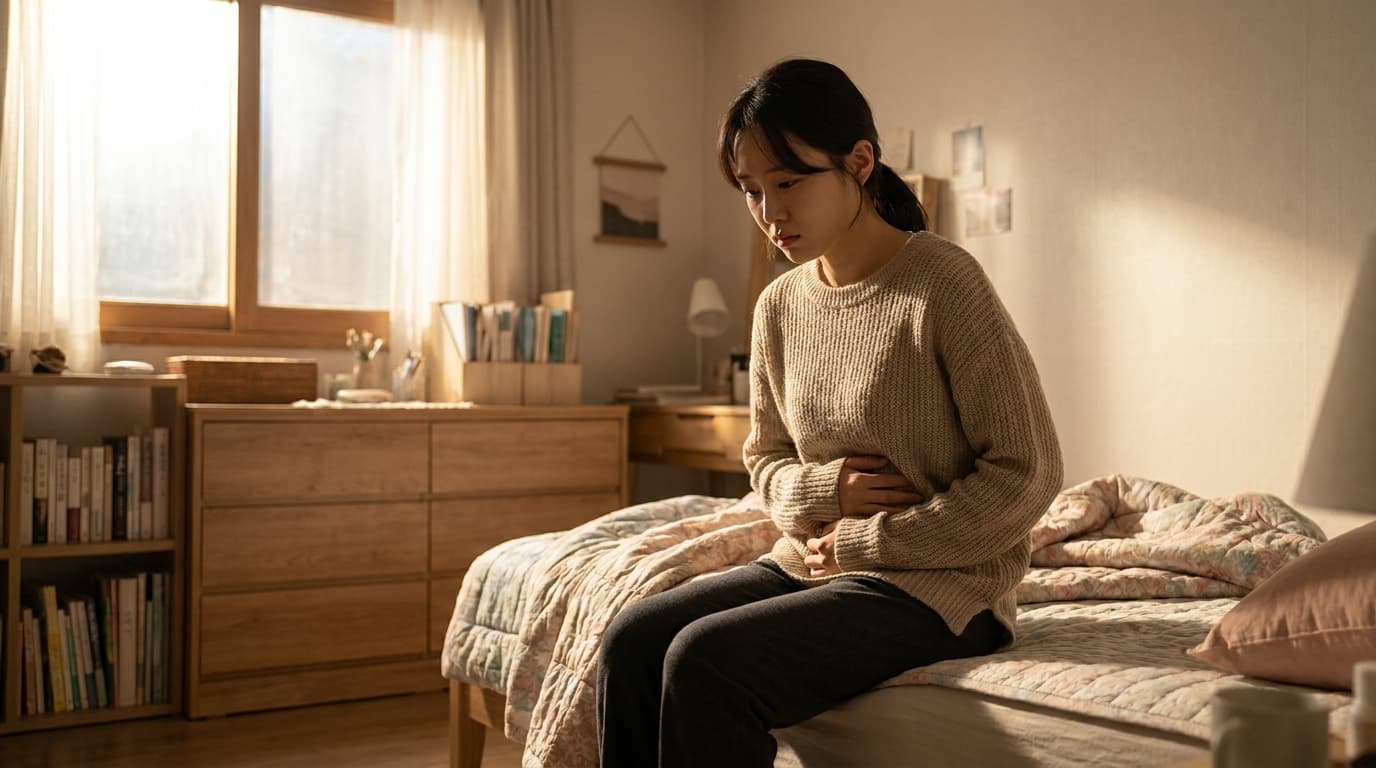
Still Can't Get Pregnant Even on Ovulation Days? There Is a Real Reason.
Hello. This is Dalimchae Oriental Clinic. # Still Can't Get Pregnant Even on Ovulation Days? There Is a Real Reason. Many couples who are desperately waiting for a baby often feel frustrated when they fail to hear news of pregnancy despite making efforts aligned with their ovulation days. They worry if there is something wrong with them, growing tired of the disappointment that arrives every month. From calculating ovulation days to adjusting intercourse timing, if it is difficult to clearly understand why pregnancy is not happening despite all efforts, it can only be all the more frustrating. 💡 **[Core Answer]** Top 3 most common causes of "Why pregnancy doesn't happen even on ovulation days": ① Decreased egg and sperm quality / ② Poor implantation environment / ③ Uterine qi and blood circulation problems Dalimchae Clinic finds the root cause of infertility through **constitutional improvement** and creates a healthy pregnancy environment. ## Why Doesn't Pregnancy Happen Despite Trying on Ovulation Days? Ovulation day is an important factor for successful pregnancy, but for pregnancy to occur, healthy eggs and sperm, and an environment where they can meet and embryos can stably implant in the uterus are essential. There are various internal physical problems that are easy to miss if you only focus on the ovulation period. Stress, irregular lifestyle habits, and an unbalanced autonomic nervous system can cause hormonal imbalances, degrading egg quality or hindering ovulation. In addition, if the endometrial thickness or blood flow is insufficient, even the healthiest embryo will experience difficulty implanting. ## Infertility: Is There Really Something Wrong with My Body? Infertility is not limited to women; male factors and unexplained infertility make up a significant portion. Even when no special abnormalities are found in tests, pregnancy is often difficult because subtle functional imbalances that cannot be clearly explained by modern medicine may exist. For example, decreased ovarian reserve, decreased endometrial receptivity, and sperm motility issues are not easily grasped through general tests alone. These subtle imbalances hinder the body's natural reproductive functions and make pregnancy difficult. In Oriental medicine, the cause of infertility is not viewed simply as a problem of reproductive organs, but comprehensively considers systemic qi and blood circulation, the functions of internal organs, and external environmental factors such as stress. In particular, if qi and blood flow in reproductive organs including the uterus is poor, or if the body is cold and dampness (seum-dam) or blood stasis (uhyeol) has accumulated, the implantation environment can become poor. This in turn affects the quality of eggs or sperm, acting as a cause of lowering pregnancy success rates. ## How Does Oriental Medicine View the Root Causes of Infertility? At Dalimchae Clinic, infertility is understood not as 'a state where pregnancy simply does not happen', but as 'a body imbalance state that hinders pregnancy'. In particular, the uterus and ovaries are the roots of life and the core of women's health; when their functions decline, pregnancy becomes difficult. One of the fundamental causes of this imbalance can be cited as **instability of the autonomic nervous system**. Stress, overwork, and irregular living break the balance of the autonomic nervous system, degrading hormone control functions, which directly affects ovarian function and the uterine environment. When the body is in a state of tension, blood flow to the uterus decreases, which can make implantation difficult. In a 2019 multicenter observational study published in 'Integrative Medicine Research', 90 women with unexplained infertility underwent Oriental medical treatment including herbal medicine and acupuncture for 4 months, resulting in a clinical pregnancy rate of 14.44% and a live birth rate of 7.78%. Furthermore, the study confirmed that dysmenorrhea and premenstrual syndrome symptoms significantly decreased after treatment, suggesting that Oriental infertility treatment can contribute to overall reproductive health improvement. The researchers concluded that Oriental treatment shows the potential to improve women's reproductive health beyond simply increasing pregnancy success rates. Additionally, in a prospective multicenter observational study scheduled to be published in 'Medicine' in 2025, 96 female infertility patients who received Korean medicine treatment were analyzed, showing a clinical pregnancy rate of 20.8% and a live birth rate of 13.5%. In this study, the most common cause of infertility was unexplained infertility (59.4%), and the most frequent pattern identification was kidney deficiency (Sinheo) type (67.7%). In particular, herbal prescriptions like 'Jogyeongjongok-tang' and acupuncture treatment were mainly utilized, and no serious side effects were reported. These studies show that Oriental treatment increases the pregnancy success rate of infertile women and can be more effective when approached according to specific constitutional characteristics. Based on these data, Dalimchae Clinic focuses on identifying the root causes of infertility from individual constitution, autonomic nervous system state, and internal organ functional abnormalities and improving them. This emphasizes the importance of constitutional improvement treatment that helps the body create a healthy pregnancy environment on its own, rather than merely suppressing symptoms. ## Dalimchae Clinic's Constitutional Improvement Treatment for Healthy Pregnancy? Dalimchae Clinic's infertility treatment focuses on **constitutional improvement** to build a body where symptoms do not re-ignite, rather than putting them out. For a healthy pregnancy, healthy eggs and sperm must meet, and a uterine environment where embryos can grow comfortably must be created. To this end, we approach treatment as follows: * **Strengthening Uterine and Ovarian Functions:** Optimizes ovarian function and helps ovulation of healthy eggs. Also improves endometrial blood flow to create fertile soil where embryos can implant stably. This is an important part for those visiting the Incheon infertility Oriental clinic seeking uterine environment improvement. * **Improving Systemic Qi and Blood Circulation:** Smooths qi and blood circulation throughout the body to ensure sufficient nutrients and energy are supplied to reproductive organs including the uterus and ovaries. This enhances immunity and overall body vitality to create a body state suitable for pregnancy. * **Autonomic Stabilization and Stress Management:** Resolves stress and autonomic imbalance that greatly affect modern infertility. Suppresses excessive sympathetic hyperactivity and activates parasympathetic nerves to help natural pregnancy preparation occur while the body is relaxed and comfortable. Creating an environment where the brain can rest — known in Oriental medicine as 'Susunghwagang' (water rising and fire descending) — also positively impacts hormone balance. * **Personalized Herbal Prescriptions:** Prescribes customized herbal medicine according to individual constitution and infertility causes. Utilizing herbs that discharge body toxins, replenish deficient qi and blood, warm the uterus, and strengthen ovarian function to increase pregnancy probability. * **Oriental Therapies such as Acupuncture, Moxibustion, and Pharmacopuncture:** Combines acupuncture, moxibustion, and pharmacopuncture treatments around uterine and ovarian blood points to promote qi and blood circulation and improve the uterine environment. This helps not only relieve pain but also activate reproductive organ functions. In particular, Dalimchae Clinic Incheon branch helps pregnancy preparation through personalized treatment. This holistic treatment focuses not only on pregnancy itself, but on creating the optimal physical condition where a healthy mother and baby can meet. It helps prepare for a healthier pregnancy by improving related conditions associated with infertility such as menstrual pain, menstrual irregularity, and polycystic ovary syndrome (PCOS) together. ## Infertility Self-Diagnosis Checklist Check how many of the following items apply to you: * 1. Tried according to ovulation days but failed to get pregnant for over a year. * 2. Usually irregular menstrual cycles or severe menstrual pain. * 3. Feel cold hands and feet and cold lower abdomen. * 4. High stress, sensitive, and often unable to sleep deeply. * 5. Poor digestion or chronic fatigue. * 6. Past history of miscarriage or diagnosis of uterine-related diseases (endometriosis, uterine fibroids, etc.). * 7. Age 35 or older or diagnosed with decreased ovarian reserve. **Judgment Criteria:** * **1~2 items checked:** Physical imbalance may have begun. Consider basic lifestyle improvements for healthy pregnancy along with Oriental medical checkups. * **3~4 items checked:** Multiple factors likely affect infertility. Identify causes through autonomic and uterine health exams and consider Oriental combination treatment. * **5 or more items checked:** May be a stage requiring active infertility treatment. Immediate visit and consultation recommended for accurate diagnosis and customized treatment. Consult with Dalimchae Clinic Incheon branch medical staff. --- ### **Q. How long does infertility treatment take?** A. Infertility treatment duration varies depending on individual infertility causes, health status, and age. We generally recommend consistent treatment and body management for about 3 to 6 months, flexibly adjusted according to individual recovery speed. ### **Q. Can IVF and Oriental infertility treatment be combined?** A. Yes, combining IVF and Oriental infertility treatment can create synergy. Oriental treatment improves the uterine environment and enhances egg and sperm quality, helping increase the success rate of IVF. Consult at the Incheon Oriental clinic for body management before and after procedures. ### **Q. Is male infertility also treated with Oriental medicine?** A. Yes, male infertility is also a target for Oriental treatment. Effective herbal prescriptions and acupuncture treatments can be utilized to improve semen parameters such as sperm motility, count, and morphology, and strengthen overall reproductive function. ### **Q. Does it help prevent miscarriage after successful pregnancy?** A. Oriental treatment can help stabilize the uterine environment and replenish qi and blood even after successful pregnancy, helping prevent miscarriage and maintain a healthy pregnancy. Especially in cases of recurrent miscarriage history, customized management for stable implantation maintenance and fetal growth is important. --- Infertility is not a problem that can be solved by enduring it. You no longer have to ignore the body signals you have sent for a long time. If you approach it in the right direction, your body reacts faster than you think. Bring your current symptoms as they are. Dalimchae Clinic will find the cause together with you. Where life blossoms. Herbal medicine is Dalimchae Oriental Clinic. Check similar symptoms first through Dalimchae Clinic homepage AI consultation! This article is health information compiled together by Dalimchae medical staff based on frequently received questions in the treatment room. Medical Supervision | Women & Pregnancy Treatment Standards: Min Ji-hong, Oriental Medical Doctor, Dalimchae Clinic Incheon Branch