
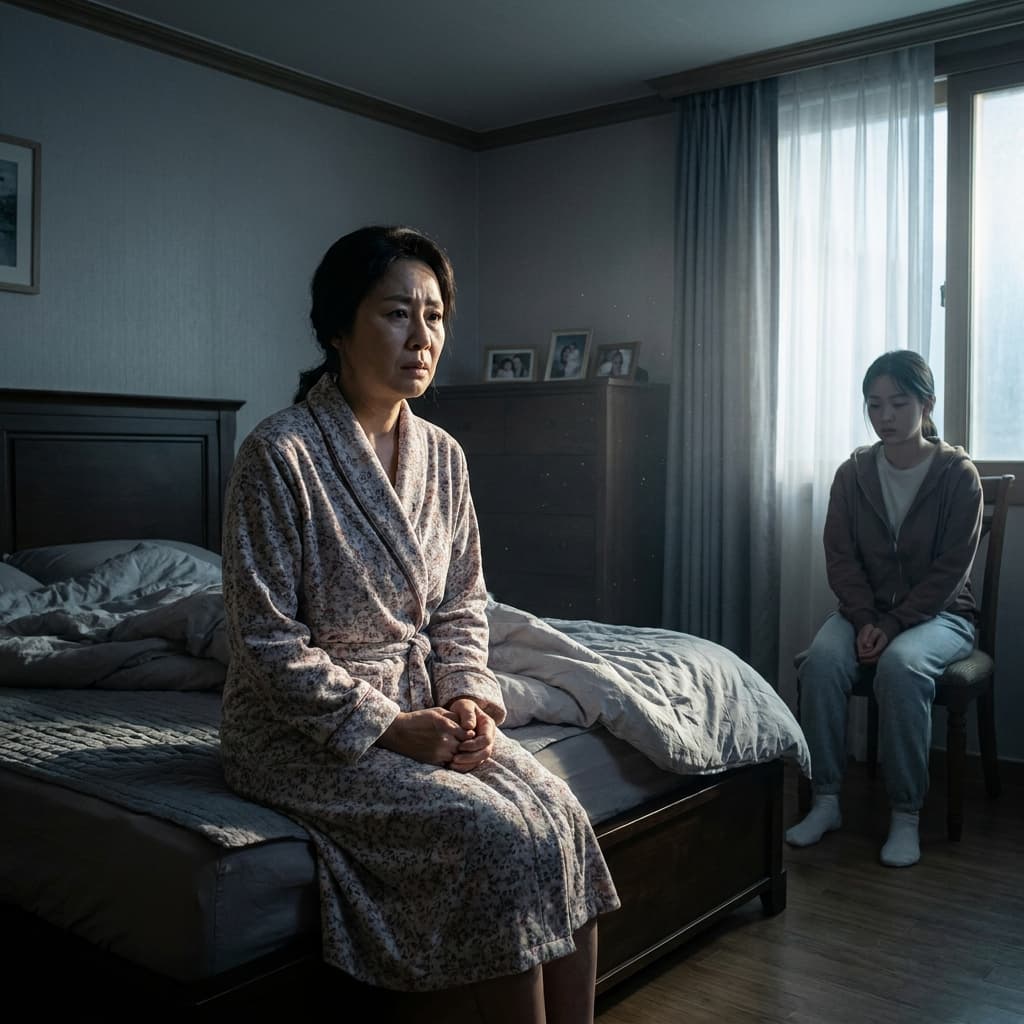
Stiff face, body stiffness. Is it an early symptom of Parkinsons disease?
Hello. This is Dalimchae Korean Medicine Clinic. # Stiff face, body stiffness. Could it be an early symptom of Parkinson's disease? "My mother-in-law's facial expression looks stiffer than before, and her gait seems somehow stiff." If you feel such changes in the elders around you, it is often difficult to dismiss it as simply due to age. In particular, complaints such as **stiff face symptoms** or **stiff body** can be early signals of Parkinson's disease, so it is necessary to look closely. This is because subtle changes that gradually appear in daily life can accumulate and significantly reduce the quality of life. 💡 **[Key Answer]** **3 most common causes of stiff face symptoms and stiff body** in Parkinson's disease: ① Loss of dopamine neurons / ② Brain function and autonomic nervous system imbalance / ③ Accumulation of brain waste products Dalimchae Clinic treats the root cause of Parkinson's disease with **autonomic stabilization** treatment that restores the balance of the nervous system, stabilizes the overheated brain, and restores the body's functions. ## Why do facial expressions suddenly stiffen and the body become stiff? Parkinson's disease occurs when dopamine-producing neurons are gradually lost in a specific part of the brain, especially the 'substantia nigra' of the midbrain. This dopamine is a neurotransmitter that plays a key role in regulating our movements. When dopamine is insufficient, errors occur in the exercise commands that the brain sends to the body, leading to various exercise symptoms. In the beginning, an expressionless face (masked face), rigidity of arms and legs, bradykinesia (slowness of movement), and resting tremor of hands and feet are representative. In particular, the **stiff face symptom**, which the patient does not feel but people around them notice first, is a phenomenon caused by rigidity of facial muscles and decreased movement. These symptoms are closely related to the control ability of the autonomic nervous system, so they should be understood as an imbalance in overall brain function rather than a simple muscle problem. ## Parkinson's disease is not just a disease where the body stiffens. In addition to exercise symptoms, Parkinson's disease accompanies various non-exercise symptoms and makes the patient's life difficult. Sleep disorders (insomnia), depression, anxiety, constipation, loss of smell, and chronic fatigue are common. These non-exercise symptoms often appear before exercise symptoms or progress together, greatly affecting the patient's daily life. It occurs due to complex causes such as dopamine deficiency in the brain, imbalance of other neurotransmitters, and problems with the brain-gut axis (gut-brain axis), and is an important factor in determining the quality of life. A systematic review and meta-analysis study published by the Korea Institute of Oriental Medicine in 2023 analyzed the results of 13 randomized controlled clinical trials involving 843 Parkinson's disease patients. According to this study, the group that combined herbal medicine and Western medical treatment statistically significantly **improved the total score of the UPDRS (Unified Parkinson's Disease Rating Scale)** compared to the placebo group (mean difference = -8.03, p \< 0.00001). This suggests that it can have a positive effect not only on the exercise function of Parkinson's disease patients but also on the overall improvement of the quality of life. Researchers concluded that a Korean medicine approach can provide additional benefits in Parkinson's disease treatment. At Dalimchae Clinic, we help patients lead a better life through such integrated treatment. ## Dalimchae Clinic's autonomic stabilization treatment to turn off the 'warning light' of the overheated brain Dalimchae Clinic focuses on stabilizing brain function by resolving **autonomic nervous system imbalance**, the root cause, rather than simply alleviating specific symptoms of Parkinson's disease. Our body's autonomic nervous system regulates overall life activities such as heart rate, digestion, and sleep, and directly affects the condition of the brain. The brains of Parkinson's disease patients are often in an unstable state, like an overheated engine that cannot rest. At Dalimchae Clinic, we restore the body's balance by lowering the heat of the nervous system and creating an environment where the brain can rest. In Korean medicine, this is called 'Su-seung-hwa-gang (Water Ascending, Fire Descending)'. In other words, lowering the hot energy of the head and raising the cold energy of the lower abdomen smooths the circulation of Qi and Blood throughout the body, restores the balance of the autonomic nervous system, and optimizes brain function. This process can also have a positive effect on the protection of dopamine neurons and the maintenance of remaining functions. In addition, as many people visiting Incheon Autonomic Nervous System Clinic experience, autonomic stabilization helps improve non-exercise symptoms such as insomnia, anxiety, and depression caused by Parkinson's disease. According to a clinical study review on acupuncture treatment for Parkinson's disease published in PubMed in 2016, acupuncture treatment has been shown to alleviate various exercise symptoms of Parkinson's disease patients and significantly improve various non-exercise symptoms such as mental disorders, sleep problems, and gastrointestinal symptoms. In particular, in a randomized controlled study of 14 Parkinson's disease patients, the UPDRS III (motor function evaluation) score showed a significant improvement trend after 2 weeks of electroacupuncture treatment. In addition, it has been reported that when acupuncture treatment is combined with levodopa, it increases treatment efficacy, reduces drug dosage, and decreases the occurrence of side effects. These research results show that acupuncture can be an effective auxiliary therapy for Parkinson's disease patients. ## Check for early symptoms of Parkinson's disease with the self-diagnosis checklist. Check if any of the following symptoms apply to you. * Tremor of hands, feet, jaw, etc., appears in a stable state. * Body movements feel slower and duller than before. * Have difficulty starting to walk or changing direction. * Facial expressions decrease and look expressionless. * Handwriting becomes smaller or drawing becomes difficult. * Arm swinging decreases or disappears. * The voice becomes smaller or monotonous. * Suffer from frequent constipation or indigestion. * Sleep disorders such as sleep talking or nightmares are severe. * Depression or anxiety persists. **Judgment Criteria:** * **If 3 or more apply:** There is a possibility of early symptoms of Parkinson's disease related to autonomic imbalance. We recommend a precise examination and consultation at Incheon Parkinson's Disease Clinic Dalimchae. * **If 5 or more apply:** This is a stage where progression of Parkinson's disease can be suspected. It is important to start professional diagnosis and treatment through immediate visit. ## Incheon Parkinson's Disease Clinic, where should I find? As Parkinson's disease is a disease that requires long-term management, customized treatment according to the patient's body condition and symptom progression stage is important. **Songdo Parkinson's Disease Clinic** Dalimchae Clinic provides Korean medical diagnosis and treatment considering these individual characteristics. We closely identify each patient's body condition through pulse wave testing, autonomic nervous system balance testing, etc., and apply herbal medicine prescriptions, acupuncture treatment, and pharmacopuncture treatment in combination to stabilize brain function and restore autonomic balance accordingly. In particular, at **Dalimchae Clinic Incheon Branch**, we establish an integrated treatment plan so that patients can minimize the difficulties they experience in daily life and increase their quality of life. --- **Q. Can Parkinson's disease be managed after treatment?** A. Parkinson's disease is known as a progressive disease with no known cure yet. However, symptoms can be alleviated and the progression rate of the disease can be slowed down through Korean medical treatment, and the quality of life can be significantly improved. **Q. I am taking Parkinson's medicine, can I combine it with herbal medicine treatment?** A. Yes, many studies report that the combined treatment of Western and herbal medicine has a synergistic effect on symptom improvement and helps reduce the side effects of Western medicine. You must establish a safe and effective combined treatment plan through consultation with a medical specialist. **Q. Early Parkinson's disease, how should I manage it?** A. In the early stages, improvement of lifestyle habits such as regular exercise, sufficient sleep, and a balanced diet is very important. In addition, if you combine Korean medical treatment that balances the autonomic nervous system, it can help slow down the progression of the disease and suppress the expression of symptoms. **Q. In addition to facial stiffening, do other early symptoms appear together?** A. Yes, in addition to facial stiffening (masked face), exercise symptoms such as resting tremor, bradykinesia (slowed movement), and rigidity (stiff body) can occur. In addition, non-exercise symptoms such as constipation, loss of smell, sleep disorders, and depression also appear from the beginning or appear before exercise symptoms. --- Parkinson's disease is not a problem that can be solved by enduring. You no longer have to ignore the signals your body has been sending for a long time. If you approach it in the right direction, your body will react faster than you think. Bring your symptoms as they are. Dalimchae Clinic will find the cause together. Where life blooms. For herbal medicine, it's Dalimchae Korean Medicine Clinic. Check your symptoms similar to mine through the AI consultation on the Dalimchae Clinic website first! This article is health information compiled by Dalimchae medical staff based on questions frequently received in the treatment room. Medical Supervision | Dalimchae Clinic Incheon Branch Korean Medicine Doctor Min Jihong (Parkinson's Disease Column) based on Brain/Autonomic Nervous System treatment standards.