
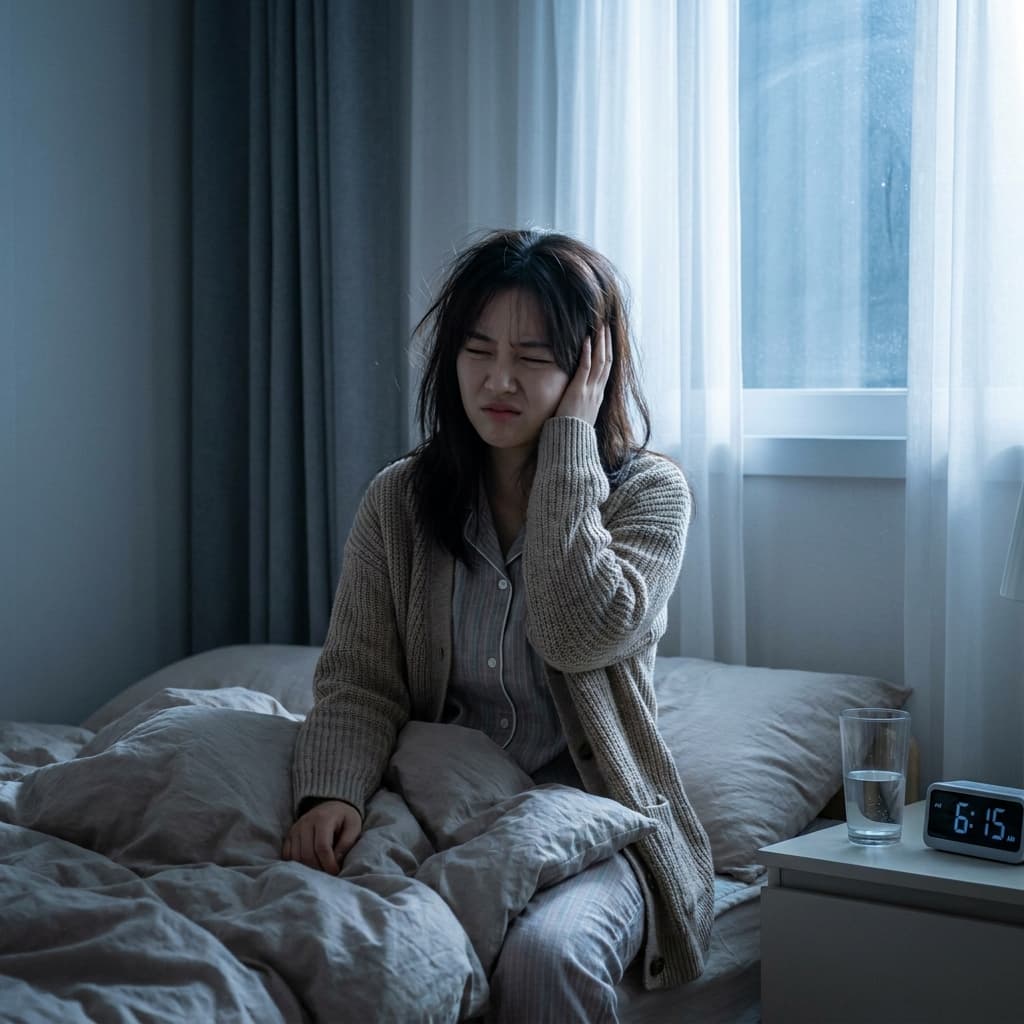
Splitting Headache Why Does It Keep Coming Back Stop Throbbing Headaches Now
Hello, this is Dalimchae Korean Medicine Clinic. # Splitting Headache, Why Does It Keep Coming Back? Stop Throbbing Headaches Now! Have you ever experienced a sudden splitting headache or throbbing headaches that persisted for days, making daily life difficult? Many people visit hospitals complaining that 'my splitting head hurts', only to feel frustrated when told there is nothing special on tests. Dismissing it simply as due to stress, many people worry that the intensity and frequency of pain will increase and progress into chronic headaches. Headaches are more than just pain felt in the head; they can be an important signal from our body. 💡 **[Key Answer]** Top 3 most common causes of throbbing splitting headaches: ① **Autonomic nervous system imbalance** / ② **Brain blood flow and oxygen supply issues** / ③ **Excessive stress and tension** Dalimchae Korean Medicine Clinic restores body balance through **autonomic stabilization treatment** to resolve the root cause of headaches. ## Splitting Headaches: Are They Simply Due to Stress? Many headache patients frequently hear that stress is the cause. Of course, stress is a major factor triggering or worsening headaches. However, when excruciating pain repeats to the extent of expressing 'my splitting head hurts', you can suspect that an abnormality has occurred in our body's **autonomic nervous system** beyond simple stress. The autonomic nervous system is an important nervous system regulating our body's biological functions, responsible for heartbeat, digestion, blood pressure, and body temperature regulation without conscious effort. This autonomic nervous system is divided into the **sympathetic nervous system** and the **parasympathetic nervous system**, and when the balance between the two nerves breaks, our body experiences various abnormal symptoms. Stress excessively activates the sympathetic nervous system, putting the body in a tense state, which leads to blood vessel constriction, muscle rigidity, and brain blood flow changes, triggering headaches. In particular, as the brain's pain threshold lowers or excessive constriction and relaxation of blood vessels repeat, it induces severe pain such as throbbing headaches and migraines. ## Can Autonomic Imbalance Worsen Headaches? Yes, that is correct. Autonomic imbalance is deeply involved in the occurrence and aggravation of headaches. When the balance of the autonomic nervous system breaks due to stress, overwork, lack of sleep, and irregular lifestyle habits, our brain cannot rest sufficiently and enters an overheated state. Just like a car engine breaks down if it keeps overheating, the brain also falls into a continuous overload state, reacting sensitively to small stimuli and making headaches easy to occur. In addition, the autonomic nervous system plays an important role in regulating brain blood flow. When balance breaks, blood circulation to the brain may not be smooth, leading to a lack of oxygen and nutrients in brain tissue. This lowers brain function and accompanies various neurological symptoms (dizziness, tinnitus, insomnia, etc.) including headaches. Songdo Headache Oriental Medicine Clinic views this autonomic imbalance as the core cause of headaches and approaches treatment accordingly. ## How Does Traditional Korean Medicine Diagnose and Treat Headaches? Dalimchae Korean Medicine Clinic Songdo Branch does not view headaches simply as symptoms, but interprets them as the result of a broken overall body balance. In particular, it importantly diagnoses and treats the unbalanced state of the autonomic nervous system. Rather than merely suppressing outwardly appearing pain, it focuses on resolving the instability of the autonomic nervous system, which is the root of pain, helping the brain recover on its own and find balance. This can provide a new solution to patients who suffer even after receiving a 'normal' diagnosis from Western medical tests. A study published in 2020 in the *Journal of Clinical Neurology* analyzed the effects of traditional Korean medicine acupuncture treatment on the autonomic nervous system in 60 chronic migraine patients. The group receiving acupuncture twice a week for 8 weeks showed a significant decrease in monthly headache frequency from an average of 10.2 times to 4.5 times compared to the control group (p\<0.001), and especially heart rate variability (HRV) analysis revealed that parasympathetic nervous system activity increased significantly, showing improved autonomic balance. The researchers concluded that acupuncture treatment helps improve the brain's pain control function by regulating the autonomic nervous system. Furthermore, another study published in 2023 in *Complementary Therapies in Medicine* compared herbal medicine treatment with general painkiller treatment in 75 tension headache patients. After 12 weeks of treatment, the group receiving herbal medicine treatment improved headache intensity by about 54% from an average of 6.8 points to 3.1 points, confirming a statistically significant difference (p\<0.01) compared to the control group (painkillers). Researchers reported that herbal medicine has a positive effect on improving brain blood flow and stabilizing the nervous system, making it effective in alleviating headache symptoms. Based on these data, Dalimchae Korean Medicine Clinic administers customized herbal medicine prescriptions and acupuncture treatments considering individual constitutions and autonomic states, stabilizing the overheated nervous system and creating an environment where the brain can rest to solve the root cause of headaches through autonomic stabilization treatment. ## Self-Diagnosis Checklist for Those Suffering from Headaches Check if any of the following questions apply to you. If 3 or more apply, you can suspect headaches caused by autonomic imbalance. * Sudden throbbing or throbbing pain in the head frequently occurs. * Frequently feel fatigued and not refreshed no matter how much you rest. * Difficulty falling asleep even when lying in bed, or waking up frequently during sleep. * Poor digestion and frequent bloating or stuffiness in the stomach. * Feeling stuffy or pounding sensation in the chest. * Dizziness or blurred vision for no special reason. * Reacting sensitively to small things and easily getting irritated. * Frequent stiffness and soreness in the neck or shoulders. **Judgment Result:** * **3+ apply:** Suspect autonomic imbalance-type headaches and recommend reviewing Korean medicine complex treatment through professional consultation at a Songdo autonomic oriental medicine clinic. * **5+ apply:** Immediate clinic visit and diagnosis and treatment start are required. ## Overcome Chronic Headaches Caused by the Brain Not Resting Through Autonomic Stabilization Dalimchae Korean Medicine Clinic treats the root cause of headaches with **autonomic stabilization** as its core treatment principle. When our body's autonomic nervous system balance collapses, the brain cannot rest like an overheated engine and continues to activity. This induces chronic tension and fatigue, ultimately turning on warning lights called headaches. We focus on lowering the nervous system's heat and creating an environment where the brain can rest—in traditional Korean medicine, this is called **Suseunghwagang (水昇火降)**—to restore autonomic balance. At Songdo Oriental Medicine Clinic, personalized treatments adjust unstable autonomic nervous systems and help the brain possess self-recovery power. ## FAQ **Q. How long do I need to be treated for splitting severe headaches?** A. The treatment period for headaches varies depending on the degree of symptoms, duration of chronicization, and causes. Generally, initial treatment aimed at acute symptom relief takes about 2 to 4 weeks, and intensive treatment to restore autonomic balance and prevent recurrence is recommended to be pursued steadily for 2 to 3 months or more. **Q. Can migraines be treated with Korean medicine?** A. Yes, migraines are also a good indication for traditional Korean medicine treatment. Traditional Korean medicine treats migraines through various causes such as blood circulation problems, dameum (phlegm), eohyeol (blood stasis), and liver heat, proceeding with customized treatment. Through autonomic regulation and blood circulation improvement, pain frequency and intensity can be reduced and quality of life enhanced. **Q. Headaches, dizziness, and insomnia come together; can they be treated together?** A. Yes, autonomic imbalance can simultaneously trigger various symptoms such as dizziness, insomnia, and anxiety as well as headaches. Dalimchae Korean Medicine Clinic views all these symptoms as stemming from a single root and improves symptoms together through integrated treatment. **Q. Even after hospital tests show no abnormalities, my headache is severe. Is Korean medicine treatment effective in such cases?** A. Yes, rather in these cases, traditional Korean medicine treatment often shines. Functional headaches, for which Western medical tests have difficulty finding causes, are often mainly caused by autonomic nervous system imbalance, and traditional Korean medicine provides various treatments effectively improving these functional problems. Splitting headaches are not problems solved by enduring them. You no longer need to ignore the signals your body has sent for a long time. When approached in the right direction, the body responds faster than you think. Bring your current symptoms as they are. Dalimchae Korean Medicine Clinic will find the cause together. Where life blooms. Herbal medicine is Dalimchae Korean Medicine Clinic. Check symptoms similar to yours first through Dalimchae Korean Medicine Clinic homepage AI consultation! This article is based on questions frequently received in the treatment room, and is health information organized together by Dalimchae medical staff. Medical Supervision | Brain & Autonomic Nervous System Treatment Standard: Dalimchae Korean Medicine Clinic Songdo Branch Oriental Medical Doctor Oh Hyunmin (Headache Column)
