
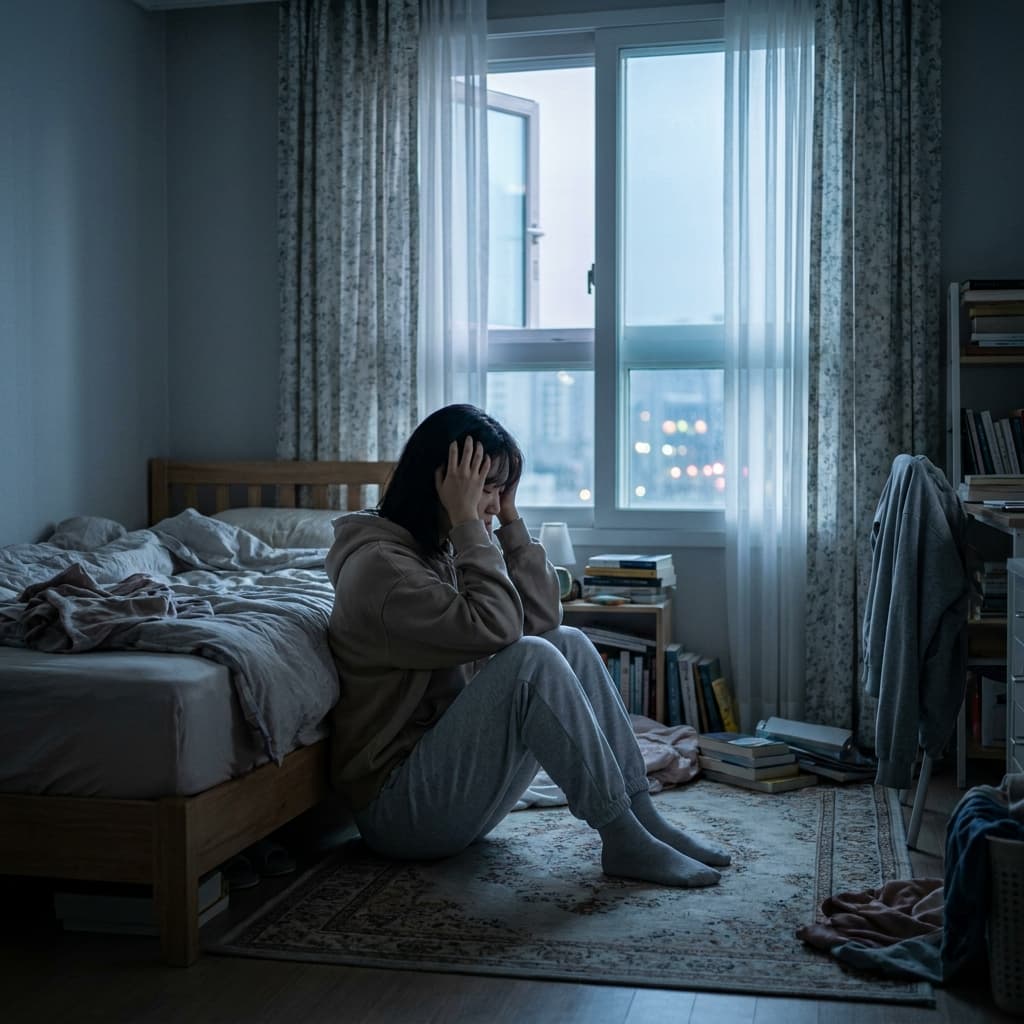
Signs your body is sending when you don't want to do anything and feel bothered
Hello. This is Dalimchae Korean Medicine Clinic. # When you don't want to do anything and feel bothered, it's a red signal from your body. Do you often feel like "I don't want to do anything and it's bothersome"? If it's hard to even open your eyes in the morning, you get irritated easily by small things, lose motivation in everything, and fall into lethargy, you shouldn't dismiss it as just a lack of willpower. It could be an important sign that the balance of your body and mind is broken. Especially, chronic stress and irregular lifestyle in modern society accelerate this lethargy, often leading to an imbalance of the autonomic nervous system beyond simple fatigue. 💡 **[Key Answer]** **3 most common causes of "when you don't want to do anything and feel bothered":** ① **Autonomic Nervous System Imbalance** / ② **Chronic Fatigue and Stress** / ③ **Mental Energy Exhaustion (Burnout)** Dalimchae Clinic restores vitality to the body and mind through **recovery of the autonomic nervous system balance**, the root cause of lethargy. ## Why don't you want to do anything and feel bothered? It's not just a matter of willpower. Many people blame themselves as weak when they feel lethargic and bothered. However, this is deeply related to physiological changes in the body, not just a matter of mental strength. Especially when the function of the **autonomic nervous system**, which is responsible for our body's balance, decreases or is excessively hyperactive, lethargy deepens. The autonomic nervous system governs core functions that operate without conscious effort, such as heart rate, digestion, breathing, and temperature regulation. The sympathetic nervous system (activity mode) and the parasympathetic nervous system (recovery mode) should be appropriately coordinated. If chronic stress, sleep deprivation, and overwork persist, the sympathetic nervous system becomes over-activated while the parasympathetic function weakens, keeping the body in a constant state of tension. If this continues, the body cannot rest properly when it needs to conserve and recover energy, eventually leading to physical and mental exhaustion, making it more frequent for you to **not want to do anything and feel bothered**. ## Chronic lethargy, what kind of signal is it from our body? Chronic lethargy goes beyond a simple 'wanting to rest' message and is accompanied by various physical and mental symptoms. Concentration loss, memory decline, sleep disorders, indigestion, headaches, dizziness, and heart palpitations are representative. Especially when it develops into burnout syndrome, it can lead to a cynical attitude toward work, decreased work efficiency, and in severe cases, depression or panic disorder. Even when these symptoms appear, many people feel frustrated because they often get a 'normal' diagnosis after various tests at the hospital. In Korean medicine, this state is interpreted within the category of 'Heoro (虛勞)', meaning a state where the body's energy has weakened and immunity has decreased due to overwork and stress. ## How does Korean medicine treat the root of lethargy, autonomic imbalance? At Dalimchae Clinic, we view the lethargy and accompanying symptoms that appear **when you don't want to do anything and feel bothered** as originating from an imbalance of the autonomic nervous system and focus on restoring that balance. It's about supplementing the body's exhausted energy state, stabilizing the over-activated sympathetic nervous system, and pulling up the weakened parasympathetic function to help the body regain its own power to recover. In May 2026, a study by Kim et al., published in the international journal "Integrative Medicine Research," reported the results of a large-scale randomized controlled trial (RCT) evaluating the safety and efficacy of Gongjin-dan and Ssanghwa-tang in patients with chronic fatigue syndrome. In this study, Gongjin-dan showed anti-fatigue effects when administered continuously for at least 4 weeks, and it was confirmed that long-term use of safe herbal medicine is safe. Especially, it suggested the possibility of being effective for 'fatigue, malaise, and exhaustion after illness or due to damaged Qi and blood or a weak constitution.' This serves as a basis for Dalimchae Clinic to utilize herbal prescriptions such as Gongjin-dan in the treatment of lethargy and chronic fatigue. Additionally, a systematic review and meta-analysis study conducted by Donghyun Nam's research team in 2019 analyzed the effects of Bojungikgi-tang (補中益氣湯) and its modified versions on 476 patients with chronic fatigue syndrome. Synthesizing 7 randomized controlled trials (RCTs), Bojungikgi-tang and its modifications showed a significant effect on overall symptom improvement compared to non-specific control group management (Relative Risk 0.20, 95% Confidence Interval 0.13~0.31, Z=7.44, p\<0.00001). This study statistically supports the efficacy of herbal medicine for chronic fatigue syndrome and shows the importance of herbal prescriptions that help the body's energy and recovery. At Dalimchae Clinic, based on these research data, we do not simply suppress outward symptoms but perform **autonomic stabilization** treatment that corrects internal imbalances so the body can overcome the disease itself. If the balance of the autonomic nervous system is broken, it's like the brain cannot rest and keeps turning on warning lights. We focus on lowering excessive heat in the nervous system and creating an environment where the brain can rest comfortably—this is called **Suseunghwagang (水升火降)** in Korean medicine. Through harmonious recovery of body and mind, we help you escape chronic lethargy and regain a vibrant daily life. This is especially an effective approach for those who also complain of headaches or dizziness due to stress. ## Lethargy, am I also burned out? Symptom Checklist If you apply to 3 or more of the following questions, you can suspect lethargy due to autonomic imbalance, i.e., burnout syndrome. If it's 5 or more, we recommend visiting Dalimchae Clinic Incheon, a lethargy clinic in Incheon, for professional consultation. 1. It's hard to wake up in the morning, and I don't feel refreshed after sleeping. 2. I've lost interest in things or hobbies that were previously enjoyable. 3. I get irritated and sensitive easily over small things. 4. I feel like my concentration and memory have declined. 5. Physical symptoms such as chest tightness, palpitations, or indigestion are accompanied. 6. I often feel chronic headaches or dizziness. 7. I have no hope or motivation for the future, and everything feels bothersome. 8. The quality of sleep is poor, such as difficulty falling asleep or waking up frequently during the night. --- **Q. Can the feeling of not wanting to do anything and being bothered get better on its own?** A. Temporary fatigue can be improved with rest, but if it lasts for more than 2 weeks or is accompanied by physical symptoms, it is highly likely chronic lethargy due to autonomic imbalance. Rather than waiting for it to get better naturally, active treatment and management are necessary. **Q. How does the herbal treatment for lethargy proceed?** A. At Dalimchae Clinic Incheon Branch, we help regulate autonomic nervous system functions, supplement the body's energy, and stabilize the mind and body through one-on-one customized herbal prescriptions, acupuncture, pharmacopuncture, and moxibustion according to the patient's constitution and symptoms. **Q. I'm taking herbal medicine, but the lethargy seems to be getting worse.** A. In the beginning, you may temporarily feel more fatigue as the body undergoes the recovery process. This could be a natural phenomenon of the body responding to treatment, but if the discomfort persists, we may consider adjusting the prescription after consulting with the medical staff. **Q. I have chronic lethargy and depression together. Can they be treated together?** A. Yes, chronic lethargy and depression are often closely related to autonomic imbalance and appear together. At Dalimchae Clinic, an Incheon autonomic clinic, we treat the root causes of both symptoms simultaneously to help recover the health of both body and mind. --- **When you don't want to do anything and feel bothered**, it's not a problem that can be solved by enduring. You don't have to ignore the signals your body has been sending for a long time. If you approach it in the right direction, your body will respond faster than you think. Bring your symptoms as they are. At Dalimchae Clinic, we will find the cause together. Where life blooms. For herbal medicine, it's Dalimchae Korean Medicine Clinic. Check your symptoms similar to mine through the AI consultation on the Dalimchae Clinic website first! This article is health information compiled by Dalimchae medical staff based on questions frequently received in the treatment room. Medical Supervision | Brain and Autonomic Treatment Standards Dalimchae Clinic Incheon Branch Korean Medicine Doctor Yang Yuchan (Depression Column)