
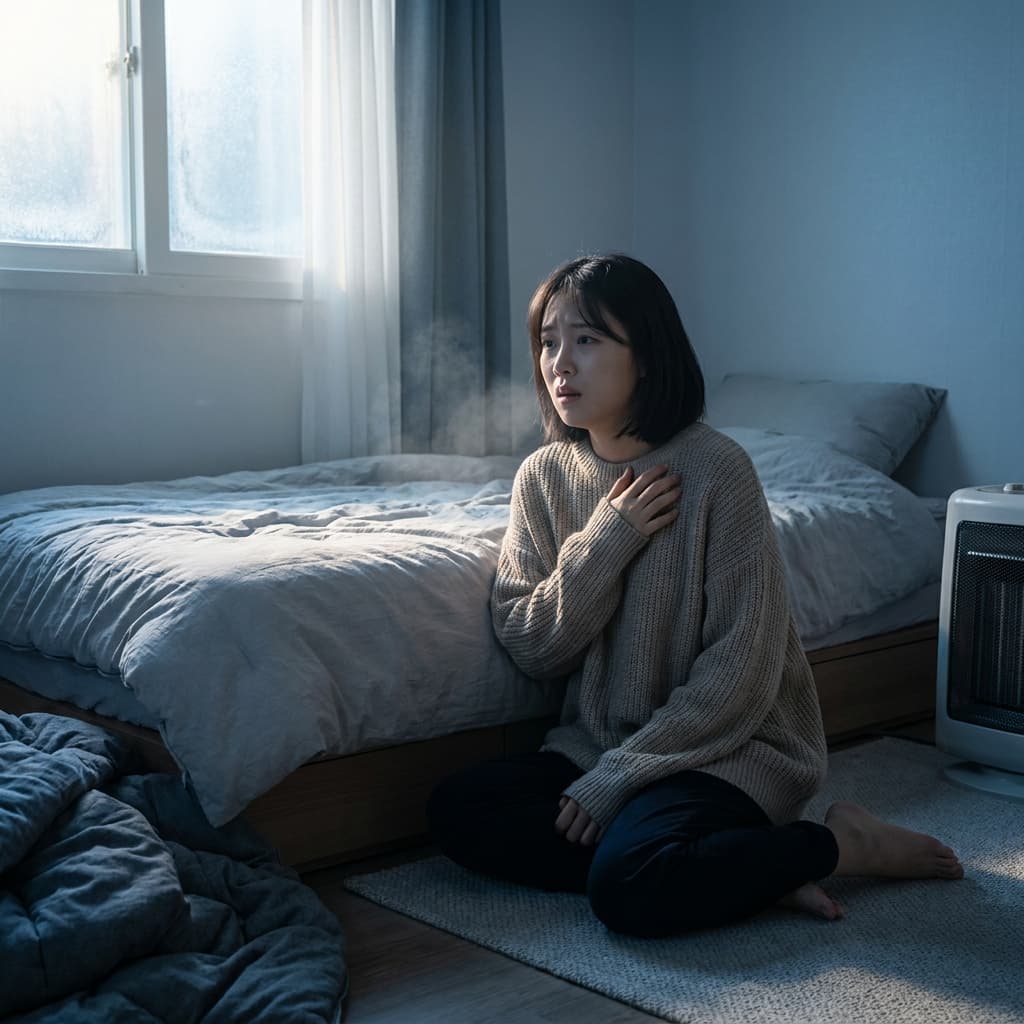
Shortness of Breath and Heart Palpitations Is It Panic or Anxiety Causes and Treatment in Korean Medicine
Hello, this is Dalimchae Korean Medicine Clinic. # Shortness of Breath and Heart Palpitations: Is It Panic or Anxiety? Causes and Treatment in Korean Medicine Suddenly experiencing tightness in your chest, shortness of breath, a pounding heart, and dizziness with a feeling of impending collapse. You went to the emergency room, but tests showed "nothing wrong," which only made you more anxious. Or perhaps you experience chronic anxiety, nervousness, excessive worry over minor things, and sleepless nights. If you have been searching for an Incheon anxiety clinic due to worries about panic disorder or anxiety disorder, this article will help you. 💡 **Key Answer** Top 3 most common causes of shortness of breath and heart palpitations: ① Autonomic imbalance / ② Brain function changes due to stress overload / ③ Depletion of body and mind energy. Dalimchae Korean Medicine Clinic calms your oversensitive alarm system with autonomic stabilization treatment and helps you recover on your own. ## Why Do Shortness of Breath and Heart Palpitations Occur? Shortness of breath and heart palpitations without clear cause are often rooted in autonomic nervous system malfunction. Our autonomic nervous system consists of the sympathetic and parasympathetic nervous systems, regulating vital functions like heartbeat, breathing, digestion, and sleep. Like a car's accelerator (sympathetic) and brakes (parasympathetic), they must maintain balance. When stress or overwork breaks this balance, the sympathetic nervous system becomes overly hyperactive. This sympathetic hyperactivity causes rapid heartbeat, accelerated breathing, and muscle tension. The brain perceives these responses as an "emergency," inducing greater anxiety and terror, which in turn stimulates the sympathetic nervous system further in a vicious cycle. ## How Does Korean Medicine View Panic and Anxiety Disorders? Both panic disorder and anxiety disorder are closely related to unstable regulation of the autonomic nervous system. Panic disorder features sudden "panic attacks"—extreme terror accompanied by palpitations, dyspnea, and dizziness—followed by "anticipatory anxiety" about future attacks. Anxiety disorder manifests as generalized anxiety disorder, social anxiety disorder, and obsessive-compulsive disorder, with chronic generalized anxiety, excessive worry, and tension. Korean medicine approaches these symptoms through the holistic view of mind-body unity (심신일원론). It emphasizes organ functions such as Heart, Liver, Kidney, and Gallbladder, along with stress responses and Qi-Blood circulation. When stress weakens the Heart and Gallbladder, small anxieties trigger major reactions (심담허겁), or excessive thinking depletes Heart and Spleen functions (심비양허). Abnormal waste (담음) or blood deficiency (혈허) can also cause anxiety. ## How Does Korean Medicine Treatment Help Anxiety and Palpitations? Korean medicine treatment focuses on addressing the root of anxiety by restoring autonomic balance. Acupuncture, herbal medicine, and pharmacopuncture calm overactive sympathetic nerves and activate parasympathetic functions, allowing body and mind to rest. A randomized clinical trial by Xue Li, Sisi Zheng, and Sitong Feng published in 2022 in Evidence-Based Complementary and Alternative Medicine showed that the herbal formula Jie Yu Wan significantly improved anxiety symptoms in patients with Generalized Anxiety Disorder. Furthermore, a 2012 clinical case study by Dr. Young-bum Noh published in the Journal of the Society of Korean Medicine for Sasang Constitutional Medicine demonstrated that Yeonggyegamjotang successfully resolved panic attacks and palpitations in patients with severe panic disorder. At Dalimchae Korean Medicine Clinic Incheon Branch, we provide autonomic stabilization treatment to calm overheated alarm systems and foster self-recovery. We focus on lowering nervous system heat and creating a comfortable resting environment for the brain—known as Su-seung-hwa-gang (水昇火降). ## Do You Have Anxiety Disorder? Self-Diagnosis Checklist If 3 or more items apply, suspect autonomic imbalance; if 5 or more, visit Dalimchae Korean Medicine Clinic Incheon Branch for professional consultation. * Your chest pounds and feels tight for no reason. * You suddenly feel like you cannot breathe. * You are easily startled, nervous, and tense over minor things. * You have difficulty falling asleep or waking up frequently due to anxiety. * You worry constantly and imagine worst-case scenarios. * Your hands and feet are cold and numb, or you sweat frequently. * You frequently feel dizzy and faint. * Your neck and shoulders are always stiff and tense. * You suffer from poor digestion and abdominal discomfort. * You are sensitive and startled by small noises. **3+ items:** Suspect autonomic imbalance type -> Consider herbal combination treatment. **5+ items:** Immediate clinic visit recommended for precise diagnosis and treatment. ## Dalimchae Korean Medicine Clinic Incheon Branch Autonomic Stabilization Treatment * **Herbal Medicine:** Regulates autonomic balance, calms overheated brain, replenishes energy, and relieves anxiety. * **Acupuncture:** Stimulates specific meridians to smooth Qi-Blood circulation, regulate stress hormones, and relieve tension. * **Pharmacopuncture:** Injects refined herbal extracts into meridians for rapid symptom relief and reduced nervous oversensitivity. * **Personalized Counseling:** Identifies psychological triggers and provides lifestyle guidance. ## FAQ **Q. How do I distinguish between panic disorder and anxiety disorder?** A. Panic disorder features sudden panic attacks with intense terror and physical symptoms, followed by anticipatory anxiety. Anxiety disorder is broader, involving chronic generalized worry, tension, and apprehension. **Q. Can panic and anxiety disorders be treated with Korean medicine?** A. Yes. Korean medicine restores autonomic balance through herbal medicine, acupuncture, and pharmacopuncture to manage stress responses and treat root causes. **Q. How long does treatment take?** A. Duration varies depending on severity, duration, and constitution, aiming for gradual symptom relief and relapse prevention. **Q. Can I take Western medicine concurrently?** A. Yes, herbal and Western treatments can be combined after careful review by our medical staff. Reduction of Western medication should always be discussed with your Western medical doctor. Shortness of breath and heart palpitations cannot be solved simply by enduring them. Bring your symptoms to Dalimchae Korean Medicine Clinic, and we will find the root cause together. A place where life blooms. Herbal medicine is, after all, Dalimchae Korean Medicine Clinic. Check similar symptoms first through our website AI consultation! Medical Supervision | Brain & Autonomic Treatment Standard, Dalimchae Korean Medicine Clinic Incheon Branch Korean Medicine Doctor Yang Yuchan (Anxiety Disorder Column)